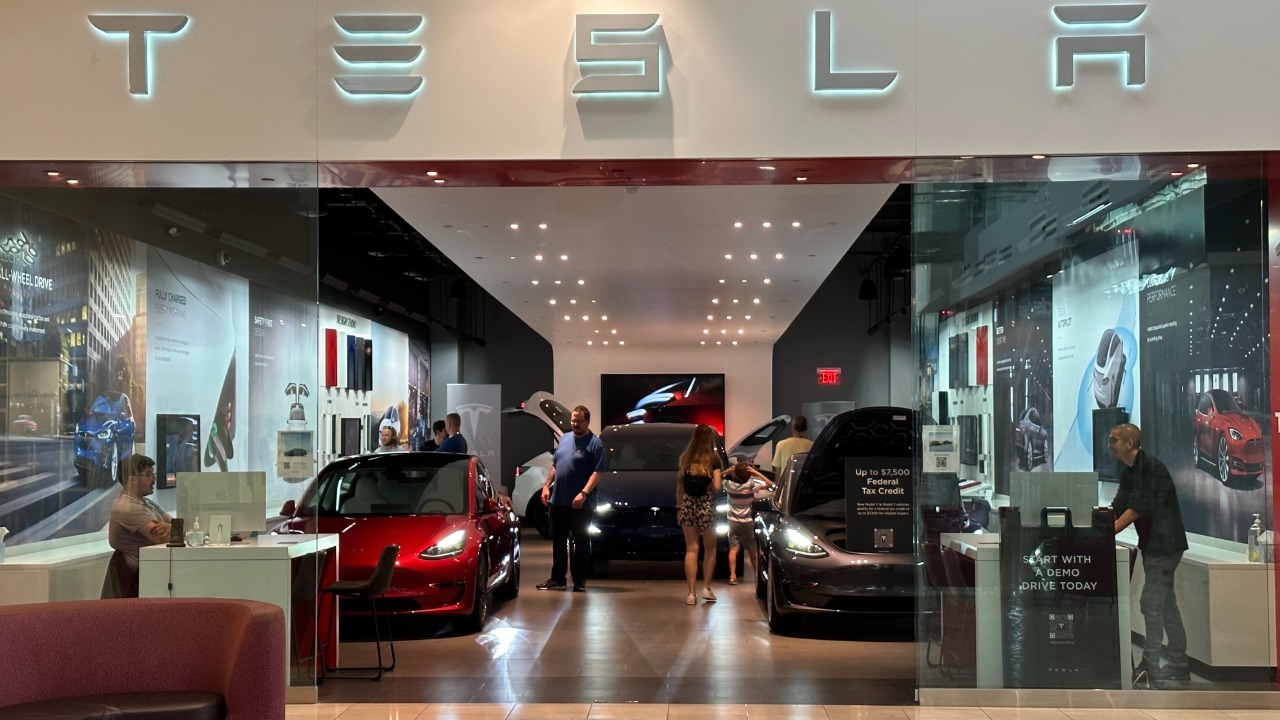

Tesla’s long courtship of India has finally produced hard sales numbers, and they are far smaller than the hype suggested. After months of fanfare, the company has managed to move only about 100 cars in a market that is both the world’s most populous country and one of the fastest growing for passenger vehicles. Instead of a breakout success, Tesla’s early performance has become a case study in how global brands can misread the realities of India’s price-sensitive, infrastructure-constrained auto landscape.
From blockbuster expectations to a trickle of deliveries
When Tesla entered India earlier this year, expectations were set sky high, both by the company’s own reputation and by years of speculation about when it would finally commit to the market. The narrative was simple: a country with rising incomes, worsening urban air quality, and a government eager to attract global EV makers looked like a natural fit for a brand that had already reshaped electric mobility in North America, Europe, and China. Instead, the first few months have produced a sobering reality check, with dealership data indicating that the launch has been more of a soft landing than a moonshot.
According to figures cited in late Nov, Dealership data shows that Tesla has only sold “just over” 100 cars in India since July, a volume that would barely register in most of its established markets. That tally is even more striking when set against the size of India’s passenger car segment and the intense media attention that preceded Tesla’s arrival. Rather than a flood of Model 3 and Model Y vehicles on Indian roads, the company is contending with a slow drip of deliveries that underscores how difficult it is to translate global brand power into local traction.
Why “just 100” sales matter in a market of 1.4 billion
On its own, a figure of 100 cars might sound like a rounding error for a company of Tesla’s scale, but in India it carries outsized symbolic weight. The country has spent years positioning itself as a manufacturing and consumption hub for electric vehicles, and policymakers have repeatedly highlighted the importance of attracting marquee global players. Against that backdrop, a launch that yields only a three-digit sales figure over several months raises uncomfortable questions about whether the product, pricing, and policy mix is aligned with what Indian buyers actually want.
Local reporting has framed the situation in stark terms, noting that there are Just 100 Teslas in five months: the real reasons behind Musk’s weak car sales in India * 600 bookings, but only 100 so. That contrast between 600 expressions of interest and only 100 completed purchases highlights a critical gap between aspiration and conversion. It suggests that while the Tesla brand and the idea of owning one of its cars resonate with a slice of Indian consumers, the practical hurdles of price, financing, and delivery are still preventing many would-be buyers from following through.
Premium pricing and the import problem
The most immediate drag on Tesla’s India performance is its decision to rely on imported vehicles, which pushes prices into a rarefied bracket even by urban upper-middle-class standards. Import duties and logistics costs stack on top of already premium base prices, turning what might be a stretch purchase in other markets into an outright luxury in India. For a country where a large share of car buyers still shop in the sub-₹15 lakh range, that positioning sharply narrows the addressable audience.
Reporting from early Nov captures how this strategy has played out in practice, noting that Tesla’s long-awaited debut in India has gotten off to a slow start, as the company’s premium pricing and limited local presence have constrained demand. The same coverage points out that the company is competing in a niche where cars can cost about ₹22 lakh or more, a price point that automatically excludes the vast majority of Indian households. By anchoring itself in this imported, high-cost segment, Tesla has effectively chosen to fight for a thin slice of the market while domestic rivals experiment with more locally tailored, cost-conscious EV offerings.
Stiff competition from entrenched luxury and local players
Even within the premium bracket, Tesla is not operating in a vacuum. India’s affluent buyers already have established relationships with German luxury brands, and those companies have spent years building dealer networks, service centers, and financing partnerships. For a wealthy customer in Mumbai, Delhi, or Bengaluru, choosing a high-end EV is not just about technology or acceleration figures, it is also about trust in after-sales support and the comfort of dealing with a familiar badge.
Coverage of Tesla’s early months in India notes that While global brands like Mercedes-Benz and BMW also compete in this space, Tesla’s dependence on imports leaves it part of a narrower, more vulnerable segment. Mercedes, Benz and BMW have already seeded the market with electric models that plug into existing luxury ecosystems, from concierge-style service to corporate fleet deals. At the same time, Indian manufacturers are rolling out more affordable EVs that, while less glamorous than a Tesla, speak directly to local needs on price, maintenance, and charging access. In that crowded field, Tesla’s imported-only strategy looks less like a bold beachhead and more like a constrained experiment.
Demand is not the only problem: conversion and delivery gaps
The gap between 600 bookings and 100 actual deliveries points to a deeper issue than simple lack of interest. It suggests that Tesla is struggling to convert early enthusiasm into completed sales, a problem that can stem from delays, opaque timelines, or shifting buyer priorities once the initial excitement fades. In India, where household budgets are often finely balanced and financing approvals can be complex, any uncertainty around final pricing or delivery dates can quickly derail a purchase decision.
Reports that highlight the figure of 600 bookings, but only 100 so far delivered underscore how fragile that conversion funnel can be. Potential buyers who placed early orders may have been swayed by competing offers from Mercedes, Benz and BMW or by more attainable EVs from Indian brands while they waited. Others may have reconsidered after factoring in the cost of home charging setups, insurance, and the uncertainty around resale value for a car that is still a novelty on Indian roads. The result is a launch phase where Tesla’s order book looks healthier than its actual presence on the street.
Infrastructure, policy, and the limits of early adopters
Even for those who can afford a Tesla, India’s patchy charging infrastructure and uneven policy landscape add friction to the ownership equation. Public fast chargers are concentrated in a handful of major cities, and long-distance travel between states can still require careful planning. While early adopters are often willing to tolerate inconvenience, there is a ceiling to how many buyers will accept a car that demands lifestyle adjustments in exchange for status and performance.
Analysts quoted in late Nov have argued that In India, Musk has shown interest in the government’s efforts to attract global EV makers, but policy support alone cannot compensate for the day-to-day realities of driving and charging. State-level incentives vary, and local regulations around apartment parking, metering, and grid upgrades can slow the rollout of home charging in exactly the urban neighborhoods where Tesla’s target buyers live. Until those practical barriers ease, the pool of customers willing to be first movers will remain limited, no matter how strong the brand halo.
Tesla’s strategy reset: foot in the door, not a failed bet
Despite the underwhelming sales figures, it would be premature to write off Tesla’s India push as a failure. The company appears to be treating this initial phase as a learning exercise, using a small volume of imported cars to test pricing, gauge demand, and understand regulatory nuances before committing to deeper localization. That approach may frustrate fans who expected a splashy rollout, but it also limits financial exposure while the company refines its playbook for a complex, price-sensitive market.
Commentary from late Nov captures this cautious optimism, noting that They have just put their foot in the door in India. And they have good potential to increase sales here in the time to come if strategy and execution improve. That perspective frames the current 100-car milestone not as an endpoint but as a baseline from which Tesla will need to climb. The key question is whether the company is willing to adapt its global formula to India’s specific constraints, from local manufacturing and more aggressive pricing to partnerships that can accelerate charging infrastructure and after-sales support.
The second-month slump and what it signals
One of the more telling data points from Tesla’s early months in India is that sales did not simply start small, they also slipped in the second month after launch. That pattern suggests that the initial wave of enthusiasts and brand loyalists may have been quickly exhausted, leaving the company to compete for more cautious buyers who scrutinize value and practicality more closely. For a premium product in a new category, sustaining momentum beyond the first cohort of fans is often the hardest part.
Reporting dated Nov 9, 2025 notes that Tesla’s long-awaited debut in India has gotten off to a slow start, as the company’s premium pricing and limited local footprint coincided with a decline in sales in the second month after launch. That early dip is a warning sign that the company cannot rely solely on pent-up demand or brand mystique to carry it forward. To avoid a prolonged plateau, Tesla will need to broaden its appeal beyond the narrow circle of early adopters who were always going to buy a car with its logo, regardless of price or infrastructure challenges.
What Tesla must change to turn 100 into thousands
For Tesla to move from a three-digit sales figure to the kind of volumes that justify deeper investment, several strategic shifts look unavoidable. Local manufacturing would be the most transformative, both because it could lower prices by sidestepping import duties and because it would signal a long-term commitment that reassures buyers about service and parts availability. A more localized product mix, potentially including variants tuned to Indian road conditions and feature preferences, would also help the brand feel less like an imported curiosity and more like a serious contender.
Equally important will be a more aggressive push on charging infrastructure and partnerships that make ownership feel less experimental. While the company’s global reputation for technology and performance remains a powerful asset, the experience of selling only 100 cars over several months in India shows that brand equity alone is not enough. If Tesla can translate the lessons embedded in those early numbers into a more grounded, locally attuned strategy, the story of its India entry may yet shift from stalled promise to sustained growth. For now, though, the contrast between the country’s 600 bookings and the reality of just 100 Teslas on the road stands as a sharp reminder of how hard it is to crack this market on global terms alone.
More from MorningOverview