A newly released image from a space telescope has provided the most detailed view to date of Jupiter’s tumultuous storms, revealing intricate details of the planet’s atmospheric phenomena. These observations offer scientists unprecedented insights into Jupiter’s dynamic weather systems, contributing to our understanding of the gas giant’s complex climate.
The Power of Space Telescopes
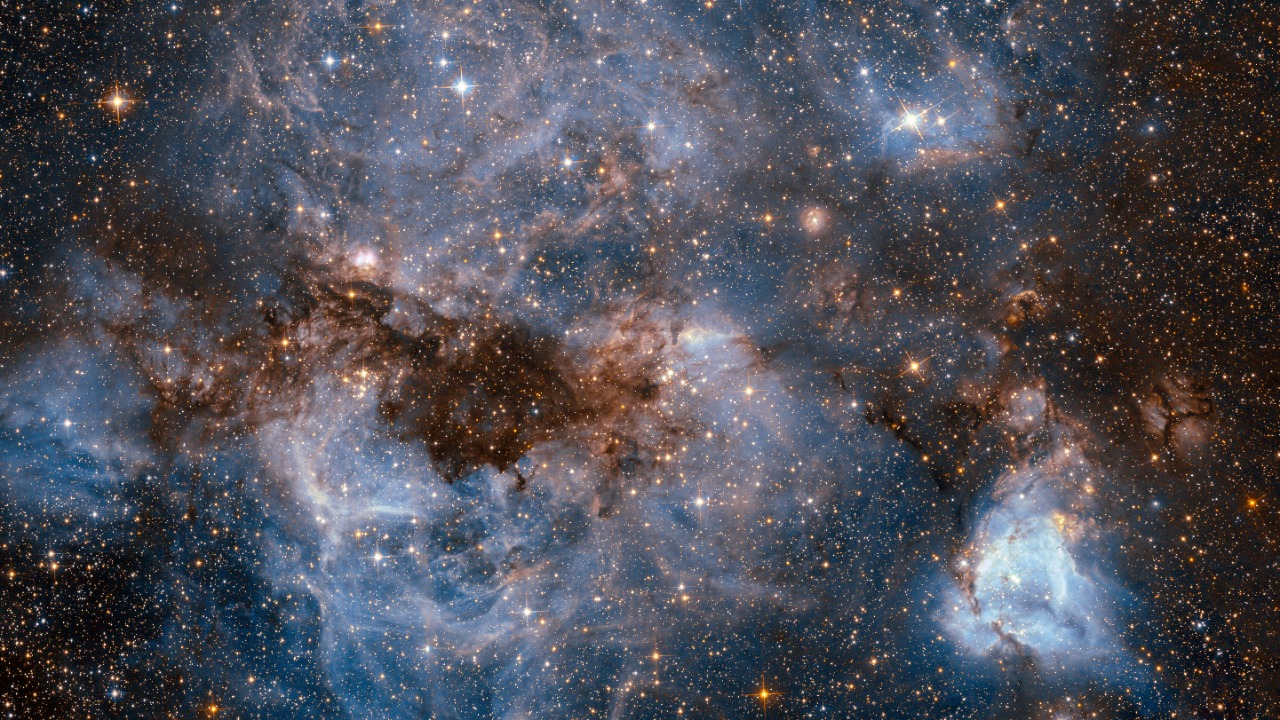
Space telescopes have played a crucial role in observing Jupiter, each offering unique capabilities that enhance our understanding of the planet. The Hubble Space Telescope and the Juno spacecraft are two key players in this arena. Hubble, with its position above Earth’s atmosphere, captures high-resolution images and a broad spectrum of light, including visible, ultraviolet, and near-infrared wavelengths. This allows scientists to observe Jupiter’s clouds and storms with unparalleled clarity. Meanwhile, Juno, which orbits Jupiter, provides close-up images and data on the planet’s magnetic field and gravitational pull, offering a different but complementary perspective.
Technological advancements have significantly improved the resolution and data collection capabilities of these telescopes. Innovations such as adaptive optics and advanced imaging sensors allow for sharper images and more precise measurements of Jupiter’s atmospheric conditions. These tools enable scientists to study the planet’s weather patterns with greater detail than ever before. The collaboration between various space agencies and observatories, including NASA and the European Space Agency, facilitates these detailed observations. This partnership exemplifies how collaborative efforts and shared resources can push the boundaries of what we know about the universe.
Unveiling Jupiter’s Storms
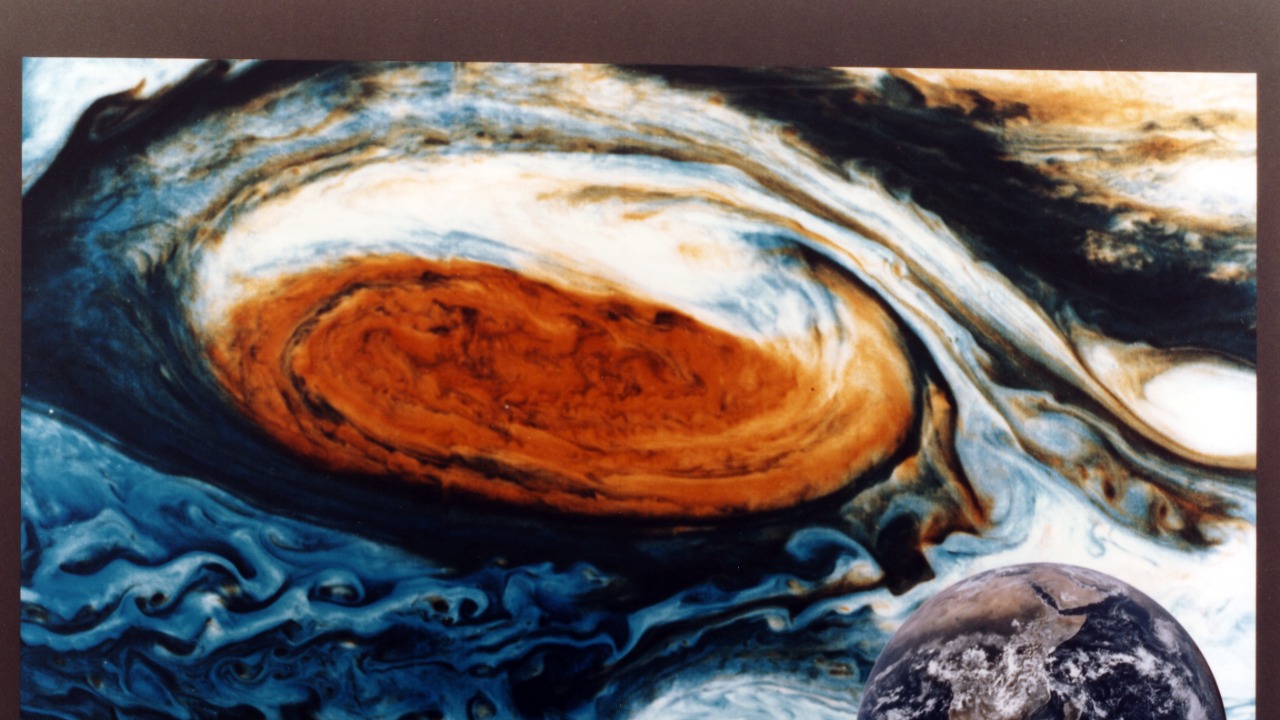
The newly captured images of Jupiter reveal stunning details of the planet’s storms, showcasing their immense size, intricate structures, and vibrant color variations. The Great Red Spot, a colossal storm larger than Earth, has been a focal point of these observations. Recent images suggest that the Great Red Spot may be shrinking, a phenomenon that scientists are closely monitoring to understand its implications for Jupiter’s atmospheric dynamics. Additionally, other storm systems, such as the smaller but equally intriguing Oval BA, are also under scrutiny for potential changes over time.
Ultraviolet imaging has been instrumental in uncovering hidden details about these storms’ composition and behavior. By capturing light beyond the visible spectrum, ultraviolet images reveal the distribution of various chemicals and particles within the clouds. This information helps scientists decipher the complex interactions between Jupiter’s atmosphere and its magnetic field. A recent ultraviolet image from Hubble provided unprecedented insights into the storms’ dynamics, offering clues about the processes that drive their formation and evolution.
Scientific Insights and Implications

The detailed observations of Jupiter’s storms contribute significantly to our understanding of atmospheric dynamics and weather patterns on gas giants. By analyzing these storms, scientists gain insights into the processes that govern the behavior of Jupiter’s atmosphere, including convection, turbulence, and the interaction between different atmospheric layers. This knowledge not only enhances our comprehension of Jupiter but also provides valuable analogs for studying other gas giants, both within our solar system and beyond.
Jupiter’s storms play a vital role in shaping the planet’s overall climate and magnetic field. The intense energy and dynamics of these storms influence the distribution of heat and gases across the planet, affecting its weather systems and climate patterns. Understanding these interactions is crucial for building comprehensive models of Jupiter’s atmosphere. Moreover, the study of Jupiter’s storms has broader implications for planetary science, particularly in the context of exoplanets with similar atmospheric conditions. By drawing parallels between Jupiter and these distant worlds, scientists can refine their models and predictions about the behavior of planets beyond our solar system.
Challenges and Future Prospects
Despite the remarkable progress made in observing Jupiter’s atmosphere, there are still limitations and challenges to overcome. The vast distance between Earth and Jupiter presents significant obstacles in capturing high-resolution images and accurate data. Additionally, Jupiter’s dynamic and ever-changing atmosphere requires continuous monitoring to capture the full spectrum of its weather phenomena. Analyzing the complex interactions within the planet’s atmosphere also poses challenges, requiring sophisticated models and simulations to interpret the data accurately.
Future missions and technological advancements hold promise for further exploring Jupiter and its storms. Upcoming missions, such as the European Space Agency’s JUICE (Jupiter Icy Moons Explorer), aim to study Jupiter’s atmosphere and its moons in greater detail. These missions, combined with advancements in telescope technology, will provide new opportunities to unravel the mysteries of Jupiter’s weather systems. The findings from these missions have the potential to inspire new research questions and exploration strategies, driving the field of planetary science forward.
Public Engagement and Interest

The groundbreaking images of Jupiter’s storms have captured the public’s imagination, sparking interest and awareness in planetary science and space exploration. These stunning visuals offer a glimpse into the dynamic and awe-inspiring nature of our solar system’s largest planet, inspiring curiosity and wonder. Educational initiatives and media coverage play a crucial role in translating these scientific findings for a broader audience, making complex scientific concepts accessible and engaging.
The impact of these discoveries extends beyond the realm of science, inspiring future generations to pursue careers in science and technology. By showcasing the wonders of space and the possibilities of exploration, these images serve as a powerful tool for fostering interest in STEM fields. Events such as public viewings of Jupiter, like the one described in a recent article, further enhance public engagement by providing opportunities for people to connect with the cosmos and appreciate the beauty and complexity of our universe.
