Antimatter, the elusive counterpart to the matter that makes up everything around us, has intrigued scientists for decades. Recent breakthroughs have begun to unravel the mysteries surrounding antimatter, offering potential insights into the fundamental nature of our universe. Delving into the latest discoveries and implications, one finds a fascinating blend of science and technology.
The Nature of Antimatter
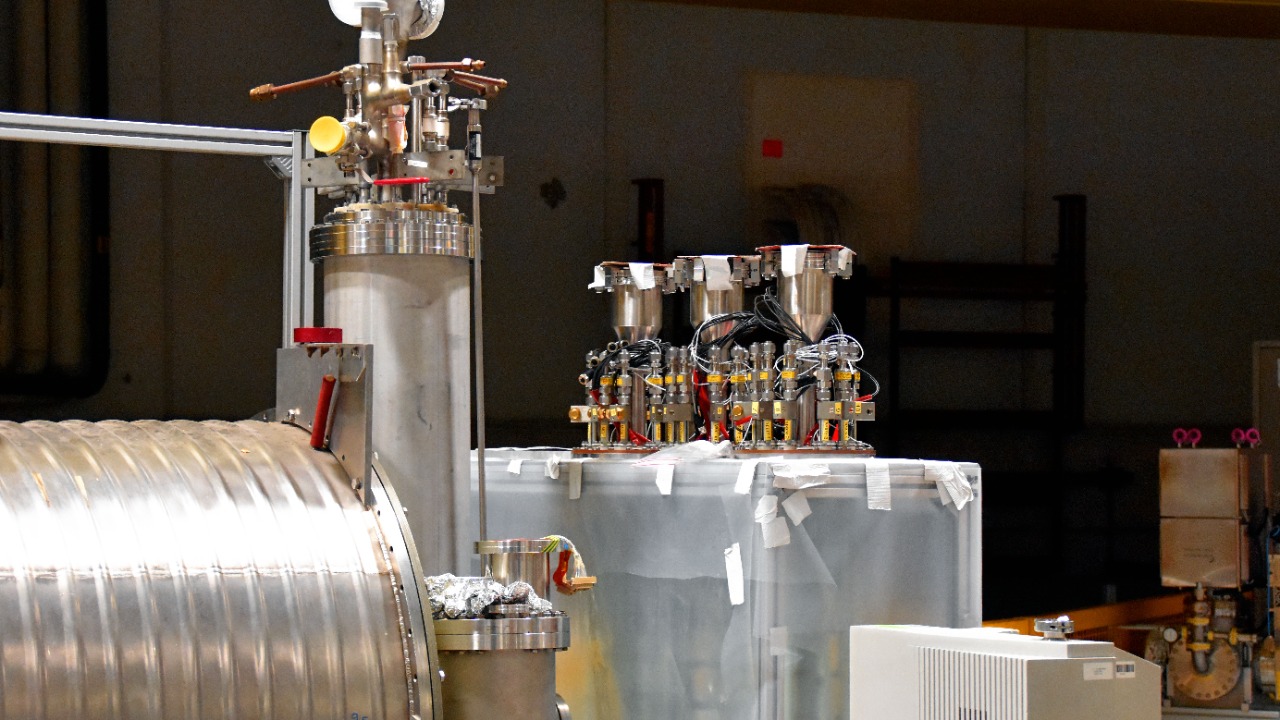
Antimatter, first conceptualized by physicist Paul Dirac in 1928, is the counterpart to regular matter. Each particle of matter has an equivalent antiparticle with the same mass but opposite charge. This revolutionary idea was confirmed with the discovery of the positron, the antimatter equivalent of the electron, in 1932 by Carl Anderson. Antimatter and matter annihilate upon contact, releasing vast amounts of energy, a property that has intrigued scientists for its potential applications and insights into cosmic origins.
The apparent scarcity of antimatter in the universe poses one of the greatest mysteries in astrophysics. According to the Big Bang theory, matter and antimatter should have been created in equal amounts. However, our universe appears overwhelmingly composed of matter. This imbalance, known as baryon asymmetry, has prompted theories ranging from the role of CP violation to the existence of parallel universes where antimatter dominates.
Particle accelerators like those at CERN are pivotal in antimatter research. These facilities recreate the high-energy conditions of the early universe, enabling scientists to study particle interactions and properties. The Large Hadron Collider (LHC), for instance, has been instrumental in producing and observing antimatter particles, enhancing our understanding of fundamental forces and particles in the cosmos.
Breakthroughs in Antimatter Research
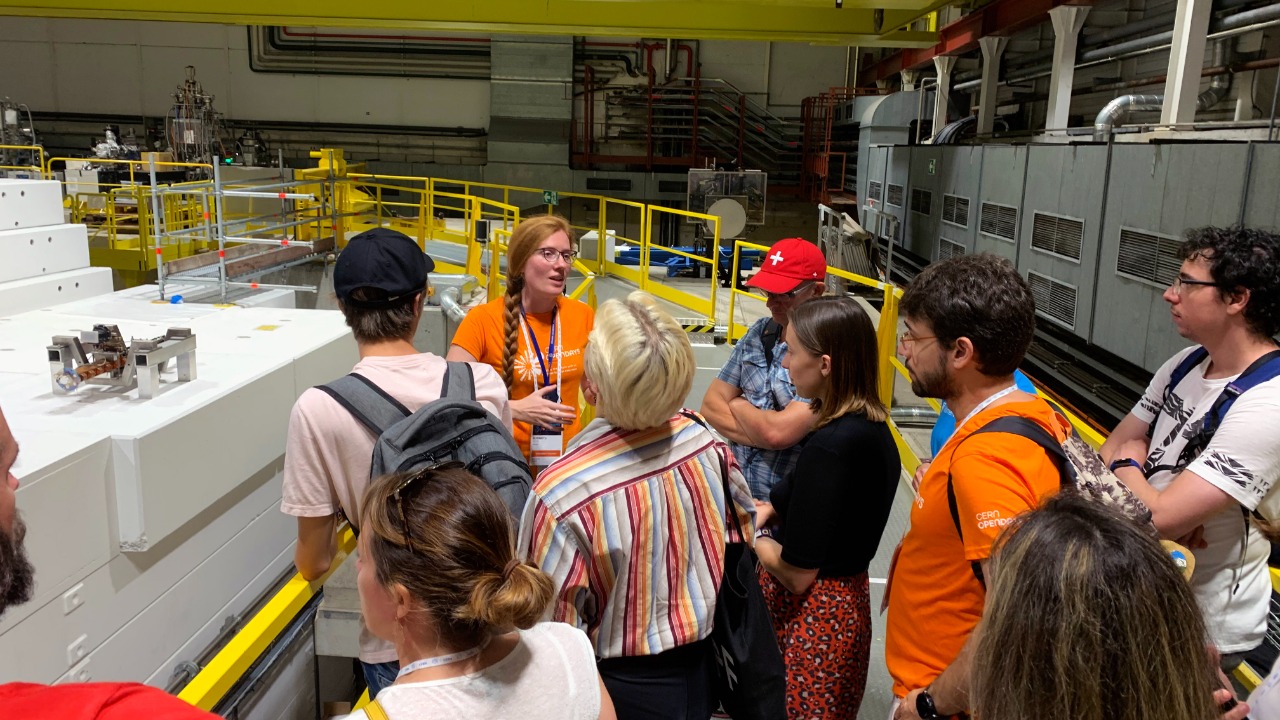
Recent experiments have made significant strides in uncovering the properties of antimatter. At CERN, researchers have focused on measuring the charge-to-mass ratio of antiprotons and comparing them to protons, a task crucial for understanding the fundamental symmetries of the universe. Such experiments have shown that, despite the vast differences in abundance, matter and antimatter behave remarkably similarly under gravity and electromagnetic forces.
One of the most groundbreaking areas of study is CP symmetry, which explores the differences in behavior between particles and antiparticles. Findings suggest slight deviations that could explain the matter-antimatter imbalance. These studies, which delve into the subatomic world, provide clues to the universe’s earliest moments and why matter prevailed over antimatter.
Neutrino physics also plays a vital role in understanding antimatter. Neutrinos, elusive particles that rarely interact with matter, could hold the key to why antimatter is so scarce. Experiments like the Tokai to Kamioka (T2K) in Japan are investigating whether neutrinos and antineutrinos behave differently, which could offer insights into the fundamental asymmetries of the universe. More on this can be found in the Innovation News Network.
Applications and Implications of Antimatter

Antimatter’s unique properties offer exciting possibilities for medical applications. Positron Emission Tomography (PET) scans, which utilize positrons, are already a crucial tool in medical imaging, providing detailed insights into metabolic processes and aiding in the diagnosis of conditions like cancer. Future developments could enhance these technologies, offering more precise and less invasive diagnostic options.
In the realm of energy and propulsion, antimatter holds tantalizing possibilities. Theoretically, antimatter-matter annihilation could produce immense energy, far exceeding that of nuclear reactions. This potential makes antimatter an attractive, albeit challenging, candidate for space propulsion, promising faster interstellar travel. However, the production and storage of antimatter remain significant hurdles.
Current research, such as studies on large-scale antimatter production, highlights both the explosive potential and the technological challenges involved, as detailed in this ResearchGate article.
With these advancements come questions of safety and ethics. The potential for using antimatter in weapons makes its research a subject of international scrutiny. Moreover, the ethical considerations of investing heavily in antimatter research while other pressing global issues demand attention cannot be ignored. Balancing scientific curiosity with practical and moral responsibilities is critical as we advance in this field.
Future Directions in Antimatter Research
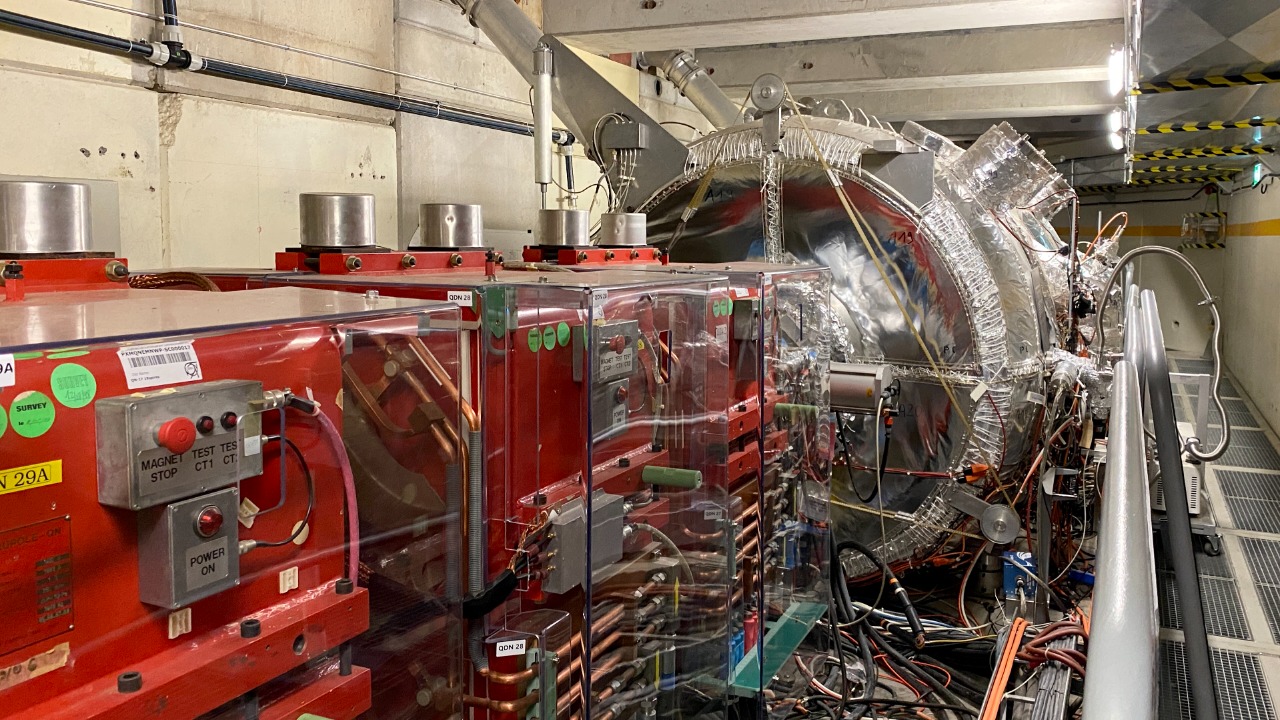
The future of antimatter research is marked by ambitious experiments and international collaborations. Projects like the Antiproton Decelerator at CERN aim to refine our understanding of antimatter’s properties, while collaborations with institutions worldwide seek to develop new experimental techniques. These endeavors promise to deepen our comprehension of the universe’s fundamental laws and the forces that govern them.
Theoretical advancements are equally promising, with emerging theories challenging our current understanding of physics. Concepts such as supersymmetry and string theory propose new frameworks for understanding antimatter and its role in the universe. These ideas, though still speculative, have the potential to revolutionize our grasp of the cosmos.
Long-term goals in antimatter research are both profound and practical. Scientists aim to unveil the mysteries of the universe’s formation and the moments following the Big Bang. Moreover, the pursuit of new technologies, from advanced medical applications to groundbreaking energy solutions, continues to drive research forward. For those intrigued by the cosmic dance of matter and antimatter, the journey promises to be as enlightening as it is exciting, as outlined in this World Wide Journal of Physics.
