The scientific and technological community is abuzz with the unveiling of a new room-temperature superconductor. This pivotal discovery holds the potential to revolutionize a myriad of industries, paving the way for advancements in energy storage, transportation, and computing.
Understanding the Basics of Superconductivity
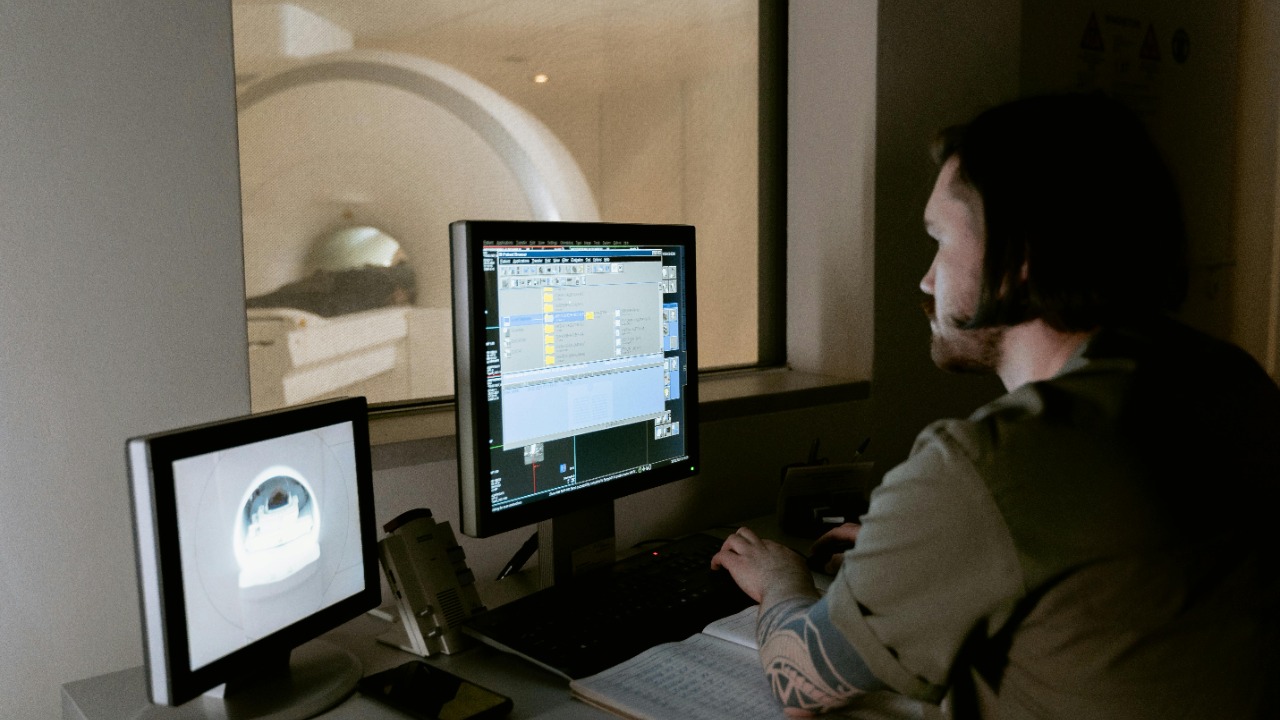
Superconductors are materials that can conduct electricity without resistance, making them incredibly efficient. They are crucial in various applications, from magnetic resonance imaging (MRI) machines to particle accelerators. However, one of the major challenges with superconductors is that they typically require extremely low temperatures to function, often close to absolute zero (-273.15°C or -459.67°F). This requirement has been a significant barrier to their widespread use.
However, the recent discovery of a room-temperature superconductor promises to overcome this hurdle. This new material differs from its predecessors in that it can exhibit superconductivity at temperatures that are easily achievable in everyday environments. This breakthrough is largely attributed to the application of the ‘unified theory’ in the research process.
Unveiling the New Room-Temperature Superconductor

The new room-temperature superconductor is a game-changer in the field of materials science. Unlike previous superconductors, this material does not require extreme cooling to exhibit zero electrical resistance. The research and experiments leading to this discovery were underpinned by the ‘unified theory’, a concept that has been instrumental in revealing more superconducting materials. This theory has opened up new avenues in the study of superconductivity, enabling scientists to explore materials that were previously overlooked.
Key to this discovery was the use of innovative techniques that allowed researchers to probe the hidden properties of high-temperature superconductors. One such technique was the ‘tunneling technique’, which was crucial in revealing these properties. This technique has been a significant tool in the arsenal of researchers studying superconductivity.
Techniques Used in Discovering the Room-Temperature Superconductor

The ‘tunneling technique’ has been instrumental in the discovery of the room-temperature superconductor. This method involves applying a voltage to a superconductor and observing how electrons ‘tunnel’ through the energy barrier. This process has been pivotal in revealing the hidden properties of high-temperature superconductors.
Another key experiment that contributed to this discovery was the ‘twisted crystals’ experiment. This experiment showed hints of a new kind of superconductivity, providing valuable insights that guided the research towards the development of the room-temperature superconductor. The twisted crystals experiment has thus been a cornerstone in the journey towards this groundbreaking discovery.
The Potential Impact of Room-Temperature Superconductors

The potential applications of room-temperature superconductors are vast and transformative. They could revolutionize energy storage, making it more efficient and sustainable. In transportation, they could lead to the development of faster and more energy-efficient vehicles. In computing, they could pave the way for faster and more powerful processors.
This discovery could significantly impact the future of energy. With the ability to conduct electricity without resistance at room temperature, these superconductors could lead to more efficient and sustainable energy systems. The future of energy could be reshaped by this advancement, unlocking a new era of sustainability and efficiency.
Future Directions for Superconductor Research

While the discovery of a room-temperature superconductor is a significant milestone, the quest for even higher temperature superconductors continues. Researchers are optimistic that the unified theory and innovative techniques like the tunneling technique and twisted crystals experiment will continue to guide this quest.
Another area of focus in superconductor research is the role of fundamental constants. These constants, which include the speed of light and the charge of an electron, have been found to unlock the potential for room-temperature superconductors. New research has revealed that a deeper understanding of these constants could lead to the discovery of more room-temperature superconductors, opening up exciting possibilities for the future of this field.
