A team of dedicated scientists is currently exploring the potential of nuclear-powered rockets as a means to transport astronauts to Mars. This innovative approach could revolutionize space travel and bring us closer to the Red Planet than ever before.
Nuclear-Powered Rockets: A Potential Game Changer

Nuclear-powered rockets operate by using nuclear reactions to generate heat, which is then expelled through a nozzle to create thrust. This method of propulsion is significantly more efficient than traditional chemical rockets, potentially allowing for faster and more efficient space travel. The use of nuclear propulsion could drastically reduce the travel time to Mars, making manned missions to the planet more feasible.
Furthermore, the impact of nuclear-powered rockets on future Mars missions could be monumental. By reducing the travel time, astronauts would be exposed to less cosmic radiation, one of the main health risks of long-duration space travel. This could also allow for more frequent and longer missions, opening up new possibilities for exploration and research on Mars. source
In addition to the benefits for manned missions, nuclear-powered rockets could also revolutionize unmanned space exploration. The increased efficiency and speed could allow for more ambitious missions, such as sending probes to the outer planets or even beyond our solar system. This could provide invaluable data about the universe and further our understanding of space. source
The Scientists Behind the Vision
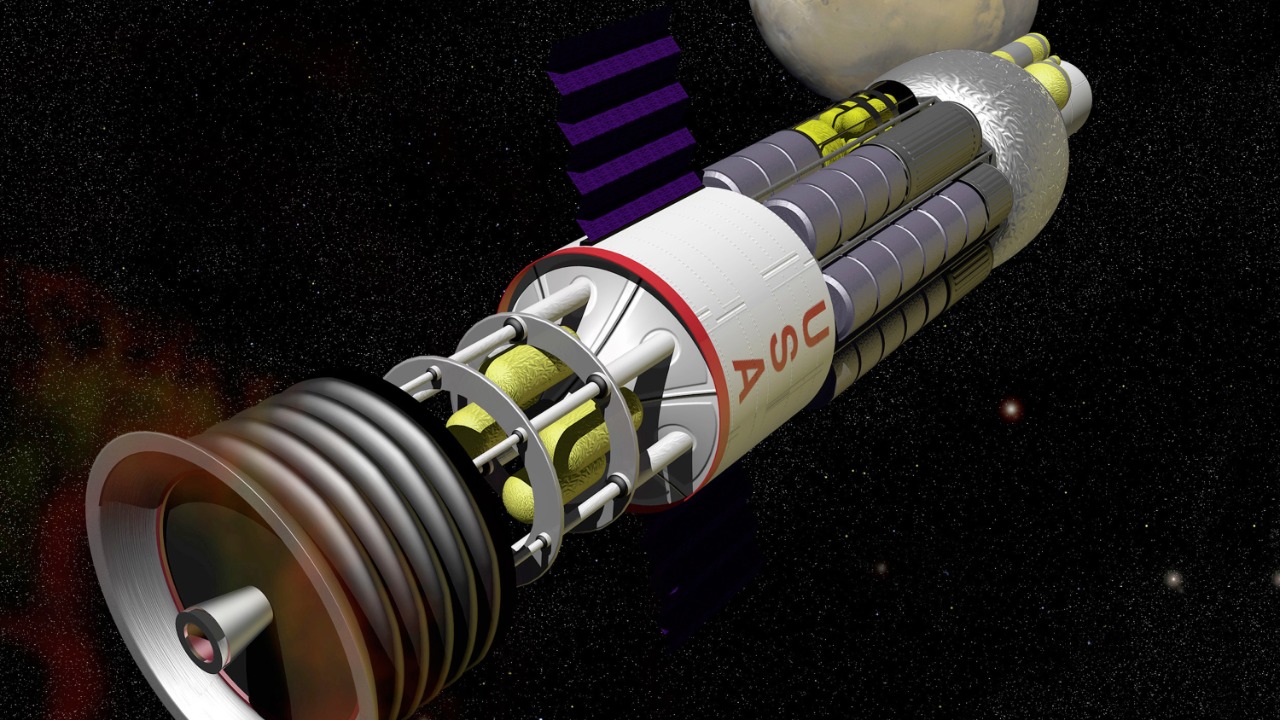
The team of scientists working on this project come from diverse backgrounds and disciplines, but they all share a common vision for the future of space travel. Their research so far has focused on the technical feasibility of nuclear propulsion, and they have made significant strides in this area. However, much work remains to be done before nuclear-powered rockets can become a reality.
The scientists’ vision for the future of space travel is one where distances within our solar system are no longer prohibitive. With nuclear propulsion, missions to Mars and beyond could become routine, opening up a new era of space exploration. source
Among the team of scientists, there are experts in nuclear physics, materials science, and aerospace engineering. Their combined expertise is crucial in tackling the complex challenges of nuclear propulsion. They are not only working on the technical aspects but also considering the ethical and environmental implications of their work. Their commitment to safety and sustainability is as strong as their commitment to innovation. source
Challenges and Hurdles

Despite the potential benefits, there are significant challenges involved in developing nuclear-powered rockets. These include technical hurdles such as the need for advanced materials to withstand the intense heat generated by nuclear reactions, as well as the challenge of miniaturizing a nuclear reactor to fit on a rocket.
There are also potential risks and safety concerns associated with nuclear propulsion. These include the risk of a nuclear accident during launch or in space, as well as the challenge of safely disposing of spent nuclear fuel. However, the scientists are taking these concerns seriously and are working on solutions to mitigate these risks. source
Another significant challenge is the regulatory and political landscape. The use of nuclear power in space is a contentious issue, with many legal and international treaties to consider. The team is actively engaging with policymakers and the public to address these concerns and ensure that their work is conducted in a responsible and transparent manner. Despite these challenges, the potential benefits of nuclear propulsion for space travel make it a worthwhile endeavor. source
