In a groundbreaking scientific achievement, researchers have successfully created a new phase of matter known as time crystals, which fascinatingly exhibit behaviors akin to perpetual motion. We will delve into the intricacies of these enigmatic time crystals, their formation, potential applications, and the controversies surrounding them.
Understanding Time Crystals

Time crystals are a unique phase of matter that exhibit a phenomenon known as time-translation symmetry breaking. Unlike conventional crystals, like a diamond or quartz, that repeat their structure in space, time crystals repeat their structure in time, leading to a constant oscillation without energy. This concept challenges conventional physics principles which are typically centered around equilibrium dynamics and energy conservation.
The concept of time crystals was first proposed by Nobel laureate Frank Wilczek in 2012. Wilczek suggested that it might be possible to create a structure that moves in time perpetually, in its ground state, thereby breaking time-translation symmetry. However, this idea was met with skepticism, as it seemed to challenge the fundamental laws of physics.
Creation of Time Crystals
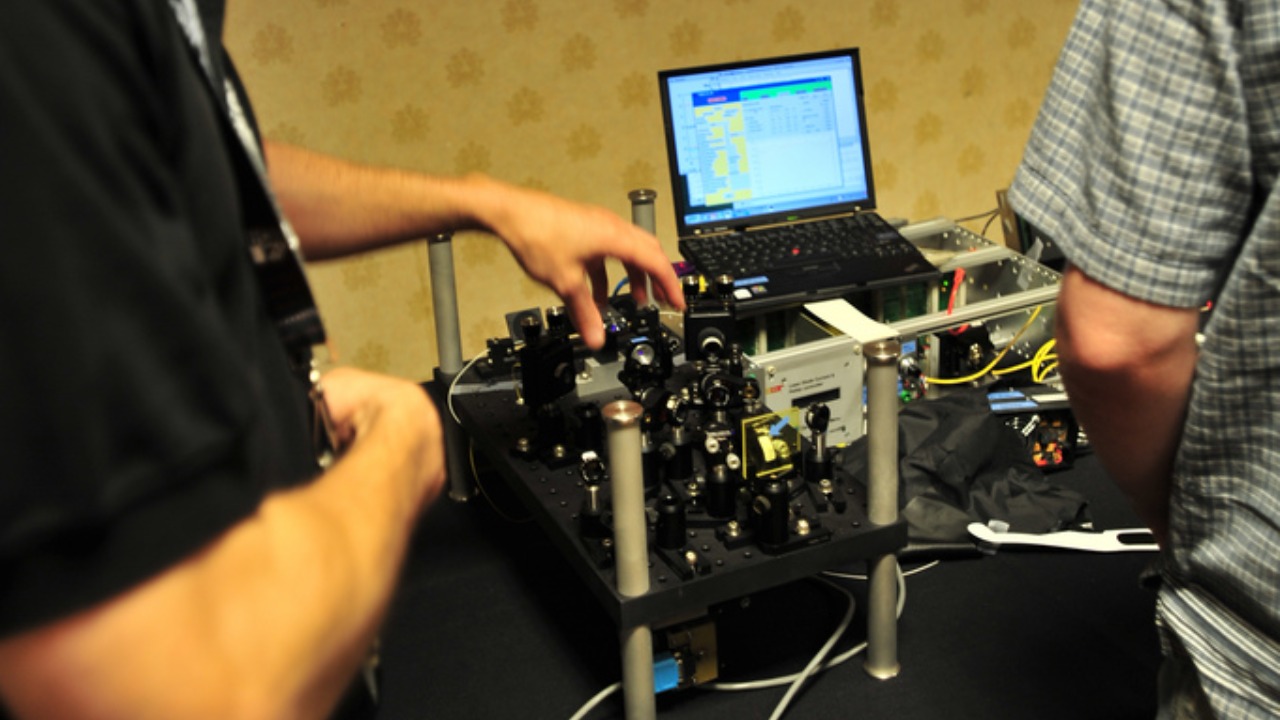
Creating time crystals is no simple feat. It requires a delicate interplay of quantum entanglement and superconducting qubits. Quantum entanglement, a phenomenon where particles become interconnected, and the state of one instantly influences the state of the other, regardless of the distance separating them, plays a critical role in maintaining the coherence of time crystals. Meanwhile, superconducting qubits serve as the foundation on which these crystals are formed.
The process of creating time crystals has been fraught with challenges. Researchers had to carefully calibrate the qubits to ensure they were in the correct state. Despite these obstacles, scientists from Google’s Quantum AI lab were successful in creating time crystals in their lab, marking a significant breakthrough in this field.
Perpetual Motion-Like Behavior Explained

Perpetual motion is a concept that has intrigued scientists for centuries. It refers to the continuous operation of a machine indefinitely without an input of energy. However, such a machine would violate the first and second laws of thermodynamics, making it impossible to create in practice.
Despite this, time crystals exhibit a form of perpetual motion. They oscillate between different states indefinitely without any energy input, a phenomenon that has been described as ‘time-translation symmetry breaking’. However, it’s crucial to understand that this does not violate the laws of thermodynamics. These crystals are not a closed system – they require a periodic driving force to maintain their oscillation. Therefore, they do not create energy but rather dissipate it over time.
Potential Applications of Time Crystals
The unusual properties of time crystals hold promise for future technologies, particularly in the realm of quantum computing. Their ability to maintain coherence over extended periods could potentially improve the stability and performance of quantum computers, which currently suffer from issues related to qubit instability.
Beyond quantum computing, time crystals could also contribute to advancements in other technologies. For example, their unique properties could be utilized for more efficient energy storage systems. While these applications are largely speculative at this stage, they represent exciting possibilities for future research and development.
The Controversy Surrounding Time Crystals

Despite the potential applications and the successful creation of time crystals in the lab, the concept is not without controversy. Some scientists in the community regard time crystals as a theoretical curiosity rather than a practical reality. Critics argue that the broken time-translation symmetry observed in these crystals is merely a result of the external driving force rather than an intrinsic property of the crystal itself.
Nevertheless, research into time crystals is ongoing, with several experiments conducted to validate their existence and properties. The results of these experiments could have profound implications for our understanding of physics and the nature of the universe. As with any groundbreaking scientific discovery, only time will tell how the story of time crystals will unfold.
