The Su-34 Fullback, Russia’s advanced fighter-bomber, has a combat history that spans from successful deployments in Syria to significant attrition in the ongoing conflict in Ukraine. Designed for precision strikes and long-range operations, the aircraft demonstrated its effectiveness in supporting ground forces against ISIS targets in Syria. However, in Ukraine, the Su-34 has faced considerable losses due to Ukrainian air defenses, with at least 20 downed since February 2022. This evolution from Syrian successes to Ukrainian challenges underscores the Su-34’s role in modern Russian air power and prompts a detailed exploration of its capabilities and operational record.
Origins and Design of the Su-34 Fullback
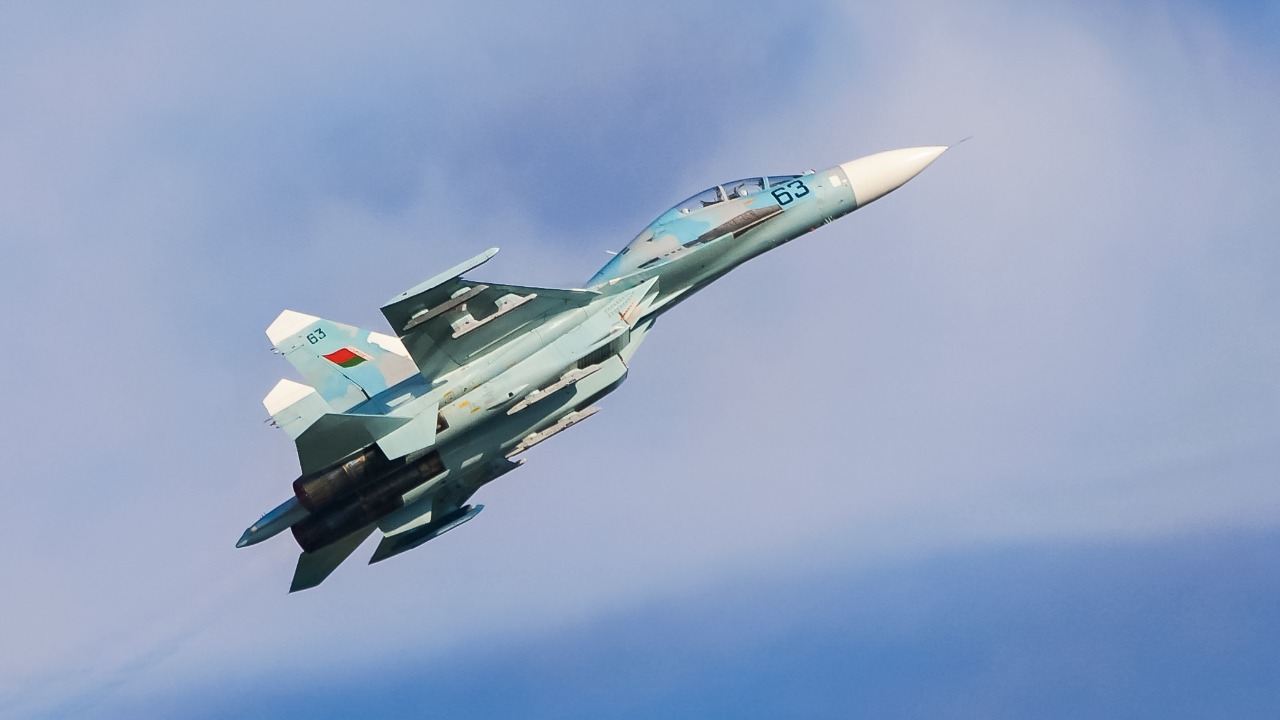
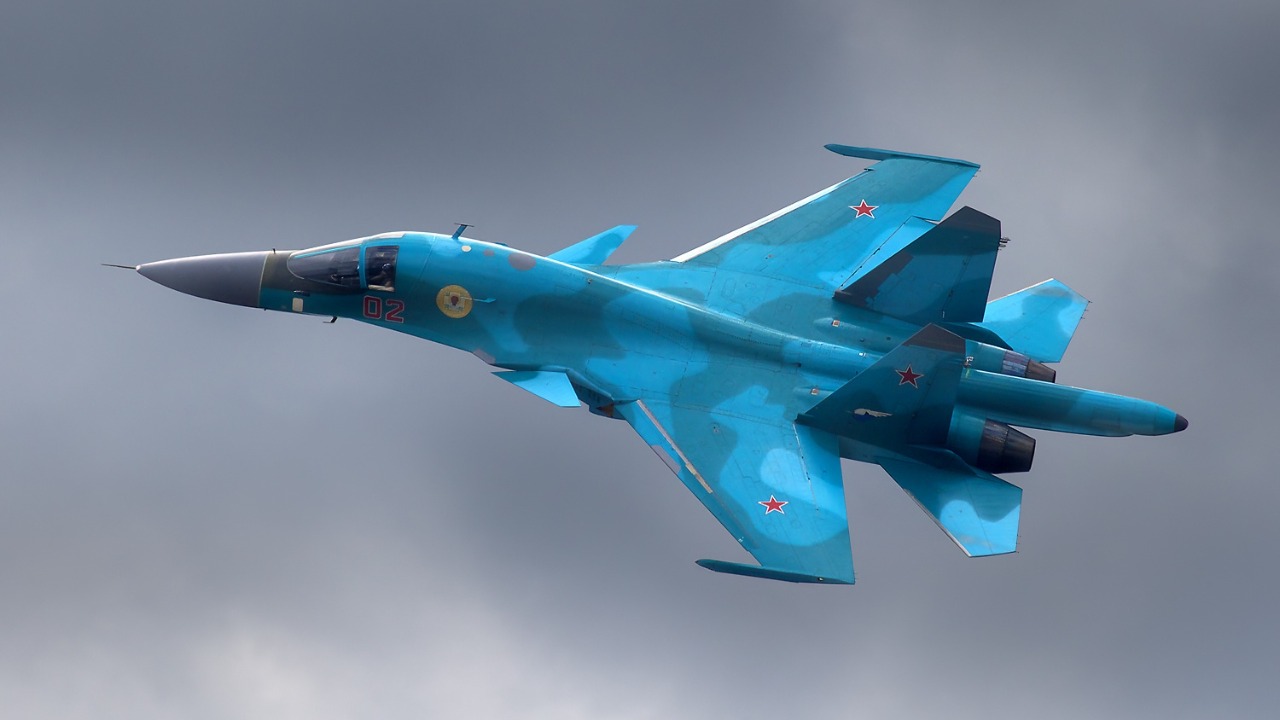
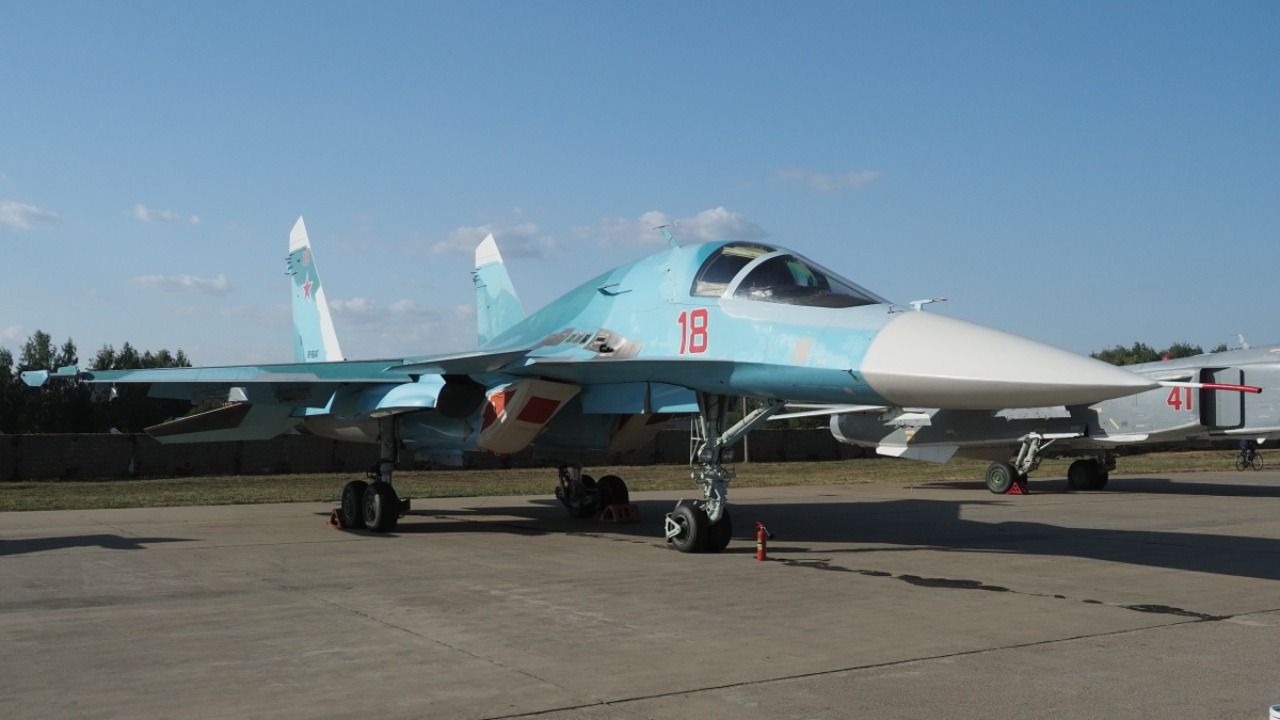
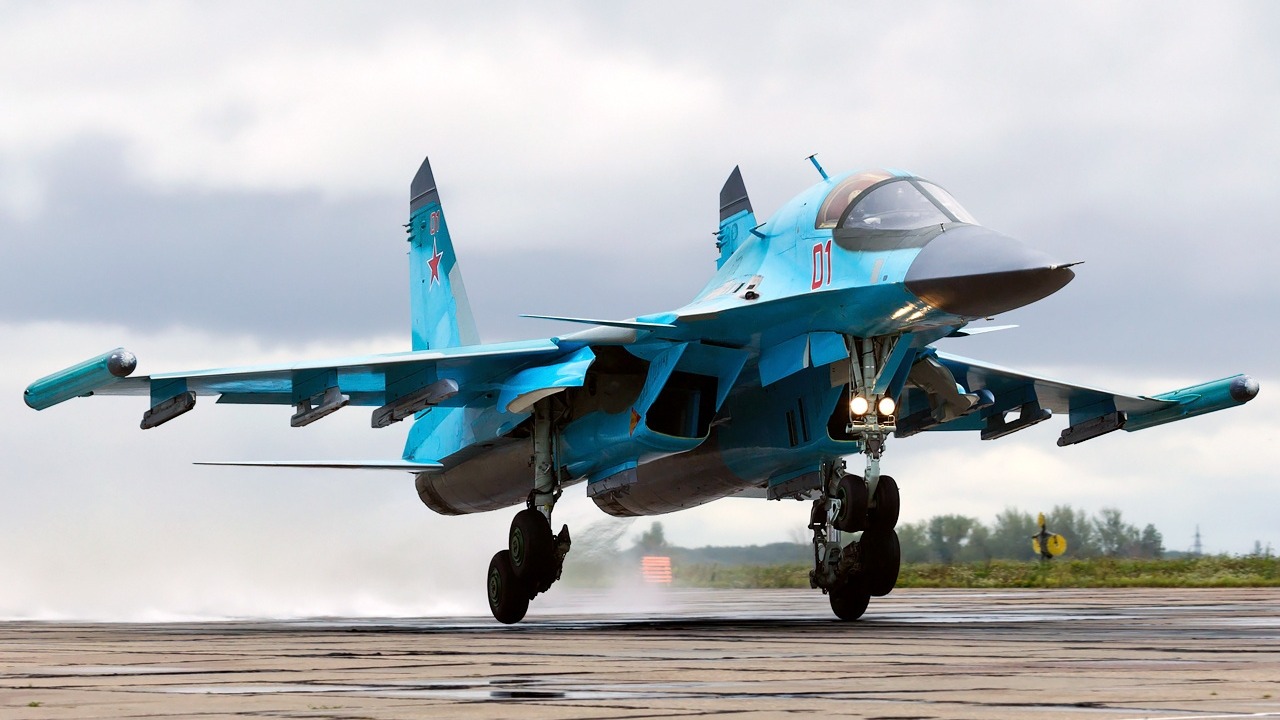
The Su-34 Fullback, a derivative of the Su-27, entered service with the Russian Air Force in 2014. Its design emphasizes a twin-engine configuration, an armored cockpit, and a payload capacity of up to 12,000 kg for bombs and missiles. The aircraft boasts key technical specifications, including a maximum speed of Mach 1.8, a combat radius of 1,100 km, and advanced avionics like the Kopyo radar for all-weather operations.
Designed for low-level penetration bombing, the Su-34 features side-by-side seating for the pilot and navigator. It also integrates precision-guided munitions like the Kh-29 and KAB-500, further enhancing its capabilities for precision strikes.
Initial Deployment and Syrian Campaign
The Su-34’s first major combat use was in Syria, starting in September 2015. From bases like Khmeimim Air Base, the aircraft conducted over 1,600 sorties, targeting ISIS and rebel positions. Specific missions included strikes on oil facilities in Deir ez-Zor and support for Syrian Army advances in Latakia province, showcasing the aircraft’s ability to deliver unguided bombs from standoff distances.
The Su-34 played a significant role in integrated operations with Su-25s and Tu-22M3s, contributing to Russia’s air campaign that helped regain control of key cities by 2016.
Tactical Successes in the Syrian Theater
In Syria, the Su-34 proved effective in close air support. It destroyed militant convoys near Homs using TV-guided bombs, minimizing collateral damage in urban environments. The aircraft also demonstrated endurance in long-duration patrols, enabling 8-10 hour missions with in-flight refueling, which proved vital during the 2016 Palmyra offensive.
Losses in Syria were minimal, with only one confirmed Su-34 downed by rebels in 2018 near Idlib. This can be attributed to its electronic warfare suite and low-altitude flying tactics.
Transition to the Ukraine Conflict
Following the February 24, 2022 invasion, the Su-34 was redeployed to Ukraine. Initially, it was used for deep strikes on Ukrainian infrastructure in Kyiv and Lviv regions. The new theater required adaptations, including increased reliance on glide bombs like the FAB-500 to counter enhanced Ukrainian air defenses from S-300 systems.
There was an escalation in sortie rates, with Russian forces flying up to 50 Su-34 missions daily in eastern Ukraine by mid-2023 to support advances near Bakhmut.
Attrition and Losses in Ukraine
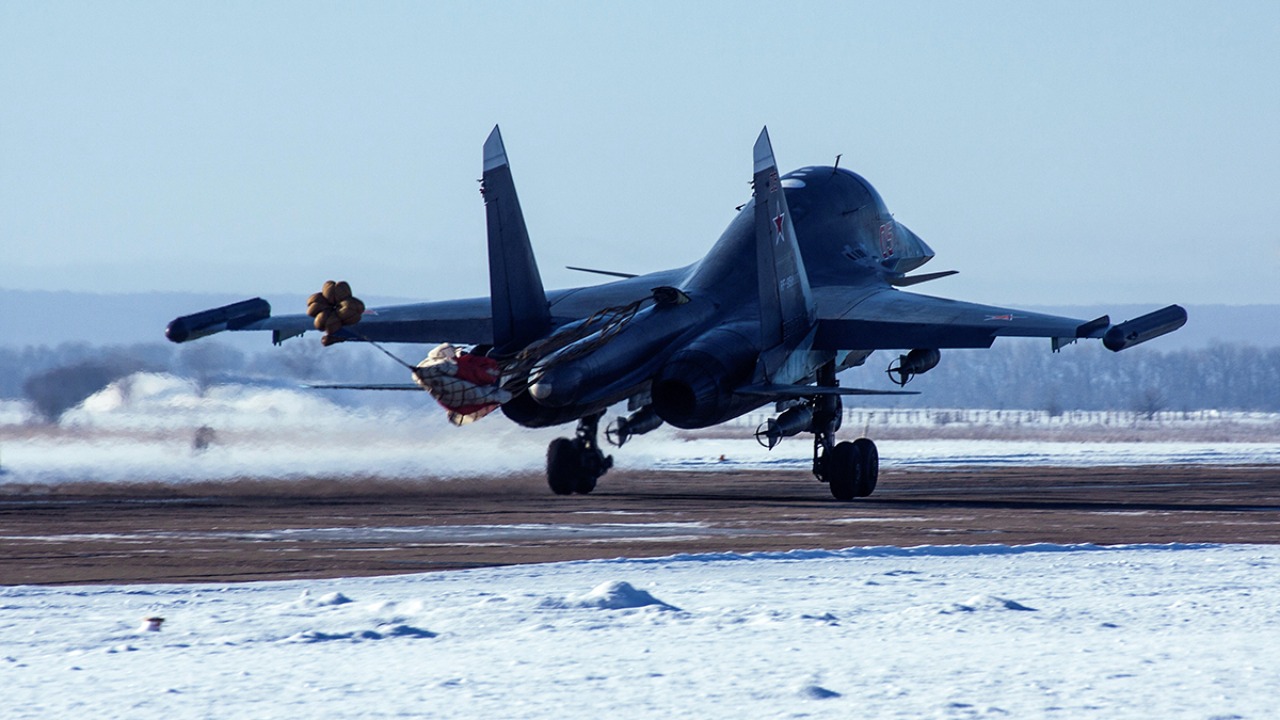
Reports indicate significant Su-34 losses in Ukraine. Two aircraft were downed by Ukrainian MANPADS near Izyum in March 2022, and subsequent hits by Patriot missiles occurred in Dnipro region in May 2023. Approximately 25 Su-34s were lost by early 2024 out of a fleet of around 140, due to operations at altitudes vulnerable to Western-supplied systems like NASAMS.
Despite these losses, pilot survival rates were notable, with instances where ejection seats saved crews after strikes over Zaporizhzhia in late 2023.
Operational Challenges and Future Implications
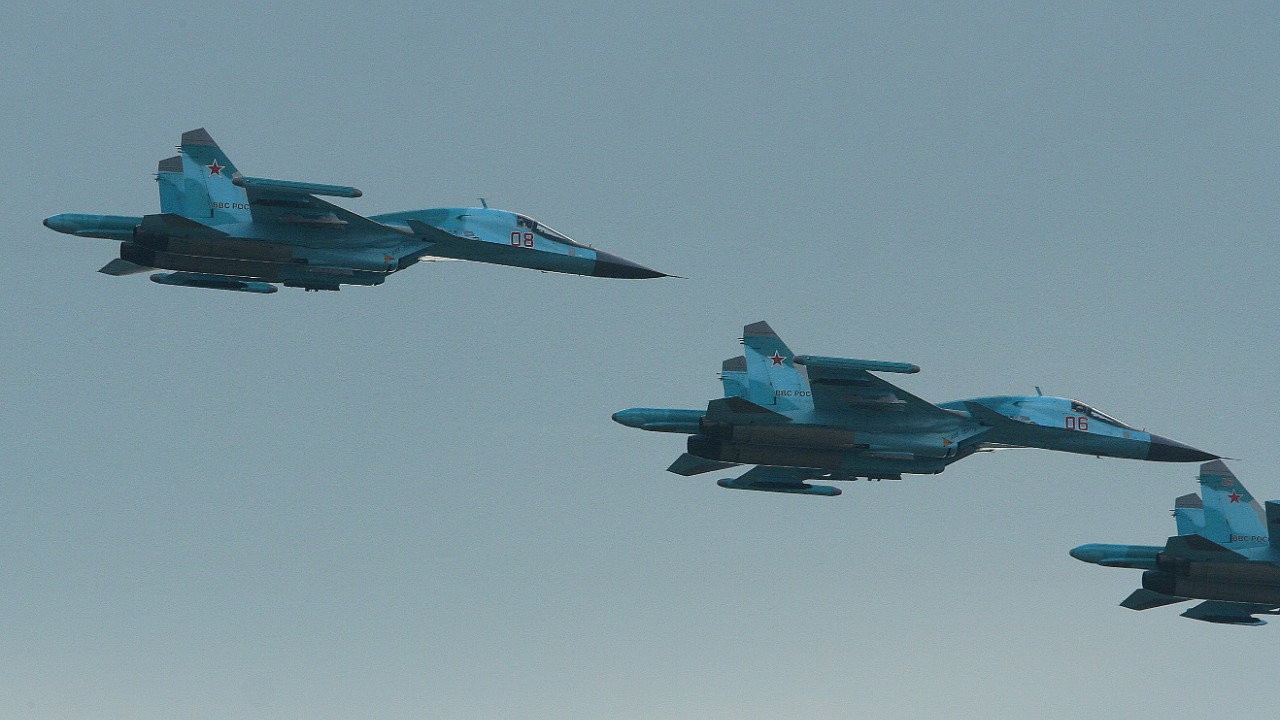
The Ukraine conflict exposed vulnerabilities in the Su-34, such as limited stealth features making the aircraft detectable by radar in contested airspace over Kherson and Mykolaiv. In response, Russia has implemented countermeasures like upgraded R-77 missiles and decoy flares, aimed at reducing attrition rates amid production delays at the Novosibirsk plant.
The high loss rate of the Su-34 has prompted shifts in Russian air strategy, with a move towards drone-assisted strikes and potential upgrades in the Su-34M variant. These developments highlight the ongoing evolution of the Su-34’s role in modern Russian air power.
