
Russia’s once-dominant human spaceflight program has been shaken by a self-inflicted disaster on the steppe and a failed attempt to claw back technological advantage from SpaceX. As a Soyuz crew headed safely for orbit, the launch complex beneath them partially tore itself apart, leaving Moscow suddenly short of a working pad to reach the International Space Station. At the same time, a covert push to copy SpaceX’s reusable rocket technology has collided with the reality that the United States is racing ahead with its own spy satellite network.
The Soyuz launch that wrecked the pad beneath it
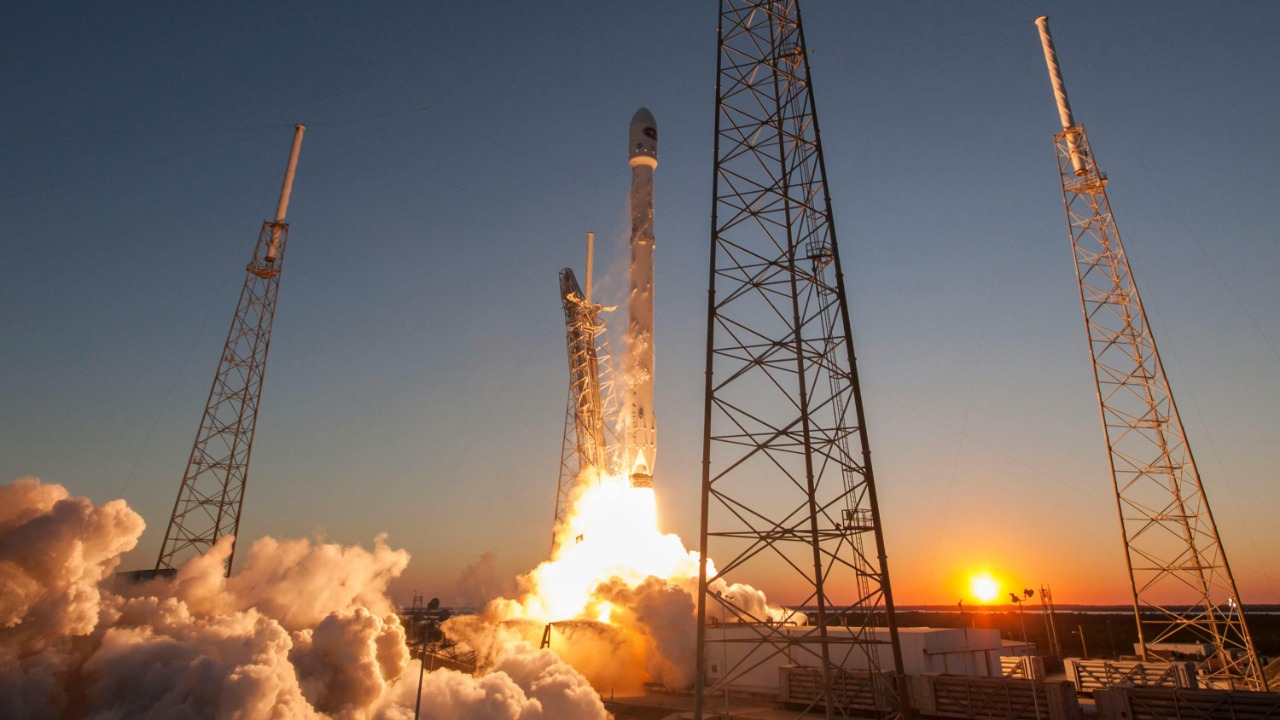
The humiliation began at Baikonur Cosmodrome, the historic Soviet-era gateway to space that Russia leases in Kazakhstan. During the Soyuz MS-28 mission, the rocket carrying a crew toward the International Space Station lifted off successfully, but the structure at Site 31/6 below it suffered serious damage as exhaust and debris ripped through key components, leaving Russia with what experts described as its only fully operational crew launch pad temporarily out of action. Engineers later identified a failure in launch pad components that should have retracted safely away from the rocket plume, turning a routine liftoff into a structural crisis.
Russian space agency Roscosmos acknowledged that the Baikonur Cosmodrome facility in Kazakhstan had sustained “significant damage,” even as it stressed that the crew was never in danger. The accident effectively sidelined the pad that handles Soyuz crews to orbit, a blow compounded by the fact that alternative sites are either inactive or not certified for emergency use. For a country that once prided itself on unbroken access to low Earth orbit, the image of a rocket rising triumphantly while the ground infrastructure crumpled beneath it captured a stark reversal of fortune.
Inside the failed hardware that brought Baikonur to a halt
What went wrong at Site 31/6 was not a dramatic explosion in the sky but a more mundane, and in some ways more damning, mechanical failure. A movable structure that should have been locked safely in its nook appears either to have been improperly secured or to have slipped its restraints as the Soyuz MS-28 engines ignited, according to technical reconstructions that describe how the However of the inspection revealed misaligned locks. Once the rocket’s exhaust hit that stray hardware, it turned into shrapnel that tore through concrete and steel, leaving engineers to choose between a lengthy rebuild or constructing an entirely new complex.
Russian officials have said an assessment of the launch complex is underway and that all parts needed for repair are available, but outside analysts note that Baikonur’s aging infrastructure has been patched repeatedly rather than modernized. Detailed accounts of the pad’s flame trench describe how a movable deflector is positioned under the rocket and then retracted into a hangar closed by doors shortly before liftoff, a sequence that, if mistimed, can be catastrophic, as radio operator notes about the system’s behavior Before launch make clear. The fact that such a basic safeguard appears to have failed suggests deeper problems in maintenance culture and oversight.
From “BAD NEWS” on the steppe to a strategic dead end
Russian commentators sympathetic to the program have not sugarcoated the scale of the setback. One widely shared analysis framed it as “BAD NEWS! Russia is in Biggest Trouble Ever after Launch Pad Damage,” describing how a key pad at Cosmo in Kazak was knocked offline and how the country suddenly faced the prospect of relying on foreign vehicles for crew access again, a scenario that had seemed unthinkable only a few years ago when Soyuz flights were the only ride to orbit. In that telling, the accident at Cosmo in Kazak was not just a technical mishap but a symbol of a broader slide from leadership to dependency.
The same commentary, amplified in follow up segments labeled BAD and NEWS, cast Russia as being in “Biggest Trouble Ever” over “Launch Pad Damage” and even floated the idea that SpaceX might eventually “Help” fill the gap. While that last notion remains speculative and unverified based on available sources, the rhetoric reflects a real anxiety: that a country which once sold seats on Soyuse spacecraft to NASA is now struggling to guarantee its own cosmonauts a reliable route to orbit.
Humiliation compounded by a SpaceX tech grab
The physical destruction at Baikonur was only the first half of what one video report called a humiliating “one two punch.” In the aftermath, Russia was accused of trying to steal SpaceX technology, specifically the know how behind reusable boosters that land vertically and can be flown again. According to that account, Russian actors sought to obtain proprietary SpaceX data, a move that, if confirmed, would underline how far behind Moscow now finds itself in the commercial-style innovation race.
The same reporting describes how Russia “blew up its own launchpad then tried stealing SpaceX tech,” a sequence that made an already bad situation “even worse.” Another segment on the same incident notes that Russia suffered that “humiliating one two punch” after a major Soyuz launchpad accident crippled its ability to send crews to the station. Unverified based on available sources is whether any of the alleged espionage attempts yielded useful data, but the very need to chase SpaceX’s lead underscores how the balance of power has shifted.
NASA, Dragon and the shrinking leverage of Soyuz
For NASA, the Baikonur accident was a reminder of why it invested so heavily in commercial crew vehicles. In August 2025, NASA and SpaceX successfully tested a minimum lifeboat scenario in which just one crew Dragon docked to the station could evacuate all seven crew members in an emergency, proving that the United States no longer needed Soyuz seats as a safety valve. When a Russian cosmonaut was later removed from a NASA and SpaceX mission launching from Florida, coverage noted that the decision represented “another recent blow” to Russia after the pad it uses in Kazakhstan was damaged at the end of November.
American officials have been careful to keep technical cooperation with Roscosmos alive on the station, but their public comments after the Baikonur incident were notably cool. A statement responding to the accident at Baikonur Cosmodrome in Kazakhstan emphasized that NASA was monitoring the situation but did not offer material assistance, a contrast to the era when Washington routinely bought Soyuz seats. With commercial crew now proven and Dragon flights routine, the leverage that once came from controlling the only human-rated route to orbit has largely evaporated for Moscow.
More from Morning Overview