The icy expanses of Antarctica have long held a sense of mystery and intrigue. Recently, this intrigue has been further fueled by the discovery of a pyramid-like formation beneath the ice. This finding, coupled with the revelation of an ancient hidden ecosystem, has sparked a wave of excitement and speculation within the scientific community.
The Discovery of the Pyramid-Like Formation

The discovery of the pyramid-like formation has sent ripples through the scientific community. The formation, hidden beneath the Antarctic ice for millennia, was first reported by The Brighter Side News. The exact location of the discovery remains undisclosed, but it is within the vast, icy wilderness of Antarctica.
The identification and analysis of the formation were made possible through advanced technologies. Satellite imagery and ground-penetrating radar were instrumental in revealing the structure’s existence. These tools allowed researchers to peer beneath the ice and discern the shape and dimensions of the formation.
Analysis and Interpretation of the Formation

The pyramid-like formation has sparked debates about its origins. Its symmetrical shape has led some to speculate that it could be a human-made structure. This theory is further supported by its resemblance to known human-made structures, as reported by Live Science.
However, the age and purpose of the formation remain uncertain. If it is indeed man-made, it could potentially be a relic of a lost civilization. Alternatively, it could be a natural formation sculpted by the harsh Antarctic conditions over millions of years. Further research is needed to confirm these theories.
Unveiling an Ancient Ecosystem

Beneath the frozen surface of Antarctica, researchers have discovered an ancient ecosystem. This ecosystem, thriving in extreme conditions, is believed to be around 30 million years old, according to the New York Post. The discovery has been likened to opening a time capsule, offering a glimpse into Earth’s distant past.
The survival of such an ecosystem in the harsh Antarctic conditions is a testament to the resilience of life. The species found within this ecosystem are yet to be fully catalogued, but their existence could have significant implications for our understanding of life’s adaptability and evolution.
Implications for Understanding Earth’s History

This discovery could potentially rewrite our understanding of Earth’s history. If the pyramid-like formation is indeed man-made, it could suggest the existence of an advanced civilization in Antarctica in the distant past. This would challenge our current understanding of human history and migration patterns.
Furthermore, the discovery of the ancient ecosystem could have implications for climate studies and evolution theories. The survival of life in such extreme conditions could provide insights into how species adapt and evolve in response to environmental changes. This could be particularly relevant in the context of current climate change discussions.
Future Research and Exploration
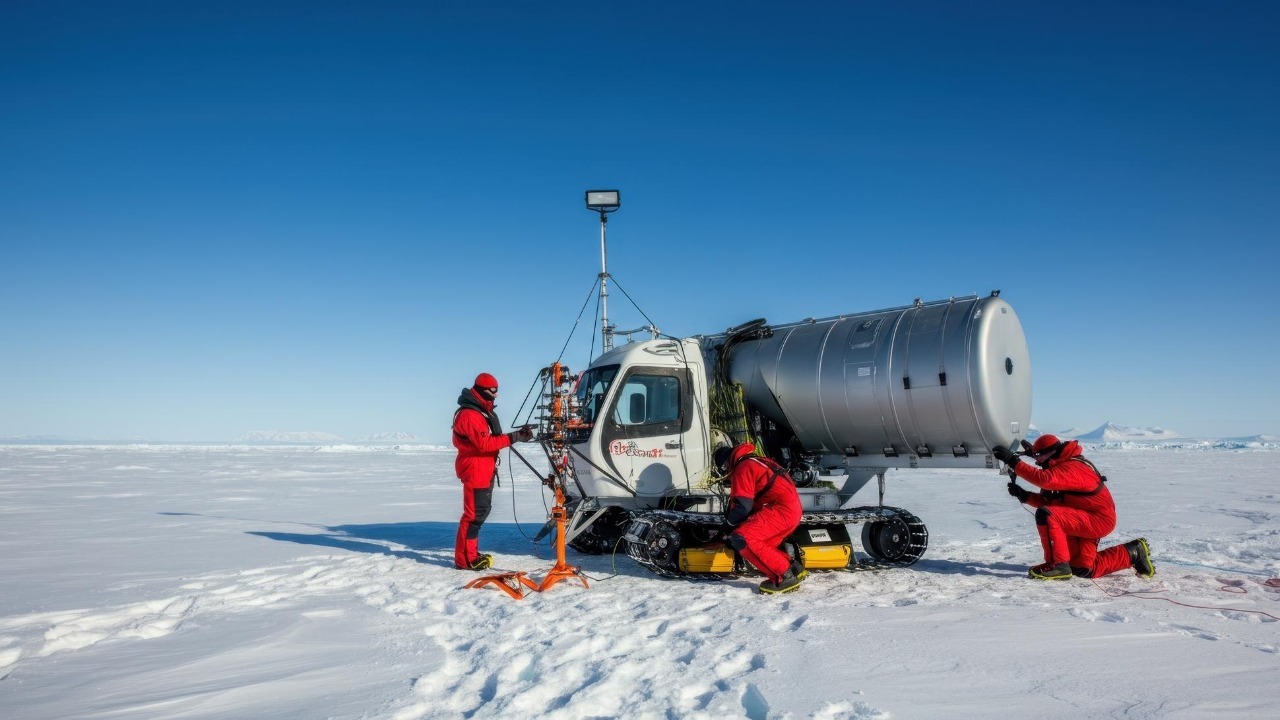
Plans are underway for further exploration and study of the pyramid-like formation. Future research will employ more advanced technologies and methodologies, including deep ice drilling and possibly even manned expeditions.
However, exploring this remote and extreme environment is not without its challenges. The harsh Antarctic conditions pose significant risks, and the remote location makes logistics a major hurdle. Despite these challenges, the potential rewards of uncovering the secrets of this ancient formation and ecosystem make the endeavor worthwhile.
