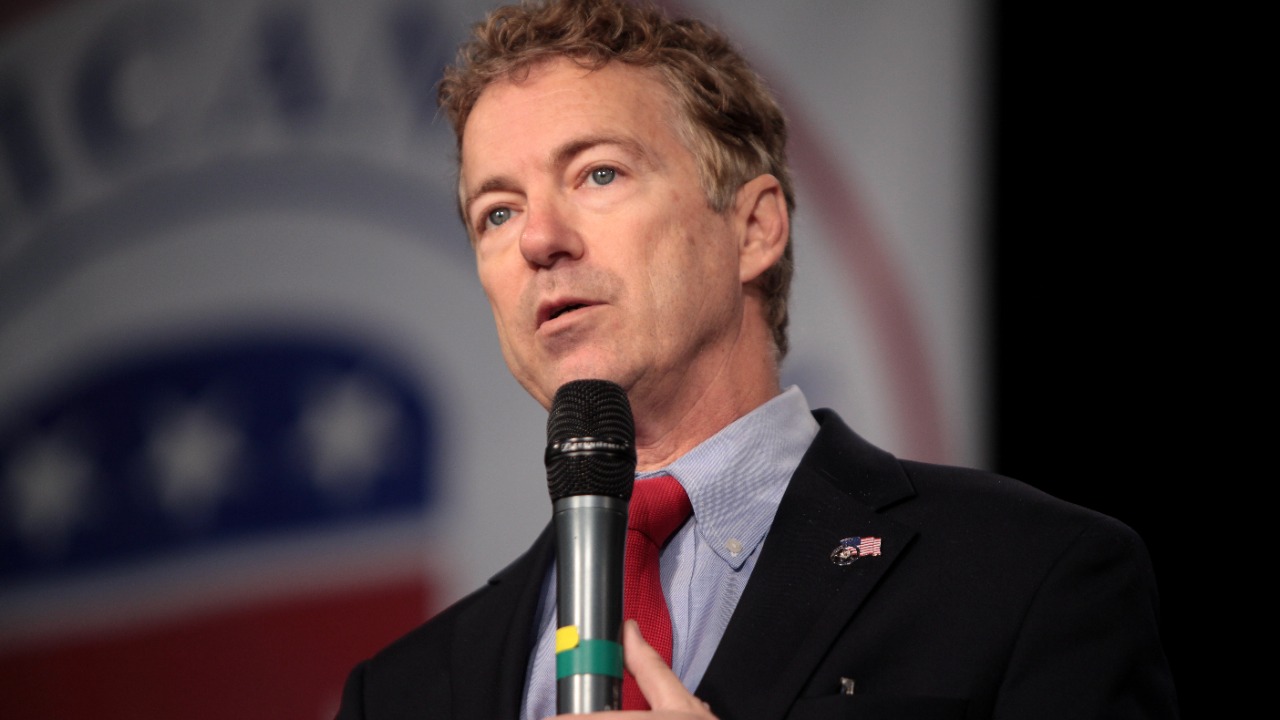

Rand Paul built his political brand on a libertarian instinct to keep government out of the boardroom, even when it came to Silicon Valley. Now he is arguing that Google and YouTube have amassed so much power, and shown such poor judgment, that they can no longer be trusted to police themselves. His reversal captures a broader shift on the right, where frustration with Big Tech’s influence over speech is colliding with long standing free market rhetoric.
I see his turn against Google and YouTube not as a sudden outburst, but as the culmination of years of escalating conflict between a high profile critic and the platforms that host, and sometimes suppress, his message. Tracing that arc helps explain why a senator who once warned against heavy handed regulation is now calling for lawsuits, liability and new limits on the tech giants’ reach.
From free market defender to Big Tech skeptic
For much of his career, Rand Paul treated Silicon Valley as a success story that should be protected from political meddling. In a widely circulated op ed, he argued that Politicians worried about China’s economic rise should think carefully before weakening American technology firms, warning that undermining domestic champions would only help China. That argument fit neatly with his broader skepticism of antitrust threats and his belief that markets, not regulators, should decide how big a company should be.
His voting record reflected the same instincts. When debates flared over net neutrality and other online rules, Sen. Rand Paul often sided with those who wanted to pare back federal oversight of the internet. In one official statement, Sen, Rand Paul to Repeal Internet Regulation, presenting himself as a defender of online freedom against what he cast as heavy handed rules from WASHINGTON. That history makes his current push to rein in Google and YouTube far more striking, because it represents a break with positions he once framed as matters of principle.
A long running clash with YouTube
Even as he defended Big Tech in the abstract, Rand Paul’s relationship with YouTube was deteriorating. Earlier in the decade, the platform removed some of his videos on COVID 19, prompting him to accuse it of political bias and censorship. The conflict escalated to the point that Rand Paul announces, with the senator saying he would stop posting because of the company’s enforcement actions against his content.
He took that message directly to supporters. In a social media video, Sen, Rand Paul described YouTube as the “worst censor of all” and announced, “Today I begin my exodus from Big Tech, starting with the worst censor of all, I’m doing.” His team told viewers they could find his videos on alternative platforms instead, underscoring how deeply he felt that the company’s moderation decisions were silencing his views.
The tipping point: a disputed COVID video and a call for lawsuits
The immediate catalyst for his latest shift was not a video of his own, but a clip he says puts lives at risk. In a recent opinion piece, he wrote that Youtube and its parent company Google deserves to be sued after the platform hosted a video for weeks that he describes as a cal, a claim that the COVID 19 vaccine was more dangerous than the virus and that masks did nothing to prevent transmission. He argued that the company knew the content was false and harmful yet refused to remove the video, a decision he sees as proof that the platforms cannot be trusted to act responsibly.
In that piece, he framed his change of heart bluntly, saying he had “changed my mind” about the wisdom of leaving Google and YouTube to their own devices. He accused Youtube and, Google, past three weeks of knowingly hosting dangerous misinformation and insisted that only the threat of legal liability would force them to take such content seriously. That argument marks a sharp departure from his earlier warnings that lawsuits and regulation would stifle innovation.
He has repeated the same charge in other versions of the piece, stressing that Youtube and its parent company Google deserves to be sued and that the company refused to remove the video even after it was flagged. In one passage, he focuses on the specific falsehood that masks did not prevent transmission of COVID 19, arguing that advocating for liability for Google is now necessary because the platform allowed a video to claim masks did nothing to prevent transmission of COVID 19. He links that failure directly to his broader conclusion that the companies must be reined in, a point he reinforces in another version of the essay that again states Youtube and, Google, For the past three weeks have not acted responsibly Google and.
Reversing course on Section 230 and platform immunity
That frustration has now spilled into a broader attack on the legal shield that has long protected online platforms. Sen. Rand Paul, who once resisted efforts to weaken Section 230, is now openly arguing that the law gives Big Tech too much leeway to shape public debate without consequences. In a recent interview, he said that Big Tech’s “lack of decency” had gone too far and that companies with so much power over public discourse should not enjoy blanket immunity under 230.
That reversal is especially notable because Sen. Rand Paul (R Ky) has long been one of the Repu lawmakers most skeptical of expanding liability for tech firms. Now he is aligning with colleagues who want to pare back the protections that allow platforms to host user content without being treated as publishers. In a separate account of his shift, Rand Paul, Section, are all invoked to underscore how unusual it is for a lawmaker with his ideological profile to call for narrowing a statute that conservatives once saw as a bulwark against government control of speech.
What “reining in” Google and YouTube could look like
Rand Paul’s rhetoric now goes beyond complaints about bias or censorship and into concrete demands for new constraints on the platforms. In his recent essays, he has said plainly that Youtube and its parent company Google deserves to be sued, and that only the threat of liability will change their behavior. One version of the piece emphasizes that advocating for liability for Google is necessary because the company allowed a video to claim masks did nothing to prevent transmission of COVID 19, a failure he sees as disqualifying for a platform that dominates online video liability for Google.
At the same time, he is still trying to reconcile this new posture with his earlier warnings about overregulation. In his free market writings, he cautioned that Had the threat of antitrust been wielded more aggressively, it might have discouraged the very innovation that allowed American tech firms to grow, and he urged Politicians not to let anger at Silicon Valley become an excuse to abandon market principles. That tension is evident in his current stance, which calls for targeted legal changes rather than a wholesale government takeover of content moderation. It is also visible in his continued criticism of broad internet rules, even as Politicians who are about tech power now find an unexpected ally in his call to rein in Google and YouTube.
More from Morning Overview