
Quantum encryption, born from the quantum computing revolution, heralds a new era of unprecedented security. This technological advancement not only promises impenetrable encryption but also reshapes the landscape of data security.
Understanding Quantum Encryption

Quantum encryption, also known as quantum cryptography, leverages the principles of quantum mechanics to secure data. Unlike traditional encryption methods which depend on mathematical complexity, quantum encryption is grounded on the laws of physics. It relies on quantum keys, which are random sequences of bits generated by quantum processes. These keys are used to encrypt and decrypt messages, ensuring that only the authorized parties can access the information.
Compared to traditional encryption methods, quantum encryption provides a higher level of security. Traditional encryption methods can be compromised by brute force attacks or sophisticated algorithms, whereas quantum encryption is resistant to these threats. The security of quantum encryption is reinforced by the properties of quantum keys. Any attempt to measure or observe a quantum system results in alterations to the system, making eavesdropping or interception virtually impossible, as it would be immediately noticeable.
The Threat of Quantum Computers to Traditional Encryption

Quantum computers pose a significant threat to traditional encryption methods. Their immense computational power can potentially break through the complex mathematical problems that form the basis of traditional encryption. For instance, Shor’s algorithm, a quantum algorithm, can factorize large numbers exponentially faster than the best-known algorithms on classical computers, undermining the security of encryption schemes like RSA.
This potential risk associated with quantum computers exposes a vulnerability in our current digital security infrastructure. Sensitive data protected by traditional encryption methods could be at risk if quantum computers become widely accessible. Therefore, there is an urgent need to develop new encryption methods that can withstand the power of quantum computers.
How Quantum Encryption Makes Hacking Impossible

Quantum encryption leverages key principles of quantum mechanics, such as superposition and entanglement, to provide secure data transmission. Quantum superposition allows quantum bits, or qubits, to exist in multiple states at once, increasing the complexity of the encryption. Quantum entanglement ensures that any change to one qubit will instantaneously affect its entangled partner, regardless of distance. This property enables the detection of eavesdropping attempts during data transmission.
The no-cloning theorem is another principle that makes quantum encryption impervious to hacking attempts. According to this theorem, it’s impossible to create an exact copy of an arbitrary unknown quantum state. This means that a hacker cannot replicate a quantum key without detection, rendering traditional hacking methods obsolete in the face of quantum encryption.
Current Applications and Experiments with Quantum Encryption
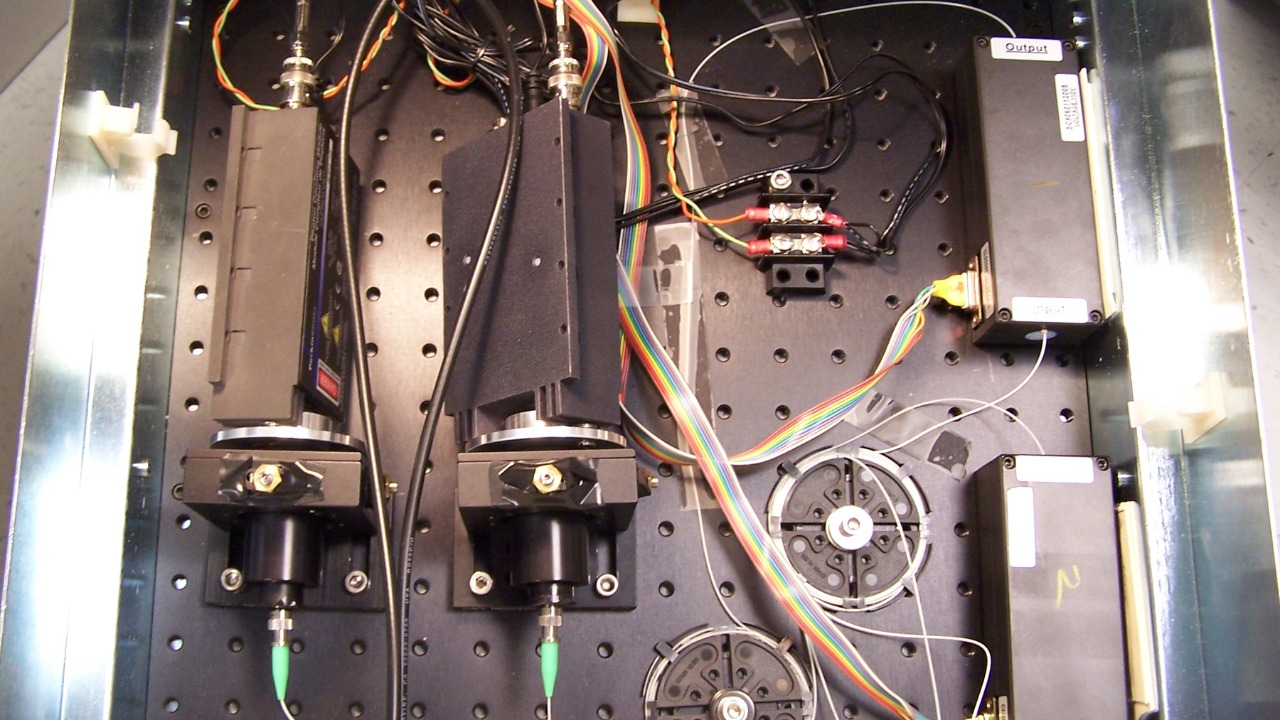
Quantum encryption is already being used in a technology called Quantum Key Distribution (QKD). QKD enables two parties to generate a shared random secret key, which can be used to encrypt and decrypt messages. As it’s based on quantum mechanics, any attempt to intercept the key would be detected, ensuring secure communication.
There are also ongoing experiments with quantum encryption. For example, in an unprecedented experiment, Scientists beamed quantum data from Europe to Canada, showcasing the potential of quantum encryption in long-distance secure data transmission. These applications and experiments signal the promising future of quantum encryption in various sectors, including finance, healthcare, and defense.
Challenges and Future Prospects of Quantum Encryption
Despite its potential, quantum encryption is not without challenges. The technology is still in its infancy, and its widespread implementation is constrained by technical and logistical obstacles. For instance, quantum systems are highly sensitive to environmental noises, which can lead to errors in quantum key generation and distribution. Also, the current quantum communication infrastructure is limited, restricting the practical application of quantum encryption.
Nevertheless, the development of quantum-resistant algorithms offers a potential solution to the threats posed by quantum decryption. For instance, lattice-based cryptography is considered to be resistant to quantum attacks. As we advance towards a quantum era, it’s evident that quantum encryption will play a crucial role in data security. With ongoing research and development, we can expect to see more robust and efficient quantum encryption solutions in the near future.
