Quantum computing’s potential has reached a new milestone with the simulation of a black hole. This achievement not only marks a significant advancement in computational physics but also provides new insights into the complex nature of black holes, as outlined in several recent studies. In this exploration, the implications and methodologies of this groundbreaking simulation are unraveled.
Theoretical Foundations of Black Holes

Overview of Black Hole Physics
Black holes have long fascinated scientists, serving as a critical subject in the study of the universe. At the core of black hole physics are fundamental concepts such as event horizons, the boundary beyond which nothing can escape, and singularities, the point where gravitational forces cause matter to have infinite density. These enigmatic entities challenge our understanding of space and time.
Historically, breakthroughs in black hole research have included theories like Einstein’s general relativity, which predicted the existence of black holes, and Stephen Hawking’s groundbreaking work on black hole radiation. These theories have laid the groundwork for contemporary studies, propelling our understanding of these cosmic phenomena to new heights.
Quantum Mechanics and Black Holes
Quantum mechanics, with its principles of uncertainty and wave-particle duality, introduces a new layer of complexity to the study of black holes. The intersection of quantum mechanics and black hole physics has sparked debates, particularly concerning the information paradox and the nature of singularities. Key advancements, such as Hawking’s discovery of black hole radiation, have furthered our comprehension of how quantum effects might influence black holes.
These theoretical advancements have paved the way for simulating black holes with quantum computers. By leveraging the principles of quantum mechanics, researchers have developed innovative methods to model the intricate dynamics of black holes, providing new insights into their enigmatic nature.
Advancements in Quantum Computing
Progress in Quantum Computing Technologies
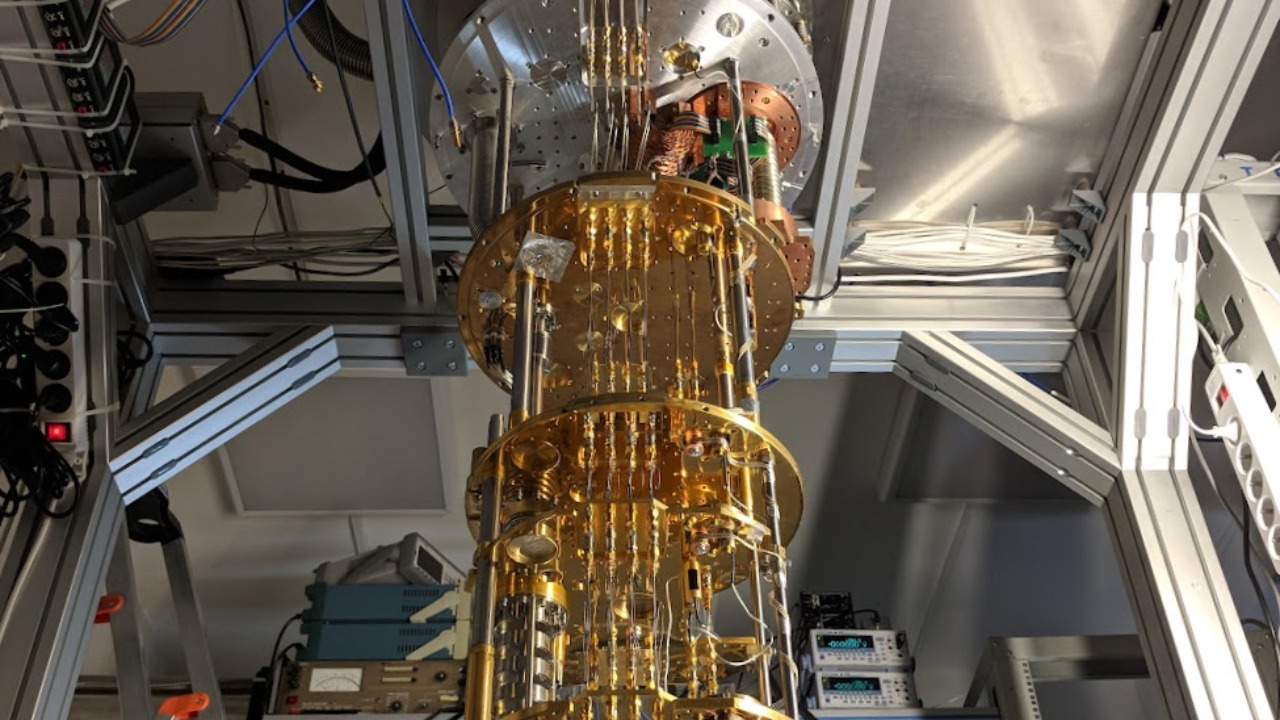
Recent technological advancements in quantum computing have been nothing short of revolutionary. Quantum computers like those from IBM and Google have demonstrated capabilities far beyond traditional computing systems. These technologies utilize quantum bits (qubits), allowing for complex calculations that were previously impossible.
Quantum computing’s ability to process vast amounts of data and simulate quantum phenomena has enabled researchers to tackle problems once thought to be insurmountable. The simulation of a black hole is a testament to this progress, showcasing the potential of quantum computing to revolutionize fields such as computational physics and cosmology.
Quantum Algorithms for Simulating Black Holes
The simulation of black holes on quantum computers relies on sophisticated algorithms designed to replicate their properties with high efficiency and accuracy. Algorithms such as the Quantum Approximate Optimization Algorithm (QAOA) and Variational Quantum Eigensolver (VQE) have played a crucial role in this process.
These algorithms enable researchers to model the complex interactions and dynamics of black holes, providing valuable insights into their behavior. The efficiency of these algorithms is evident in their ability to simulate phenomena that classical computers struggle to replicate, offering a glimpse into the future of computational simulations.
The Simulation Process

Methodologies Employed in the Simulation
Simulating a black hole on a quantum computer involves a meticulous step-by-step process. Researchers begin by encoding the physical properties of black holes into quantum bits (qubits), which serve as the building blocks of quantum simulations. This encoding allows for the representation of complex quantum states that mimic the behavior of black holes.
The role of qubits in modeling black hole dynamics is pivotal, as they enable the simulation of interactions at a quantum level. By manipulating these qubits through quantum gates, researchers can replicate the effects of gravitational forces and quantum phenomena, providing a comprehensive model of black hole behavior.
Challenges and Solutions
Simulating black holes on quantum computers is not without its challenges. Key obstacles include maintaining qubit coherence, managing quantum noise, and ensuring the accuracy of simulations. These challenges necessitate innovative solutions to achieve reliable results.
Researchers have developed techniques such as error correction and noise reduction to address these challenges. By implementing these solutions, they have successfully overcome the hurdles of quantum simulations, paving the way for more accurate and reliable models of black holes.
Scientific Implications and Discoveries

Insights Gained from the Simulation
The simulation of a black hole has yielded new scientific insights, enhancing our understanding of the universe. By replicating the behavior of black holes on a quantum level, researchers have gained a deeper understanding of phenomena such as Hawking radiation and the information paradox.
These insights contribute to our broader understanding of cosmology and theoretical physics, offering new perspectives on the nature of space and time. The ability to simulate black holes has opened new avenues of research, with the potential to unlock the mysteries of the universe.
Impact on Future Research
The impact of quantum simulations on future black hole research cannot be overstated. By providing a new tool for modeling complex cosmic phenomena, these simulations have the potential to revolutionize the field. Researchers can now explore questions that were previously beyond reach, advancing our knowledge of the universe.
The broader implications for cosmology and theoretical physics are immense. As quantum simulations become more refined, they will continue to shape our understanding of the cosmos, offering new insights into the fundamental nature of reality.
Ethical and Philosophical Considerations

Ethical Implications of Quantum Simulations
The use of advanced technology to simulate cosmic phenomena raises important ethical considerations. As researchers delve deeper into the mysteries of the universe, questions about the societal impacts and responsibilities of the scientific community arise. The potential for misuse or unintended consequences of quantum simulations necessitates careful consideration and oversight.
Researchers must navigate these ethical complexities, ensuring that their work aligns with societal values and contributes positively to scientific progress. By addressing these ethical concerns, the scientific community can harness the power of quantum simulations responsibly.
Philosophical Questions Raised
The advent of quantum simulations raises intriguing philosophical questions about reality and existence. As we replicate the behavior of black holes on a quantum level, we are confronted with questions about the nature of simulation and its implications for our understanding of the universe. These simulations challenge our perceptions of reality, prompting us to reconsider our place in the cosmos.
By exploring these philosophical questions, we can gain a deeper appreciation for the complexities of the universe and our role within it. The insights gained from quantum simulations have the potential to reshape our understanding of existence, offering new perspectives on the nature of reality itself.
