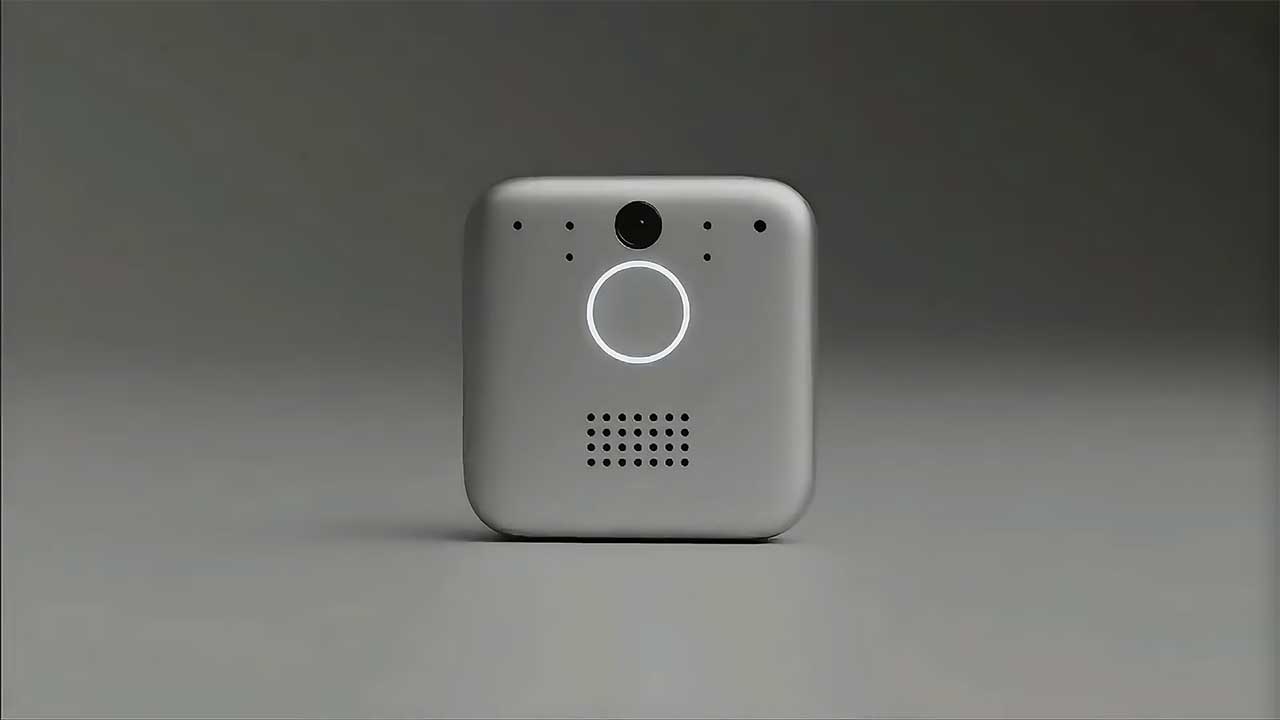

OpenAI is quietly trying to do something that has eluded Silicon Valley for a generation: build a mass‑market gadget whose core components, from chips to casings, are conceived and manufactured entirely inside the United States. Its first AI device, still in prototype form, is emerging alongside a parallel effort to stand up a domestic supply chain that could cover everything from data center racks to humanoid robots. If that strategy holds, the company’s debut hardware could become a test case for whether advanced consumer electronics can be “made in America” again at scale.
The stakes go beyond patriotic branding. OpenAI is racing to ship what it has described internally as 100 million AI “companion” devices, a hardware platform that would anchor its software for everyday life. To get there, it is stitching together industrial partners, custom silicon programs, and design talent from Apple’s golden era, while signaling to suppliers that future contracts may depend on building in Wisconsin or Texas rather than Shenzhen or Taipei.
The prototype era: from Jony Ive sketches to working hardware
OpenAI’s hardware push started as a design experiment with Jony Ive, the former chief design officer at Apple whose studio helped define the iPhone and MacBook era. Reporting describes an AI pen codenamed “Jan,” framed in a Quick Read as a kind of screen‑reduction tool that would let users interact with AI without constantly staring at a phone. That same collaboration credits Jony Ive with helping OpenAI think about how ambient computing should feel in the hand, not just in the cloud, and it is no accident that the company bought his design firm I/O to lock in that expertise.
By late 2025, OpenAI executives were no longer talking in hypotheticals. Sam Altman, CEO of OpenAI, appeared at the Allen and Co Sun Valley Media and Technology Conference at the Sun Valley Resort and confirmed that Altman and Ive had a working version of the device, describing how exciting it felt to see the concept in physical form. In a separate conversation that same week, OpenAI CEO Sam said on Friday that the company had finally finished its first hardware prototype, underscoring that the project had moved from sketches to something engineers could test and iterate.
What the first device might look like
Even as the core prototype remains under wraps, leaks point to a family of AI gadgets rather than a single monolith. One report describes a main device made of metal and shaped like an eggstone, with two pill‑shaped earbuds stored inside the shell, a design that would let the buds sit snugly in the ear of the user while the case doubles as a tactile object in the hand. The tipster behind that leak suggested that this egg‑like form factor, associated with the codename “Inside the,” could be part of a broader ecosystem that also includes the pen‑style “There” device, all tied back to OpenAI’s conversational models and sold directly by OpenAI in the near future.
Behind the industrial design, the engineering story is still evolving. A detailed rundown of everything we know about the project notes that the device is currently in prototype form, with Altman and Ive confirming they have a working version that can be used in real‑world scenarios. That same reporting emphasizes that the team is still experimenting with how the gadget should surface AI in daily life, a tension echoed in another account that says OpenAI and Jony face significant technical challenges as they try to make the device feel natural rather than intrusive.
Designing the silicon and the supply chain in parallel
To make a device that is truly built “from the ground up” in the United States, OpenAI has to control more than the outer shell. The company has already signaled that Nvidia and AMD are not enough for its long‑term ambitions, with a widely discussed summary noting that, in Oct, TLDR OpenAI announced it was partnering with Broadcom to design custom AI chips targeting 10 gigawatts of compute, with first chips expected to deploy late 2026 and a reference to the figure 202 as part of the discussion. Separately, another report says OpenAI is working with TSMC and Broadcom to build an in‑house AI chip, while also exploring alternatives, a move that would give the company more control over performance, cost, and security.
At the same time, OpenAI is trying to rewire where its hardware is physically made. A detailed account of how OpenAI is working to build a US supply chain explains that the company is mapping out domestic production not only for consumer devices but also for robots, noting that When OpenAI purchased Jony Ive’s I/O, it effectively committed to pairing high‑end industrial design with a domestic manufacturing footprint that could eventually support some impressive humanoid robots. That ambition is being formalized through a sweeping request for proposals, with one report describing how OpenAI Bets on US Manufacturing and Releases AI Supply Chain RFP Focusing on Domestic Data Centers and Robot Production, a package valued at 1 that is meant to entice American factories to retool for AI‑era workloads.
Foxconn, Wisconsin, and the politics of “made in America”
OpenAI’s most visible manufacturing partner so far is Foxconn, the Taiwanese giant best known for assembling iPhones in China. In a joint announcement, OpenAI and Foxconn said they would partner on AI hardware manufacturing in the US, a deal that covers both data center infrastructure and end‑user devices. A separate breakdown of the partnership notes that Foxconn plans to manufacture everything from cooling and cabling to networking and power systems at its facilities across Wisconsi, Ohio, Texas, Virginia and Indiana, a geographic spread that could anchor OpenAI’s domestic ambitions in multiple swing‑state economies if the projects materialize as advertised.
Another analysis of the OpenAI‑Foxconn partnership argues that the deal signals how AI infrastructure is reshaping American manufacturing, with the OpenAI‑Foxconn partnership framed as part of a broader wave of tech giants pouring trillions into new plants and logistics. Yet Foxconn carries some baggage in the U.S. market, as one account points out that Foxconn previously announced a massive factory project in Wisconsin that never fully lived up to its original promises. That same report notes that Yet Foxconn’s history in Wisconsin is now being weighed against the current AI infrastructure boom, a reminder that OpenAI’s domestic manufacturing narrative will be judged not by press releases but by whether plants actually hire and ship.
From RFPs to 100 million companions
OpenAI is not leaving its “made in America” aspirations to chance. The company has publicly said it issued a request for proposals to US‑based hardware manufacturers as it seeks to push into consumer devices and robotics, with one summary explaining that OpenAI says it is requesting proposals from hardware makers that can support its AI roadmap. A separate deep dive into the company’s hardware plans notes that OpenAI set ambitious goals at the outset, claiming consumers could see the new gadget as early as the second half of 2026, while also warning that supply chain complexity will likely delay the launch, a tension captured in the Jan analysis of the device’s timeline.
Inside the company, the scale of the bet is even clearer. One report says OpenAI looks to ship 100M AI “companion” devices for everyday life, citing internal discussions in which WSJ reported that Sam Altman told his staff that Microsoft, identified in the same account as MSF, would be a critical software partner for the effort. If OpenAI can align that volume target with its domestic RFPs, the first AI device built entirely in the US from the ground up would not just be a halo product, it would be the anchor for a new category of American‑made AI companions.
More from Morning Overview