Recent discoveries in the field of quantum physics have identified a new class of particles known as anyons, which hold the potential to bridge the gap between quantum mechanics and classical physics. These particles, distinct from the well-known bosons and fermions, offer promising insights into the fundamental nature of reality and could revolutionize our understanding of physics.
The Discovery of Anyon Particles
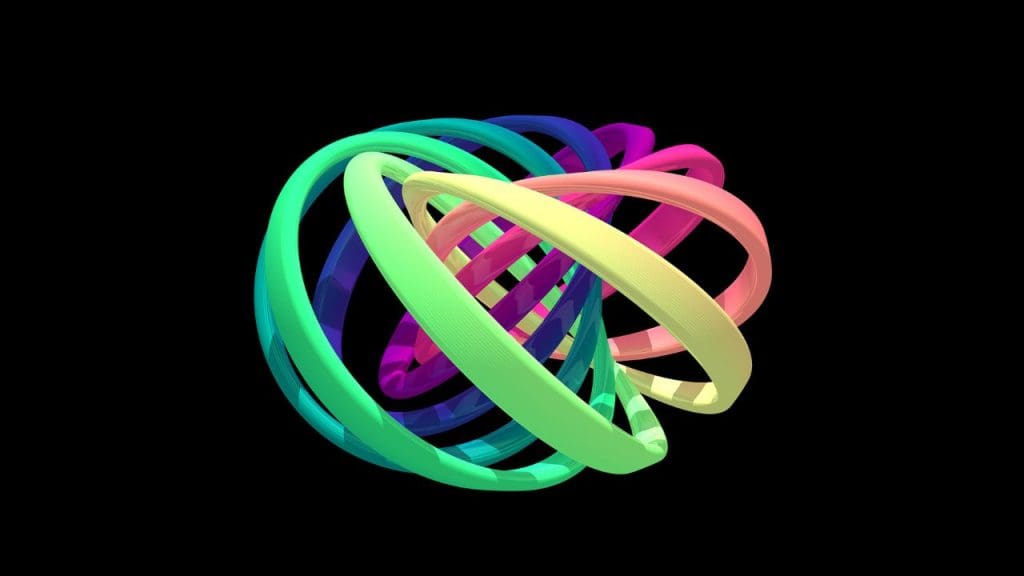
The theoretical predictions regarding anyons date back to the 1980s, when physicists began to consider the possibility of particles that do not fit into the existing categories of bosons and fermions. The work of Frank Wilczek was particularly influential; he coined the term “anyons” to describe particles that obey fractional statistics, a notion that challenges the traditional view of particle physics. The idea was that in two-dimensional systems, particles could exhibit behaviors that are not seen in three-dimensional counterparts, providing a new lens through which to view quantum mechanics.
Experimental evidence for anyons has been mounting over the years, culminating in recent breakthroughs that have provided tangible proof of their existence. Cutting-edge experiments, such as those conducted in high-mobility semiconductor devices and fractional quantum Hall effect systems, have shown the unique properties of anyons. These advancements were made possible by technological innovations, including improved nanofabrication techniques and advanced cryogenic systems, which allow scientists to observe and manipulate particles at unprecedented levels of precision.
Characteristics and Behavior of Anyons

Anyons are distinguished from other particles by their unique properties, particularly their fractional statistics. Unlike fermions, which follow the Pauli exclusion principle, and bosons, which can occupy the same quantum state, anyons exhibit statistics that allow them to be in states that are neither purely fermionic nor bosonic. This fractional behavior is particularly evident in two-dimensional systems, where the movement and exchange of anyons result in phase changes that are fractional multiples of 2π, unlike the integer multiples seen with bosons and fermions.
The implications of anyons extend into quantum computing and materials science. In the realm of quantum computing, anyons hold the promise of creating more stable qubits, the fundamental units of quantum information. These qubits could be less susceptible to decoherence, a major challenge in developing practical quantum computers. Furthermore, the unique properties of anyons could lead to the development of new materials with exotic characteristics, potentially revolutionizing fields such as superconductivity and magnetic materials.
Bridging Quantum and Classical Physics

The discovery of anyons offers intriguing possibilities for a unified theory of physics, one that could bridge the gap between the quantum and classical realms. Theoretical physicists are exploring how anyons might complement and enhance existing theories, such as new theories of gravity. These theories aim to reconcile the discrepancies between quantum mechanics and general relativity, potentially leading to a deeper understanding of gravitational forces at the quantum level.
Despite the excitement surrounding anyons, challenges remain in fully integrating them into existing physical frameworks. Understanding the precise nature of anyons and their interactions requires further research and experimentation. Future research directions include exploring the behavior of anyons in different physical contexts and developing new theoretical models to predict their properties. This ongoing research is crucial to unlocking the full potential of anyons and their role in advancing our understanding of the universe.
Potential Applications and Technological Innovations
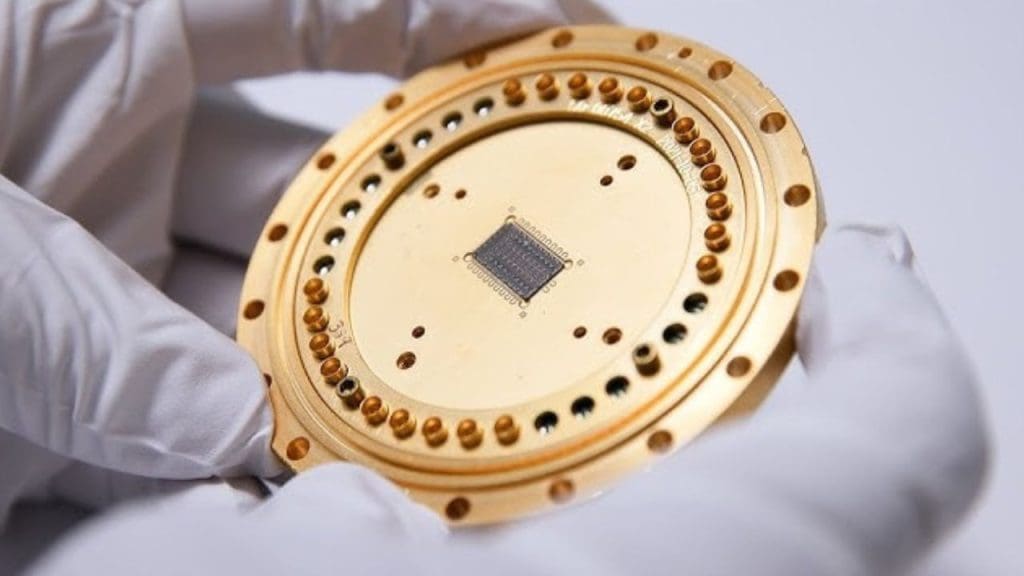
Anyons have the potential to drive significant technological advancements, particularly in the field of quantum computing. The development of anyon-based qubits could lead to breakthroughs in computing power, enabling more complex calculations and simulations that are currently beyond the reach of classical computers. Additionally, the stability of anyon-based qubits could enhance data security, providing new ways to protect information from unauthorized access.
The industrial applications of anyons extend beyond quantum computing. In telecommunications, for instance, the unique properties of anyons could lead to more efficient and reliable communication systems. The economic impact of these advancements could be substantial, with industries poised to benefit from the increased efficiency and capabilities provided by anyon-based technologies. As with any technological leap, there are ethical considerations to address, ensuring that the benefits of anyon-related technologies are distributed equitably across society.
The Future Landscape of Physics and Beyond

The discovery and exploration of anyons are likely to shape the future landscape of scientific discovery, influencing research directions and priorities. As scientists continue to unravel the mysteries of anyons, the potential for new insights into the fundamental nature of reality grows. This exploration could lead to a paradigm shift in our understanding of physics, with anyons playing a central role in new theories and models.
Interdisciplinary collaboration is essential in advancing our understanding of anyons and their applications. Physicists, mathematicians, and engineers must work together to develop the theoretical and practical tools needed to harness the potential of anyons. Such collaboration is critical to unlocking the technological innovations that anyons promise, with each discipline contributing its unique expertise to the endeavor. The future of anyon research is bright, offering the potential for groundbreaking discoveries and transformative technological advancements.
