
NASA is pioneering a new era of space exploration with its groundbreaking solar sail technology, a promising method for deep-space travel. This innovative approach harnesses sunlight to propel spacecraft, offering a sustainable and efficient solution for long-duration missions beyond our solar system. As the space agency continues to push the boundaries of what’s possible, solar sails represent a leap forward in the quest to explore the cosmos.
The Concept of Solar Sailing
Principle of Solar Sailing
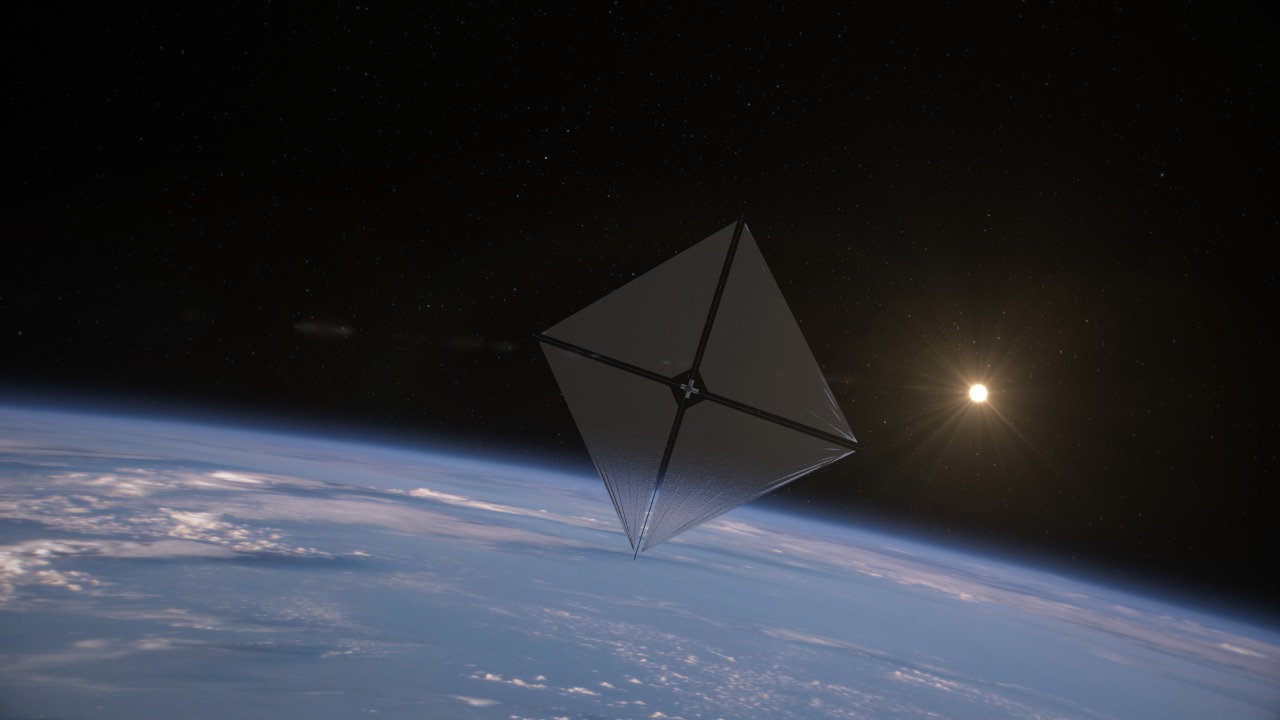
Solar sails operate on a deceptively simple principle: they utilize the pressure exerted by photons from the Sun to propel spacecraft. Unlike traditional propulsion methods that rely on chemical fuels, solar sails do not require onboard propellant. This makes them a game-changer for long-duration missions, allowing for continuous acceleration without the weight constraints of fuel. The momentum transfer from the photons to the sail generates a small but constant thrust, which can accumulate over time to achieve significant speeds.
Compared to conventional propulsion, solar sails offer distinct advantages. Traditional rockets must carry massive amounts of fuel to escape Earth’s gravity and reach distant destinations, limiting their payload capacity. In contrast, solar sails, by leveraging the constant stream of solar energy, can potentially carry more scientific instruments and supplies, making them ideal for extended missions. Moreover, solar sails’ ability to adjust their orientation to control direction and speed adds a level of navigational flexibility unseen in chemical propulsion systems.
Historical Context and Development
The concept of solar sailing has a storied history, transitioning from theoretical musings to practical applications. The idea dates back to the early 20th century, when scientists like Johannes Kepler speculated about using solar pressure for space travel. It wasn’t until the latter half of the century that significant strides were made. The Soviet Union’s Znamya projects in the 1990s marked some of the earliest attempts to deploy solar sails in space, albeit with limited success.
In recent years, solar sail technology has seen remarkable advancements. Notable milestones include the successful deployment of the Japanese IKAROS mission in 2010, which became the first spacecraft to use solar sailing as its primary propulsion method. This paved the way for initiatives like NASA’s Solar Cruiser mission, which aims to further demonstrate the viability of this technology for deeper space exploration.
NASA’s Solar Cruiser Mission
Mission Objectives and Goals
The Solar Cruiser mission is a pivotal project under NASA’s portfolio, designed to validate the use of solar sails for deep-space exploration. The mission’s primary objective is to demonstrate the practical application of solar sails for controlling and propelling spacecraft beyond Earth’s orbit. By achieving this, NASA hopes to unlock new possibilities for missions that venture farther into space, potentially reaching destinations in the Kuiper Belt or even interstellar space.
Expected outcomes from the Solar Cruiser mission include enhanced understanding of solar sail dynamics and performance in space. The mission aims to gather data that will inform future spacecraft designs, ensuring they can withstand the rigors of extended missions. Additionally, the Solar Cruiser is expected to contribute to the development of new mission profiles that leverage solar sails for cost-effective exploration of distant celestial bodies.
Technical Specifications and Design
The Solar Cruiser’s sail is a marvel of engineering, featuring a vast expanse of ultra-thin material capable of harnessing sunlight. Made from a durable and reflective film, the sail spans thousands of square meters, maximizing its exposure to solar photons. This design not only optimizes propulsion but also ensures resilience against the harsh conditions of space. The sail’s deployment mechanism is equally sophisticated, utilizing a series of booms and tensioning systems to unfold the sail from its compact storage configuration.
However, the engineering challenges of deploying such a large structure in space are significant. The team must ensure the sail unfurls smoothly and maintains its shape without tearing. Additionally, navigating with a solar sail requires precise control of the spacecraft’s attitude to adjust the sail’s angle relative to the Sun. These challenges are being addressed through a combination of advanced materials, innovative design, and rigorous testing.
Potential Advantages of Solar Sails in Deep-Space Exploration

Sustainability and Efficiency
Solar sails offer a sustainable propulsion method that stands in stark contrast to chemical rockets. By eliminating the need for onboard fuel, solar sails significantly reduce the environmental impact of space missions. This sustainability extends to operational efficiency, as solar sails can maintain thrust indefinitely as long as sunlight is available. This capability enables continuous acceleration, allowing for faster travel times and more ambitious mission profiles.
The long-term impact of solar sails on mission planning is profound. With reduced reliance on fuel, mission costs can be lowered, enabling more frequent and diverse exploration efforts. This cost-effectiveness may democratize access to deep-space exploration, allowing more countries and organizations to participate in space science.
Extended Mission Duration and Reach
One of the most compelling advantages of solar sails is their potential to extend mission durations and reach previously inaccessible destinations. Unlike traditional spacecraft, which are limited by fuel constraints, solar sails can operate for years, even decades, without needing refueling. This opens up possibilities for missions to the outer planets, the Kuiper Belt, and beyond.
Potential missions that could benefit from solar sail technology include reconnaissance of distant asteroids, exploration of the outer solar system, and even interstellar probes. By enabling access to these challenging targets, solar sails could revolutionize our understanding of the universe and our place within it.
Recent Tests and Demonstrations
Overview of Recent Trials
NASA has been actively testing solar sail technology to demonstrate its effectiveness in real-world conditions. Recent trials have focused on deploying and maneuvering solar sails in space, providing valuable insights into their performance. These tests have confirmed that solar sails can achieve the expected thrust levels and maintain stability, even in the variable conditions of space.
Key results from these demonstrations have shown that solar sails can be deployed reliably and controlled with precision. The data collected is instrumental in refining the technology and preparing it for future missions. Through these efforts, NASA is paving the way for solar sails to become a standard propulsion method for deep-space exploration.
Public Engagement and Observations
NASA has made significant efforts to engage the public in its solar sail demonstrations, fostering interest and understanding of this groundbreaking technology. By offering opportunities for the public to observe solar sail deployments and track their progress, NASA is building a community of enthusiasts and supporters.
These public engagement initiatives not only raise awareness but also inspire the next generation of scientists and engineers. As more people become familiar with solar sail technology, the potential for collaboration and innovation increases, further advancing the field of space exploration.
Future Prospects and Challenges
Upcoming Missions and Research
Looking ahead, several missions are being planned to capitalize on solar sail technology. These include exploratory missions to distant asteroids and comets, as well as potential missions to the outer planets. Researchers are also exploring the possibility of using solar sails for interstellar travel, leveraging the continuous acceleration offered by solar sailing to reach nearby star systems.
Ongoing research focuses on enhancing the capabilities of solar sails, such as improving sail materials for greater durability and developing advanced control systems for precise navigation. These efforts aim to broaden the scope of missions that can be undertaken with solar sails, ultimately making them a versatile tool for space exploration.
Overcoming Technical and Practical Challenges
While solar sails hold immense promise, several technical and practical challenges must be addressed. Deployment and navigation remain significant hurdles, as the large sails must be unfurled in space without incident and precisely oriented to achieve the desired trajectory. Researchers are exploring innovative solutions, such as autonomous navigation systems and adaptive sail designs, to overcome these obstacles.
In addition to technical challenges, practical considerations such as mission planning and integration with other spacecraft systems must be addressed. Continued collaboration between scientists, engineers, and policymakers will be crucial in overcoming these challenges and realizing the full potential of solar sail technology.
