A recent discovery by NASA has left scientists both bewildered and excited—a mysterious cube-shaped anomaly orbiting Saturn. This unexpected finding has sparked a flurry of theories and discussions about its origin, structure, and potential implications for our understanding of the universe.
Discovery and Initial Observations
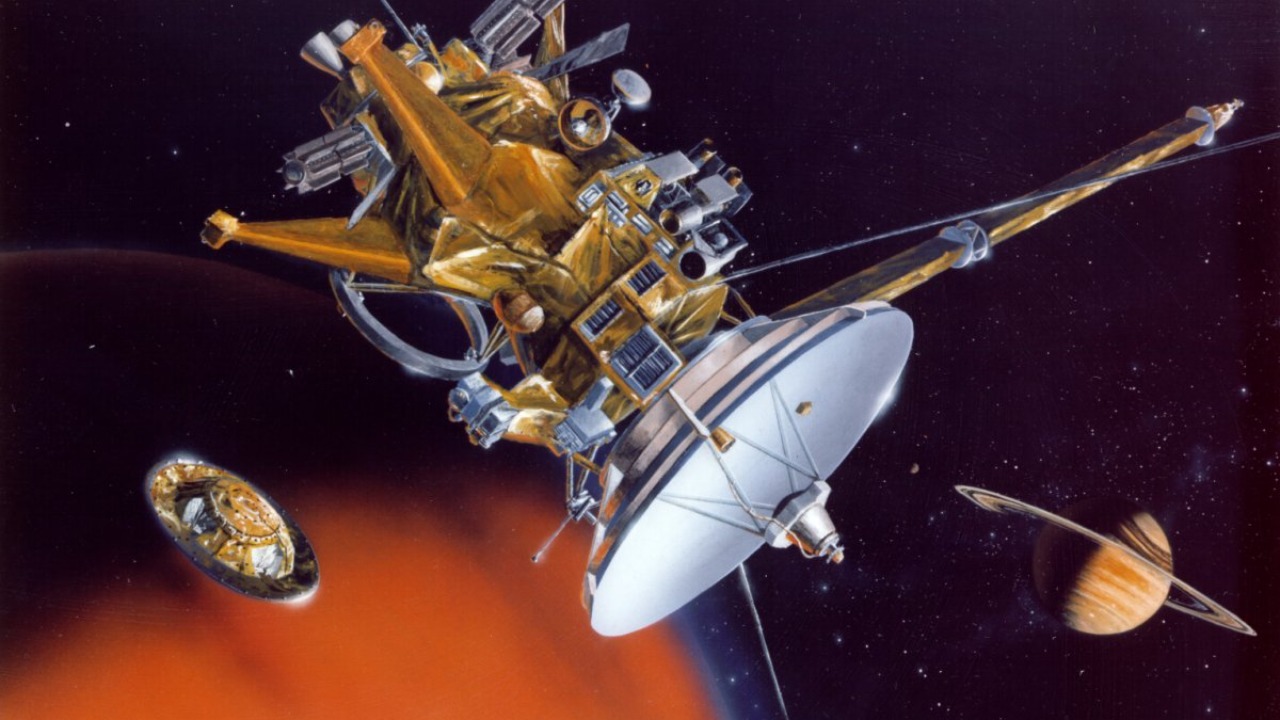
The cube-shaped anomaly was first detected by NASA’s Cassini spacecraft during its mission to study Saturn and its moons. The initial observation occurred in late 2024, when the spacecraft’s imaging systems captured an unusual geometric shape amidst the planet’s rings. This anomaly stood out due to its distinct cubic form, a stark contrast to the natural, irregular shapes typically observed in space.
Upon closer examination, the anomaly was estimated to measure approximately 2 kilometers on each side, orbiting Saturn at a distance that places it just beyond the outer edge of the planet’s A ring. The anomaly’s orbit is stable, suggesting it has been in place for a significant period. The scientific community was quick to react, with experts proposing a range of initial hypotheses. Some suggested it could be a rare natural formation, while others speculated about the possibility of it being a piece of space debris or even an artifact of extraterrestrial origin.
Scientific Analysis and Theories
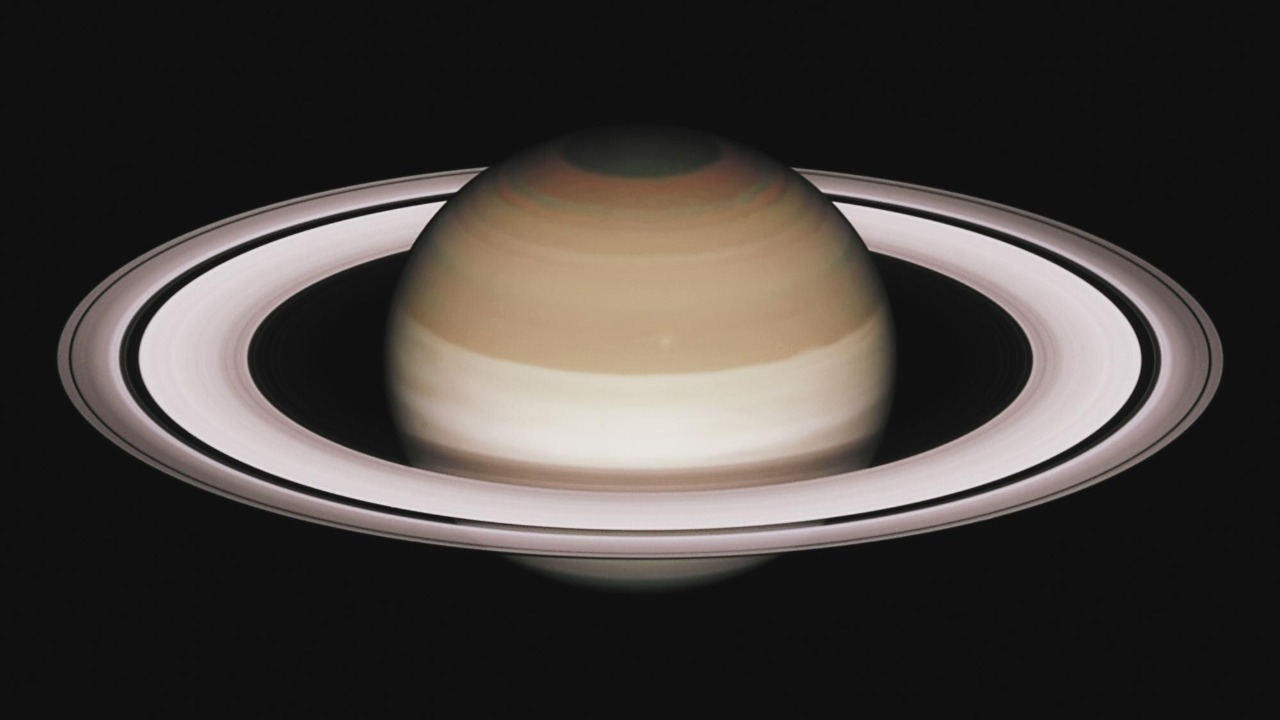
NASA scientists have employed a variety of investigative techniques to study the anomaly in greater detail. High-resolution telescopic imaging has been crucial in capturing detailed visuals of the cube, while spectroscopic analysis is being used to determine its composition. Data from these methods are being analyzed to understand the anomaly’s surface characteristics and potential material makeup.
Among the leading theories, one suggests that the anomaly could be a naturally occurring ice formation, shaped by unique gravitational forces within Saturn’s ring system. Another theory posits that it might be a remnant of a larger celestial body that broke apart, leaving behind this peculiar structure. The more speculative theories entertain the idea of the cube being an artifact of extraterrestrial technology, a notion that has captured the public’s imagination despite the lack of concrete evidence. However, scientists face significant challenges in confirming any of these theories due to the limitations of current technology and the vast distance from Earth.
Potential Implications for Space Exploration

The discovery of the cube-shaped anomaly has the potential to significantly impact future space missions. NASA is considering redirecting some of its research priorities to focus more on Saturn and its surroundings. This could lead to the development of new missions specifically aimed at studying the anomaly, possibly involving advanced robotic explorers or even crewed missions in the distant future.
Beyond immediate mission planning, the anomaly challenges existing paradigms in planetary science and celestial phenomena. If the anomaly is confirmed to be a natural formation, it could provide new insights into the processes that shape planetary rings and moons. Conversely, if it is determined to be artificial, it would revolutionize our understanding of extraterrestrial life and technology. Such discoveries invariably boost public interest in space exploration, potentially leading to increased funding and support for NASA and other space agencies.
Public and Cultural Reactions
The cube-shaped anomaly has captured the attention of media outlets worldwide, with headlines speculating about its nature and origin. The public’s fascination with the anomaly has been fueled by its mysterious appearance and the tantalizing possibility of it being linked to extraterrestrial life. This has led to widespread coverage in both traditional media and online platforms, where discussions and debates continue to thrive.
In popular culture, the anomaly has already begun to inspire new works of science fiction, art, and cultural narratives. Writers and filmmakers are incorporating the cube into their stories, exploring themes of discovery and the unknown. Educational institutions are also seizing the opportunity to engage students with this real-world mystery, using it as a case study to teach about space science and the scientific method.
Future Research and Exploration
NASA is currently evaluating the next steps for further investigation of the cube-shaped anomaly. Potential missions could involve sending a dedicated probe to Saturn to gather more detailed data, or leveraging international collaboration to pool resources and expertise. The European Space Agency and other international partners have expressed interest in participating in such efforts, recognizing the anomaly’s potential to advance our understanding of the universe.
In the long term, scientists hope to achieve a comprehensive understanding of the anomaly’s nature and origins. This could involve developing new technologies for deep space exploration and analysis, as well as fostering international partnerships to share knowledge and resources. The ultimate goal is to unravel the mystery of the cube-shaped anomaly and, in doing so, expand our knowledge of the cosmos and our place within it.
