Elon Musk, the visionary CEO of SpaceX, has recently made a bold prediction about the future capabilities of the company’s Starship. According to Musk, in approximately 6 or 7 years, the Starship will be capable of launching more than 24 times within a 24-hour period.
Elon Musk’s Prediction about SpaceX’s Starship
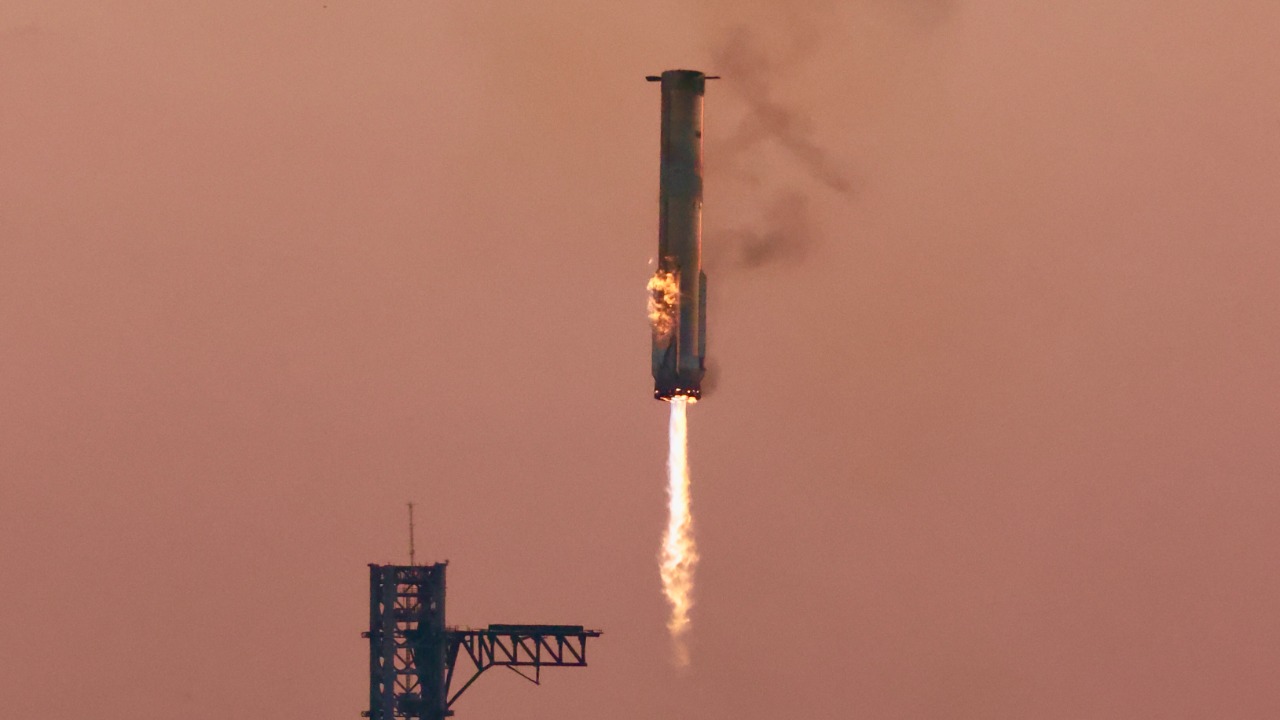
Musk’s prediction suggests a future where the frequency of Starship launches will significantly increase. If realized, this would mean that the Starship could potentially launch more than once per hour within a single day. The feasibility of such a prediction, however, is dependent on a number of factors including technological advancements, logistical considerations, and regulatory approvals.
The implications of such frequent launches on space travel and exploration are profound. With the ability to launch more than 24 times in 24 hours, the Starship could potentially facilitate rapid deployment of satellites, quick turnaround for scientific experiments, and even pave the way for high-frequency space tourism. However, the realization of this prediction is contingent on SpaceX overcoming a number of technological and logistical challenges.
Elon Musk’s ambitious prediction also reflects his broader vision for SpaceX and the future of space travel. Musk has long been an advocate for the colonization of Mars and envisions a future where space travel is as common as air travel. Achieving a launch frequency of more than 24 times in 24 hours would be a significant step towards realizing this vision. It would not only increase the accessibility of space travel but also potentially lower the cost, making it more feasible for a larger number of people and organizations.
Current State of SpaceX’s Starship

The current capabilities of SpaceX’s Starship, as reported by Space.com, are impressive but still far from reaching Musk’s predicted launch frequency. The Starship is designed to be a fully reusable spacecraft capable of carrying up to 100 people to Mars, but achieving a launch frequency of more than 24 times in 24 hours would require significant advancements in launch and recovery operations, spacecraft turnaround times, and launch pad availability.
Technological innovations needed to achieve this goal could include advancements in rocket engine technology for quicker turnaround times, improvements in launch pad infrastructure to support rapid launches, and advancements in spacecraft recovery and refurbishment processes. The realization of Musk’s prediction would undoubtedly represent a significant leap forward in space launch capabilities.
As of now, SpaceX’s Starship is still in the testing phase. According to Space.com, the company has successfully conducted several high-altitude test flights of the Starship prototypes. These tests are crucial in assessing the spacecraft’s performance and reliability, and in identifying areas that need improvement. The data gathered from these tests will be instrumental in refining the design and operations of the Starship, and in inching closer to Musk’s ambitious prediction.
Impact on the Aerospace Industry and Space Exploration
The potential impact of Musk’s prediction on the wider aerospace industry is substantial. If SpaceX is able to achieve the predicted launch frequency, it could potentially disrupt the launch market, forcing other players in the industry to innovate and adapt. This could lead to a new era of competition and innovation in the aerospace industry.
Frequent Starship launches could also influence future space missions, scientific research, and space tourism. With the ability to launch more than 24 times in 24 hours, SpaceX could potentially support a wide range of missions including satellite deployments, scientific experiments, and even space tourism flights. However, such frequent launches could also pose challenges such as increased space traffic and potential for space debris, which would need to be effectively managed.
Moreover, the potential for such frequent launches could also accelerate the pace of space exploration. With the ability to launch more than 24 times in 24 hours, SpaceX could potentially conduct more frequent and diverse missions to the Moon, Mars, and beyond. This could lead to new discoveries and advancements in our understanding of the universe. However, it also underscores the need for robust space traffic management systems to ensure safe and efficient operations in space.
