NASA’s Perseverance rover has made a startling discovery on Mars—a rock covered in strange, sphere-like features, whimsically dubbed the “spider egg” rock by scientists. This peculiar object was spotted in March 2025, and its origin remains a mystery, challenging our understanding of Mars’ geological history. The discovery has sparked intrigue and curiosity among scientists, as they attempt to unravel the secrets behind this enigmatic find.
Discovery of the ‘Spider Egg’ Rock
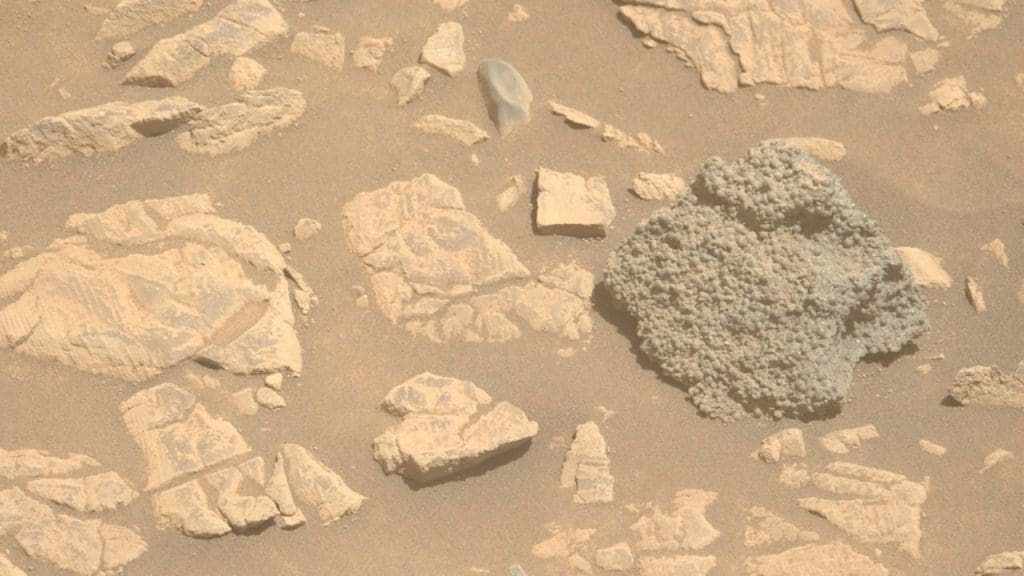
The “spider egg” rock, as it has been informally named, presents a peculiar sight with its surface dotted by numerous spherical protrusions, reminiscent of spider eggs. This unusual appearance was captured by the Perseverance rover, which has been exploring the Martian surface in search of signs of past life and geological activity. The rock’s unique texture and formation have captivated scientists, prompting a flurry of hypotheses and discussions about its possible origins. According to WION News, the rock’s appearance is unlike anything previously observed on Mars, adding to the mystery surrounding its formation.
Located in the Jezero Crater, the site where Perseverance made this discovery is known for its rich geological history, believed to have once hosted a lake. This context adds another layer of intrigue, as scientists speculate about the processes that could have led to the formation of such a distinctive rock. The Space.com report highlights the significance of this location, suggesting that the rock’s formation could be linked to ancient water activity or volcanic processes.
NASA scientists have reacted with a mix of excitement and puzzlement to this unexpected find. Initial hypotheses range from natural geological processes to the possibility of ancient biological activity, though no definitive conclusions have been reached. As Chip Chick notes, the discovery has sparked a renewed interest in Mars’ geological history, with researchers eager to explore the implications of such formations.
In addition to its unusual appearance, the “spider egg” rock’s location within the Jezero Crater provides a unique opportunity for scientists to study the interplay between Mars’ ancient water systems and its geological formations. The crater’s history as a former lakebed suggests that water may have played a significant role in shaping the rock’s current form. This possibility is supported by the presence of sedimentary layers in the area, which could have contributed to the rock’s spherical features through processes such as mineral precipitation or erosion. As researchers continue to analyze data from the Perseverance rover, they hope to determine whether these spheres are the result of chemical reactions in a watery environment or if they formed through other means, such as volcanic activity or wind erosion.
Scientific Puzzles Posed by the Discovery
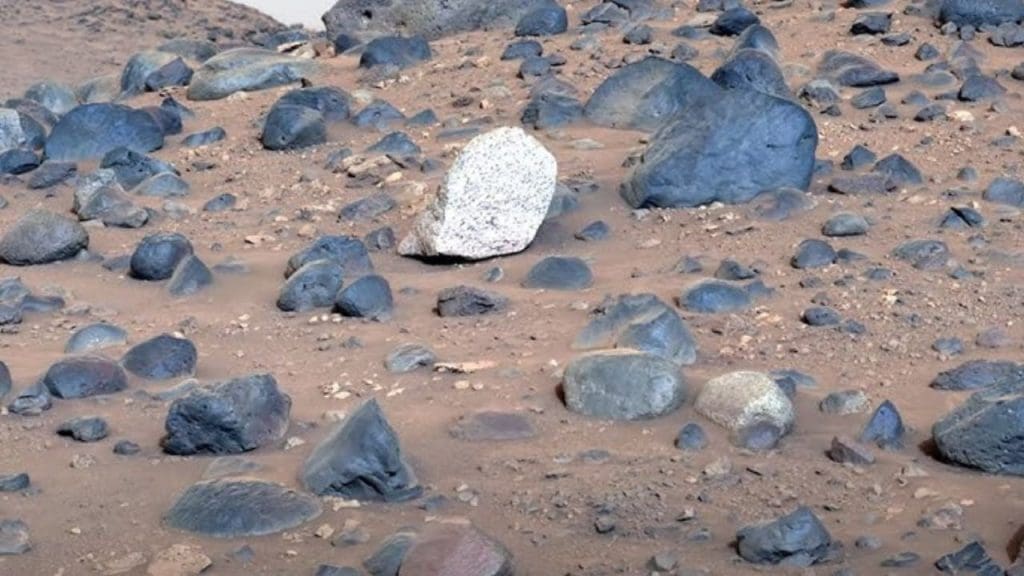
The origin and composition of the “spider egg” rock remain a mystery, with scientists currently lacking a clear understanding of how such formations could occur on Mars. The spheres’ composition and the processes that led to their creation are subjects of intense study, as researchers attempt to piece together the geological history of the Red Planet. According to Live Science, the lack of definitive answers highlights the complexity of Mars’ geological processes and the challenges faced by scientists in interpreting these findings.
Several potential geological processes have been considered as explanations for the rock’s formation. These include volcanic activity, sedimentary processes, or even the impact of meteorites, each offering a different perspective on Mars’ past. As Chip Chick reports, the diversity of these hypotheses underscores the need for further exploration and analysis to determine the true nature of these formations.
This discovery could prompt a significant rethink of Mars’ geological history, challenging existing theories and potentially leading to new insights about the planet’s past. As ZME Science suggests, the “spider egg” rock may hold clues to previously unknown aspects of Mars’ evolution, offering a fresh perspective on the planet’s complex geological narrative.
Adding to the complexity of the “spider egg” rock’s formation is the potential influence of Mars’ atmospheric conditions. The thin atmosphere and frequent dust storms on the planet could have contributed to the rock’s weathering and erosion over time, potentially revealing or altering its spherical structures. This aspect of the rock’s history is crucial for understanding the broader environmental conditions on Mars and how they have changed over millions of years. By studying the rock’s composition and the surrounding terrain, scientists aim to reconstruct the environmental history of the Jezero Crater, providing insights into the planet’s climate and its capacity to support life in the past.
Implications for Mars Research and Exploration

Findings like the “spider egg” rock could have significant implications for future Mars exploration missions. The discovery highlights the need for advanced technology and methods to study Mars’ surface in greater detail, potentially guiding the development of new instruments and techniques. As ZME Science points out, such discoveries could shape the objectives and strategies of upcoming missions, focusing on areas with similar geological features.
The potential for new technology and methods in unraveling the mysteries of Mars’ surface is vast. The Perseverance rover’s ability to capture detailed images and data from the Martian surface is a testament to the advancements in space exploration technology. According to Space.com, continued innovation in this field could lead to breakthroughs in our understanding of Mars and its potential for past life.
In the long term, discoveries like the “spider egg” rock hold significance for human exploration and settlement on Mars. Understanding the planet’s geological history and surface conditions is crucial for assessing its habitability and potential resources. As Live Science notes, these insights could inform future missions and the eventual goal of establishing a human presence on the Red Planet.
Concluding Thoughts on the Mysterious Find
The “spider egg” rock presents a series of challenges and questions for scientists, highlighting the complexity and intrigue of Mars’ geological landscape. The discovery underscores the importance of continued exploration and study, as researchers strive to unlock the secrets of the Red Planet. As Chip Chick emphasizes, the rock’s enigmatic nature serves as a reminder of the many mysteries that remain to be uncovered on Mars.
The Perseverance rover plays a crucial role in advancing our understanding of Mars, providing valuable data and insights that drive scientific inquiry. Its discoveries, including the “spider egg” rock, contribute to a growing body of knowledge that shapes our perception of the Red Planet. As Space.com highlights, the rover’s mission is a testament to the power of exploration and the pursuit of knowledge.
The ongoing journey to uncover the secrets of Mars is filled with challenges and opportunities, as each new discovery adds to our understanding of this distant world. The “spider egg” rock is a fascinating piece of this puzzle, offering a glimpse into the complexities of Mars’ geological history and the potential for future exploration. As we continue to explore the Red Planet, the mysteries it holds promise to inspire and captivate for years to come.
