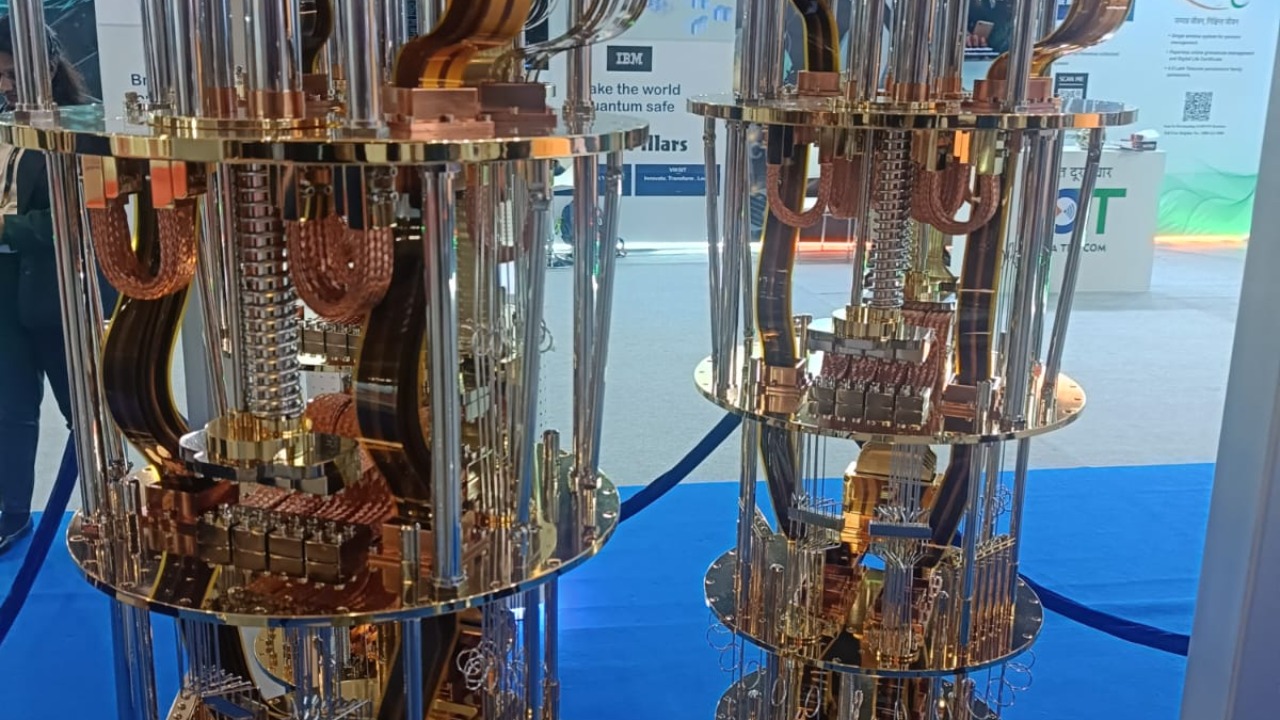

Quantum computing has long been dominated by proprietary machines locked behind corporate and national lab firewalls, but a different model is starting to take shape. A growing coalition of researchers and nonprofits is trying to build a full quantum stack that anyone can inspect, copy, and improve, treating qubits less like trade secrets and more like shared infrastructure. Their goal is not just to match commercial systems, but to prove that an open blueprint can accelerate the field itself.
At the center of this shift is a trapped-ion device that its creators describe as the World’s first open hardware quantum platform, paired with open control software and community governance. Around it, industrial heavyweights and software communities are testing how far open source can stretch when the hardware is fragile, expensive, and still experimental.
The Waterloo lab betting on radical openness
The most concrete bid to create a fully transparent quantum machine is emerging in Waterloo, where Open Quantum Design, or OQD, is publishing the schematics, control stack, and operating procedures for a trapped-ion system. The group, based in Waterloo, frames its device as the World’s first open-source trapped-ion quantum computer, a label that matters because it commits them to releasing not just code but the physical design and calibration methods that make the qubits work. In a field where hardware recipes are usually guarded as competitive advantage, OQD is effectively inviting others to copy and critique its approach to storing and processing information.
OQD describes itself as a Waterloo non-profit organization focused on widening access to quantum computing technology, and its trapped-ion platform is meant as a reference design that universities and smaller labs can replicate without negotiating vendor contracts. The group’s public materials emphasize that Open Quantum Design wants to lower the barrier to hands-on experimentation, positioning its open hardware as a counterweight to closed commercial systems that sit behind cloud paywalls, a stance that is underscored in reporting on the open-source trapped-ion project.
Inside OQD’s community-built machine
What makes the Waterloo effort unusual is not only that the hardware design is public, but that the build itself is structured like a software project. OQD counts more than 30 software contributors and dozens of laboratory collaborators, including Waterloo undergraduate students and international partners, who are collectively refining the control stack and experimental protocols. That contributor model, more familiar from Linux or Python, is being applied to the delicate business of aligning lasers, trapping ions, and stabilizing qubits, with the expectation that a distributed community can debug and improve the system faster than any single lab.
The group’s leaders argue that this open architecture is already paying dividends for training and research. Beyond speeding up technological advancements, OQD presents its platform as a way to train quantum industry experts and to advance other areas of science that depend on high performance computation, from chemistry to optimization. In their view, publishing the full design lets the broader community move faster together, a claim that is central to descriptions of how Beyond the immediate device, the project is meant to seed a generation of experimentalists who are fluent in both hardware and open collaboration.
From open software to open hardware
The push to open quantum hardware builds on a decade of work in open quantum software, where toolkits and simulators have already reshaped who can participate. Guides on Defining Open Source Quantum Software describe how shared codebases let researchers test algorithms, benchmark devices, and prototype applications without owning a single qubit, mirroring the way classical open source projects accelerated the development of operating systems and web infrastructure. In that framing, open quantum projects are not just a philosophical choice, they are a practical way to pool scarce expertise and avoid duplicating effort across isolated teams.
Major vendors have leaned into this logic on the software side. IBM, for example, has treated open tooling as a strategic asset, open-sourcing key parts of its quantum software stack and introducing Qiskit as a versatile framework for programming and experimenting with its devices. Documentation on open-source efforts around IBM’s cloud platform highlights how Qiskit has become a common language for students and professionals, while separate material on Qiskit itself underscores its role in advancing quantum technology by standardizing how experiments are described and shared.
How open fits into a fiercely competitive industry
Even as OQD and academic partners push for transparency, the broader quantum market is defined by intense competition among hardware makers and cloud providers. Industry surveys that rely on patent and market research analysis consistently place IBM at or near the top of quantum computing companies, with IBM Quantum described as a first-of-its-kind effort to commercialize large scale devices. One breakdown of leading manufacturers lists IBM in the USA as the number one quantum computer company, highlighting its focus on superconducting hardware and systems like IBM Quantum System One, a ranking that appears in IBM focused manufacturer lists.
Other analyses of the sector point to a cluster of major players, including IBM, Microsoft, Amazon, D-Wave, IonQ, Classiq and BQP, that lead innovation across hardware, software, and quantum cloud services. One set of Key Takeaways on quantum companies names BQP, IBM, Microsoft and Amazon as central actors, while another review of top firms stresses how partnerships with quantum hardware suppliers and specialized Quantum software are shaping applications in areas like computational chemistry. These competitive dynamics are documented in analysis of corporate strategies, in Key Takeaways about leading firms, and in manufacturer rankings that again single out IBM as a global leader.
Why the first open machine matters
In that context, the decision by a Waterloo non-profit to publish a full trapped-ion design is less a curiosity and more a test of whether open models can coexist with, or even accelerate, commercial roadmaps. Advocates of Defining Open Source Quantum Software argue that open projects help democratize access and speed the development of future technologies, and OQD is effectively extending that logic from code to hardware. By treating the World’s first open-source trapped-ion quantum computer as a shared reference, Open Quantum Design is betting that more eyes on the schematics and control stack will surface new ideas and applications that proprietary teams might miss, a stance reflected in descriptions of Defining Open Source.
The project’s champions, including researchers who have spoken at events hosted by Xanadu for quantum developers, frame the effort as part of a broader cultural shift in how frontier technologies are built. Talks such as Roger Melko’s remarks on building an open source quantum computer, and related presentations on Xanadu for community events, stress that training, reproducibility, and shared infrastructure are as important as raw qubit counts. University profiles of the Waterloo initiative note that OQD already coordinates more than 30 contributors and multiple labs, including OQD collaborators on campus, while coverage of the trapped-ion device itself reiterates that Open Quantum Design in Waterloo is explicitly targeting wider access to quantum computing technology.
Whether that model scales to larger, fault tolerant machines is still unverified based on available sources, but the first open hardware efforts are already reshaping expectations. As proprietary leaders like IBM refine their cloud platforms and software ecosystems through initiatives documented in open source guides, and as market studies continue to track IBM and its peers, the existence of a community-built trapped-ion machine in Waterloo offers a different benchmark. It suggests that the race to practical quantum computing will not be decided only by who has the most qubits, but also by who is willing to share the blueprints.
More from Morning Overview