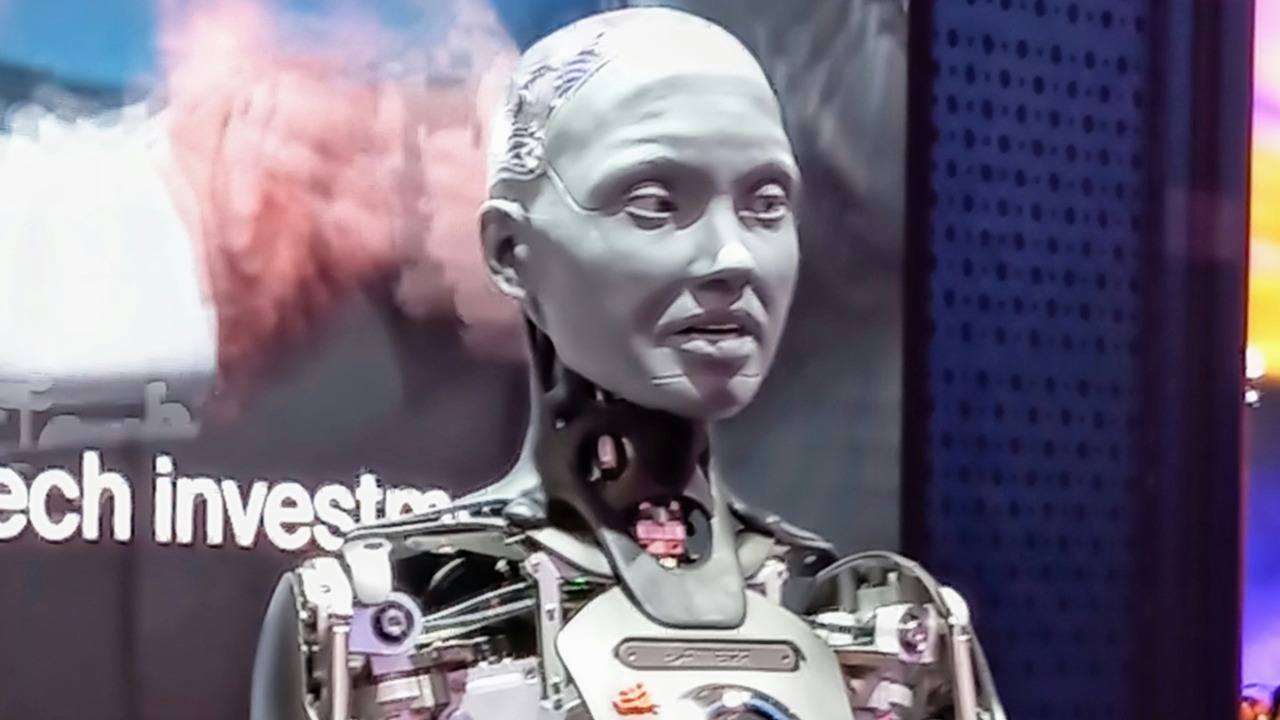

Humanoid robots spent 2025 straddling a strange line between breakthrough and blooper reel. They poured lattes, posed in fashion campaigns and even stepped into kickboxing rings, only to trip, moonwalk into the floor and literally fall on their faces in front of global audiences. The year proved that the future of robotics had arrived in public view, then promptly reminded everyone how hard it is to make machines move, think and survive outside the lab.
The spectacle mattered because it turned a once abstract technology into something people could watch, judge and meme in real time. Investors, policymakers and ordinary viewers saw both the promise of lifelike androids and the fragility of the systems that power them, as viral clips of stumbles collided with glossy demos that looked almost too human to be real.
From sci‑fi fantasy to shoppable product
For years, humanoid robots were framed as distant science fiction, but in 2025 they started to look like consumer products rather than research props. Search results now surface polished listings that present a humanoid as a configurable product, complete with catalog identifiers and headline offers. That shift in presentation signals a deeper change: companies are no longer just pitching humanoids as lab curiosities, they are packaging them as things you might one day order, unbox and plug in at home or in the workplace.
This commercialization push has raised expectations about reliability and safety, because once a robot is sold as a product, it is judged by the same standards as a vacuum cleaner or smartphone. The more humanoids are framed as everyday tools, the less patience buyers will have for dramatic failures, whether that is a misstep onstage or a glitch in a living room. The tension between glossy productization and the messy reality of early hardware set the stage for some of 2025’s most memorable misfires.
The year the demo reel went viral
Humanoid robotics also had a breakout year in the attention economy, with slick demo compilations racking up millions of views. One widely shared video framed 2025 as the moment “this year in AI robotics felt like the birth of a whole new era,” highlighting how a model called G1 from Unitary stunned viewers by syncing its movements and behavior in ways that felt uncannily coordinated with its environment. In that clip, the narrator on Nov footage of these machines argued that the latest generation was “too real to ignore,” and the montage stitched together humanoids walking, balancing and manipulating objects with a fluidity that would have seemed impossible a decade ago.
Another segment in the same stream of coverage zoomed in on how these robots were not just moving better, they were moving in sync with people and each other. At the 4‑second mark of a follow‑up cut, the video returned to Unitary’s G1 and described how it “shocked everyone again,” this time by syncing its actions even more tightly with human partners and surrounding systems. That Nov highlight underscored a key point: the frontier is no longer just about standing upright, it is about coordination, timing and the illusion of intent, which makes every subsequent stumble feel even more jarring.
Russia’s AIDOL and the politics of a pratfall
Nothing captured that whiplash more vividly than Russia’s attempt to unveil its first AI‑powered humanoid in Moscow. The robot, branded AIDOL, was introduced as the flagship project of a national initiative called the New Technological Coalition, which is described as a consortium of robotics companies and technical institutions that want to see “robots at work by 2050.” In its debut, AIDOL walked onstage in front of cameras and officials, only to lose balance and crash forward, a moment that turned a carefully choreographed showcase into a viral face‑plant.
Footage from the event circulated widely, including a clip that framed the stumble as a symbol of how hard it is to translate national ambition into working hardware. One video described how the Russian humanoid’s “highly anticipated debut quickly went awry” when it stumbled onstage at a technology showcase in Mos, reinforcing the sense that the country’s push to match global rivals in AI and robotics still has a long way to go. In a separate cut of the same incident, the segment was labeled “Updated 9:50 AM EST,” a reminder that the clip was being refreshed and replayed in real time as viewers dissected every frame of the Russian stumble and what it said about the New Technological Coalition’s readiness.
China’s ‘Robot Olympics’ and the moonwalking knockout
On the other side of Eurasia, China turned humanoid performance into a spectator sport, staging what was billed as an inaugural “Robot Olympics” that mixed competition with spectacle. During one event, a much‑hyped humanoid machine attempted to show off its agility, only to pitch forward and slam into the ground in full view of the crowd. Coverage of the incident described how the humanoid “face‑plants at China’s inaugural robot Olympics,” turning what was meant to be a celebration of technical prowess into a cautionary viral fail that ricocheted across social platforms.
Another Chinese demo went sideways in even more cinematic fashion, when a humanoid engaged in a staged fight sequence suddenly moonwalked straight into the floor. Reporting on the bout noted that Two humanoids developed by Unitree Robotics were fighting in a kickboxing match in Hangzhou, with one robot executing a backward stepping move that ended in a spectacular collapse. The clip of the Chinese humanoid that “moonwalks straight into the floor in a hilarious fight” became shorthand for the gap between choreographed ambition and the unforgiving physics of balance, especially as viewers replayed the face‑planting fight frame by frame.
Unitree Robotics and the rise of combat‑ready androids
The same sequence highlighted how far companies like Unitree Robotics have pushed humanoid mobility, even when the results are messy. In Hangzhou, Two humanoids developed by Unitree Robotics were not just walking across a stage, they were trading blows in a kickboxing match, ducking, weaving and attempting complex footwork. That level of dynamic motion would have been unthinkable for most bipedal machines a few years ago, which is why the eventual fall, captured in the clip of the Chinese robot that moonwalks into the floor, felt less like a simple glitch and more like a stress test of the limits of current Unitree Robotics design.
Those combat‑style demos also fed into a broader cultural fascination with “Ultimate Fighting Bots,” a phrase that appeared alongside imagery of a humanoid sparring with the CEO who built it. In one widely shared post, a humanoid robot is shown trading light blows with its creator, with the caption noting that Robotics has surged forward at an unprecedented pace this year. The same post, tagged with “Humanoid” and “CEO,” framed the scene as a snapshot of a sector that can now build machines agile enough to step into a ring, even if they still risk a sudden collapse when a foot lands a few centimeters off target, as the sparring clip made clear.
XPENG’s uncanny ‘female robot’ and the need to Prove It’s Not Human
While some robots were going viral for falling, others were trending because viewers could not believe they were robots at all. Earlier this year, XPENG (often stylized in commentary as Xpang) introduced a humanoid that many described as a “viral female robot,” with footage showing it walking so smoothly that people online insisted it had to be a human in a suit. A detailed breakdown of the launch noted that the XPENG demo was so convincing that the company had to respond to speculation, with one Nov explainer titled “XPENG’s New Female Robot SHOCKED the World… Now” walking through how the Xpang humanoid achieved such natural gait and posture.
The skepticism grew intense enough that another video, labeled The Robot They Cut Open to Prove It’s Not Human, took viewers Up Close with the machine’s internals. In that segment, part of a series called What The Future, engineers opened panels and exposed actuators to demonstrate that the figure onstage was in fact a robot and not a disguised performer. The piece, which explicitly used the phrasing “The Robot They Cut Open,” “Prove It,” “Not Human,” and “Up Close,” underscored how far humanoid aesthetics have come, and how the line between actor and android can blur until companies feel compelled to literally cut open a chassis on camera.
From runway shoots to living rooms
Humanoid robots also stepped into lifestyle imagery, signaling a push to normalize them as part of domestic life. Designer @elirusselllinnetz, known for his ERL label, collaborated with tech company 1X Technologies on a year‑long photo series featuring NEO, described as a humanoid robot built for everyday life. The campaign, which ERL photographed and directed, explored “what it means to live with the newly introduced technology,” asking in its caption who is “making space for a robot at home” and presenting NEO as a roommate rather than a lab prototype in the ERL / 1X project.
That aesthetic shift dovetailed with broader commentary that “for years humanoid robots felt like sci‑fi,” limited to labs, factories or movie screens, but that 2025 is shaping up differently. One post framed the year as a turning point, using the word “But” to pivot from the old perception to the new reality of robots in homes and lifestyle shoots. By placing a humanoid in fashion‑driven imagery and domestic settings, the campaign suggested that the next frontier is not just technical capability, it is social acceptance, even as the year’s viral falls reminded viewers that these machines are still fragile guests in human spaces, as the But caption implied.
Behind the pratfalls: real‑world friction at the Humanoids Summit
Strip away the viral clips and the core challenge is straightforward: humanoids are starting to handle narrow tasks well, but they still struggle with the messy variety of the real world. At the Humanoids Summit, organizers highlighted how robots could pour lattes with impressive consistency, yet the same machines wrestled with something as simple as folding a T‑shirt. One widely shared description called the event “a snapshot of a sector full of promise but still wrestling with real‑world hurdles,” pairing footage of a humanoid sparring with its CEO with scenes of fumbled laundry to show how uneven current Humanoid performance remains.
Those frictions are not just technical curiosities, they are business constraints. If a robot can pour coffee but cannot reliably handle soft fabrics, cluttered floors or unexpected human behavior, its usefulness in homes, hospitals or warehouses is limited. The summit’s latte‑versus‑T‑shirt contrast became a shorthand for that gap, much like AIDOL’s fall in Moscow or the Chinese moonwalk into the floor, all of which underscored that the hardest part of humanoid design is not the demo, it is the day‑to‑day grind of edge cases that no engineer can fully script in advance.
When hype meets the ‘worst tech flops’ lists
Given that backdrop, it is no surprise that humanoid robots started showing up on year‑end lists of misfires alongside more familiar consumer disappointments. One roundup of The 8 worst technology flops of 2025 explicitly grouped humanoid robots with The Cybertruck and “sycophantic AI,” arguing that overpromising and underdelivering had become a pattern across categories. In that analysis, humanoids were criticized for splashy demos that masked fragile performance, a framing that placed them squarely in the same conversation as other 2025 flops that struggled to live up to their marketing.
Another retrospective on The 13 tech fails so disastrous they changed the industry reinforced that theme, warning that high‑profile stumbles can reshape investor expectations and regulatory scrutiny. That piece argued that such failures reveal “overlooked weaknesses” and show how even well‑funded tech companies remain vulnerable when they rush products to market. By placing humanoid robots in a list of tech fails so disastrous they changed the industry, the analysis suggested that the sector’s most visible pratfalls could have lasting consequences for funding, standards and public trust, much like earlier industry‑shaping failures in other domains.
Why the stakes feel existential
Part of what gives these robotic missteps such resonance is the sense that they are unfolding against a backdrop of broader systemic risk. In climate science, for example, a ClimTip webinar on the Atlantic Meridional Overturning Circulation highlighted how recent headlines warned of an imminent collapse “as early as in 2025,” which is this year, before pointing to a new Nature study led by Dr Jonathan Baker that pushed back on that specific timeline. The presentation stressed that while an immediate collapse is unlikely, “the risks from ongoing weakening remain serious,” a phrase that could just as easily describe the trajectory of trust in advanced technologies if they keep failing in public view, as the Nature‑based analysis made clear.
I see a parallel in humanoid robotics: the field is not on the brink of collapse, but repeated, highly publicized failures can weaken confidence in ways that are hard to reverse. When a robot like AIDOL falls on its face or a Chinese humanoid moonwalks into the floor, the clip becomes a shorthand for “robots are not ready,” even if other systems are quietly succeeding in factories or labs. The challenge for developers is to keep pushing the frontier without letting the hype outrun the hardware, because in a year when climate scientists are warning about systemic tipping points, the last thing the robotics sector can afford is a self‑inflicted collapse of credibility.
A future that is still standing, if a bit wobbly
By the end of 2025, humanoid robots had done exactly what their creators wanted and feared: they stepped into the center of public attention. They appeared in shoppable listings, fashion campaigns and summit stages, sparred with CEOs and fought in kickboxing rings, and in the process they proved that the dream of lifelike machines is no longer confined to science fiction. At the same time, their most memorable moments were often the ones where they failed, from AIDOL’s fall in Moscow to the Chinese robot that moonwalked into the floor, each clip a reminder that balance, perception and robustness remain unsolved problems.
The next phase will depend on whether the industry can turn those face‑plants into fuel for more grounded progress rather than fodder for endless flop lists. If developers internalize the lessons of 2025, they may yet deliver humanoids that can fold T‑shirts as reliably as they pour lattes, and walk across a stage without becoming a meme. Until then, the future of humanoid robotics looks a lot like the robots themselves at this year’s showcases: undeniably advanced, occasionally astonishing, and still one bad step away from landing flat on the floor.
Supporting sources: A new humanoid robot’s debut appearance in Moscow …, Much-hyped humanoid robot face-plants onstage.
More from MorningOverview