Scientists have made a groundbreaking discovery that could reshape our understanding of gold’s origins, a mystery that has puzzled experts for decades. This major breakthrough is being hailed as one of the most significant scientific achievements of the century, as it addresses fundamental questions about the formation and distribution of this precious metal in the universe.
The Scientific Quest for Gold’s Origins

The quest to understand where gold comes from has been a scientific endeavor spanning centuries. Historically, theories have ranged from alchemical transformations in ancient times to more recent hypotheses involving supernovae and cosmic collisions. Each theory has added a layer of complexity to our understanding, but none have provided a definitive answer to the question of gold’s origins.
At the heart of this quest have been several key scientific questions: How is gold formed in the universe? What cosmic events lead to its creation? These questions have driven decades of research, as scientists have sought to unravel the processes that produce this valuable element. The importance of gold transcends its economic value; it holds a significant place in scientific research, serving as a tool for understanding stellar evolution and the life cycle of elements.
Understanding the origins of gold is not just a scientific curiosity. It has profound implications for the economic landscape, as gold remains a cornerstone of global finance and industry. Insights into its formation could inform resource management and mining strategies, potentially leading to more sustainable practices.
Unveiling the New Discovery

The recent breakthrough in understanding gold’s origins came through an innovative set of experiments and advanced technologies. Researchers employed cutting-edge simulations and observations to trace the cosmic events that lead to gold formation. These efforts have culminated in a new theory involving magnetars, a type of neutron star with an extremely powerful magnetic field.
Magnetars are now believed to play a crucial role in the formation of gold. According to findings, the intense magnetic fields and rapid rotation of these stars create the perfect conditions for heavy element synthesis, including gold. This discovery has been supported by extensive data analysis and simulations, offering a new lens through which to understand cosmic nucleosynthesis.
Leading research institutions, including NASA, have been pivotal in this breakthrough. Their contributions have provided essential data and resources that have been instrumental in developing this new model of gold formation. NASA’s involvement has not only advanced our understanding but has also highlighted the collaborative nature of modern scientific research.
Implications for Science and Industry
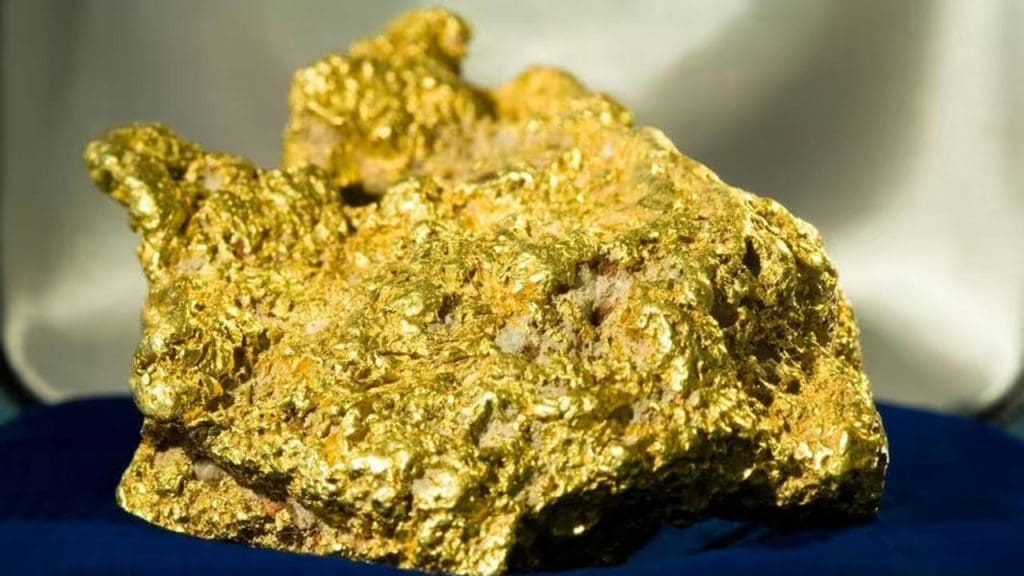
This discovery has far-reaching implications for astrophysics. It challenges existing models of stellar evolution and opens new avenues for studying cosmic events. By understanding the role of magnetars in gold formation, scientists can gain deeper insights into the life cycles of stars and the dynamic processes of the universe.
Technological advancements may also emerge from this newfound understanding of gold. The knowledge of how gold forms can lead to innovations in materials science and engineering, potentially impacting various industries, from electronics to healthcare. Moreover, this breakthrough could shift economic perspectives, influencing gold mining and resource management strategies on a global scale.
The potential for more sustainable and efficient resource extraction methods could be one of the most significant outcomes of this discovery. As the demand for gold continues to rise, these insights could drive the development of technologies that minimize environmental impact while maximizing yield.
Challenges and Future Directions

Despite this breakthrough, several mysteries still surround the formation and distribution of gold. Scientists continue to explore questions about the specific conditions required for gold synthesis and the frequency of such cosmic events. These unanswered questions highlight the complexity of stellar processes and the challenges of modeling them accurately.
Applying this new knowledge to practical applications presents its own set of challenges. Theoretical advancements must be translated into technologies and strategies that can be implemented in the real world, requiring interdisciplinary collaboration and innovation.
Future research will likely build on these findings, exploring new approaches and technologies to further unravel the mysteries of gold formation. This ongoing research promises to deepen our understanding of the universe and its intricate workings, inspiring future generations of scientists to continue this compelling journey.
Public and Expert Reactions

The scientific community has responded enthusiastically to the news of this discovery. Experts from various fields have praised the innovative approaches and insights that have led to this breakthrough. The collaborative effort between institutions has been seen as a model for future scientific research, demonstrating the power of collective inquiry.
Media coverage has played a significant role in shaping public understanding and interest in the discovery. As news of the breakthrough spread, it sparked a wave of curiosity and excitement, highlighting the public’s enduring fascination with the mysteries of the universe.
Educational institutions are also taking note, considering how to integrate this discovery into curriculums. By incorporating these new insights into educational programs, educators hope to inspire the next generation of scientists, equipping them with the knowledge and curiosity to explore the universe’s many mysteries.
