In a groundbreaking milestone for energy research, a recent fusion test has achieved a record-breaking output, offering a glimpse into the potential of fusion as a sustainable energy source. This achievement marks a significant step forward in harnessing fusion power, which promises to offer a cleaner and virtually limitless energy supply.
The Science Behind Fusion
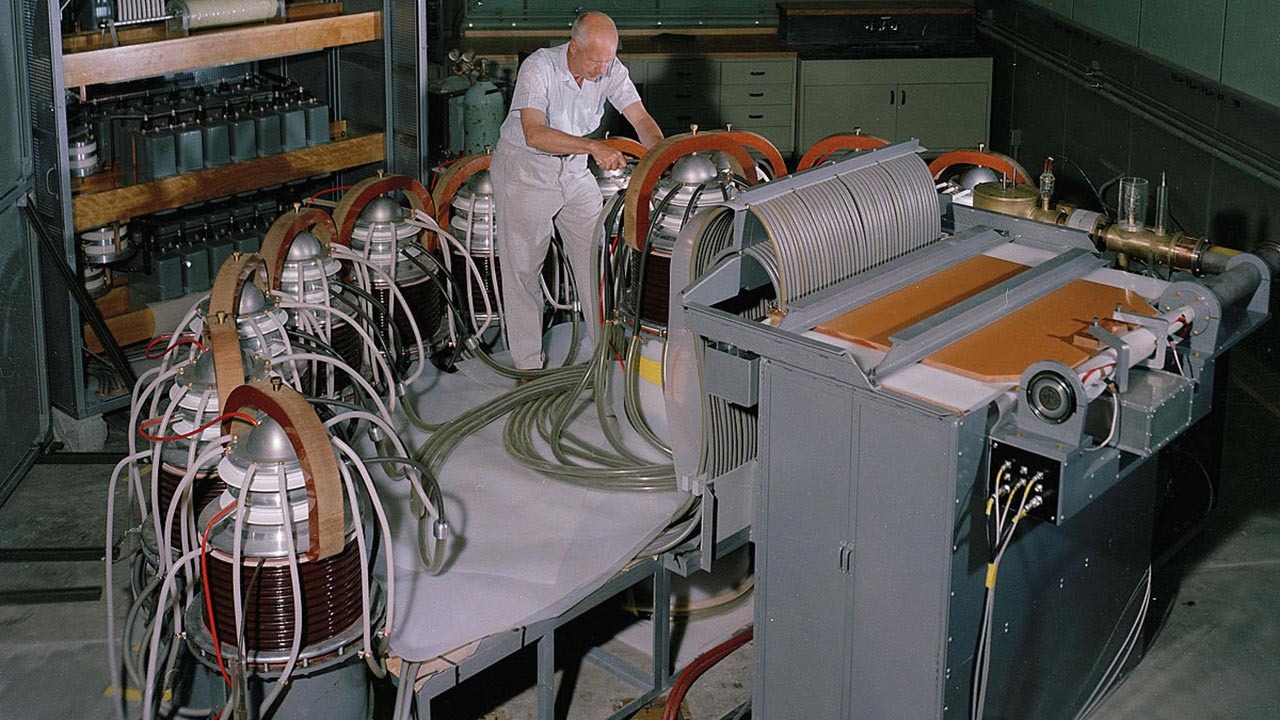
Nuclear fusion is a process where two light atomic nuclei combine to form a heavier nucleus, releasing energy in the process. This is the same reaction that powers the sun, contrasting with nuclear fission, where heavy atomic nuclei split into lighter nuclei. Fusion’s appeal lies in its potential to provide a nearly limitless energy source with minimal environmental impact, unlike fission, which generates long-lived radioactive waste.
For fusion to occur, extremely high temperatures and pressures are necessary to overcome the natural repulsion between positively charged nuclei. Typically, temperatures exceeding 100 million degrees Celsius are required. This is where technologies like lasers and magnetic confinement come into play. Lasers can rapidly heat the fusion fuel, while magnetic fields can contain the plasma long enough for fusion to occur, as seen in facilities like the National Ignition Facility (NIF).
Details of the Recent Experiment

The recent breakthrough in fusion energy was achieved at the National Ignition Facility, one of the leading institutions in fusion research. The facility utilizes a powerful laser system designed to achieve the conditions necessary for nuclear fusion. This system directs 192 high-energy laser beams onto a tiny fuel pellet, creating the extreme temperatures and pressures needed for fusion reactions.
The laser technology employed in this test reached a record output of 8.6 megajoules. This significant leap was made possible by advances in laser power and precision, as well as improvements in target design and diagnostic capabilities. Scientists involved in the experiment have expressed optimism, noting that these achievements bring us closer to the goal of practical fusion energy.
Record-Breaking Output Achievements

The recent fusion test achieved an output that more than doubles previous records, underscoring the potential of fusion as a viable energy source. According to TechCrunch, the 8.6 megajoule output is a testament to the advancements in fusion technology, marking a pivotal moment for the field. This achievement not only sets a new benchmark but also highlights the growing feasibility of fusion energy.
The implications of this record are far-reaching, offering hope that fusion could be a cornerstone of future energy strategies. The increased output demonstrates that significant progress is being made, bringing us closer to the goal of a sustainable and clean energy source that could revolutionize power generation globally.
Challenges and Limitations

Despite the recent successes, significant technical hurdles remain before fusion energy can become commercially viable. Achieving sustained and controlled fusion reactions on a large scale is a complex challenge that requires further advancements in materials science, engineering, and reactor design. The process of scaling up from experimental setups to full-scale power plants involves numerous technical and engineering obstacles.
Financial and logistical challenges also pose significant barriers. The development and construction of fusion facilities require substantial investment and resources. As a result, international collaboration and government support are crucial to overcoming these challenges. The timeline for commercial fusion energy remains uncertain, with experts suggesting that it could take several more decades of research and development to achieve widespread adoption.
Implications for the Future of Energy

The potential benefits of fusion energy are immense. It promises to provide a clean and virtually inexhaustible energy source with minimal environmental impact. Fusion reactions produce no greenhouse gases and generate only short-lived radioactive waste, making it an attractive option for reducing our reliance on fossil fuels and combating climate change.
Fusion could complement or even replace existing energy sources, providing a stable and secure energy supply. Its development could lead to a more resilient energy infrastructure, reducing dependence on geopolitically sensitive fossil fuel imports. Furthermore, international collaboration will be key to advancing fusion research and technology, as shared knowledge and resources can accelerate the path to practical fusion energy. As noted by Live Science, the recent achievements are a promising step towards this future.
