Floating solar farms are a novel way of providing renewable energy to remote islands. By utilizing available water bodies, these innovative energy solutions are revolutionizing the energy sector in regions that are often difficult to access.
Understanding Floating Solar Farms
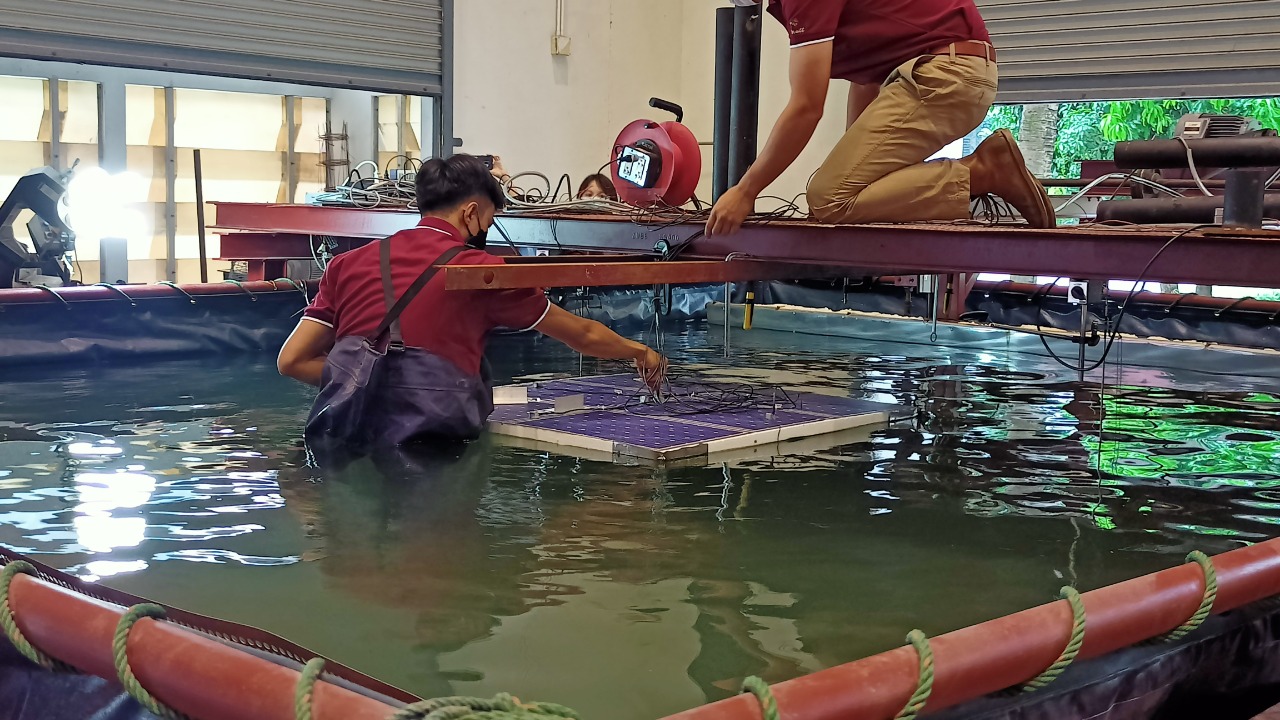
Floating solar farms, also known as floatovoltaics, are essentially solar panels mounted on a floating structure that is anchored to a water body like a lake, reservoir, or the ocean. The concept behind floating solar farms is simple – to make use of water bodies for generating solar power, especially in areas where land availability is a constraint. The technology behind these farms is similar to traditional solar panels, but they are engineered to be buoyant and withstand harsh aquatic conditions.
There are different types of floating solar farms, primarily distinguished by the type of water body they are installed on. For instance, some floatovoltaics are designed for calm freshwater bodies like lakes and reservoirs, while others are engineered for saline or turbulent waters like seas or oceans. The size, design, and anchoring systems of these farms can vary greatly, depending on the specific needs and conditions of the location.
Benefits and Challenges of Floating Solar Farms
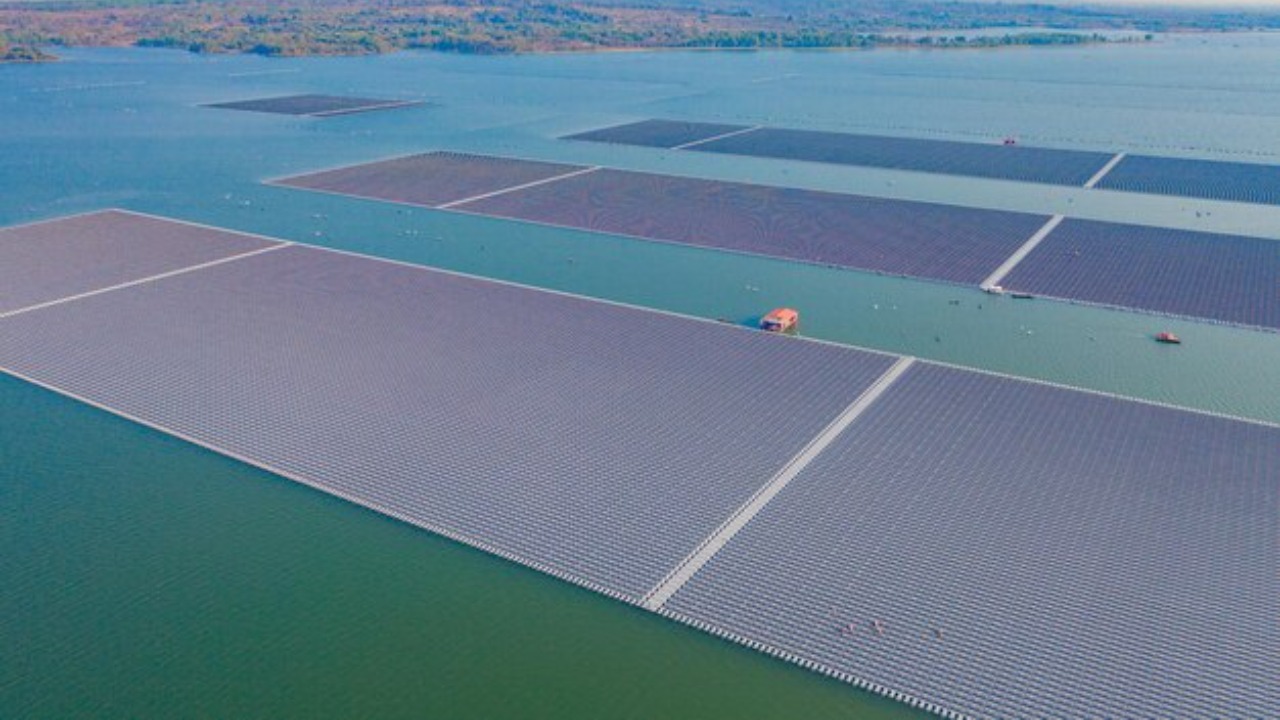
Floating solar farms offer numerous environmental benefits. For one, they help conserve land space. Additionally, they reduce water evaporation and inhibit the growth of harmful algae by blocking sunlight. Economically, they can be more cost-effective than land-based solar farms as they do not require expensive land acquisitions or site preparation. Furthermore, the cooling effect of the water can enhance the efficiency of solar panels. The BBC discusses these advantages in more detail.
However, setting up and maintaining floating solar farms can come with its own set of challenges. These include the cost and complexity of installation, potential impacts on aquatic ecosystems, and the need for robust anchoring systems to withstand weather conditions. Issues such as corrosion and biofouling also require regular maintenance and inspection.
Case Studies of Floating Solar Farms
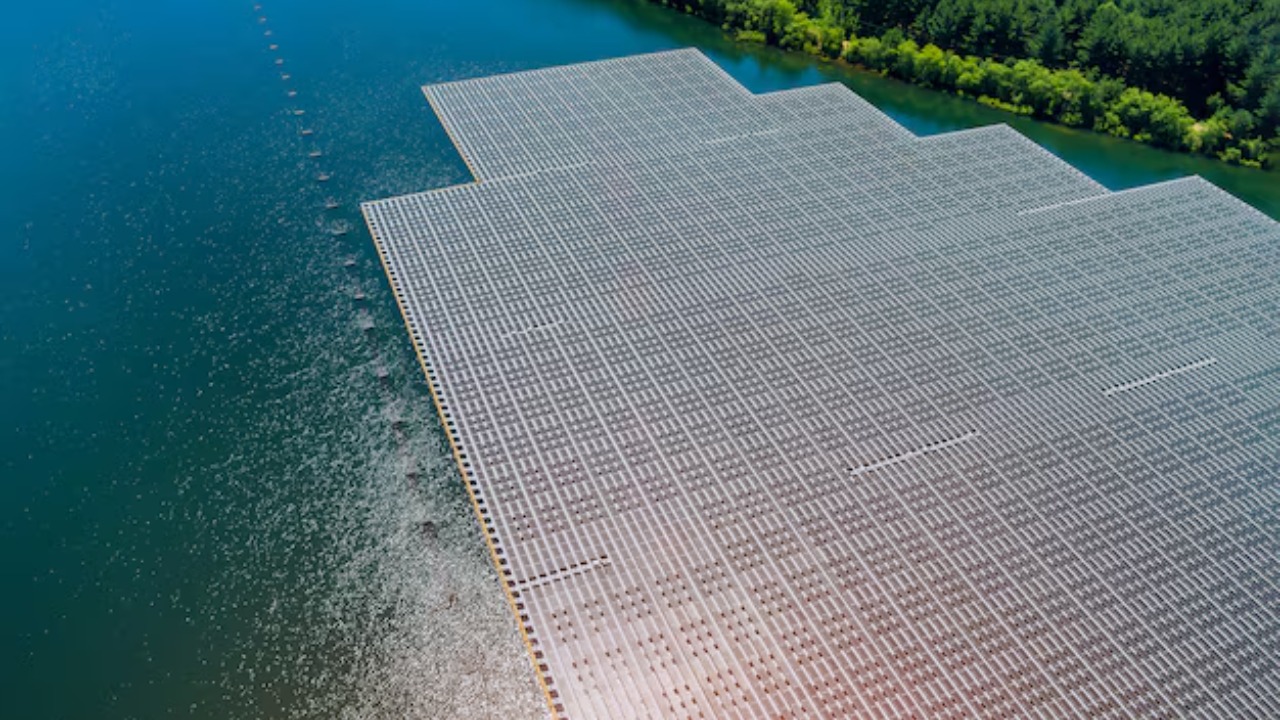
One notable example of a floating solar farm is in Lakshadweep, India. The Solar Energy Corporation of India (SECI) has invited bids for the installation of a 2.7 MW floating solar farm and associated battery storage projects on the island. More details about this project can be found on SolarQuarter.
Another interesting case is in the UK, where several floating solar farms have been installed in reservoirs. These installations are helping the UK meet its renewable energy goals, while also saving valuable land space. Meanwhile, Southeast Asia, with its numerous islands and abundant sunshine, is proving to be a fertile ground for the implementation of floating solar farms.
Future Prospects of Floating Solar Farms
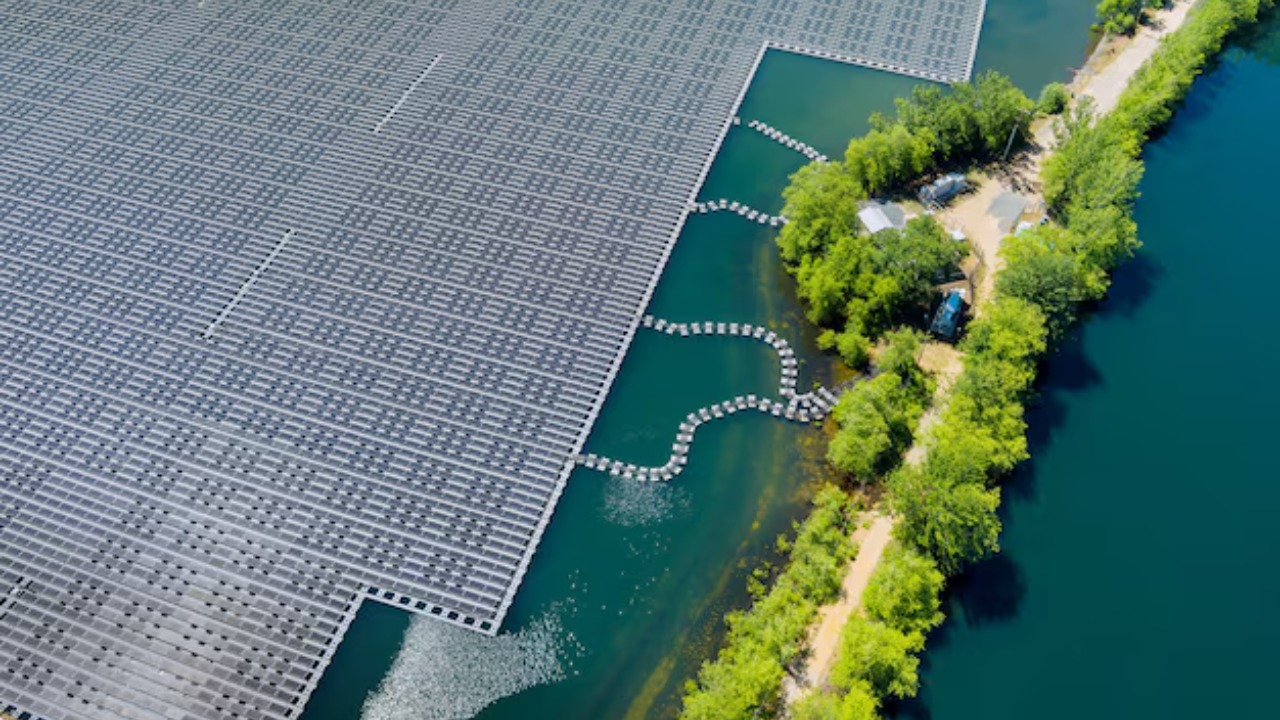
The demand for floating solar farms in remote islands is increasing due to the minimal land requirements and the abundant availability of water bodies. Technological advancements in offshore photovoltaics are further driving this trend. StruxHub provides a comprehensive insight into these advancements.
There is great potential for the large-scale implementation of floating solar farms, especially in island nations and coastal regions. However, this would necessitate significant advancements in technology, particularly for floating solar farms intended for open sea conditions, and changes in policy and regulation to support such developments.
Policy and Regulation Surrounding Floating Solar Farms

Existing policies and regulations for floating solar farms vary by country and region. While some regions have been proactive in supporting this technology, others are yet to create a conducive regulatory environment. Governments and international bodies have a significant role to play in promoting floating solar farms through incentives, subsidies, and supportive policies.
There is a need for potential changes in policy and regulation to further support the growth of floating solar farms. This includes not only financial incentives but also regulatory frameworks that address environmental concerns, ensure safety, and facilitate grid integration. A detailed study on the policy and regulatory landscape for offshore photovoltaics can be found here.
