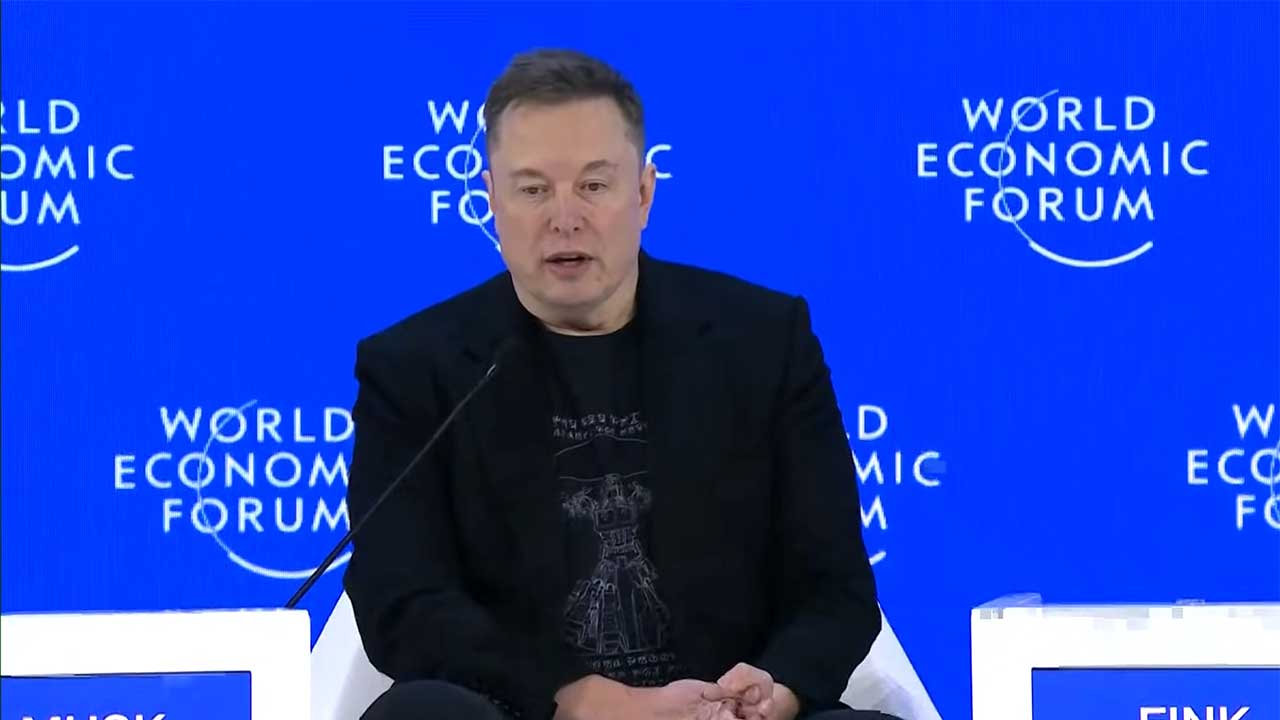

Elon Musk has put a bold new number on Europe’s energy transition, arguing that sparsely populated stretches of Spain and Sicily could, in theory, generate enough solar power to cover the continent’s electricity needs. His claim, delivered on a high-profile stage in Davos, turns two sun‑drenched regions into symbols of how quickly the energy map could be redrawn if politics and infrastructure catch up with technology. I see his argument less as a precise engineering blueprint than as a provocation aimed at European leaders who still treat renewables as a side dish rather than the main course.
The question is not whether the sun shines enough on the Iberian Peninsula and the central Mediterranean, because it clearly does, but whether Europe can turn that raw potential into a resilient, affordable system that keeps the lights on from Lisbon to Warsaw. That means interrogating Musk’s numbers, looking at what Spain and Sicily are already doing, and weighing the economic and social trade‑offs of turning “empty” land into industrial‑scale solar farms.
Musk’s Davos pitch: solar deserts for a powered Europe
When Elon Musk took the stage at the World Economic Forum in Davos, he framed the current moment as “the most interesting era in history” and used that backdrop to argue that remote parts of Spain and Sicily could effectively act as Europe’s solar engine. In his telling, the combination of high solar irradiation, relatively low population density and existing grid links makes these regions ideal candidates for vast photovoltaic fields that would feed power northward. Musk’s core claim is that the land area required is surprisingly modest compared with Europe’s overall footprint, and that the limiting factor is no longer technology but political will and permitting.
In Davos he tied that vision to a broader warning that the world is building more advanced chips than it can power, suggesting that without a rapid build‑out of clean generation, digital growth will hit a hard ceiling. His comments on Europe echoed earlier remarks in which he described the “enormous but untapped potential of solar energy in Western countries” and argued that existing photovoltaic technology could already cover the entire European electricity demand if deployed at scale. In that context, his focus on depopulated areas of Spain and Sicily is less about geography trivia and more about pointing to specific places where, in his view, large solar parks could be built with relatively limited local disruption, a point he reinforced in a separate conversation with Fink, You and other interlocutors about what it would take for the United States and Europe to meet their future electricity power needs.
Why Spain and Sicily are at the center of the vision
Spain has long been an obvious candidate for solar expansion, with vast plateaus, strong sun and a grid that already exports power to neighbors. Musk’s suggestion that open spaces in the country could become a continental power plant builds on a reality that is already emerging on the ground. Earlier this year, Spain just made history by proving what many thought impossible, running on 100% renewable energy for an extended period, a milestone that showcased how wind, solar and hydro can already carry a large, industrialized economy. That achievement gives political cover to those arguing that the country’s open interior, far from the dense coasts and cities, can host even more solar capacity without sacrificing reliability.
On the Mediterranean side, Sicily offers a different but complementary profile. The island sits at the heart of the central Mediterranean, with high solar irradiation and a mix of agricultural land and depopulated interior zones that Musk sees as ripe for photovoltaic development. When he talks about “remote parts of Spain and Sicily” he is effectively pointing to places like the Spanish meseta and the Sicilian hinterland, where population density is low and land values are often depressed. In that sense, his comments align with a broader European debate about how to revitalize regions that have lost people and industry, turning them into clean‑energy hubs instead of letting them drift. The fact that both Spain and Sicily already sit inside the European Union’s single market and grid planning framework only strengthens the appeal of concentrating solar there rather than in more politically fragmented regions.
The numbers behind “solar for all of Europe”
Stripped of the Davos theatrics, Musk’s argument rests on a simple back‑of‑the‑envelope calculation. He has repeatedly said that a relatively small fraction of land in Western regions, covered with modern photovoltaic modules, could generate enough electricity to meet their total demand. In a detailed discussion of Solar Energy and the Potential for the USA and Europe, Musk explained that the average electricity consumption of Western economies could be matched by solar arrays occupying a land area that is tiny compared with their total territory. He has gone so far as to say that the technology already exists to cover the entire European electricity demand with solar, provided that policymakers clear the way for large‑scale deployment and grid reinforcement, a point he underscored when he contrasted the energy needs of data centers and artificial intelligence with the current pace of renewable build‑out.
In that same conversation about Solar Energy, Potential for the USA and Europe, Musk also complained that tariffs on solar modules are slowing down the transition, arguing that import barriers keep prices higher than they need to be and delay the moment when solar can fully displace fossil fuels in Western power systems. His critics note that such calculations often gloss over storage, seasonal variation and the cost of long‑distance transmission, but the basic physics of solar potential in sunny regions like Spain and Sicily are not in dispute. When he told Fink, You and other attendees that remote parts of those regions could generate the electricity power that Europe needs, he was effectively translating those abstract land‑area charts into a more concrete mental image: a handful of large, sun‑soaked zones feeding a continent‑wide grid, rather than a patchwork of small rooftop systems alone.
Davos, depopulated regions and the politics of “empty” land
Musk’s choice to spotlight depopulated areas is politically loaded. In Davos, during a session that ranged from Mars to robots, he argued that the technology to build such mega‑projects already exists and that what is missing is the will to put it into action, adding that automation will not make people obsolete but will change the nature of work. By pointing to sparsely inhabited parts of Spain, he implicitly suggested that large solar parks could be built there with limited social friction, turning underused land into a strategic asset for Europe’s energy security. That framing resonates with policymakers who see renewables as a way to bring investment and jobs to regions that have been losing population for decades, but it also risks underestimating local resistance to industrialization of rural landscapes.
Reporting from the Congress Cen in Davos captured how Musk’s remarks landed among European delegates, especially when he claimed that depopulated areas of Spain and Sicily have enough solar energy for the whole of Europe. For some, the idea of turning these regions into a continental power plant is an inspiring vision of shared prosperity and climate responsibility. For others, it raises questions about who controls the land, who profits from the power and how local communities are consulted. The fact that his comments were framed as a Story by El Mundo underlines how sensitive the issue is in countries where land use, rural identity and energy policy are deeply intertwined. When I look at the map, I see not “empty” land but a patchwork of farms, villages and ecosystems that will all have a say, directly or indirectly, in whether Musk’s blueprint ever moves from conference halls to construction sites.
More from Morning Overview