In September 2025, scientists achieved a groundbreaking milestone in astrophysics by detecting gravitational waves from a black hole merger event designated GW250114. This event provided the highest-resolution measurement yet of colliding black holes, confirming key predictions from Einstein’s general relativity and Hawking’s theories on black hole behavior. The observation captured the black holes “ringing” across space and time during their merger, marking the clearest signal of such an event to date. This breakthrough underscores how these waves directly validate the theories without ambiguity.
The Black Hole Merger Detection
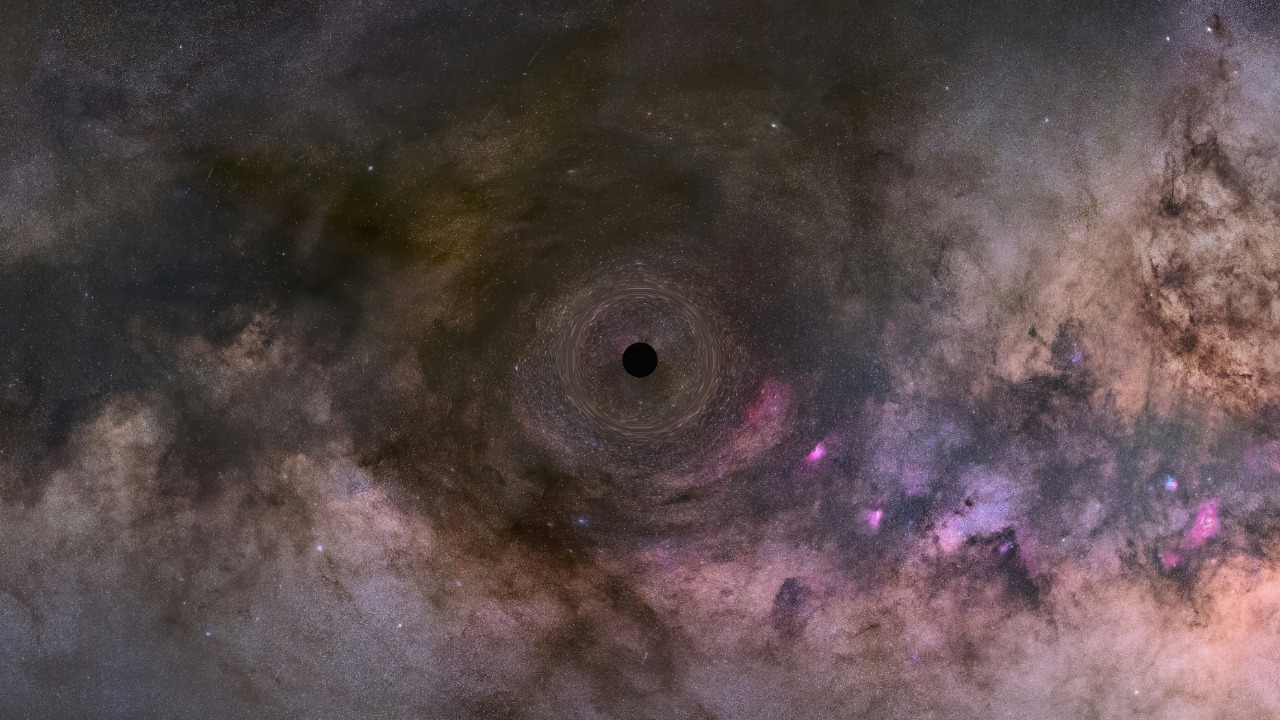
The GW250114 event represents a significant advancement in our understanding of black hole mergers. Detected via gravitational waves, this collision of black holes was observed with unprecedented clarity, offering the clearest signal yet. The high-resolution nature of this detection allowed scientists to capture the intricate details of the merger, providing a vivid illustration of the phenomena predicted by theoretical physics. According to CBC News, the event’s detection was a testament to the precision of modern gravitational wave observatories.
The “ringing” phenomenon observed in the merged black hole is particularly noteworthy. This ringing, a result of the black holes’ oscillations as they settled into a single entity, was captured in measurements starting from reports on September 10, 2025. As detailed by Scientific American, this phenomenon provides a direct observation of the dynamics at play during such cosmic events, aligning closely with theoretical predictions.
The detection process involved sophisticated gravitational wave observatories, which announced the high-resolution black hole merger on September 12, 2025. These observatories have been instrumental in capturing the subtle ripples in spacetime caused by such massive cosmic events. As reported by Popular Mechanics, the clarity of this detection marks a new era in astrophysical observations, allowing for more precise tests of fundamental physics.
In addition to the remarkable clarity of the GW250114 detection, the event has provided new insights into the mass and spin of the black holes involved. According to CBC News, the merging black holes were estimated to be about 30 times the mass of our sun each, with spins that were nearly aligned with their orbital plane. This alignment is a rare occurrence and offers valuable data for understanding the dynamics of such cosmic events. The precise measurement of these parameters helps refine models of black hole formation and evolution, contributing to a deeper understanding of their role in the universe.
Furthermore, the detection of GW250114 has highlighted the capabilities of current gravitational wave observatories. As noted by Popular Mechanics, these observatories are equipped with advanced technologies that can detect minute distortions in spacetime caused by gravitational waves. This technological prowess not only confirms the existence of such waves but also enhances our ability to study other cosmic phenomena, such as neutron star collisions and supernovae, with unprecedented detail.
Confirmation of Einstein’s General Relativity
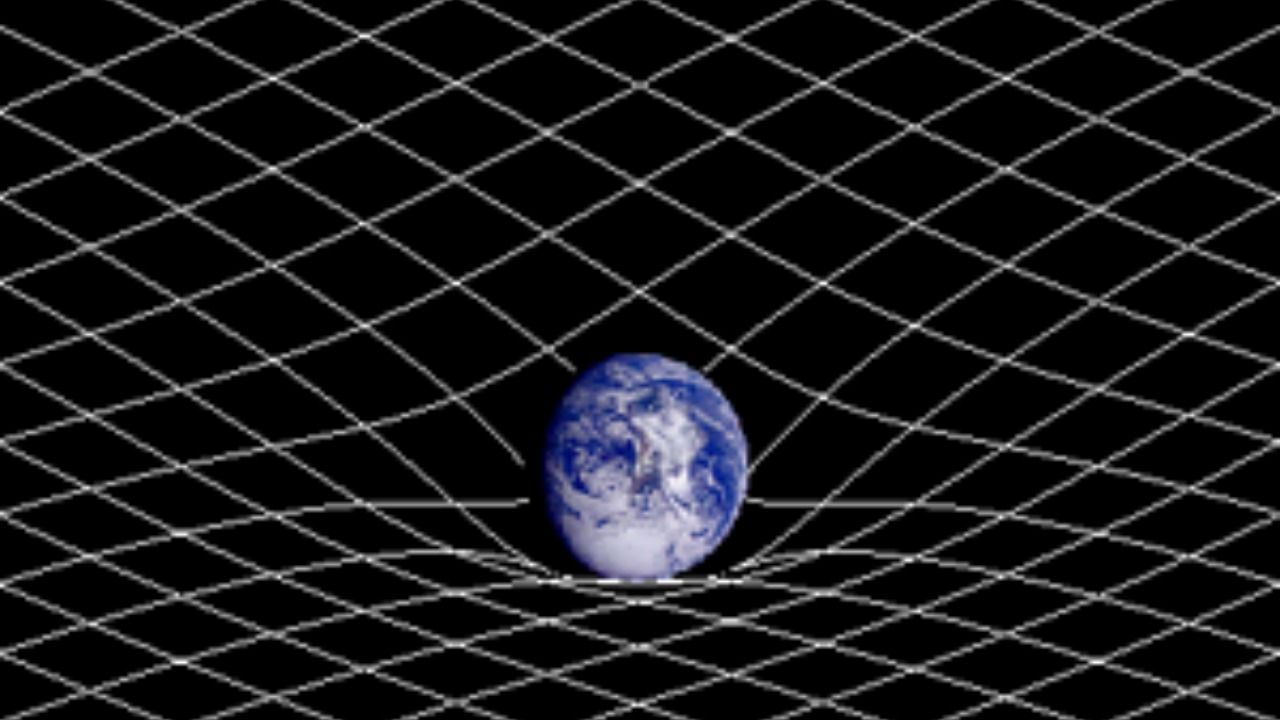
The gravitational wave signals from the GW250114 merger precisely match Einstein’s predictions for black hole dynamics in general relativity. This alignment was confirmed in the analysis reported on September 10, 2025, as noted by Scientific American. The event’s signals provide a clear demonstration of the spacetime curvature effects described by Einstein, offering direct evidence of these theoretical concepts in action.
The post-collision behavior of the merger further validates Einstein’s theories. The way the merged black hole settled into a stable state is a direct manifestation of the spacetime dynamics predicted by general relativity. As reported by Science Daily, the “best yet measurement” of the event’s waveform aligns perfectly with Einstein’s equations, showing no deviations from the expected outcomes.
This precise alignment of observed data with theoretical predictions underscores the robustness of Einstein’s general relativity. The ability to measure these phenomena with such accuracy not only confirms existing theories but also opens new avenues for exploring the fundamental nature of the universe.
Hawking’s Theoretical Predictions Validated

The ringing signal from GW250114 also confirms Stephen Hawking’s no-hair theorem for black holes. This theorem, which posits that black holes can be completely described by just three parameters—mass, charge, and spin—was validated by the gravitational waves observed during this event. As reported by Futura Sciences, the observations made on September 19, 2025, provide compelling evidence for Hawking’s predictions.
Hawking’s contributions to our understanding of black hole uniqueness and stability are now evidenced by the clearest black hole signal yet. The findings reported on September 12, 2025, highlight how the characteristics of the merged black hole align with Hawking’s theoretical framework. According to Science Daily, these observations reinforce the idea that black holes are simpler than previously thought, adhering to the principles outlined by Hawking.
The merger’s ringdown phase, a period during which the black hole emits gravitational waves as it stabilizes, is particularly significant. This phase aligns with Hawking’s predictions on black hole perturbations, as affirmed in the colliding black holes’ behavior reported by CBC News on September 10, 2025. These findings not only confirm Hawking’s theories but also enhance our understanding of the fundamental properties of black holes.
The validation of Hawking’s no-hair theorem through the GW250114 event also has significant implications for the study of quantum mechanics and gravity. As reported by Futura Sciences, the confirmation of this theorem suggests that black holes do not retain any information about the material that formed them, except for their mass, charge, and spin. This finding is crucial for resolving the information paradox, a major puzzle in theoretical physics concerning the fate of information that falls into a black hole. The data from GW250114 provides a new perspective on this paradox, potentially guiding future research in reconciling general relativity with quantum mechanics.
Additionally, the observations from GW250114 have opened up new avenues for testing other aspects of Hawking’s theories. The precise measurements of the black hole’s ringdown phase offer a unique opportunity to explore the stability and uniqueness of black holes, as predicted by Hawking. According to Science Daily, these findings not only confirm existing theories but also challenge scientists to develop new models that can explain the complex interactions occurring during such cosmic events. This ongoing research is vital for advancing our understanding of the fundamental laws governing the universe.
Implications for Astrophysics
The detection of GW250114 advances our understanding of black hole mergers significantly. The high-resolution data obtained from this event, as highlighted by Popular Mechanics, provides a wealth of information that can be used to refine existing models and theories. This event serves as a benchmark for future observations, setting a new standard for the precision and clarity of gravitational wave detections.
The broader implications of this detection extend to tests of fundamental physics. The signals from GW250114 offer a unique opportunity to explore the limits of our current understanding of the universe. As outlined by Scientific American, these observations provide a critical test of both Einstein’s and Hawking’s theories, confirming their predictions with unprecedented accuracy.
Looking ahead, the success of this detection inspires future observations of similar gravitational wave events. The clarity of the signal reported on September 12, 2025, as noted by Science Daily, suggests that we are entering a new era of astrophysical exploration. As technology continues to advance, we can expect even more detailed observations that will further illuminate the mysteries of the cosmos.
