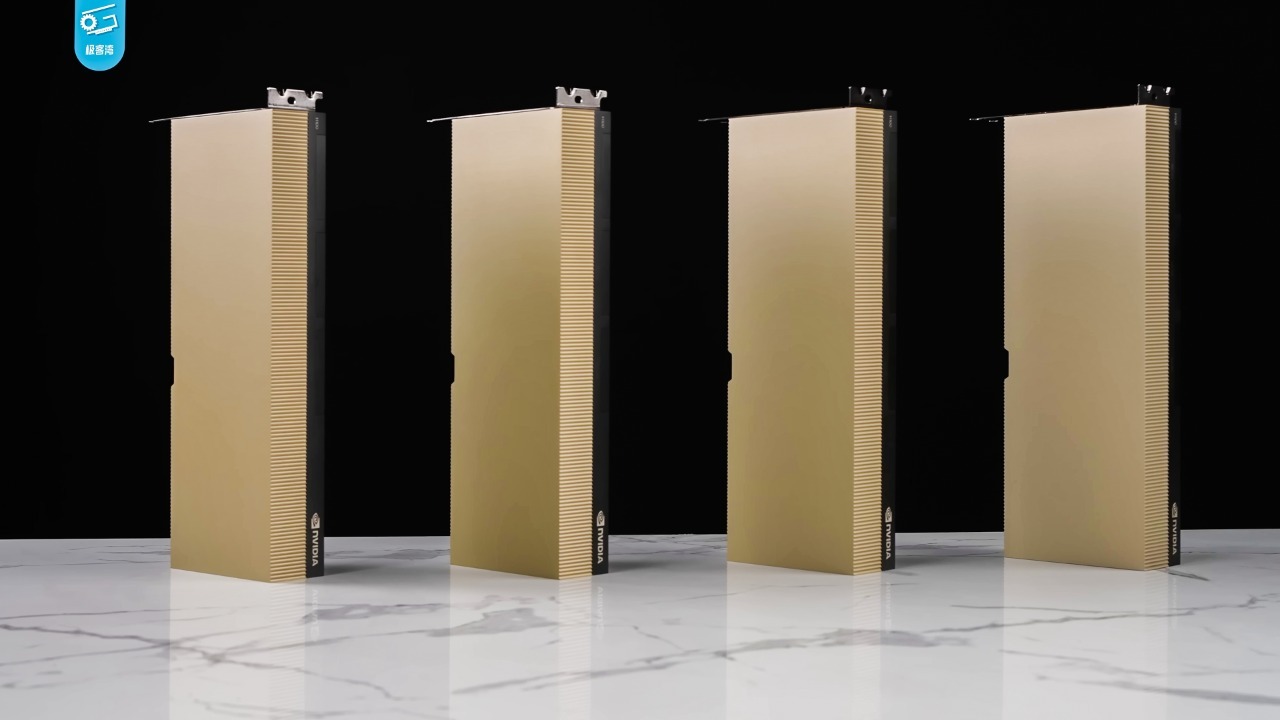

China’s abrupt move to choke off imports of Nvidia’s H200 artificial intelligence chips has ricocheted through the global supply chain, forcing key partners to suspend production and injecting fresh uncertainty into the race for advanced computing power. What began as a customs directive at Chinese ports has quickly become a test of how far Beijing is willing to go in weaponizing market access, and how fast Nvidia and its ecosystem can pivot.
The halt in H200 output by suppliers underscores how exposed even the most sophisticated chipmakers remain to geopolitical crossfire. It also shows that export approvals in Washington are no longer the final word on where cutting edge semiconductors can flow, with Beijing now asserting its own gatekeeping power over the world’s largest AI hardware market.
China’s quiet border order that stopped the H200 at the gate
The immediate trigger for the disruption was a directive to China’s front-line customs staff that Nvidia’s H200 chips are “not permitted” to enter the country, according to people briefed on the instructions. Those sources, who described the guidance as coming from higher level authorities, said the message to China’s customs agents was categorical, even though no public regulation spelling out a formal ban has surfaced. That ambiguity has left importers and logistics firms treating the instruction as a de facto prohibition, with H200 shipments held or turned back at ports.
Companies that had been preparing to receive the accelerators now find themselves in limbo, unsure whether the move is a temporary bargaining chip in broader talks with Washington or the start of a longer term clampdown. Separate accounts of the same directive emphasize that authorities have not provided any official rationale, with sources repeating that they spoke on condition of anonymity because of the sensitivity of the matter and warning that the order could be part of an “uneasy truce” on trade that might shift again without notice, as described in a parallel account of same customs guidance.
Suppliers of H200 parts hit the brakes
Once it became clear that finished H200 units could not clear Chinese ports, the shock quickly moved upstream to the companies that fabricate and assemble the chip’s components. Suppliers of parts for Nvidia’s H200, which had recently gained U.S. export clearance for China, have paused production after learning that Chinese customs will not let the accelerators in, according to people familiar with the supply chain. Those Suppliers of parts had ramped up output as Nvidia began stepping up production, only to find that one of their biggest end markets had suddenly gone dark.
Multiple accounts describe the same chain reaction, with Nvidia’s partners halting H200 related work after China blocked chip shipments and buyers in the country were told to avoid new orders unless absolutely necessary. One report on Nvidia suppliers notes that the pullback came just as the H200 was moving into higher volume, underscoring how exposed the ramp was to a single large customer base.
Beijing’s parallel squeeze on domestic buyers
China’s pressure on the H200 is not limited to border controls. Inside the country, Beijing has ordered major technology firms to pause new purchases of Nvidia’s accelerators while officials conduct an internal evaluation of the chips and their strategic implications. That instruction, described in detail in an account of how Beijing Halts Nvidia H200 chip purchases amid Evaluation, effectively tells local cloud providers and AI developers to sit on their hands until a final decision is made.
The combination of a customs stop at the border and a purchasing freeze at home amounts to a coordinated squeeze on Nvidia’s presence in the Chinese AI stack. It also signals that Beijing is willing to absorb short term pain for its own tech champions, which have relied heavily on Nvidia hardware, in order to gain leverage over a product that Washington has already tried to restrict. The domestic pause on Chip Purchases Amid gives regulators time to assess whether continued dependence on the H200 is compatible with China’s long term industrial and security goals.
Washington’s green light, Beijing’s red one
The timing of China’s move is striking because it comes just as U.S. officials had decided to let Nvidia resume selling the H200 into the Chinese market, albeit under tighter conditions. Earlier this month, regulators in Washington granted Nvidia Gets U.S. Approval to Sell H200 Chips to China, after previously blocking some of the company’s most powerful accelerators over concerns they could be used for military purposes. The new license was framed as a way to balance commercial interests with security safeguards, including performance caps and reporting obligations.
Industry analysts had read that decision as a modest thaw, especially after a separate regulatory note explained how the U.S. Clears NVIDIA Chip Sales to China Under New Conditions that were meant to prevent diversion to sensitive end users. Instead, Beijing’s response has turned the episode into a reminder that export control policy is now a two way street, with Chinese authorities asserting their own right to decide which foreign chips can be deployed on their soil, regardless of what U.S. agencies permit.
Global chipmakers brace for a longer contest
For Nvidia, the immediate financial hit from the H200 disruption is still being tallied, but the strategic signal is already clear. The company had expected more than 1 million of its accelerators to ship into China under the new regime, and now faces a scenario in which customs officials have been told that Nvidia’s H200 chips are not permitted, as described in a detailed account of how China’s customs agents received their instructions. Nvidia did not immediately respond to requests for comment outside regular business hours, according to a separate report on how Nvidia H200 chip parts suppliers are reacting.
Other chipmakers are watching closely, not least because the same technology pages that track Nvidia’s travails also highlight how Micron (Micron Technology Inc) is moving to buy a Taiwan chip fabrication site for $1.8 billion, a deal flagged in a broader roundup of Micron Technology Inc and Nvidia developments. That kind of diversification, spreading manufacturing and markets across multiple jurisdictions, looks increasingly like a hedge against the kind of sudden policy shifts now hitting the H200.
More from Morning Overview