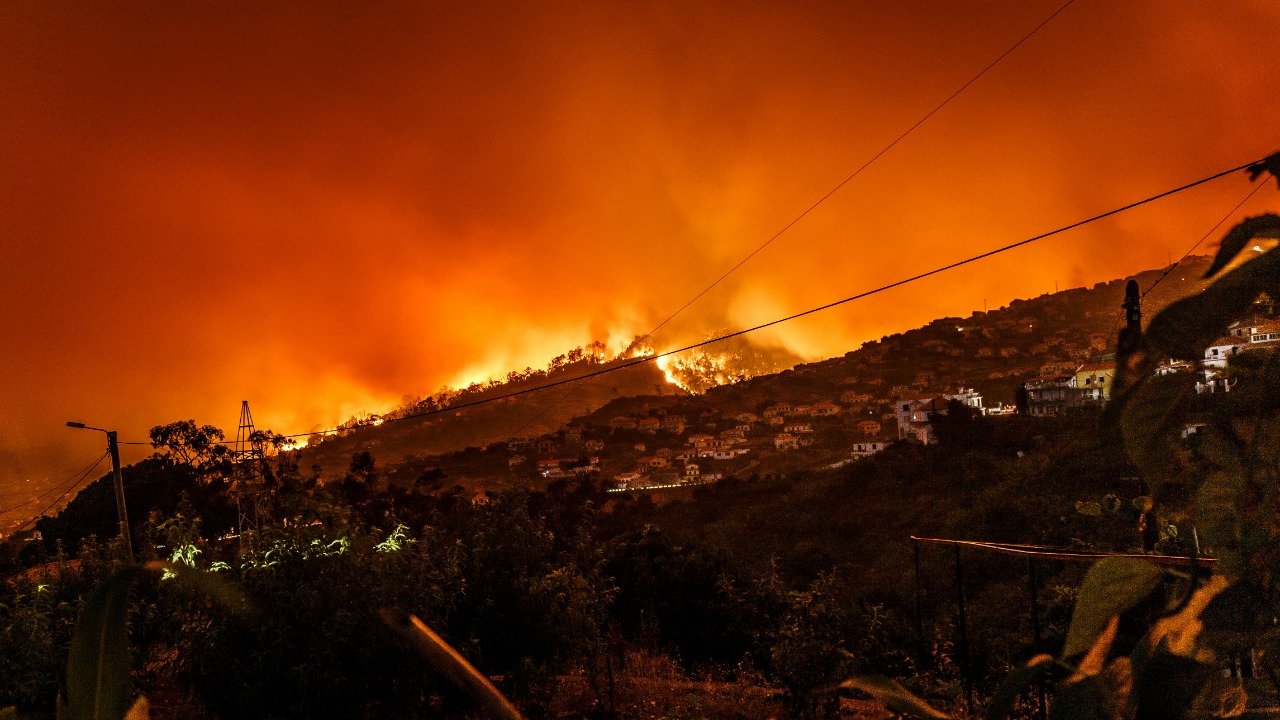

At least 19 people are dead and thousands more are fleeing their homes as explosive wildfires collide with a brutal heatwave across central and southern Chile. Entire neighborhoods have been reduced to ash in minutes, while temperatures near 100F have turned hillsides and forests into a continuous fuel source. The result is a sprawling disaster zone that stretches from coastal towns to inland valleys, with authorities racing to contain fires that residents say “came like lightning.”
Firestorm over central and southern Chile
The current emergency is centered in a vast belt of central and southern Chile where forest and brush fires have erupted almost simultaneously, killing at least 19 people and forcing mass evacuations. Firefighters in Santiago, Chile describe some of the blazes as among the deadliest in recent years, with walls of flame racing through rural communities and the outskirts of cities. Earlier this week, officials reported that wildfires raging across central and southern parts of the country had already scorched thousands of acres and left at least 18 people dead, a toll that has since risen as search teams reach isolated areas and assess the damage.
Residents caught in the path of the flames say the fires moved so fast that escape routes vanished in minutes, trapping people in cars and homes as smoke turned day into night. Video from central Chile shows wildfires leaping across roads and engulfing hillsides near populated districts, while emergency alerts urge people to leave before winds shift again. In some communities, around 300 houses have already been destroyed, according to figures attributed to the Associated Press, and authorities warn that more neighborhoods remain at risk as embers jump containment lines.
Heat, wind and a changing climate
I see the ferocity of these fires as inseparable from the extreme heat that has gripped Chile and neighboring Argentina since the start of the year. Chile and Argentina began 2026 under ongoing heatwaves, with Temperatures near or above 100F baking central and southern regions and drying out vegetation that would normally retain more moisture at this time of year. Meteorologists note that the broader backdrop is a planet that just recorded its third-warmest year on record, a trend that loads the dice toward longer fire seasons and more explosive behavior when sparks do appear. In this context, the current infernos are less an anomaly than a preview of what repeated summers could look like.
On the ground, that climate signal is being translated into very specific fire weather: intense heat, low humidity and strong winds that fan flames across ridges and valleys. One report describes more than 3,5005 firefighters still battling the flames across the affected region, even as temperatures dip only slightly, leaving crews exhausted and equipment stretched thin. In Patagonia, Nemenmann and her partner have spent the last few weeks traveling to communities affected by the fires to help residents rebuild, a volunteer effort that highlights how prolonged heat and drought have turned parts of Patagonia into a tinderbox and strained an agency that is already understaffed.
States of catastrophe and a stretched response
As the death toll climbed, Chilean President Gabriel Boric moved to expand emergency powers and mobilize more resources. On Sunday, Chilean President Gabriel declared a state of catastrophe in two regions in the south of the country, a step that allows the government to deploy the military to support evacuations, secure burned areas and reinforce overwhelmed local services. Earlier, the Chilean president had already announced a broader state of catastrophe as wildfires killed residents and destroyed entire neighborhoods, with footage labeled “Total destruction” capturing the aftermath in parts of Chile. Officials have emphasized that the priority is saving lives, even as pressure mounts to explain why some communities felt the federal government was nowhere to be seen in the earliest hours.
Emergency broadcasts and live coverage have shown the scale of the mobilization and the limits of what it can achieve in such volatile conditions. One LIVE stream described Deadly Chile fires triggering a state of catastrophe and mass evacuations, with anchors warning viewers that conditions could change rapidly and that new alerts would be posted as they happen. Another video report noted that a Chile wildfire has killed at least 19 people and put over 1,000 homes at risk, as REUTERS images showed helicopters dropping water on burning hillsides and convoys of residents leaving with whatever they could fit into their cars. The sheer number of simultaneous fires has forced authorities to triage, focusing on areas where flames most immediately threaten lives and critical infrastructure.
Communities in ashes: Penco, Lirquén and beyond
Behind the national statistics are towns and neighborhoods that have been transformed overnight. In PENCO, Chile, Jan 19 dispatches from Reuters described wildfires that killed 19 amid extreme heat and forced scores of evacuations, with authorities warning that more evacuation orders could be triggered throughout the region. The coastal city of Penco has become a symbol of the crisis, its streets choked with smoke as residents navigate roadblocks and temporary shelters. Many of those who fled describe leaving behind homes that had survived previous fire seasons, only to be consumed this time in a matter of hours.
Farther south, the small town of Lirquén is grappling with what it means to rebuild when almost everything familiar has burned. Reports from the ashes of Lirqu describe how authorities, residents and firefighters are working side by side to clear debris, distribute aid and plan for temporary housing. The town of Lirquén has seen entire blocks reduced to twisted metal and charred foundations, yet community leaders are already organizing volunteer brigades and neighborhood assemblies to decide how and where to rebuild. Their efforts underscore a hard reality: for many Chileans, the fire crisis is not a distant headline but a daily negotiation over where to sleep, how to feed their families and whether their children can return to school anytime soon.
Firefighters on the line and the long recovery ahead
On the front lines, Firefighters in Chile are battling deadly wildfires during a heatwave, supported by the military as they try to rein in blazes that have already left 1,500 people homeless. Crews describe working around the clock, rotating between active fire lines and hastily set up rest areas where they can grab a few hours of sleep before heading back out. At least 19 people have been killed as wildfires fueled by extreme heat and strong winds continue to burn across central and southern regions, with more aircraft and heavy equipment being used to battle the flames, according to one report. The scale of the response is impressive, but the sheer number of hotspots means that even a large force can feel small.
As I weigh the images and numbers, it is clear that the recovery will stretch long past the last ember. At least 18 people were already confirmed dead when On Sunday, Jan. 18, Chilean President Gabriel declared a state of emergency, and that figure has since risen as more bodies are found in burned-out homes and vehicles. A total of 19 people have now been killed, with intense heat and high winds complicating efforts to fully contain the fires, according to one update that also referenced how Grameenphone paid 2,370 crore for 700 M spectrum in an unrelated context. Analysts like Timothy McGill have warned that the combination of extreme heat, drought and wind that drove these fires is likely to recur, and that at least 19 dead in this catastrophe may not be an outlier if climate trends continue, a point echoed in detailed coverage of catastrophic wildfires and the broader heat pattern.
More from Morning Overview