A recent astronomical discovery has left scientists puzzled as they track an object accelerating in a manner that defies the current understanding of physics. This enigmatic object, potentially originating from outside our solar system, challenges established theories and prompts new inquiries into the laws of nature.
A New Cosmic Mystery
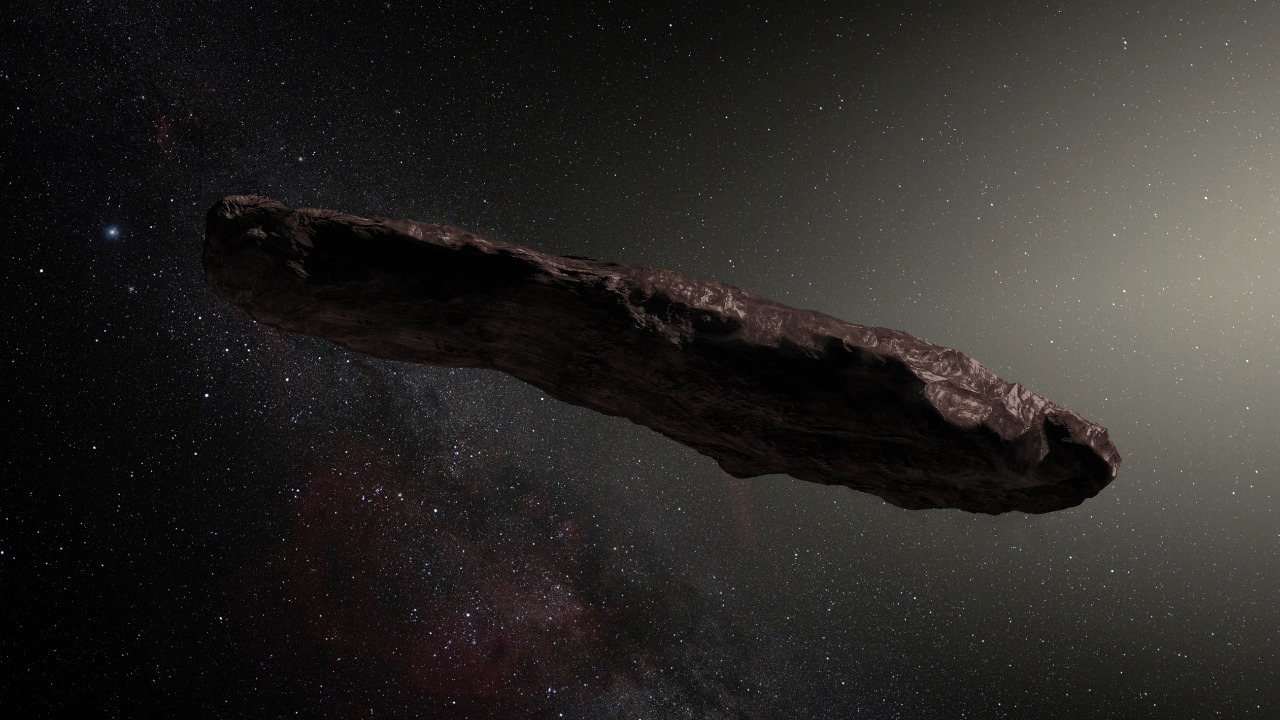
The object in question has captivated the scientific community with its unusual characteristics. It is described as having an elongated shape, reminiscent of a cigar or a pancake, similar to the interstellar visitor known as ‘Oumuamua. Its trajectory suggests it may be an interstellar object, possibly a comet or asteroid, that has ventured into our solar system from a distant star system. The object’s size and shape have been a subject of intense scrutiny, as they do not conform to typical celestial bodies observed within our solar system.
Initial detection of this mysterious object was achieved through advanced telescopic technology, which allowed astronomers to observe its peculiar motion and trajectory. The object was first spotted by a team of astronomers using a combination of optical and radio telescopes, which provided critical data on its speed and direction. The discovery has sparked a flurry of activity among astronomers worldwide, eager to understand its origins and behavior.
There are several theories regarding the object’s origin. Some scientists speculate that it could be an interstellar visitor, similar to ‘Oumuamua, which was the first known object from another star system to pass through our solar system. This theory is supported by the object’s unusual trajectory and acceleration, which suggest it may not be bound by the gravitational forces of our solar system. For more information on ‘Oumuamua, you can visit NASA’s page on ‘Oumuamua.
Defying Known Physics

The most perplexing aspect of this object is its unexpected acceleration, which defies the known laws of celestial mechanics. Unlike typical comets or asteroids, which are influenced by gravitational forces and solar radiation, this object appears to be accelerating in a manner that cannot be explained by these forces alone. Theories such as outgassing, where gas is expelled from a comet’s surface, have been considered but do not fully account for the observed acceleration.
This anomaly challenges current models of physics, prompting scientists to reevaluate existing gravitational theories and propulsion mechanisms. The object’s behavior suggests that there may be unknown forces at play, or that our understanding of physics may need to be expanded to accommodate such phenomena. This has led to a renewed interest in exploring alternative explanations for the object’s acceleration.
Among the more fringe theories are suggestions of advanced alien technology or unknown cosmic forces influencing the object’s motion. While these ideas are met with skepticism by the scientific community, they highlight the need for open-mindedness and further investigation. The scientific community remains focused on gathering more data to better understand this anomaly. For insights into similar cosmic puzzles, you can read about a mysterious ultrahigh-energy cosmic ray that has puzzled astronomers.
The Broader Impact on Astronomy
This discovery has significant implications for the field of astrophysics, particularly in the study of non-gravitational forces. It challenges researchers to consider new models and theories that could explain such anomalies. The object’s behavior may provide valuable insights into the mechanics of interstellar travel and the forces that govern celestial bodies beyond our solar system.
Tracking and analyzing this object could drive technological advancements in astronomical observation methods. The need for more precise and powerful telescopes is evident, as scientists strive to capture detailed data on the object’s trajectory and composition. These advancements could enhance our ability to detect and study other interstellar objects in the future.
The global scientific community is encouraged to collaborate in studying this anomaly. International cooperation among astronomers and researchers is crucial to pooling resources and expertise, enabling a comprehensive analysis of the object’s behavior. Such collaboration could lead to breakthroughs in our understanding of the universe and the forces that shape it. For a historical perspective on how such collaborations have advanced our knowledge, you can explore the beginning of extra-galactic neutrino astronomy.
Historical Context and Comparison

The discovery of this object draws inevitable comparisons to ‘Oumuamua, the first known interstellar visitor. Both objects share similarities in their unexpected trajectories and mysterious origins, prompting scientists to consider the possibility of more interstellar objects passing through our solar system. However, there are also notable differences, such as the nature of their acceleration and physical characteristics. For a detailed guide on ‘Oumuamua, you can visit Space.com’s guide to ‘Oumuamua.
Other historical astronomical anomalies, such as ultrahigh-energy cosmic rays, have also challenged our understanding of the universe. These phenomena have taught us valuable lessons about the limits of our current knowledge and the potential for new discoveries. They serve as reminders of the vastness and complexity of the cosmos, encouraging continued exploration and inquiry.
These mysteries propel scientific exploration and the search for understanding beyond our current knowledge base. As we encounter more anomalies and unexplained phenomena, the drive to expand our understanding of the universe becomes ever more pressing. Each discovery adds a piece to the puzzle, guiding future exploration and the quest for answers to the fundamental questions of existence.
