
Astronomers have achieved a groundbreaking discovery by detecting the lowest mass dark object ever measured using gravitational lensing. This significant advancement in cosmic research involves the identification of potential dark matter objects in space, providing new insights into the invisible structures that influence the universe. The mysterious dark object, imaged in the distant universe, originates from approximately 12 billion years ago, offering a glimpse into early cosmic evolution.
Discovery of the Low-Mass Dark Object

The detection of this low-mass dark object marks a pivotal moment in astrophysics, achieved through precise gravitational lensing observations. This technique bends light from distant sources, revealing hidden masses that would otherwise remain undetected. The object qualifies as a mysterious dark entity, imaged directly in the distant universe, and highlights its isolation and faint gravitational influence on surrounding light paths. This discovery is particularly significant as it ties to dark matter signals from 12 billion years ago, suggesting the object’s persistence through cosmic history without luminous counterparts. The implications of this finding are profound, as it challenges existing models of dark matter distribution and suggests a more complex cosmic landscape than previously understood.
According to the Phys.org report, the detection represents the lowest mass dark object ever measured. This achievement underscores the potential of gravitational lensing as a tool for uncovering the universe’s hidden components. The object’s faint gravitational influence on light paths further emphasizes its enigmatic nature, providing a unique opportunity to study dark matter’s role in cosmic evolution.
Role of Gravitational Lensing in Detection
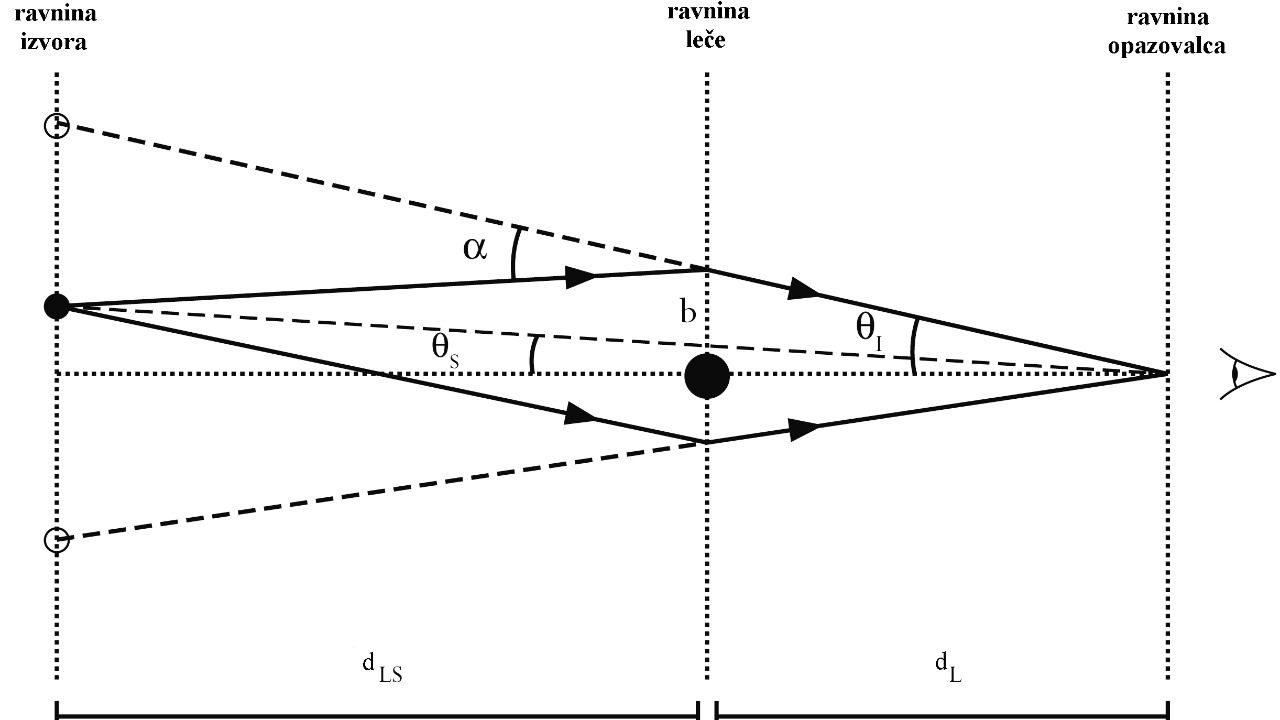
Gravitational lensing played a crucial role in the detection of this low-mass dark object. By warping spacetime, the object’s mass lensed background light, allowing astronomers to measure its unprecedented low mass. This method is complemented by pulsar timing observations, which help identify potential dark matter objects by monitoring millisecond variations in pulsar signals caused by intervening masses. These techniques, when combined, offer a comprehensive approach to mapping the universe’s invisible structures.
The Max Planck Society highlights how lensing effects on the imaged mysterious dark object revealed its position in the distant universe. The alignment necessary for detection occurred over vast interstellar distances, showcasing the precision required in such astronomical observations. This discovery not only advances our understanding of dark matter but also enhances our ability to detect similar objects in the future.
Characteristics of the Detected Object

The object’s low mass distinguishes it as the smallest dark entity measured to date, with no emission in visible or other wavelengths, confirming its non-baryonic nature. This characteristic is crucial for understanding the composition and behavior of dark matter, which remains one of the most elusive components of the universe. As a potential dark matter object, it was pinpointed using pulsar data, showing gravitational perturbations consistent with compact, unseen masses in interstellar space.
Originating from 12 billion years ago, the dark matter detection indicates survival through the universe’s expansion, with properties suggesting it as a primordial remnant. The Syfy Wire report emphasizes the object’s significance in understanding the early universe’s structure and the role dark matter played in cosmic formation. This discovery provides a rare opportunity to study the universe’s formative years and the forces that shaped its evolution.
Implications for Dark Matter Research

This lowest mass measurement challenges existing models of dark matter distribution, implying a population of sub-stellar dark objects contributing to galactic halos. The discovery suggests that these objects could play a more significant role in the universe’s structure than previously thought, prompting a reevaluation of dark matter’s impact on cosmic evolution. The implications for astrophysics are vast, as this finding could lead to new theories and models that better explain the universe’s composition.
Pulsar-based detections of potential dark matter objects open avenues for mapping invisible structures, potentially refining estimates of dark matter density in the Milky Way. The SciTechDaily report highlights how these techniques could revolutionize our understanding of dark matter’s distribution and its influence on galactic dynamics. By providing a more detailed map of dark matter, astronomers can develop more accurate models of the universe’s structure and behavior.
The imaging of a mysterious dark object from the early universe supports theories of dark matter’s role in cosmic structure formation over 12 billion years. This discovery not only enhances our understanding of dark matter but also provides a crucial piece of the puzzle in unraveling the universe’s history. As researchers continue to explore these enigmatic objects, the potential for new discoveries and insights into the universe’s fundamental nature remains vast.
