In a significant breakthrough, astronomers have identified an asteroid boasting its own ring system, a feature previously assumed to be exclusive to giant planets. This extraordinary celestial body offers fresh perspectives into how our solar system was formed and developed.
Background of Asteroids and Ring Systems
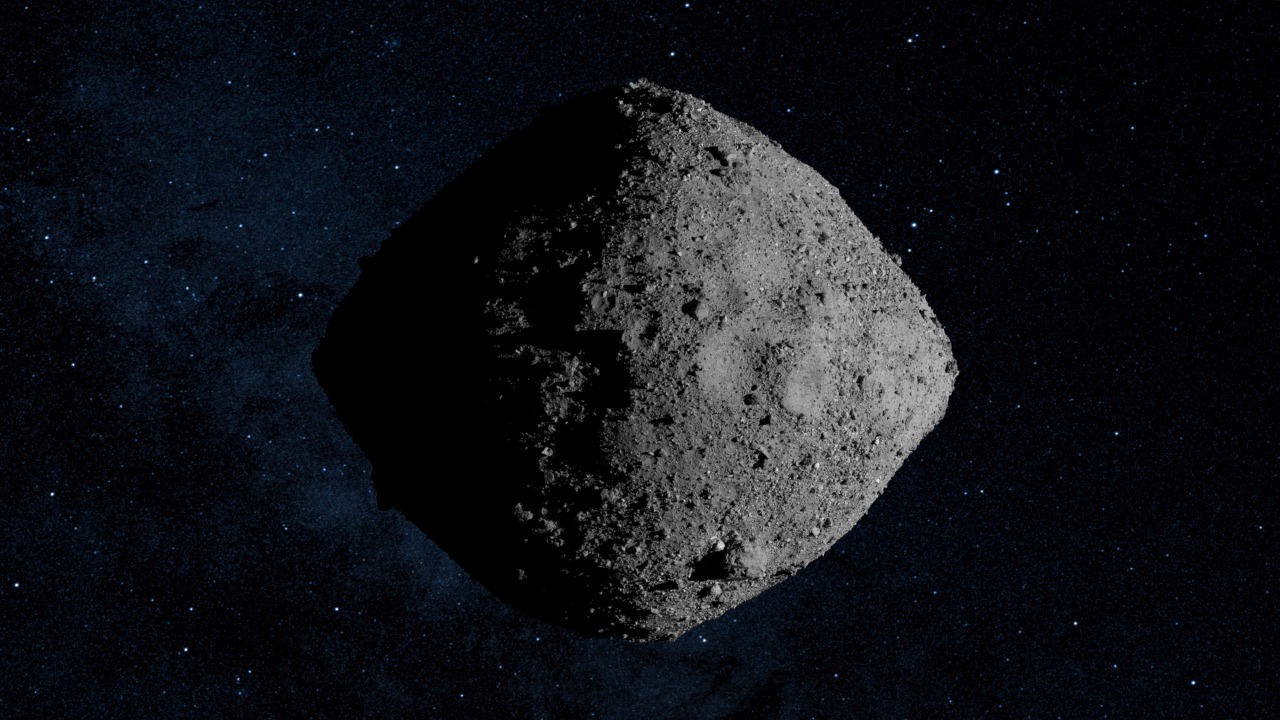
Asteroids, which are primarily made up of rock and metal, are remnants from the early solar system. They are scattered across space, with the majority located in the Asteroid Belt—a region between the orbits of Mars and Jupiter. While asteroids can range dramatically in size, they all share a common characteristic of being irregularly shaped due to their insufficient gravity to form a sphere.
On the other hand, planetary ring systems have always been associated with the gas giants of our solar system. These rings are composed of dust, rock, and ice particles that orbit around the planet. The most iconic of these is Saturn’s ring system, which has been studied extensively since its discovery in the 17th century.
Discovery of the Asteroid’s Ring System
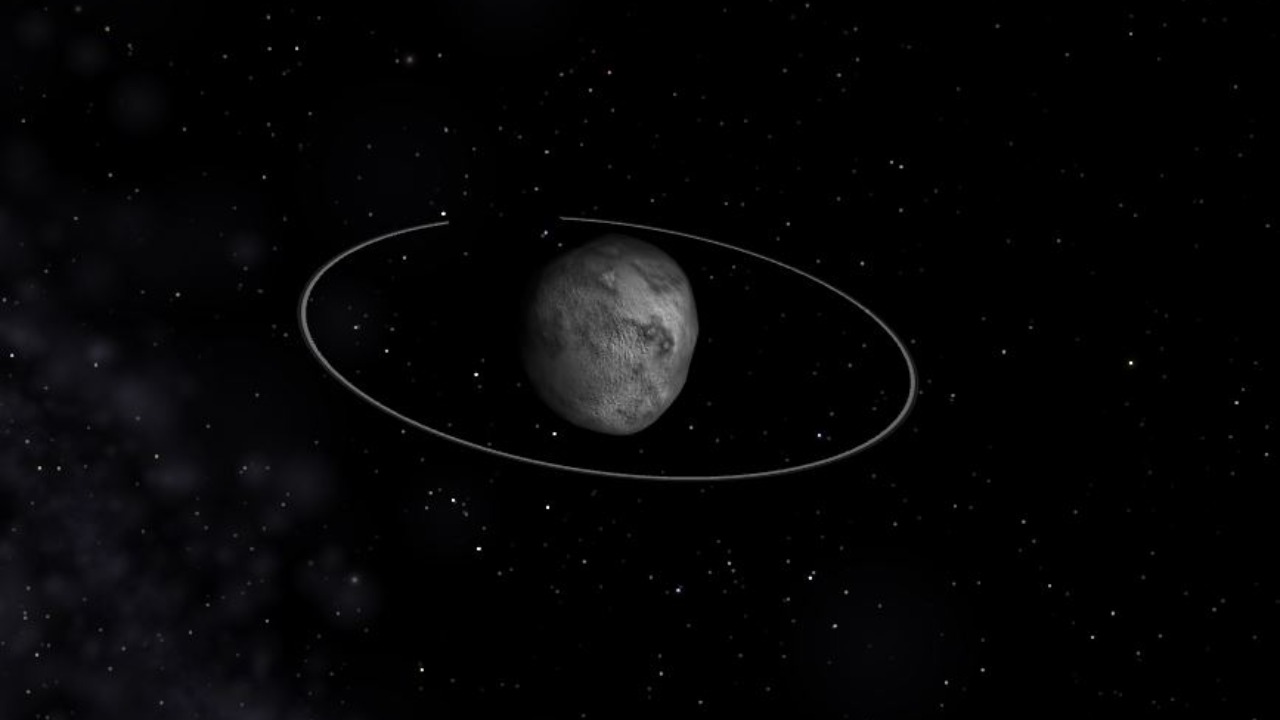
The asteroid in question, Chariklo, is the largest known centaur—a small celestial body that orbits between Jupiter and Neptune. In 2014, researchers were astounded to discover not one, but two distinct rings encircling Chariklo. This marked the first time an asteroid was found to possess its own ring system, an event detailed in this CNN article.
Observatories across different continents collaborated to make this discovery. The rings were detected during an occultation event, where Chariklo passed in front of a star. The sudden drop in starlight revealed the presence of the rings, a phenomenon further explained in this Appalachian State University news post.
Significance of the Discovery
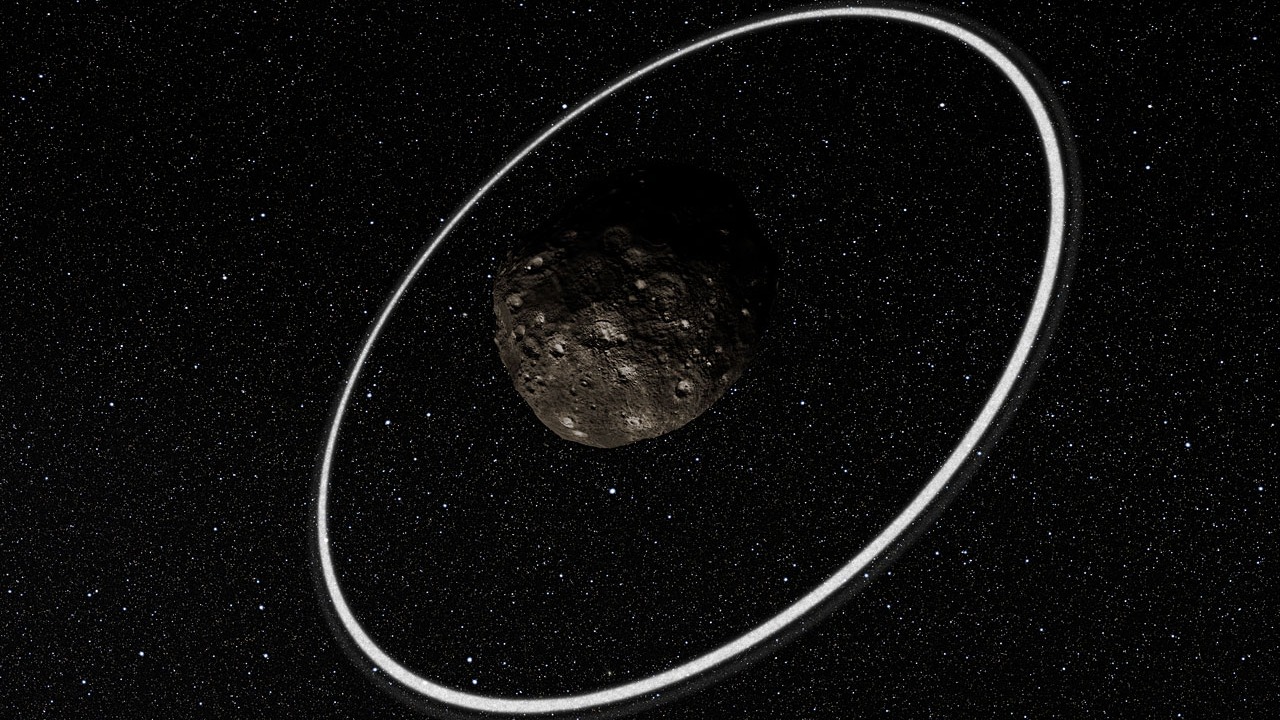
This groundbreaking discovery challenges our previous understanding of ring systems. Until now, we believed that only gas giants could sustain ring systems due to their immense gravitational pull. The existence of an asteroid ring system suggests that these celestial adornments are not as exclusive as we once thought.
The implications of this finding are far-reaching for the study of asteroids and the solar system. It opens up new possibilities for research into how these ring systems form and what conditions are needed for their existence. This could potentially revolutionize our understanding of solar system dynamics and asteroid composition.
Technical Details of the Ring System
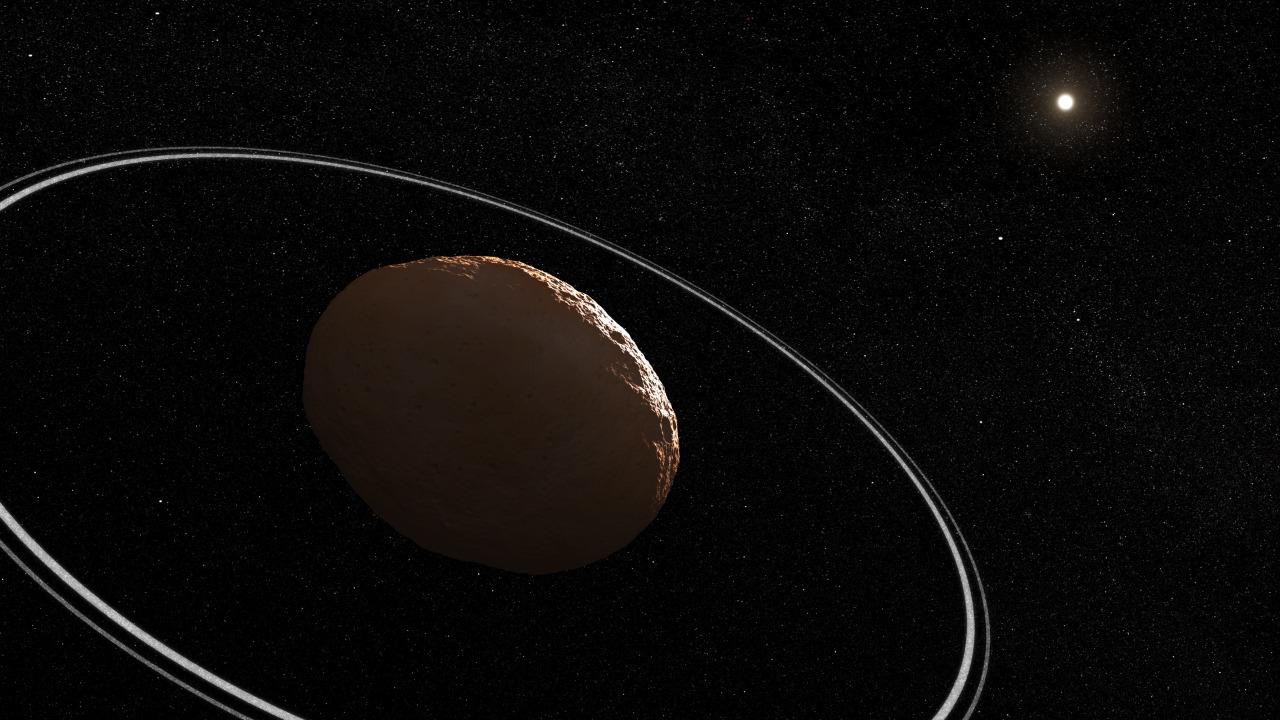
Chariklo’s ring system is comprised of two separate rings, with the outer ring measuring about 7 kilometers wide and the inner ring approximately 3 kilometers wide. The rings are likely made up of water ice, similar to the composition of many planetary rings. Further technical details can be read in this comprehensive study.
When compared to other known ring systems, Chariklo’s is significantly smaller. Nonetheless, the presence of such a system around an asteroid, a celestial body much smaller than any planet, is a remarkable discovery that defies our prior understanding of ring systems.
Future Studies and Implications

The discovery of Chariklo’s ring system has opened the door to the possibility of similar findings in other asteroids. This could have a profound impact on our theories of solar system formation and evolution, encouraging further research into these celestial bodies and their potential ring systems.
Future research will likely delve into understanding the conditions that allowed Chariklo’s ring system to form and persist. The results of these studies could challenge, and perhaps redefine, our current understanding of asteroids and the dynamics of our solar system. This Springer article provides a more comprehensive look at the future implications of this discovery.
