The recent unearthing of an ancient artifact known as the Baghdad Battery has ignited a fervent discussion among historians and scientists alike. The crux of the debate revolves around the intriguing proposition of the artifact being an early electrical device.
Understanding the Artifact: The Baghdad Battery

The Baghdad Battery, discovered in the region of Mesopotamia (modern-day Iraq), is believed to date back to the Parthian or Sassanid era (between 225 BC and AD 650). The artifact consists of a small clay jar, a copper cylinder, and an iron rod, which suggests a simplistic, yet ingenious design. The archeological context of the discovery, in a region known for its advanced civilization, also adds a layer of historical significance to the artifact.
What makes the Baghdad Battery unique is its construction. The copper cylinder is housed inside the clay jar, while the iron rod sits within the cylinder, isolated from the copper by bitumen, a kind of asphalt. This specific design and the materials used have led some to believe that it could have been an early form of battery, capable of generating a small voltage.
The Theory of Ancient Electricity

The theory suggesting that the Baghdad Battery was an ancient electrical device is fascinating yet controversial. This idea is based on the principle of galvanic cells, where two different metals in an electrolyte solution can generate electricity. Some experts believe that the clay jar of the Baghdad Battery could have been filled with an acidic substance like vinegar or lemon juice, acting as the electrolyte.
Several experiments have been conducted to test this theory. These attempts to replicate the Baghdad Battery have yielded mixed results. Some were able to generate a small voltage, while others failed. The success of these experiments, however, does not conclusively prove that the original artifact was used as a battery. It simply shows that it could have been used as one.
Counterarguments and Skepticism

Despite the electrifying theory, many experts remain skeptical. The counterarguments are mainly based on the lack of contextual evidence supporting the electrical device theory. For instance, there are no historical records or artifacts that suggest the ancients had a knowledge of electricity or a use for it.
Furthermore, some experts argue that the Baghdad Battery could have had other uses. It has been suggested that the artifact could have been a storage vessel for sacred scrolls or even a religious object used for ritual purposes. However, like the battery theory, these ideas also lack concrete evidence.
Implications for Understanding Ancient Civilizations

If the Baghdad Battery was indeed an electrical device, it would dramatically change our understanding of ancient civilizations. It would imply that our ancestors had a far superior knowledge of electricity than previously thought. This could open up an entirely new perspective on the technological capabilities of ancient cultures.
However, the debate over the true nature of the Baghdad Battery highlights the possibility of lost or underappreciated ancient technologies. It reminds us that our understanding of the past is constantly evolving and that there may be much more to learn from our ancestors.
A Wider Perspective: Other Controversial Artifacts
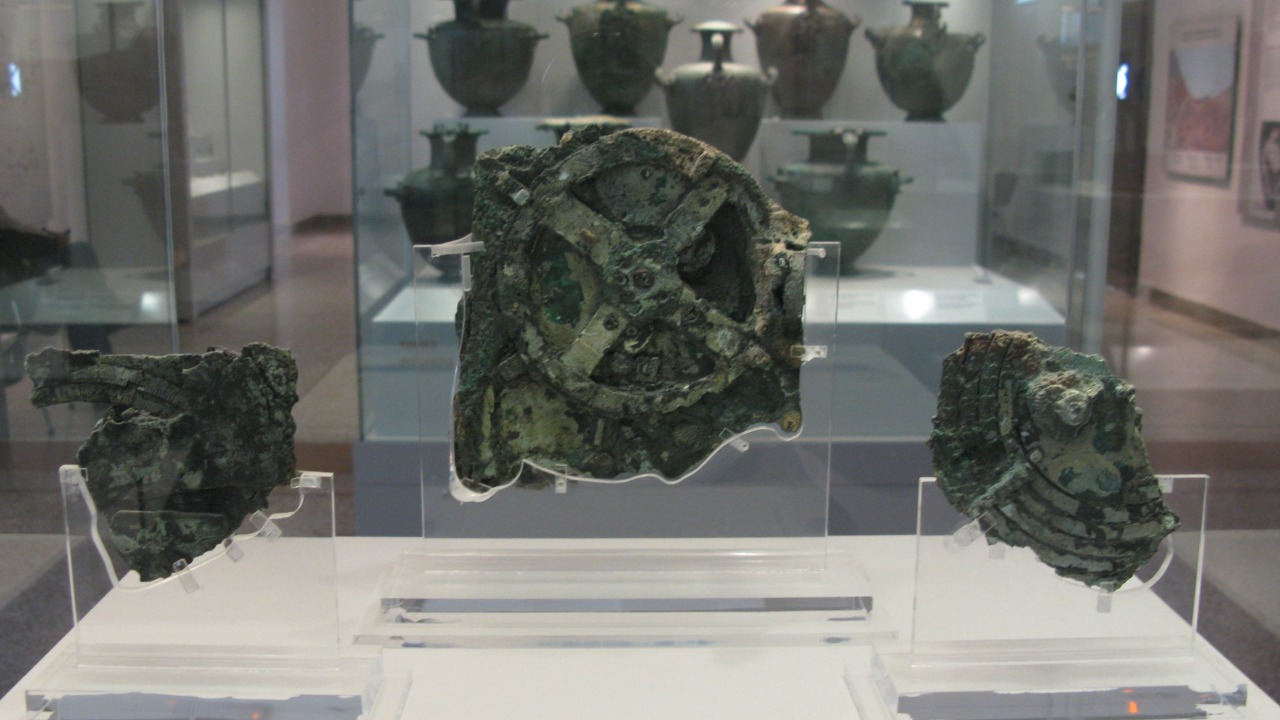
The Baghdad Battery is not the only ancient artifact to have sparked such debates. There have been numerous other controversial discoveries that have challenged our understanding of ancient technology. These include the Antikythera Mechanism, a complex astronomical device from ancient Greece, and the Dendera Light, an Egyptian bas-relief that some believe depicts an ancient electric lamp.
What these artifacts have in common is that they all challenge the traditional narrative of technological progress. They remind us that the quest to fully understand the technological capabilities of ancient cultures is far from over and that we must keep an open mind when studying the past.
