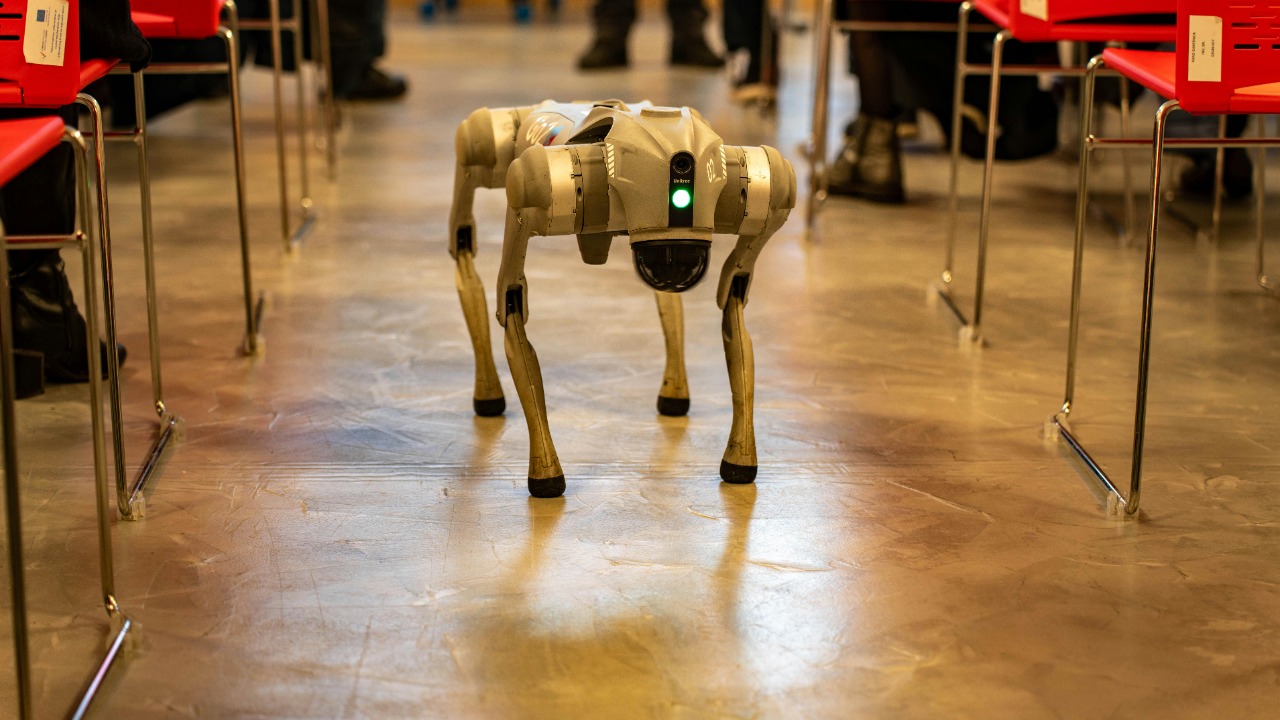

Artificial intelligence and robotics are no longer experimental side projects in medicine, they are rapidly becoming the hidden infrastructure of how care is delivered, documented, and even discovered. From operating rooms to hospital back offices, machines that can sense, plan, and act are starting to take on work that once depended entirely on humans. The result is a quiet but profound shift that is set to redefine not only treatment, but the economics and ethics of health care and adjacent industries.
I see the most dramatic changes emerging where software intelligence fuses with physical machines, creating systems that can listen to patients, guide clinicians, and in some cases perform parts of procedures themselves. The next few years will test whether this AI robotics revolution can deliver safer, more personalized care without eroding trust or widening existing gaps in access.
AI agents move from back office to bedside
The first wave of medical AI focused on pattern recognition, but the new generation is about agents that can observe, reason, and act inside complex workflows. In health systems, that shift is already visible in the way electronic records are being retooled as a Providers’ Toolbox Expands, with ambient AI scribes listening to consultations, drafting notes, and surfacing relevant history in real time. These tools are not just transcribing, they are starting to understand clinical context well enough to propose orders or follow up tasks that clinicians can accept or reject with a tap.
That same agentic logic is now being applied to more complex decisions. Expert forecasts for 2026 describe a pivotal moment in which Leading voices at Wolters Kluwer Health expect AI to move from passive decision support to active orchestration of care pathways, while still keeping clinicians at the center of innovation. In parallel, other analysts describe how Rise of Agentic will allow software to recommend diagnostic steps or treatment adjustments on its own, turning guidelines into living systems that adapt to each patient.
Robotic surgery and the new operating room
Nowhere is the fusion of AI and robotics more visible than in surgery, where precision machines are reshaping what is possible inside the body. Research cited in surgical forums highlights how Improved robotic techniques can reduce intraoperative blood loss, shorten hospital stays, and cut post operative pain, turning once major procedures into experiences that feel closer to day surgery. Systems like Stryker’s Mako Shoulder robotic surgical assistant and the related Mako Spine for spine replacement surgeries already use detailed imaging to help surgeons plan and execute bone cuts with sub millimeter accuracy.
The next frontier is autonomy. Reporting from major academic centers notes that Surgical teams are testing autonomous robots that can handle parts of procedures, such as suturing or drilling, that are traditionally done manually, with the goal of improving consistency and freeing surgeons to focus on the most complex judgment calls. In Europe, that ambition has already taken architectural form, with reports from Rome describing In Rome the unveiling of Europe’s first fully robotic surgical hospital wing, where AI powered surgical robots are expected to perform complex operations and, according to the same analysis, similar systems are projected to carry out a significant share of surgeries in the NHS.
From robotic nurses to hospital command centers
While the operating room grabs headlines, some of the most consequential robotics work is happening in the quieter corners of hospitals. Engineering programs point to Robotic nurses equipped with AI that can monitor vital signs, deliver medications, and respond to basic patient requests, effectively extending the reach of human staff on crowded wards. These systems are paired with smarter diagnostic algorithms that can detect subtle patterns in imaging or lab data, flagging deterioration earlier and giving clinicians more time to intervene.
Behind the scenes, AI is also rewiring hospital logistics and administration. Analysts tracking Emerging Trends Reshaping describe command center platforms that predict bed demand, optimize staffing, and coordinate patient transfers, while also using automation to reduce billing errors and speed up prior authorizations. Community predictions on Automation in 2026 go further, with leaders like Kem Graham, VP of Sales at Nordic Global Consulting, arguing that AI will be embedded across every area of care, from scheduling and supply chains to remote monitoring, effectively turning hospitals into semi autonomous systems that still rely on human oversight for exceptions and ethics.
Personalized care, ambient documentation, and the “medical autonomist”
For clinicians, one of the most immediate shocks is the way AI is changing documentation and decision support. Physicians have long complained that note taking has become a second job, and detailed analyses of the The Problem: Documentation describe how charting now consumes hours that could be spent with patients. Ambient systems that listen to visits and auto generate structured notes promise to reverse that trend, capturing not only what was said but also clinical reasoning patterns, and then feeding that data into predictive models that can suggest diagnoses or highlight gaps in care.
Those capabilities are converging into a new role some commentators call the New Bottom Line of the “medical autonomist”, a clinician who supervises agentic AI that handles much of the process work, from triage questions to order sets. In this model, AI is not replacing doctors, it is redefining the workforce by delegating routine steps and allowing clinicians to return to the patient. That shift is reinforced by compensation experts who argue that Decision support will expand from simple alerts to continuous guidance, while health care as an industry is still behind the curve in aligning incentives and training with these new tools.
Beyond hospitals: medtech, life sciences, and consumer health
The AI robotics revolution is not confined to hospitals, it is also reshaping devices, drug development, and even consumer gadgets. Industry specialists describe Engineering for the in medtech as a shift toward service enabled devices and outcome driven engineering, where implants and monitors are designed to stream data back to cloud platforms that adjust therapy based on the biological characteristics of individual patients. In parallel, life sciences companies are integrating AI into regulated platforms such as quality systems and LIMS, with four major shifts expected to define how technology supports discovery and compliance in 2026.
On the consumer side, the line between medical and everyday tech is blurring fast. At CES 2026, organizers highlighted how At CES digital health devices, including smart glasses with generative AI voice interfaces, are being pitched as tools to monitor chronic conditions, coach behavior change, and accelerate digital health innovation. Health tech digests predict that by 2026, Dec era generative AI will be embedded in patient facing apps that can explain lab results, simulate treatment options, and even help identify therapies for rare and complex diseases. At the same time, funding analysts warn that Over the next cycle, capital for AI startups could tighten, putting pressure on companies to prove real world outcomes rather than just flashy demos.
More from Morning Overview