
With the advent of technology, the domain of historical preservation is witnessing a remarkable transformation. Artificial Intelligence (AI) is being increasingly employed to restore faded medieval manuscripts, potentially unveiling hidden details and offering fresh insights into the past.
The Problem with Traditional Restoration Methods
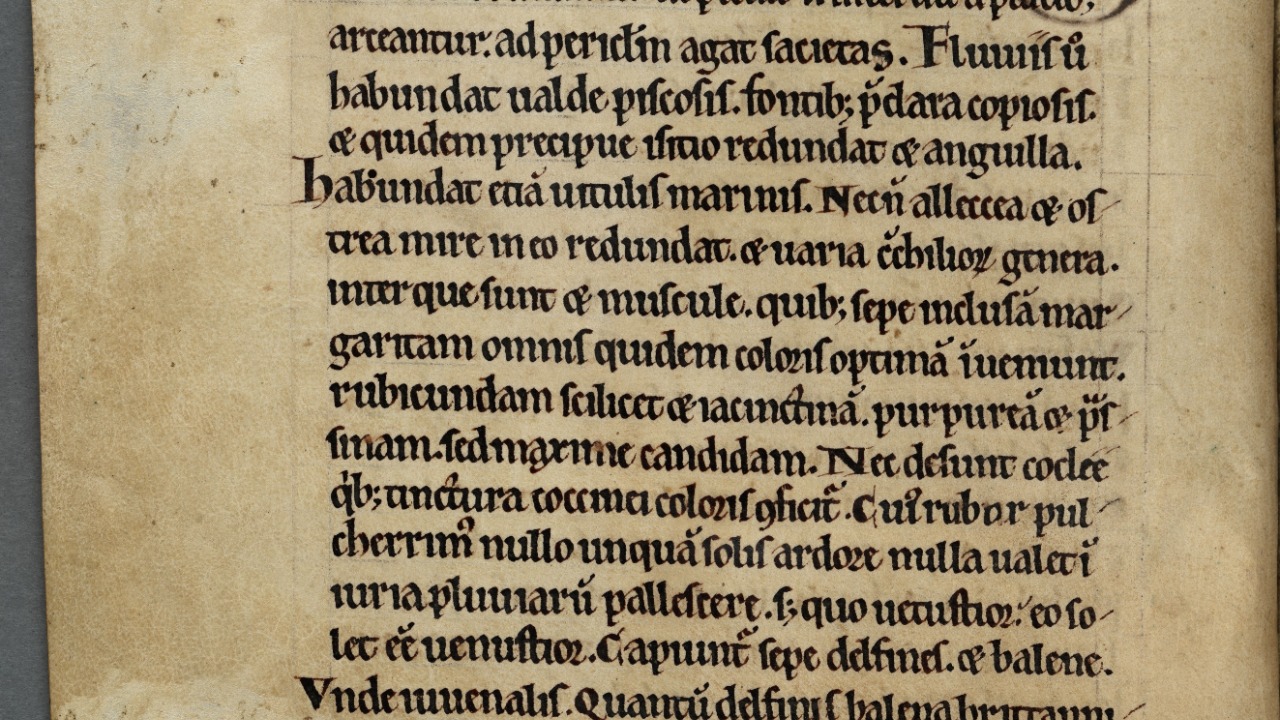
The process of restoring ancient manuscripts is a meticulous and delicate task. Traditional methods often involve manual labor, which is not only time-consuming but also fraught with challenges. For instance, the use of chemicals or other abrasive techniques to clean or restore the manuscripts can sometimes lead to further damage. The risk of human error is another significant concern, as mistakes could lead to inaccuracies or even irreparable harm to these priceless historical documents.
Moreover, the interpretation of faded texts or images is largely subjective, relying heavily on the expertise and intuition of the conservator. This reliance on human judgement can potentially introduce biases or inaccuracies into the restored versions of the manuscripts.
The Power of Artificial Intelligence

AI has been making significant strides in the realm of image processing and restoration. Its ability to analyze patterns and learn from vast amounts of data is being harnessed in a wide range of fields, including art restoration. The potential of AI in reviving faded manuscripts is immense, with its promise of accuracy, speed, and minimal risk of damage.
AI has already demonstrated its prowess in restoring damaged artworks. For instance, a damaged painting was successfully restored within hours using an AI-generated “mask”, a task that would have taken weeks or even months using traditional restoration methods. This showcases how AI can be a game-changer in the domain of restoration and preservation.
AI in Medieval Manuscript Restoration

AI’s role in the restoration of medieval manuscripts is particularly promising. By using advanced algorithms, AI can accurately predict and recreate faded or damaged portions of the text, thus potentially revealing content that was previously illegible or lost. A study published in the International Journal of Heritage Architecture elaborates on the process of AI restoration, including the use of AI-generated “masks” to recreate faded areas.
A significant example of AI’s potential in this field is the restoration of the long-lost manuscript of the Merlin and King Arthur Legend. This medieval manuscript was recovered and restored using AI, revealing previously unknown details about these legendary characters and their adventures. This case underscores the potential of AI in unearthing hidden historical treasures.
The Implications of AI Restoration

The use of AI in manuscript restoration can reveal previously unseen details, providing a fresh perspective on historical documents. As AI technology improves, it could potentially revolutionize the field of historical preservation, enabling more accurate and detailed analysis of historical texts.
For instance, the restoration of ancient scripts could throw light on the socio-cultural aspects of the period they were written in. By rendering these scripts legible, AI can potentially facilitate a deeper understanding of our history and heritage.
The Current Limitations and Future Possibilities of AI Restoration

Despite its potential, AI restoration is not without its challenges. One of the primary concerns is the risk of inaccuracies due to the AI misinterpreting the faded sections of the manuscript. Moreover, the AI’s prediction is only as good as the data it is trained on, which means that the accuracy of the restoration relies heavily on the quality of the training data. Therefore, expert oversight is still essential to verify the accuracy of the AI’s output.
However, as the technology evolves, these challenges are likely to be addressed, leading to more reliable and accurate AI restoration techniques. The future of AI in historical preservation looks promising, with potential improvements and advancements on the horizon. As a recent paper suggests, AI could soon be used not just for restoration, but also for the digital preservation and dissemination of these historical treasures, ensuring their survival for future generations.
