
Electric air taxis are moving from glossy renderings to concrete infrastructure, and one aviation startup is betting that owning its own airport will be the fastest way to get there. The race to blend artificial intelligence with next-generation aircraft is no longer a distant vision but a set of test flights, regulatory milestones, and business deals that are starting to look like the early days of commercial aviation.
As I trace how these projects are unfolding on the ground and in the air, the picture that emerges is less about sci‑fi spectacle and more about a new layer of urban transport being built piece by piece. The most ambitious players are not just designing aircraft, they are buying airfields, training AI copilots, and trying to convince regulators and travelers that a small, quiet, software-heavy aircraft can be as routine as calling a ride-hail car.
The startup turning a California airfield into an AI test bed
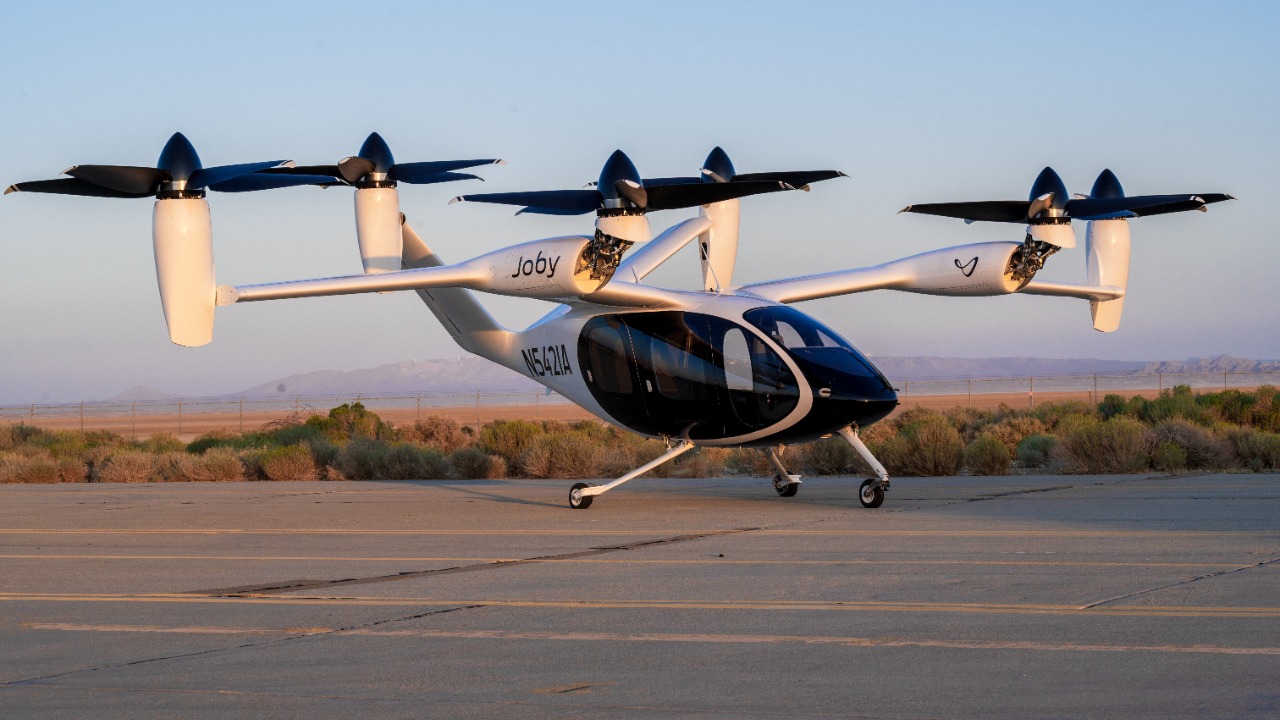
The clearest sign that this industry is maturing is that one of its leading companies, Joby Aviation, has moved from PowerPoint to property deeds. Joby Aviation, a Santa Cruz County based electric air taxi developer, has purchased a small California airport to convert it into a dedicated test bed for AI-enabled aviation, giving the company a controlled environment to refine its aircraft, ground systems, and autonomy stack without competing for space at crowded commercial hubs, according to reporting on the airport acquisition. By owning the site outright, Joby can hardwire experimental operations into the layout of the airfield, from charging pads and maintenance hangars to data links that feed every second of flight into machine learning models.
I see this move as a strategic shortcut around one of the biggest bottlenecks in advanced air mobility: access to airspace and infrastructure that can tolerate rapid iteration. Instead of negotiating for limited test slots at busy airports, Joby can run repeated sorties, tweak software between flights, and gradually layer in more automation while keeping regulators closely involved on a site designed for that purpose. The airport effectively becomes a living lab where AI systems can be trained on real-world conditions, from gusty coastal winds to complex approach paths, long before passengers ever step on board.
From prototypes to near-term service
Joby’s airport play only makes sense because its aircraft are already deep into the certification and testing pipeline. The company’s electric vertical takeoff and landing design has been flying full-scale prototypes, and it has been working with the Federal Aviation Administration on a multi-stage approval process that covers everything from airworthiness to pilot training, as detailed in coverage of the Joby electric flying taxi. I read that as a sign that the sector is shifting from speculative timelines to concrete milestones, with test flights, manufacturing plans, and regulatory paperwork all converging on the same horizon.
Investors have noticed that this is no longer a purely experimental project. Joby has drawn significant backing from established industrial players, including Toyota, which has provided both capital and manufacturing expertise to help scale production of the aircraft, according to reporting on how the flying taxi push has become an unexpected boost for Toyota. When a company that built its reputation on the Toyota Production System starts retooling its factories and processes for electric air taxis, it signals that the industry is preparing for volume, not just one-off demonstrators.
Why AI is moving into the cockpit
As the hardware matures, the next frontier is the cockpit, where AI is starting to take on tasks that used to belong exclusively to human pilots. Developers are training software to handle routine flight management, monitor systems, and even assist with navigation and collision avoidance, with some projects explicitly exploring whether AI copilots could eventually replace one of the two humans on the flight deck, according to analysis of how AI copilots could reshape pilot roles. I see this as a pragmatic response to two pressures at once: the need to keep operating costs low for short urban hops, and the broader pilot shortage that has been squeezing airlines and regional carriers.
In the near term, most of these systems are being framed as decision-support tools rather than full replacements for human judgment. AI can sift through sensor data faster than any person, flag anomalies, and suggest optimal routes or responses, but regulators still expect a trained pilot to be in command. Over time, as these algorithms prove themselves in thousands of uneventful flights, the balance of responsibility could shift, with AI taking on more of the routine workload while humans focus on edge cases and passenger reassurance.
Fully autonomous air taxis are already flying test routes
While companies like Joby are starting with piloted aircraft, other players are skipping straight to full autonomy. One leading example is an electric air taxi platform that has been designed from the outset to fly without a pilot on board, relying on a combination of onboard sensors, redundant flight computers, and remote supervision from ground operators, as shown in an exclusive look inside a fully autonomous air taxi. The cabin layout in that design has no cockpit at all, just passenger seats and a minimal interface, which underscores how radically different the economics become when you remove the pilot from the vehicle.
In my view, these autonomous prototypes are less about immediate commercial service and more about proving that the technology stack can handle the full flight envelope without human intervention. Each test flight generates a trove of data on how the aircraft responds to turbulence, unexpected traffic, and system glitches, which in turn feeds into the AI models that will eventually run production vehicles. The challenge is not just technical but psychological and regulatory, since convincing authorities and the public to accept a pilotless aircraft will likely take longer than building one that can fly safely.
How regulators are trying to stay ahead
Regulation is often portrayed as a brake on innovation, but in the case of AI-enabled flying taxis, it is more accurate to see it as the scaffolding that will let the industry scale. In the United States, aviation authorities have been working on new certification pathways for electric vertical takeoff and landing aircraft, while also grappling with how to evaluate AI systems that learn and adapt over time, a tension highlighted in reporting on how flying taxis are moving to the front of the regulatory agenda in the U.S. policy debate. I read that as an acknowledgment that the old rulebooks, written for mechanical systems and human pilots, need to be updated for software that can change with each new data upload.
What stands out to me is that regulators are not just reacting to industry proposals, they are also trying to shape how AI is used from the outset. That includes setting expectations for transparency around algorithms, requiring robust testing in controlled environments like Joby’s dedicated airport, and insisting on clear lines of accountability when something goes wrong. The goal is to avoid a patchwork of local rules that could fragment the market, while still giving cities and states enough authority to manage noise, zoning, and community impact around new vertiports.
What flying taxis could mean for travelers
For travelers, the promise of electric air taxis is not just novelty, it is a potential shift in how we think about distance and time in and around cities. Instead of budgeting an hour or more to crawl from downtown to a major airport, passengers could book a short hop that lifts off from a neighborhood vertiport and lands near their terminal, a scenario explored in depth in coverage of how flying taxis could reshape travel. I see that as part of a broader trend in which the boundaries between local transit and regional aviation start to blur, with app-based booking and dynamic pricing smoothing the experience.
Of course, the benefits will depend heavily on how these services are integrated with existing transport networks. If vertiports are built near train stations, ferry terminals, and bus hubs, flying taxis could become a high-speed connector that complements public transit rather than competing with it. If they end up isolated in hard-to-reach industrial zones, the convenience factor will evaporate. The early choices that companies and city planners make about where to place infrastructure, and how to price rides, will determine whether this becomes a premium niche product or a mainstream option for time-sensitive trips.
Global experiments and regional strategies
Although much of the attention has focused on U.S. startups, the push to commercialize air taxis is global, with different regions experimenting with their own models. In Israel, for example, authorities and private companies have been running demonstration flights of electric air taxis over urban areas, testing routes, noise levels, and public reaction as part of a broader national strategy to integrate advanced air mobility into daily life, according to reporting on Israel’s air taxi trials. I see those flights as a real-world laboratory for how densely populated cities might handle low-altitude traffic without overwhelming residents.
These international pilots also highlight how local geography and politics shape the rollout. A compact country with centralized airspace management can move faster on nationwide corridors than a sprawling federal system with multiple layers of authority. At the same time, successful demonstrations abroad put pressure on other regulators to keep pace, especially if travelers start to view air taxis as a normal part of the mobility mix in some markets but not others. The result is a quiet race to set the norms and standards that will govern cross-border operations in the long run.
The economics behind the hype
Behind every glossy rendering of a rooftop vertiport is a hard set of spreadsheets about utilization, maintenance, and staffing. For air taxis to be more than a luxury novelty, operators need to keep aircraft in the air for a large share of the day, minimize downtime for charging and inspections, and spread fixed costs over thousands of flights. Analysts following the sector have pointed out that the business case becomes far more compelling if operators can eventually move from two pilots to one, and then from one to remote or AI supervision, a progression explored in depth in coverage of pilot-free flying taxis. I interpret that as a reminder that autonomy is not just a technological ambition, it is a financial imperative.
At the same time, the capital costs are enormous, from aircraft development and certification to vertiport construction and software infrastructure. That is why partnerships with automakers, airlines, and infrastructure investors are becoming central to the story, as seen in Toyota’s involvement with Joby and similar tie-ups elsewhere. The companies that succeed are likely to be those that can align their technology roadmap with a realistic path to profitability, rather than relying indefinitely on speculative funding fueled by hype cycles.
Public perception, noise, and the view from the ground
Even if the aircraft are safe and the economics work, public acceptance will be the final gatekeeper. Residents who live under proposed flight paths are already raising questions about noise, privacy, and visual clutter in the sky, concerns that have surfaced in community meetings and public comment periods around early test programs. Some of the most revealing reactions come from people who have watched demonstration flights up close, including those captured in a detailed video tour of a next-generation air taxi that shows how quiet the rotors can be compared with traditional helicopters, as seen in a video walkthrough of an eVTOL cabin. I take those on-the-ground impressions seriously, because they hint at how quickly skepticism can soften once people see and hear the aircraft for themselves.
Noise is only one piece of the puzzle. There are also questions about who gets access to these services, whether they will deepen or reduce inequality in urban mobility, and how they will interact with existing environmental goals. Electric propulsion eliminates tailpipe emissions at the point of use, but the overall climate impact depends on the source of electricity and the lifecycle of batteries and materials. Communities that have long borne the brunt of airport pollution are understandably wary of becoming test beds for a new layer of air traffic, even if the aircraft are quieter and cleaner than what they replace.
From test beds to everyday infrastructure
When I look across all these threads, Joby Aviation’s decision to buy a California airport and turn it into an AI-focused test bed feels like a microcosm of where the industry is headed. The company is not just building an aircraft, it is building an ecosystem that includes dedicated airspace, data pipelines, and regulatory relationships, all geared toward making AI-guided electric flights feel as routine as a regional jet departure. That kind of vertical integration is expensive and risky, but it also gives the startup a chance to shape the standards and practices that others may eventually follow.
The next few years will reveal whether this bet pays off, as more prototypes transition into certified aircraft, more cities approve vertiports, and more passengers take their first short hop above the traffic. If the technology, regulation, and public sentiment align, the phrase “flying taxi” could soon feel as ordinary as “rideshare,” with AI quietly handling much of the work behind the scenes. For now, the sight of a startup-owned airfield humming with electric rotorcraft and sensor-laden test flights is the clearest signal yet that this future is being built in real time, not just imagined on a whiteboard.
More from MorningOverview