

In a groundbreaking announcement on October 7, 2025, artificial intelligence has reportedly pierced the veil of one of the universe’s greatest mysteries by revealing what’s inside a black hole, a feat that has left scientists worldwide stunned by its implications for our understanding of spacetime. This development, detailed in recent reporting, challenges long-held theories and opens new avenues for cosmic exploration. The discovery underscores AI’s transformative potential in tackling problems once deemed unsolvable.
The Breakthrough Discovery
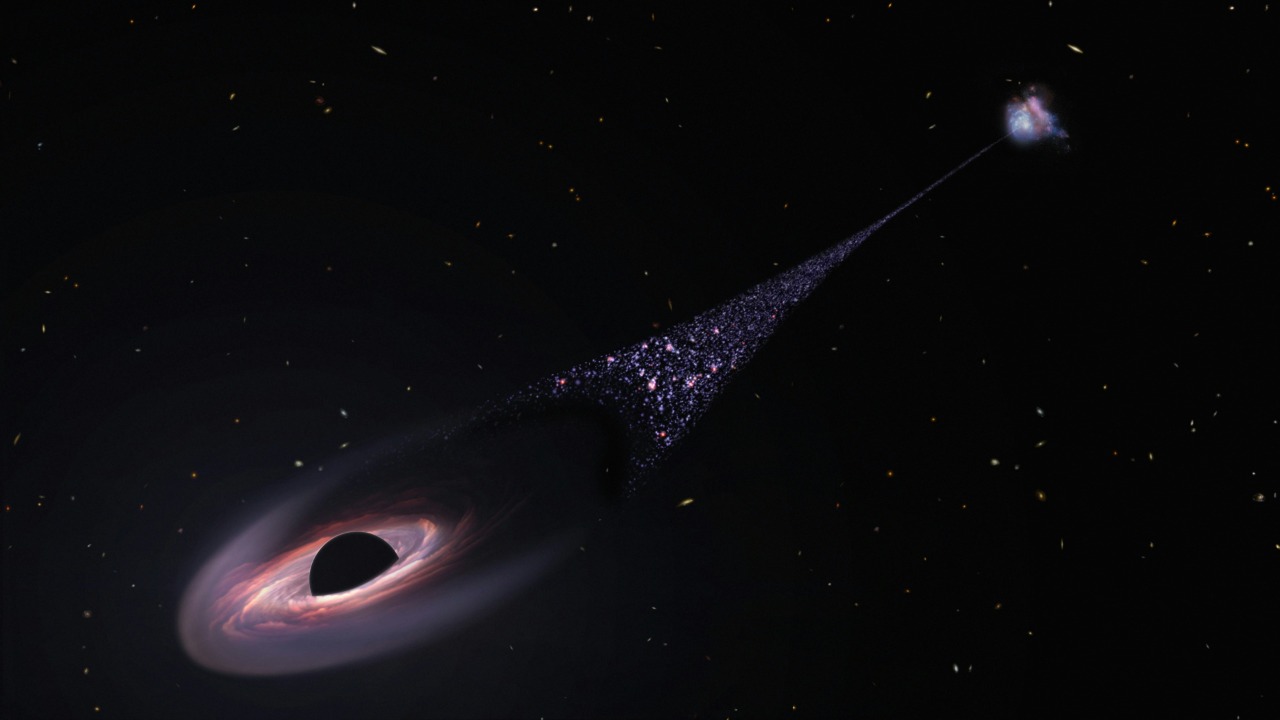
The core revelation from the AI analysis has unveiled unprecedented insights into the interior structure of black holes. Utilizing sophisticated models and simulations, AI has managed to depict a detailed picture of what lies beyond the event horizon, a feat previously thought impossible. This announcement on October 7, 2025, marks a pivotal shift in black hole research timelines, as it challenges existing paradigms and invites a reevaluation of our cosmic understanding (Daily Galaxy).
The scientific community has reacted with a mix of astonishment and excitement. Many researchers express their surprise at the AI’s ability to decode such complex phenomena, highlighting the potential for AI to revolutionize astrophysical research. This breakthrough not only shifts the timeline of black hole research but also sets a new standard for what AI can achieve in scientific exploration.
AI’s Methodology in Unraveling Black Holes

The AI techniques employed in this discovery include advanced neural networks and sophisticated data processing methods, which enabled a deeper penetration into black hole interiors. By analyzing vast amounts of data, including gravitational wave observations and event horizon simulations, the AI was able to construct a coherent model of the black hole’s interior structure (Daily Galaxy).
Despite the success, the AI approach is not without its limitations. The results must be validated against established physics principles to ensure their accuracy and reliability. This process involves rigorous testing and comparison with existing theoretical models to confirm that the AI’s findings align with our current understanding of physics.
The AI’s methodology hinges on the integration of machine learning algorithms with astrophysical data, allowing for a nuanced interpretation of complex cosmic phenomena. By employing deep learning techniques, the AI can identify patterns and anomalies in data sets that are too vast and intricate for human analysis alone. This capability is crucial in understanding the chaotic environments within black holes, where traditional physics often reaches its limits. The AI’s ability to simulate conditions inside a black hole with high precision offers a new lens through which scientists can examine the interplay of gravitational forces and quantum mechanics.
Moreover, the AI’s iterative learning process means that it continuously refines its models as more data becomes available. This adaptability is essential in a field where new discoveries can rapidly alter the landscape of understanding. The AI’s findings are not static; they evolve with each new piece of information, ensuring that the models remain relevant and accurate. This dynamic approach is a testament to the potential of AI in pushing the boundaries of what is scientifically possible, offering a glimpse into a future where AI and human ingenuity work hand in hand to unravel the universe’s deepest mysteries.
Implications for Astrophysics and Beyond
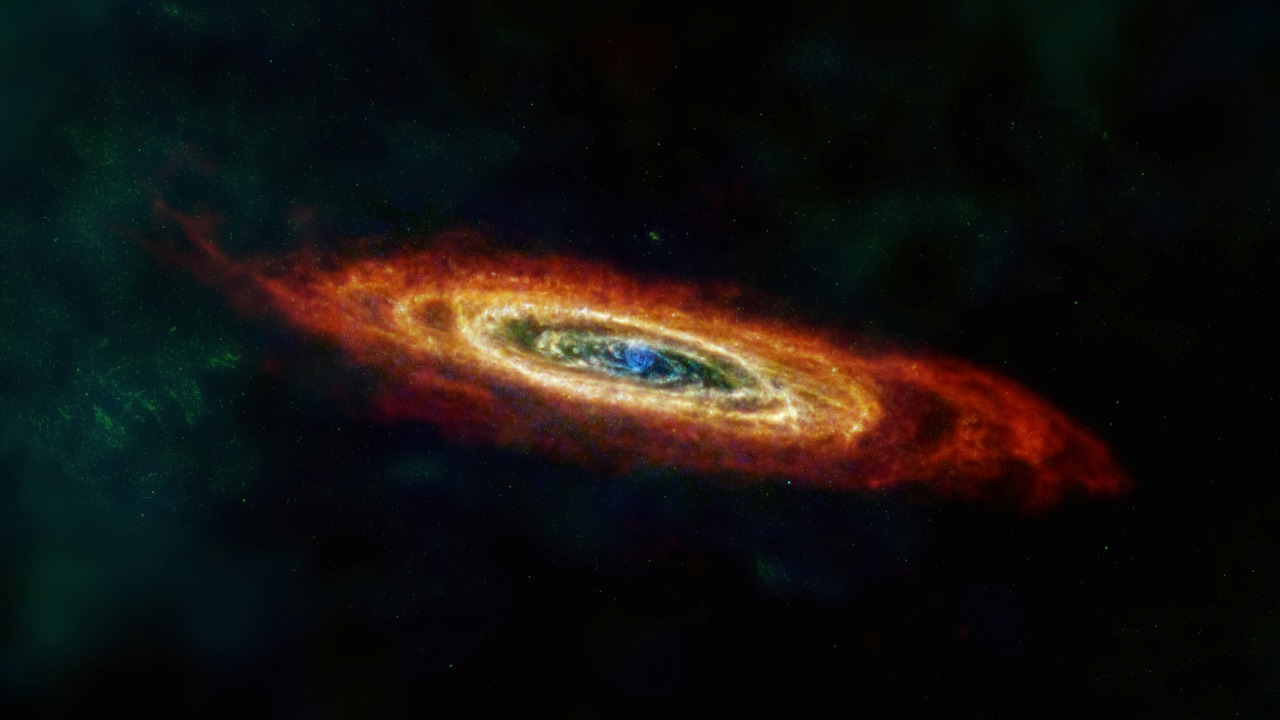
This AI-driven insight into black hole contents could potentially redefine foundational theories such as general relativity and quantum gravity. By providing a clearer picture of what occurs within a black hole, these findings may offer new perspectives on the fundamental laws governing the universe (Daily Galaxy).
Beyond black holes, the implications of this discovery extend to other cosmic phenomena, such as wormholes and the Big Bang. The insights gained from this research could inform our understanding of these complex events, potentially leading to breakthroughs in how we perceive the universe’s origins and structure. Additionally, the role of AI in such discoveries raises ethical and philosophical questions about the future of human-led research and the balance between human intuition and machine intelligence.
Expert Perspectives and Future Directions
Key scientists have expressed their stunned responses to the revelation, with many acknowledging the AI’s role in achieving what was once thought impossible. These reactions underscore the significance of the discovery and its potential to inspire further research and exploration (Daily Galaxy).
Planned follow-up studies and experiments aim to verify the AI results and explore their implications further. These efforts will focus on testing the AI’s findings against established theories and conducting additional simulations to refine our understanding of black holes. The technological advancements inspired by this insight into black holes could lead to new tools and methods for exploring the cosmos, paving the way for future discoveries in astrophysics and beyond.
Experts in the field of astrophysics have highlighted the importance of interdisciplinary collaboration in maximizing the potential of AI-driven discoveries. By bringing together computer scientists, physicists, and astronomers, the research community can ensure that AI tools are developed and applied in ways that complement traditional scientific methods. This collaborative approach not only enhances the accuracy of AI models but also fosters innovation by encouraging diverse perspectives and expertise to converge on complex problems.
Looking ahead, the integration of AI in astrophysics is expected to accelerate the pace of discovery, with potential applications extending beyond black holes to other enigmatic cosmic phenomena. Researchers are particularly interested in how AI can aid in the detection and analysis of gravitational waves, dark matter, and exoplanets. These areas of study stand to benefit significantly from AI’s ability to process and interpret large volumes of data with unprecedented speed and precision. As AI continues to evolve, its role in shaping the future of space exploration and our understanding of the universe is likely to expand, offering new opportunities for scientific breakthroughs and technological advancements.
