The A-1 Skyraider holds a unique place in the chronicles of U.S. military aviation. As the last propeller-driven fighter, it marked the end of an era, combining power, versatility, and resilience in a way that has left a significant impact on subsequent aircraft design and military tactics.
Design and Development of the A-1 Skyraider
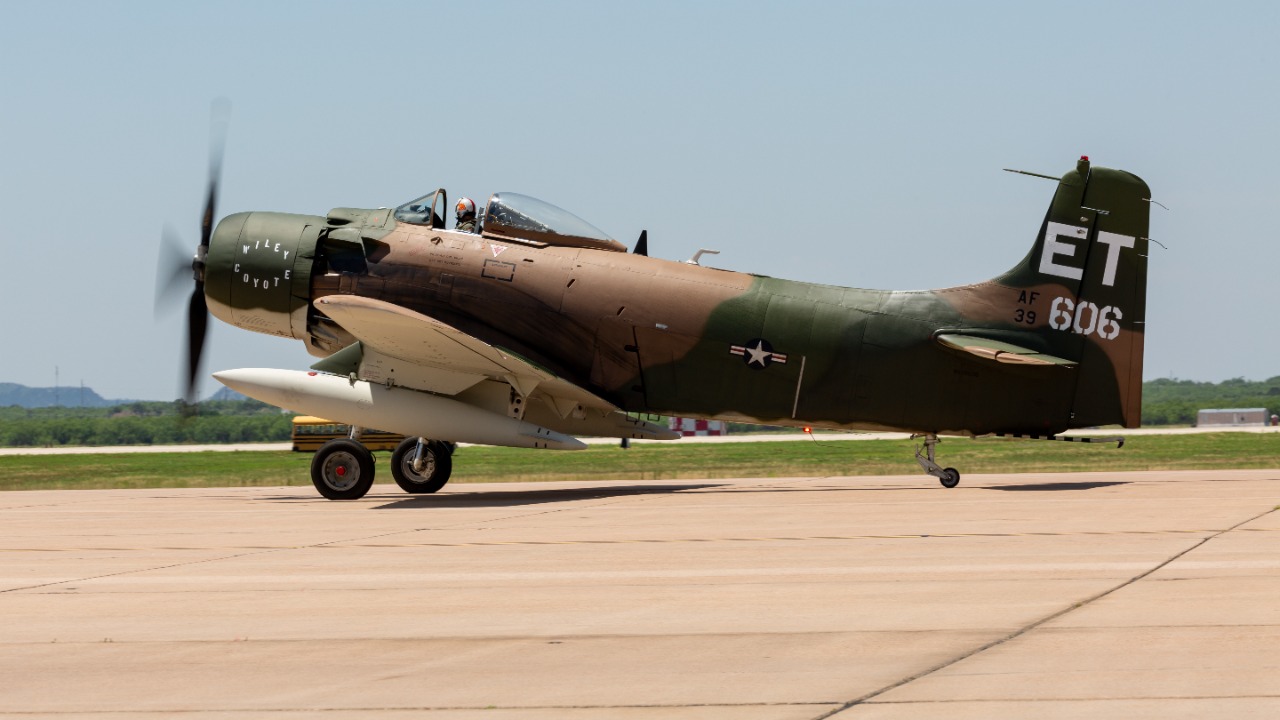
The A-1 Skyraider was born out of necessity during the latter stages of World War II, with its design aimed at providing the U.S. Navy with a robust, carrier-based, single-seat bomber. However, the war ended before the Skyraider could see combat, but the aircraft didn’t fade into obscurity.
Over the years, the Skyraider’s design evolved to meet the changing needs of warfare. Its ability to carry a substantial payload and its extended flight duration set it apart from other aircrafts of the era. The Skyraider was also versatile, being used in multiple roles such as ground attack, reconnaissance, and rescue missions. This adaptability became its defining feature and a benchmark for future military aircraft.
The A-1 Skyraider in Combat
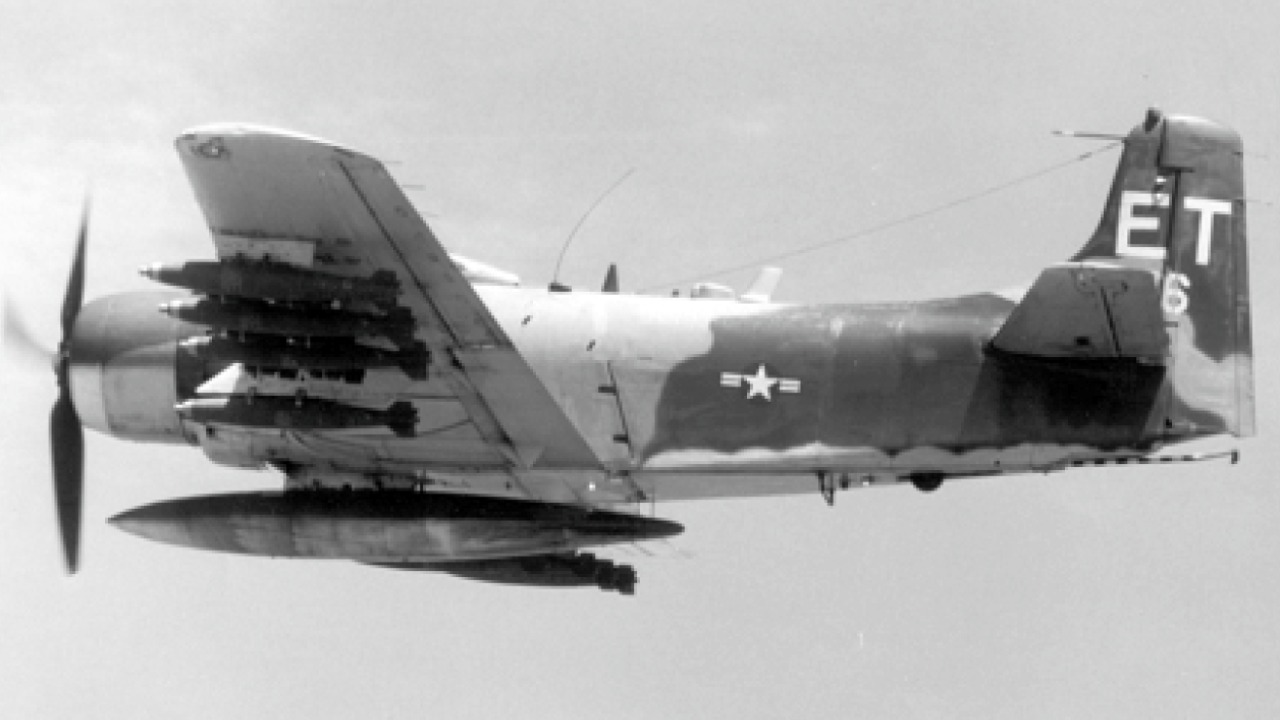
The Skyraider saw significant action in both the Korean War and the Vietnam War. In Korea, it was instrumental in close air support missions, providing cover for ground troops with its potent payload. In Vietnam, it gained a reputation as a reliable and resilient aircraft, often flying in conditions deemed too dangerous for jet-powered aircraft.
One of the most notable missions involving the A-1 Skyraider was the rescue of downed pilots in Vietnam, earning the aircraft and its pilots the nickname “Spad,” a tribute to a French World War I fighter. Despite its older technology, the Skyraider demonstrated that in certain circumstances, a propeller-driven aircraft could hold its own against more modern designs. You can read more about these missions in this book.
The Transition from Propeller-Driven to Jet-Powered Aircrafts
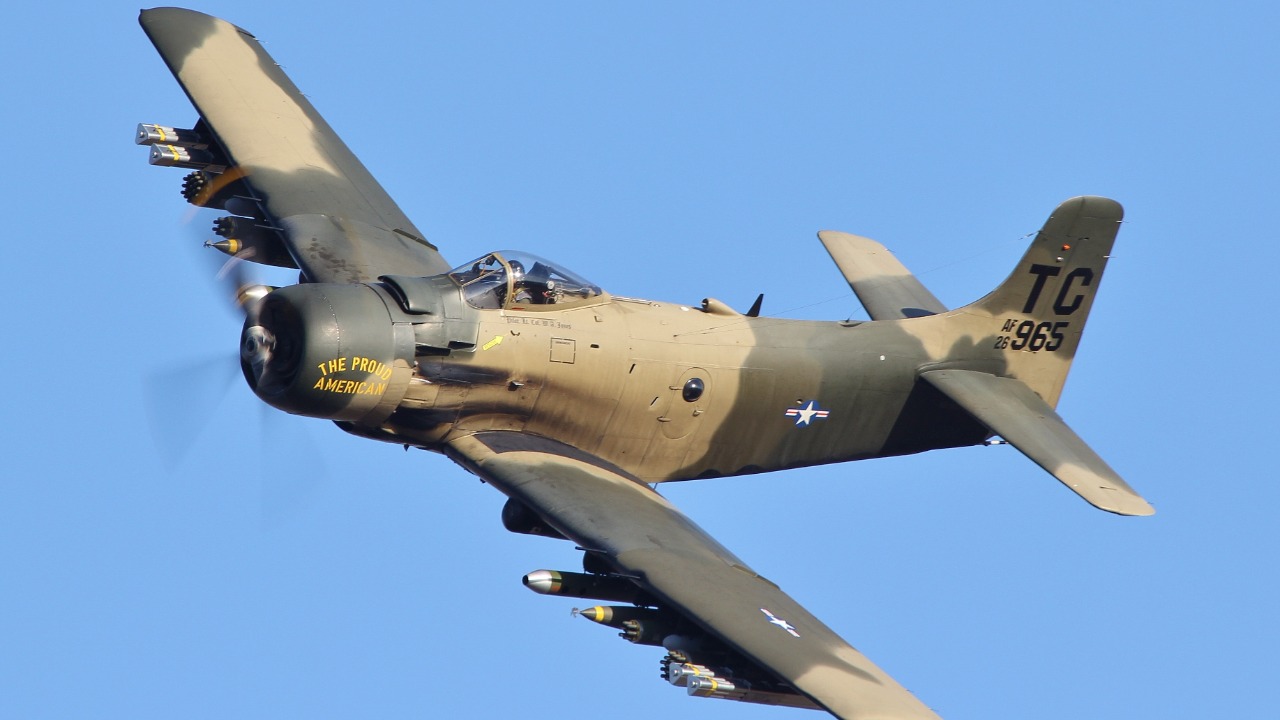
During the operational years of the Skyraider, the world saw a shift in military aircraft design from propeller-driven to jet-powered planes. This transition was not sudden but a gradual process driven by the need for speed, altitude, and maneuverability that jet engines offered.
The U.S. military embraced this transition, recognizing that jet-powered aircraft could deliver superior performance in most combat scenarios. However, the Skyraider’s versatility and reliability ensured it remained in service long after many of its contemporaries were retired. This transition and the Skyraider’s role in it are well documented in this research paper.
Legacy of the A-1 Skyraider
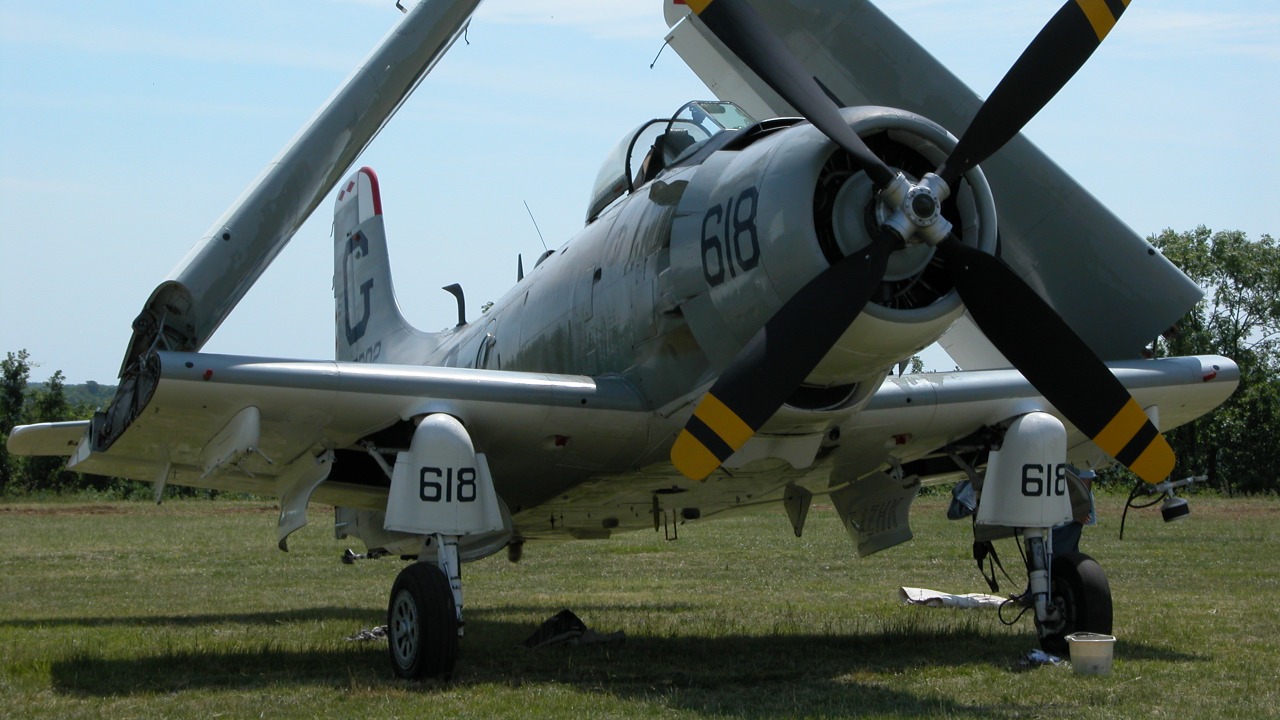
The A-1 Skyraider’s influence extends far beyond its operational years. It demonstrated the value of versatility in military aviation, influencing the design of many subsequent aircraft. In popular culture, the Skyraider has been featured in films and literature, serving as a symbol of American resilience and versatility.
Today, Skyraiders can be found in museums and private collections, tangible reminders of a bygone era of propeller-driven fighters. One such preserved Skyraider can be seen in the National Museum of the U.S. Air Force. Learn more about this iconic aircraft’s legacy in this article.
Lessons from the A-1 Skyraider
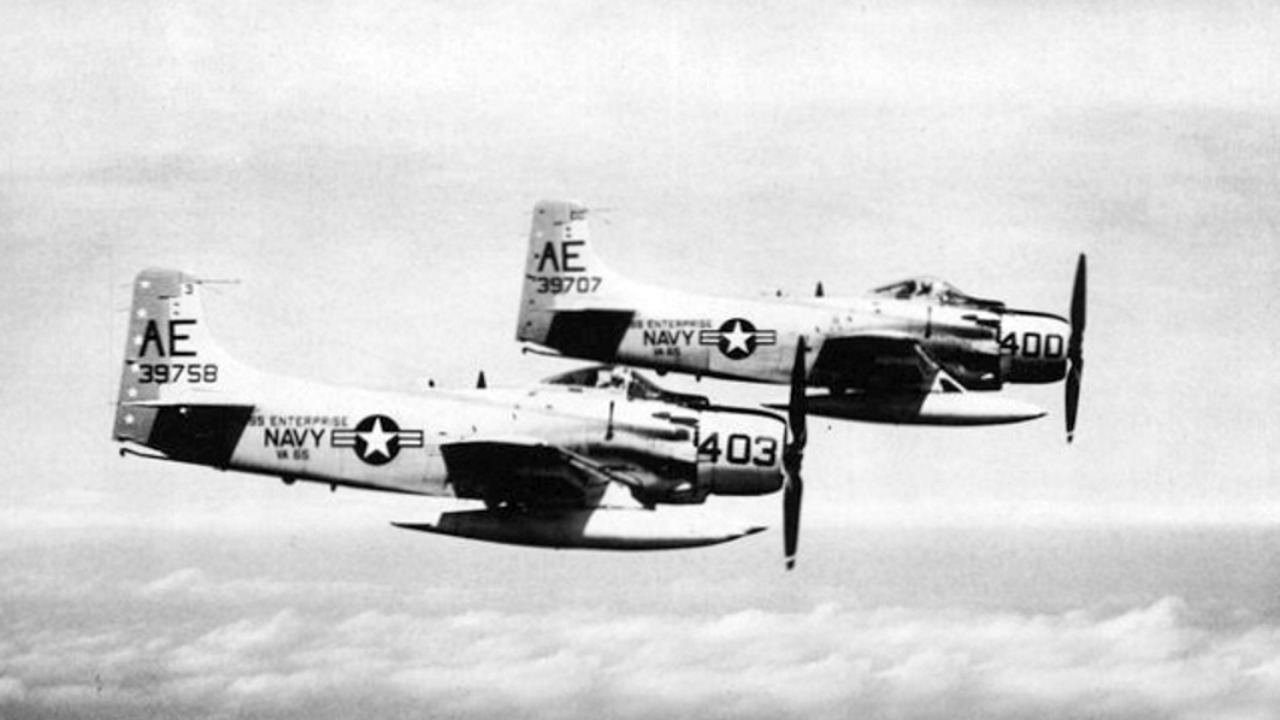
The story of the A-1 Skyraider teaches us the value of versatility and adaptability in military hardware. Despite being a propeller-driven aircraft in an era transitioning to jet power, the Skyraider carved out a critical niche for itself, becoming an indispensable tool in the U.S. military’s arsenal.
As we look to the future of military aviation, the Skyraider’s operational history offers valuable insights. It reminds us that while technology advances, the principles of versatility, reliability, and adaptability remain constant. For a more in-depth look at the lessons from the Skyraider, check out this book.
