
Mars has a reputation for looking odd, whether the view comes from an orbiter or from a rover’s camera. Shadows, minerals and ancient water can all produce shapes and textures that catch the eye. NASA’s own descriptions of eight such sights show what is actually going on, and the list begins with a famous face.
Read next on Morning Overview: Melting permafrost is setting off a newly identified kind of catastrophic landslide, scientists say
1. Face on Mars (Cydonia): Shadows Made a Face
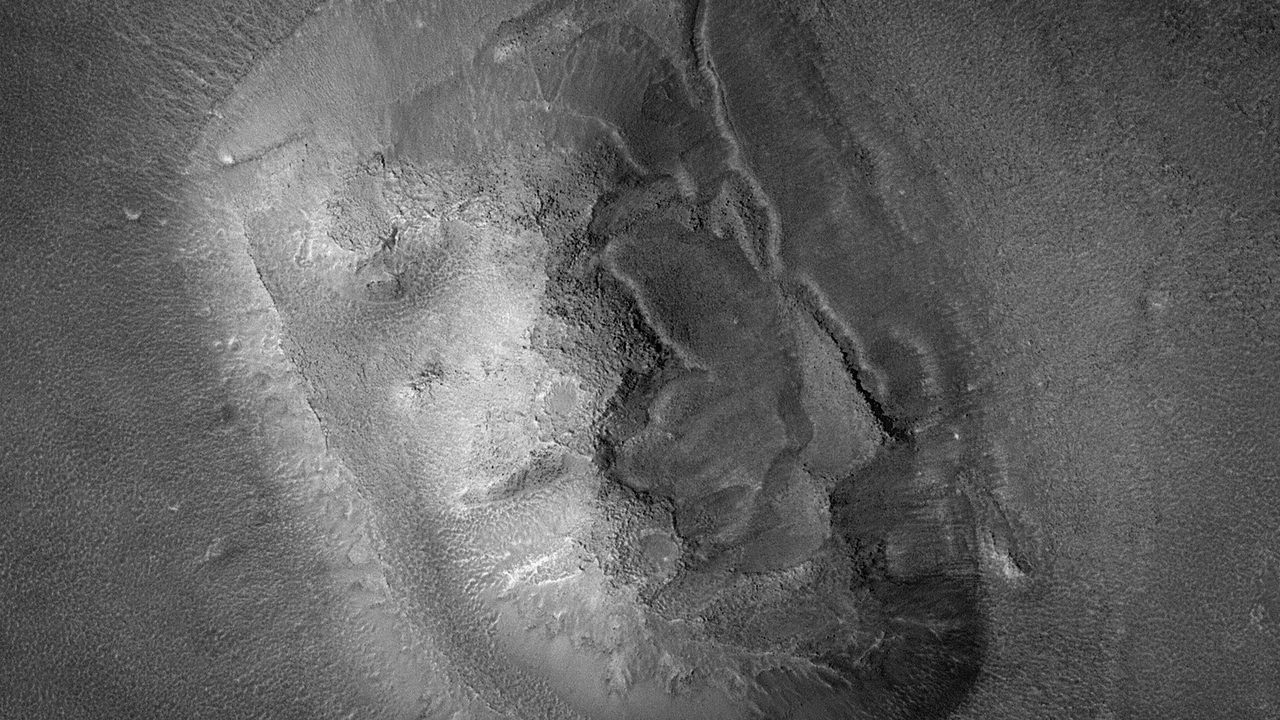
a famous Viking 1 image. Viking 1 photographed the 1.5-kilometer mesa in the Cydonia region in July 1976, and NASA says the shadows make it look like a human head. In that single frame, light and dark patches fell in just the right places to suggest facial features.
The resemblance comes from lighting and from the human habit of seeing faces in random shapes, not from any constructed monument. NASA presents it as an ordinary landform that happened to be photographed at a flattering angle, which is a good reminder to check the geology before the legend.
2. Cheyava Falls rock: Leopard Spots on Rock
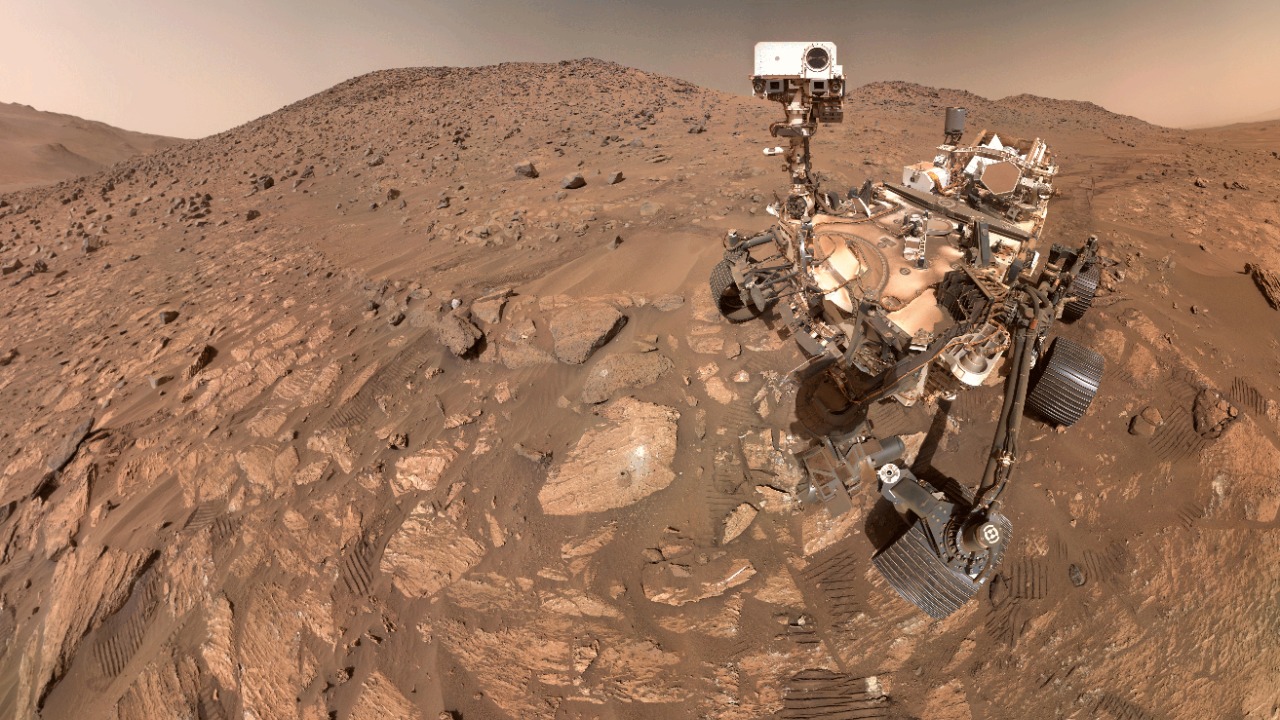
NASA’s biosignature announcement. Perseverance found an arrowhead-shaped rock marked with what the team calls leopard spots. NASA describes a distinct pattern of minerals arranged into reaction fronts, the kind of structure that can form when chemical reactions move through rock and leave visible traces behind.
Scientists are careful here. They say they cannot rule out non-biological explanations, so the spots count as a potential biosignature rather than evidence of life, a distinction that NASA keeps in its wording. More analysis would be needed to settle the question, and the claim stays hedged until then.
3. Jezero Crater: A Dry Lake Bed
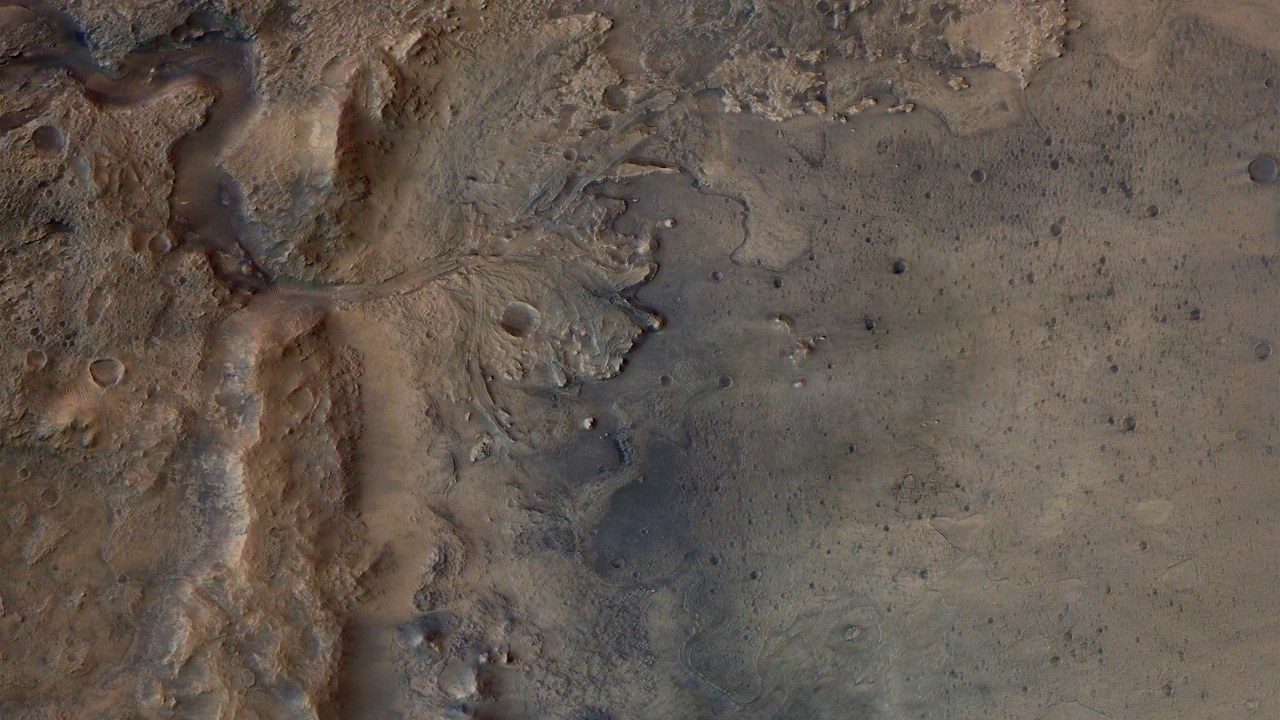
Perseverance mission overview. Jezero Crater, where Perseverance landed, looks like a dry and rocky bowl today. According to NASA, river channels spilled over the crater wall and created a lake there more than 3.5 billion years ago, which makes the crater a record of a very different, wetter Mars.
That watery history is the reason the site was chosen for exploration. Lake sediments are a promising place to look for signs of past habitability, so an unremarkable-looking crater turns out to be one of the most interesting places on the planet to study.
4. Mount Sharp in Gale Crater: Biggest Organics Yet
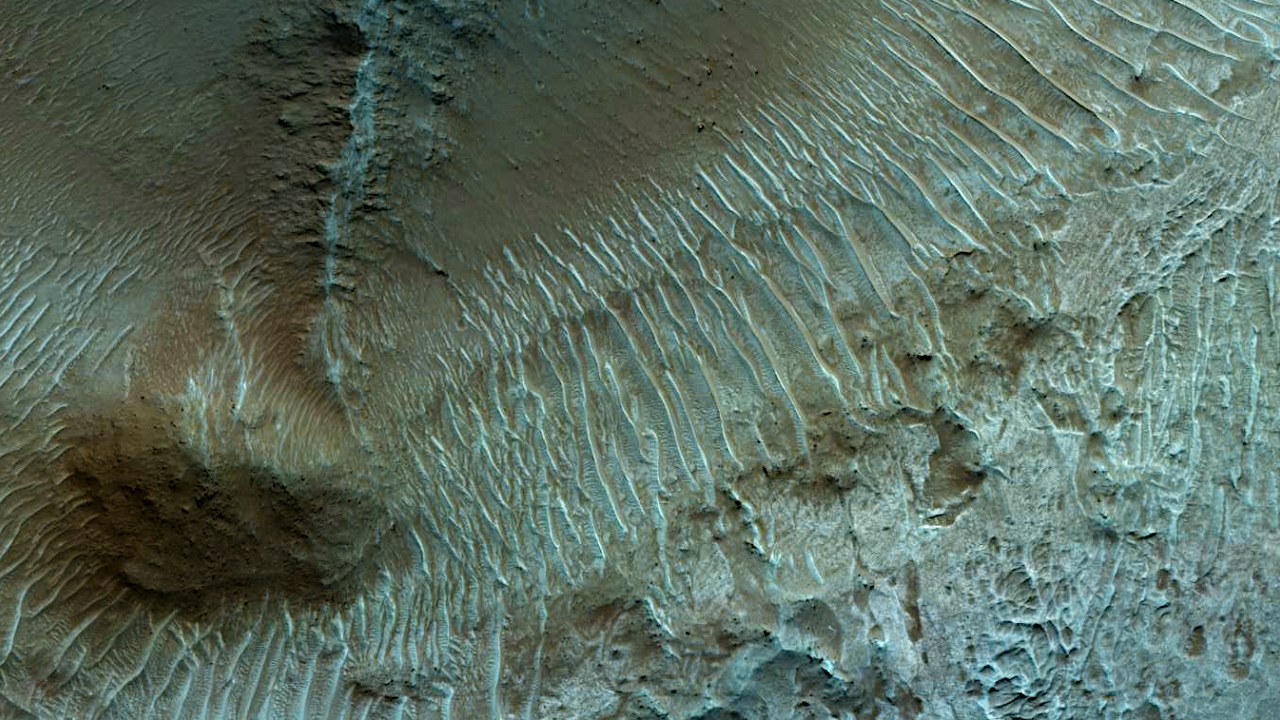
Curiosity rover mission page. Curiosity has been exploring Mount Sharp inside Gale Crater, and NASA says the rover found the largest organic molecules discovered on Mars to date. Research published in 2026 says non-biological sources could not fully account for them, which keeps the finding in the spotlight.
Organic molecules are carbon-based compounds and are not proof of life, since chemistry without biology can make them too. The result narrows the possible explanations without settling the question, so it is best read as an open puzzle rather than as a discovery of living things.
5. Olympus Mons: Taller Than Everest
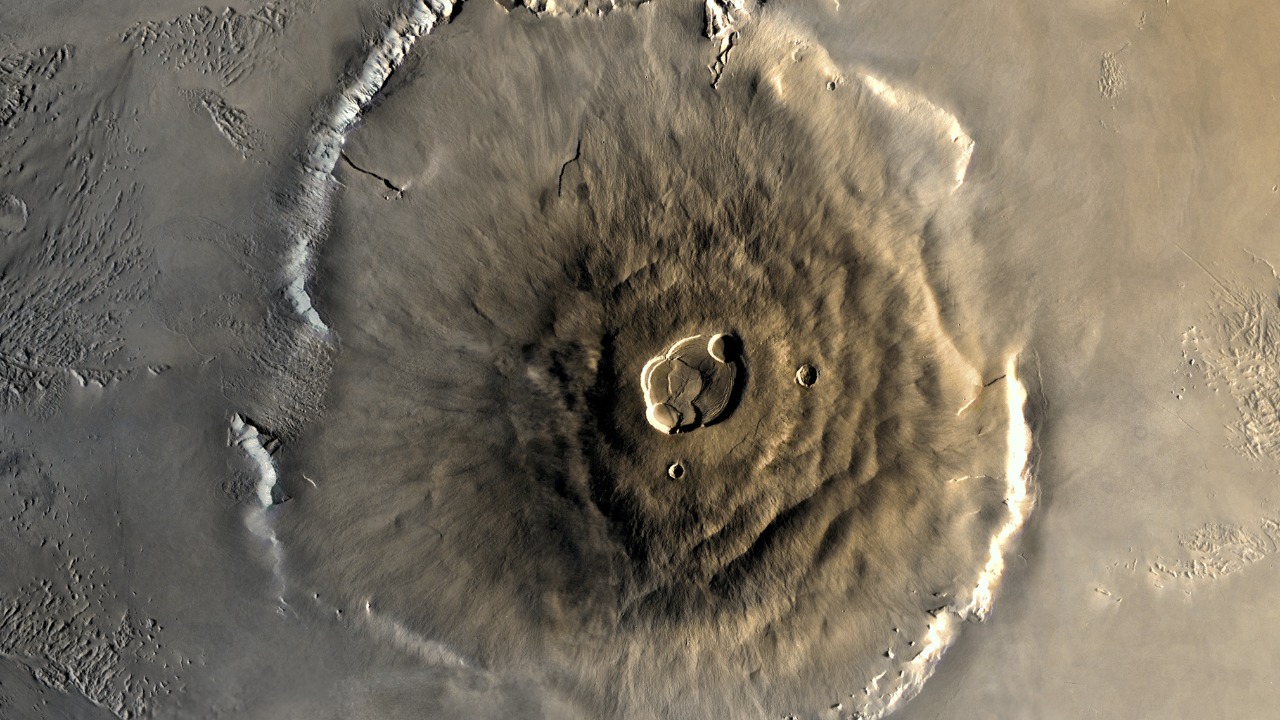
NASA’s Mars facts page. NASA calls Olympus Mons the largest volcano in the solar system. It stands taller than Mount Everest, and its base is about the size of the state of Arizona, which gives a sense of how much bigger Martian volcanoes can grow compared with those on Earth.
The scale explains why it looks so strange in images. A volcano that wide rises so gently that a visitor standing on its flank might struggle to see it as a mountain at all. NASA’s Mars facts page treats it as a record-holder among planetary landforms.
6. Valles Marineris: A Canyon Beyond Comparison
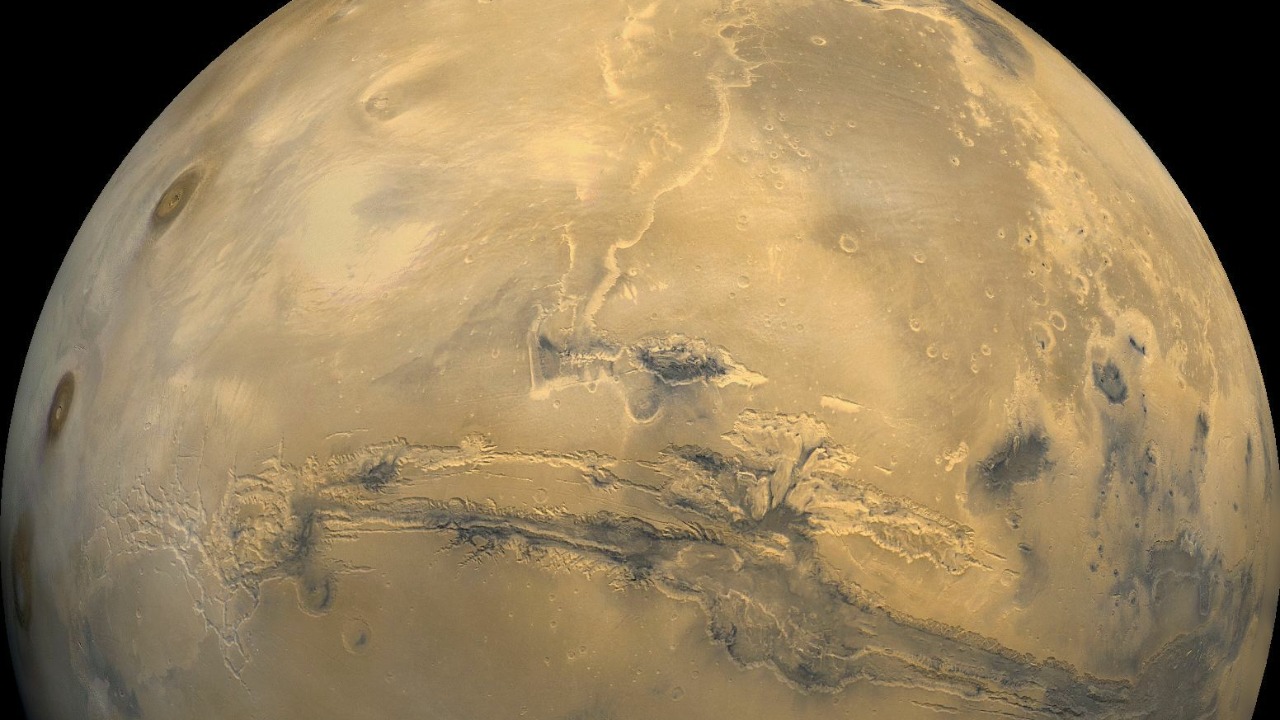
a NASA Mars fact sheet. Valles Marineris extends about 2,400 miles, or 3,870 kilometers, and NASA calls it the largest canyon in the solar system. It is more than ten times longer and wider than the Grand Canyon, so the comparison to a famous Earth landmark understates its size.
Photographed from orbit, the scar stretches across a huge portion of the planet’s face and looks like a crack in the surface. The Grand Canyon comparison helps put its dimensions into everyday terms, though the Martian version dwarfs it on every measure NASA cites.
7. Arsia Mons cave skylights: Holes in a Volcano
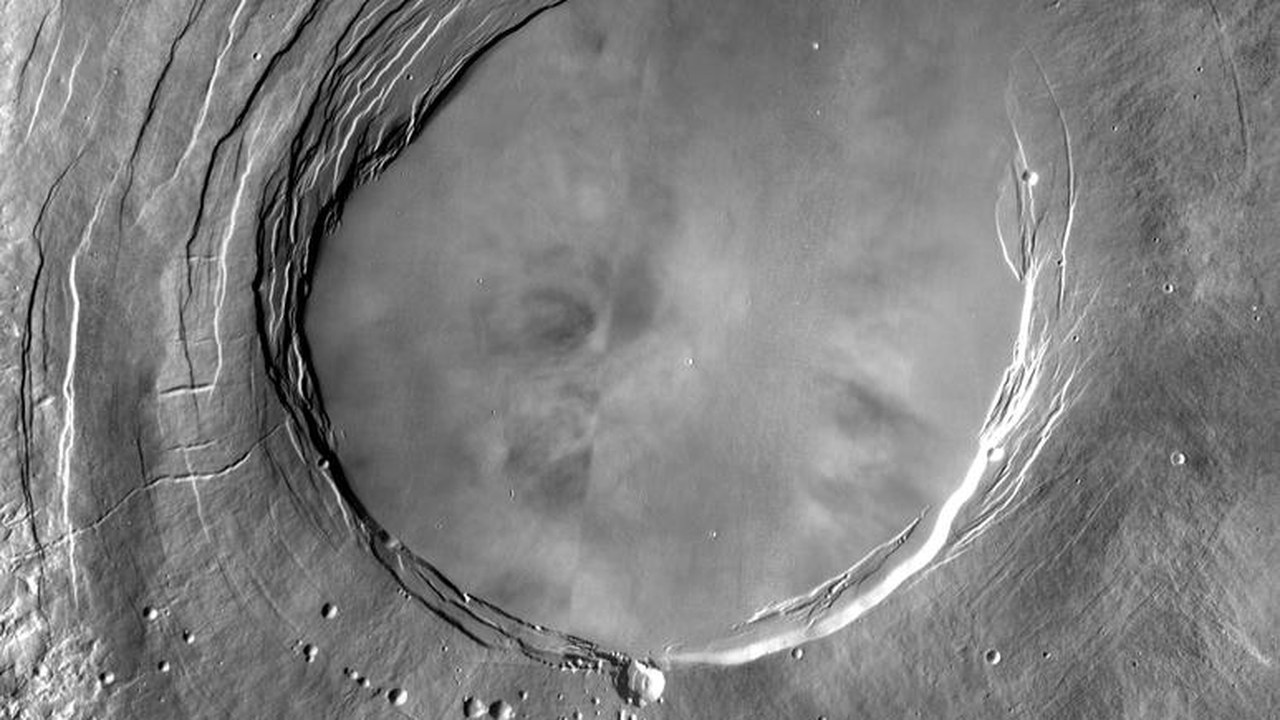
Mars Odyssey cave discovery. Mars Odyssey, a NASA orbiter, discovered entrances to seven possible caves on the slopes of Arsia Mons, a Martian volcano. The openings measure 100 to 250 meters wide, large enough to be picked out from orbit.
The word possible matters, because the images show openings rather than confirmed caverns. If they do lead underground, they would be intriguing places to study, but NASA’s report stops short of claiming that, and the word possible stays attached, and the real extent of any cave, if one exists, remains unknown to the mission team.
8. Martian ‘spiders’: Scars Carved By Gas
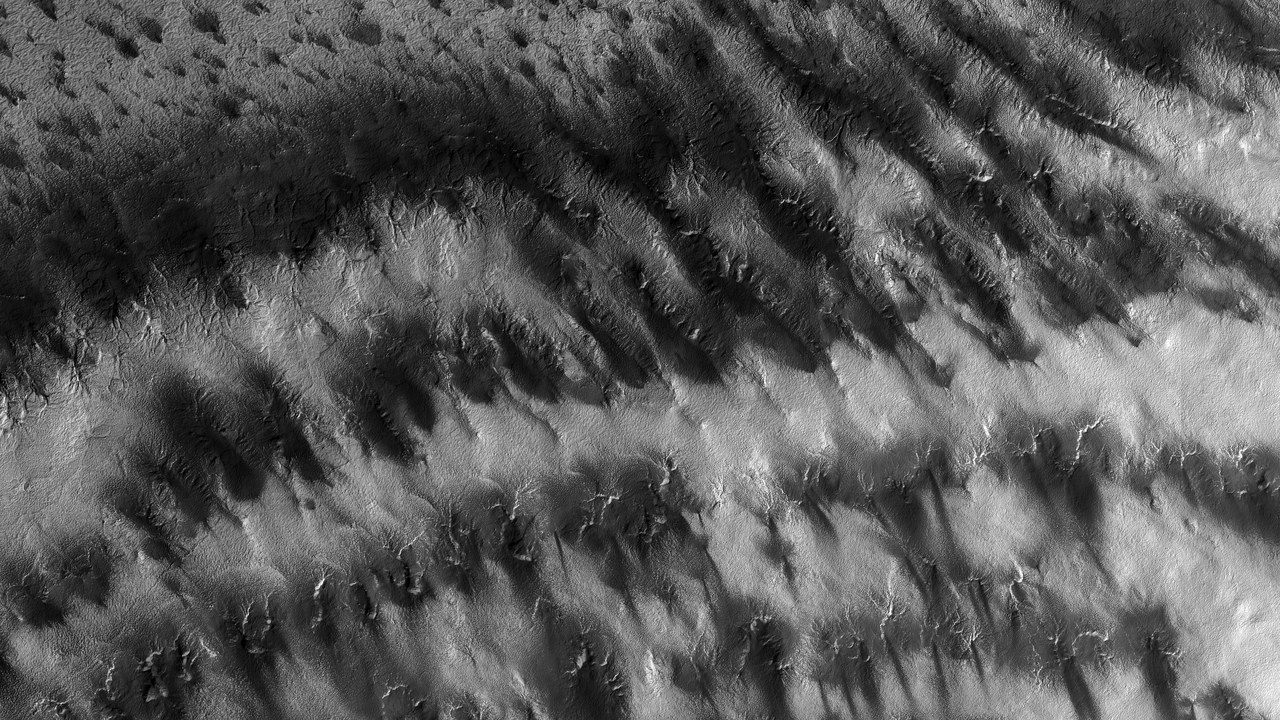
The branching dark scars nicknamed Martian ‘spiders’ mark parts of the planet’s southern hemisphere, and a single formation can stretch more than half a mile from end to end with hundreds of spindly legs, according to NASA’s Jet Propulsion Laboratory. Scientists first spotted them in orbital images in 2003, and NASA’s Mars Reconnaissance Orbiter photographed examples in 2009 and 2018.
Nothing alive made them. The leading explanation holds that spring sunlight warms soil beneath translucent carbon dioxide ice, trapped gas builds pressure until the ice cracks, and the escaping jets spray dark dust across the surface. In a study announced in 2024, JPL scientist Lauren Mc Keown re-created that process in a laboratory chamber for the first time.
More from Morning Overview
- Over 20 trillion gallons of rain fell on the Four Corners states and Nevada in two weeks
- 11 engines built to run well past 200,000 miles
- Two Kentucky residents died when a small plane crashed at Missouri’s Lake of the Ozarks, and the NTSB is investigating
- A handful of car transmissions are so tough that mechanics say they almost never die
