
Modern performance headlines are dominated by big-budget supercars, yet a parallel world of ultra-focused machines has quietly evolved in the shadows. I want to spotlight eight modern sports cars that match or beat the numbers of mainstream heroes while selling in tiny volumes and staying largely invisible to casual fans. Each one proves that low weight, obsessive engineering and limited production can deliver staggering speed without mass-market attention.
1. Ariel Atom’s Lightweight Dominance
The Ariel Atom earned cult status by ignoring convention. When the Ariel Motor Company in Somerset, UK, launched the Ariel Atom in 2005, it paired a 2.0-liter Honda engine producing 245 horsepower with a skeletal chassis that kept curb weight under 1,200 pounds. That combination delivered a 0-60 mph time of 3.2 seconds, figures that put it in direct contention with contemporary exotics. Yet the car’s exposed-tube look and uncompromising focus on performance meant it was never aimed at the mainstream.
Despite critical acclaim for its raw driving experience, early annual sales stayed below 1,000 units, underscoring how extreme hardware can remain a niche proposition even with headline-grabbing acceleration. I see the Atom as a benchmark for how lightweight engineering can outgun far more powerful rivals, while its modest production shows the commercial limits of such a purist formula.
2. BAC Mono’s Single-Seat Thrill
The BAC Mono pushed that minimalist idea even further. When Briggs Automotive Company in Liverpool, UK, introduced the BAC Mono in 2010, it arrived as a single-seat track car with a 2.5-liter Ford-sourced engine delivering 305 horsepower. With weight held to just 1,210 pounds, the Mono could sprint from 0-60 mph in 2.8 seconds, a figure that rivals far more expensive hypercars. The layout, with the driver sitting centrally, made it feel closer to a formula racer than a road-going sports car.
Initial production was limited to around 50 units per year, which kept the Mono rare even among enthusiasts. That scarcity, combined with its focused purpose, meant it slipped under the radar of typical sports-car buyers. I view the Mono as a statement that a road-legal car can prioritize lap times and driver immersion above all else, even if that keeps volumes intentionally tiny.
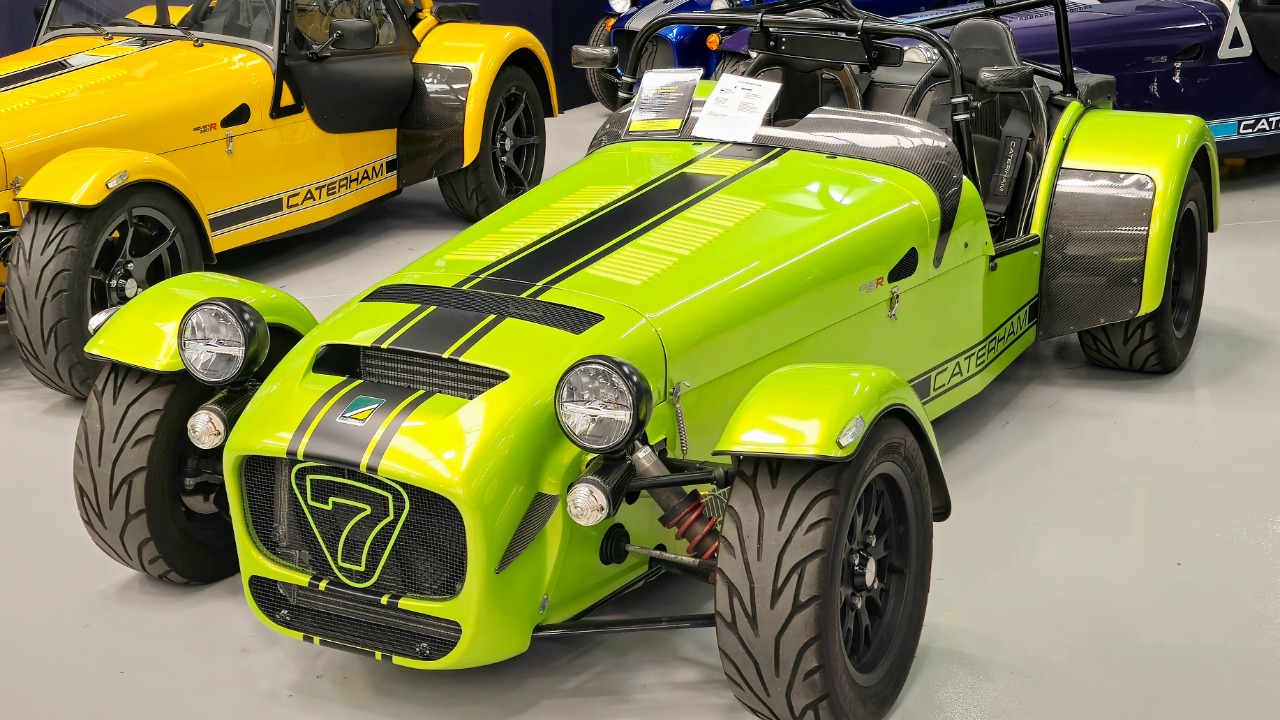
3. Caterham Seven 620R’s Supercharged Agility
The Caterham Seven 620R shows how a classic formula can be sharpened for modern performance. When Caterham Cars in Surrey, UK, updated the Caterham Seven 620R in 2013, it installed a supercharged 2.0-liter Ford engine with 310 horsepower into a chassis weighing just 1,400 pounds. That power-to-weight ratio, combined with a top speed of 155 mph, turned the 620R into one of the most intense evolutions of the Seven concept.
Even so, the car remained a niche seller, with under 200 units produced yearly in the US market. The combination of open-wheel styling, manual controls and minimal comfort kept it firmly in enthusiast territory. I see the 620R as proof that there is still room for analog, lightweight sports cars, but that such purity naturally limits their audience and keeps them largely invisible in a market dominated by tech-heavy coupes.
4. Donkervoort D8 GTO’s Audi-Powered Edge
The Donkervoort D8 GTO blends old-school silhouette with cutting-edge materials and powertrains. Donkervoort Automobielen in the Netherlands debuted the Donkervoort D8 GTO in 2015 using a 2.5-liter Audi five-cylinder engine tuned to 380 horsepower, mounted in a carbon-fiber chassis that kept weight to 1,540 pounds and enabled 0-60 mph in 2.7 seconds. Earlier versions of this Audi-sourced 2.5-liter unit appeared in special editions weighing just 1,532 pounds and still producing 380 horsepower, as detailed in a Bilster Berg edition report.
The company’s collaboration with Audi on a 2.5-liter inline-five TFSI engine, initially rated at 340 horsepower and 332 lb-ft of torque in the first GTO, is documented in a technical overview of the GTO. Later, Donkervoorts of today were Upgraded to that same 2.5-liter five-cylinder and wrapped in patented Ex-Core carbon fiber bodies, as explained in a feature on the JD70 R. A separate analysis notes that a recent JD70 version, Introduced as a carbon fiber-bodied Audi-powered roadster, weighs under 1,540 lbs (700 kg) on a tubular steel structure, according to a detailed JD70 review. Against that backdrop, annual production of the D8 GTO hovering below 100 units globally shows how even such advanced engineering can remain a low-volume, under-the-radar pursuit.
5. KTM X-Bow R’s Track Precision
The KTM X-Bow R takes motorcycle-brand know-how and applies it to four wheels. When KTM in Austria released the KTM X-Bow R in 2013, it used a 2.0-liter Audi TFSI engine producing 300 horsepower in a lightweight chassis. With a quoted weight of 1,786 pounds including driver and a 0-60 mph time of 3.7 seconds, the X-Bow R delivered serious track performance without the mass of a traditional sports coupe.
Exports were tightly controlled, and fewer than 500 total units had been built by 2020, which kept the car a rare sight even at dedicated track days. I see the X-Bow R as a bridge between motorcycle-style minimalism and car-level grip, a combination that appeals strongly to a small group of drivers while remaining almost invisible to the broader market.
6. Noble M600’s Turbocharged Rarity
The Noble M600 represents a very different kind of obscurity, pairing supercar power with artisan-scale production. When Noble Automotive in Leicester, UK, unveiled the Noble M600 in 2010, it installed a twin-turbocharged 4.4-liter Yamaha V8 engine that produced 650 horsepower. With weight held to 2,200 pounds and a 0-60 mph time of 3.0 seconds, the M600’s raw numbers rivaled or exceeded many contemporary Italian and German flagships.
Yet only 25 carbon-bodied versions were produced between 2010 and 2018, a figure that keeps the M600 firmly in the realm of ultra-rare curiosities. I view this car as a reminder that some of the most potent performance machines are built far from major brands, and that limited production can keep even a 650-horsepower V8 largely out of public view.
7. Radical SR8’s Nürburgring Feat
The Radical SR8 is arguably the most track-obsessed car on this list. Radical Sportscars in Peterborough, UK, evolved the Radical SR8 from a 2005 model into a machine powered by a 2.8-liter RPE-Suzuki V6 engine with 460 horsepower. With weight at 1,984 pounds, the SR8 recorded a Nürburgring lap time of 6:48 in 2009, a figure that placed it among the fastest production-derived cars to lap the circuit.
The company’s own history notes that Radical introduced the SR8 in 2005 with a bespoke RPE V8 and soon followed it with appearances at events such as Le Mans with the SR9 LMP2, underlining its deep motorsport roots. Even so, track-focused SR8 sales stayed under 300 units annually, reflecting how extreme circuit performance translates into a very specialized customer base. I see the SR8 as a car that commands respect in racing circles while remaining almost unknown to everyday drivers.
8. Westfield Sport 170’s Kit-Built Simplicity
The Westfield Sport 170 shows how kit cars quietly sustain a parallel performance culture. When Westfield Sportscars in Northampton, UK, modernized the Westfield Sport 170 in 2008, it adopted a 1.8-liter Toyota engine tuned to 170 horsepower. Combined with a weight of 1,100 pounds, that setup delivered a 0-60 mph time of 4.5 seconds, performance that can embarrass many conventional sports cars.
Yet the Sport 170 was sold primarily as a kit, with about 150 kits per year offered for self-assembly, which kept it firmly in the enthusiast-builder niche. I see this model as evidence that serious performance does not require a factory-finished product, and that some of the quickest modern sports cars are literally built in garages, far from the spotlight of mainstream automotive culture.
More from MorningOverview