Physics, as a field, is filled with awe-inspiring concepts and discoveries. Yet, some of these scientific revelations can be unsettling, challenging our understanding of the universe and our place within it. Here are seven physics discoveries that have left scientists both fascinated and concerned.
1. Quantum Entanglement

Quantum entanglement is a phenomenon where particles become interconnected, so the state of one instantly influences the state of another, regardless of distance. This “spooky action at a distance,” as Einstein called it, defies classical intuition. The implications are profound, suggesting that our understanding of space and time may be incomplete. With applications ranging from quantum computing to secure communications, entanglement challenges the very fabric of reality.
2. Dark Matter and Dark Energy

Comprising about 95% of the universe, dark matter and dark energy remain elusive. While dark matter is believed to hold galaxies together, dark energy is driving the universe’s accelerated expansion. Yet, both remain undetected directly, leaving scientists puzzled. The absence of direct evidence raises questions about the validity of our current models of the cosmos, leading some to worry about unseen forces shaping our universe.
3. The Multiverse Theory

The multiverse theory posits the existence of multiple, perhaps infinite, universes beyond our own. This concept challenges the notion of a singular, observable universe, potentially making our universe just one of many. The idea of endless realities, each with different physical laws and constants, is both thrilling and terrifying, leaving scientists to ponder the implications of our universe being just a cosmic drop in an ocean of possibilities.
4. Black Hole Information Paradox

The black hole information paradox arises from the conflict between general relativity and quantum mechanics. According to quantum theory, information cannot be destroyed, but black holes seem to obliterate all trace of what falls into them. This paradox suggests that our understanding of physics is incomplete, potentially requiring a new theory of quantum gravity. The implications are profound, challenging the fundamental principles of how we understand the universe.
5. The Uncertainty Principle
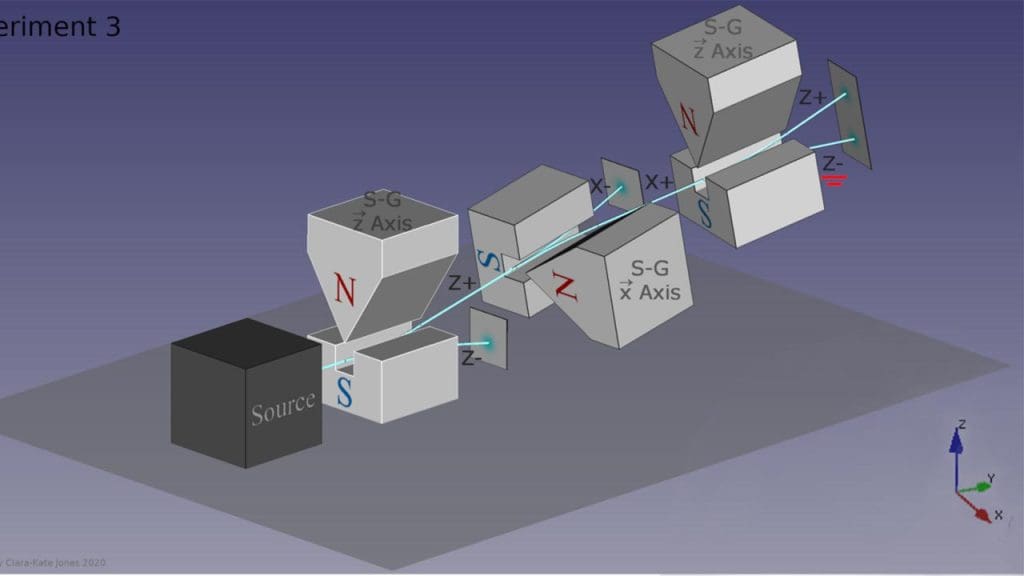
Heisenberg’s uncertainty principle asserts that certain pairs of physical properties, like position and momentum, cannot be simultaneously known to arbitrary precision. This principle introduces a fundamental limit to measurement, suggesting that the universe is inherently probabilistic rather than deterministic. This revelation has profound implications for our understanding of reality, challenging the very nature of causality and predictability.
6. Cosmic Inflation
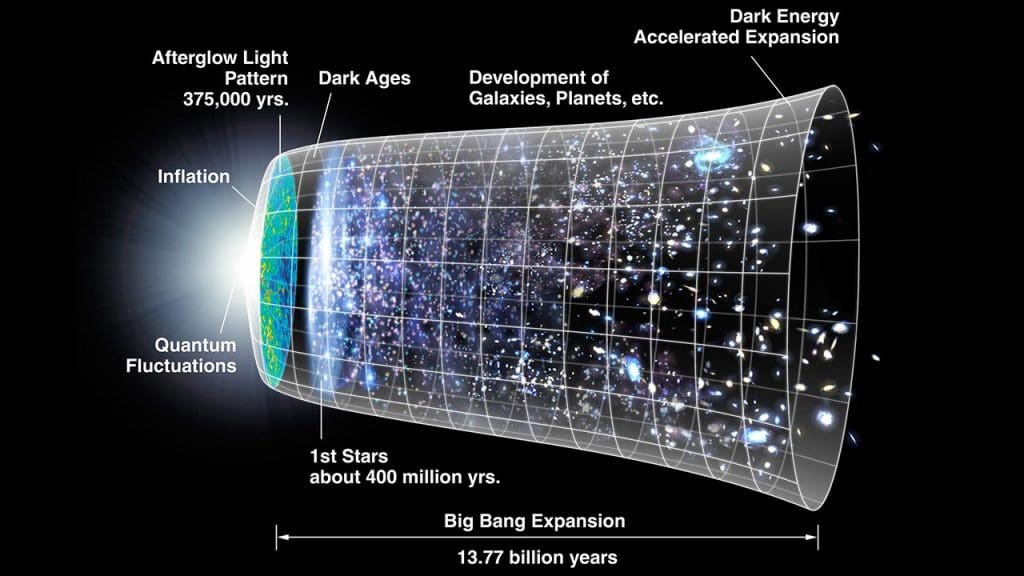
Cosmic inflation proposes that the universe underwent rapid expansion immediately after the Big Bang. While this theory explains the uniformity of the cosmic microwave background radiation, it also raises unsettling questions. The idea of such a rapid and massive expansion challenges our understanding of the early universe and the mechanisms driving its evolution. The implications for the fate of the universe remain uncertain and a topic of ongoing investigation.
7. Time Dilation

Time dilation, a concept from Einstein’s theory of relativity, suggests that time passes at different rates depending on one’s velocity and gravitational field. This means that astronauts traveling at high speeds or near massive objects experience time differently than those on Earth. The implications are profound, suggesting that our experience of time is not absolute. This realization challenges our perception of reality and raises questions about the nature of time itself.
To explore more about these intriguing yet disturbing scientific discoveries, check out this article from Smithsonian Magazine and this piece on unsolved mysteries in physics.
