Throughout history, ancient civilizations have left behind technological marvels that continue to baffle modern scientists. These intriguing artifacts and structures defy our understanding of ancient capabilities, prompting questions about the sophistication of early human innovation. Here are six ancient technologies that remain unexplained even today.
1. The Antikythera Mechanism
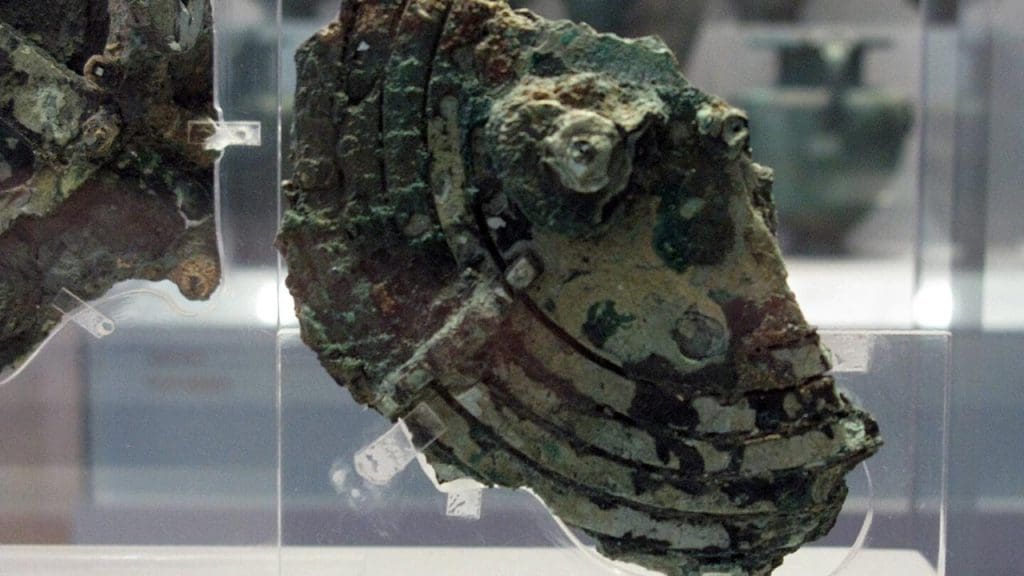
Discovered in 1901 off the coast of Greece, the Antikythera Mechanism is often referred to as the world’s first analog computer. This intricate device, dating back to around 100 BC, was used to predict astronomical positions and eclipses. With its complex system of gears, the mechanism demonstrates a level of technological prowess not thought possible for its time. Despite extensive studies, the exact purpose and full capabilities of this ancient device remain elusive.
2. The Great Pyramid of Giza

The Great Pyramid of Giza, completed around 2560 BC, continues to amaze engineers and historians alike. Its precise alignment with the cardinal points and the remarkable accuracy of its construction have led many to wonder about the methods used by ancient Egyptians. Despite numerous theories, the exact techniques employed in the transportation and assembly of the massive limestone blocks remain a mystery.
3. The Nazca Lines

Spread across the Peruvian desert, the Nazca Lines are a series of massive geoglyphs etched into the earth. These designs, depicting animals, plants, and geometric shapes, were created by the Nazca culture between 500 BC and 500 AD. The purpose of these lines is still debated, with theories ranging from astronomical calendars to religious or ceremonial functions. The scale and precision of the drawings leave us questioning how such a feat was accomplished without modern technology.
4. The Stone Spheres of Costa Rica

The enigmatic stone spheres of Costa Rica are another ancient mystery. These perfectly round stones, some weighing up to 15 tons, were crafted by the Diquís culture between 600 and 1000 AD. Their purpose and method of construction remain unknown, though they are thought to have played a role in social hierarchy or ritualistic practices. Despite various theories, the reason behind their creation continues to puzzle archaeologists.
5. The Baghdad Battery

Dating back to the Parthian period, around 250 BC, the Baghdad Battery consists of a clay jar, a copper cylinder, and an iron rod. This artifact has sparked debates over its potential use as an ancient galvanic cell or battery. Some suggest it might have been used for electroplating or religious purposes, but no definitive evidence supports these claims. The true function of the Baghdad Battery remains one of the many unsolved mysteries of ancient technology.
6. The Roman Dodecahedra
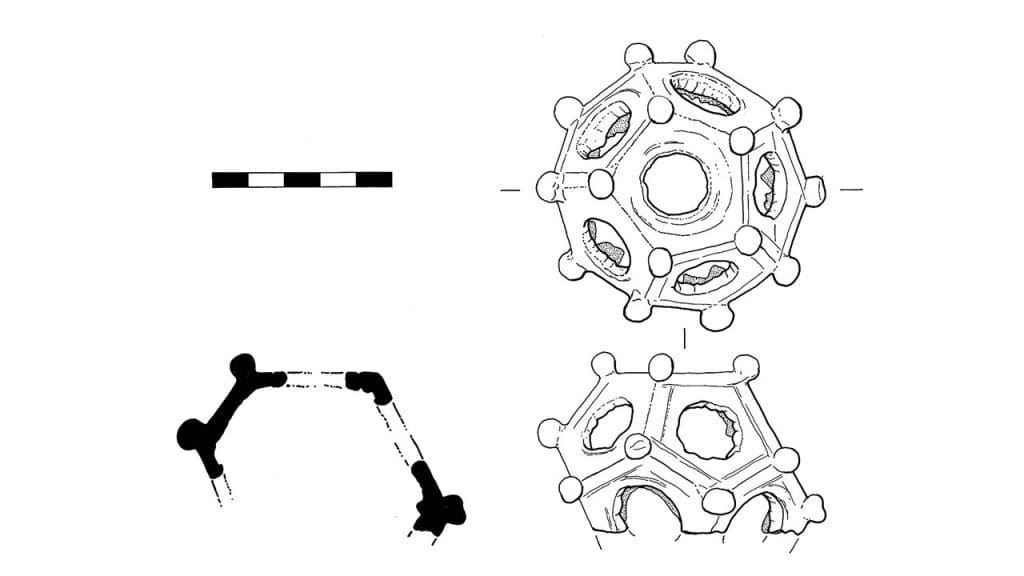
The Roman dodecahedra are small, hollow objects made of bronze or stone with 12 flat pentagonal faces. Found throughout Europe, these artifacts date back to the 2nd or 3rd centuries AD. Their purpose is still unknown, with speculations ranging from being used as measuring devices to serving as religious artifacts or even candle holders. Despite numerous hypotheses, no definitive explanation has been reached, leaving their true function a mystery.
