
Hyundai arrived in the United States in 1986 with a bargain-priced hatchback and has spent the decades since climbing from basic transportation to luxury sedans and electric performance cars. The models below mark the launches that defined each step, from sporty coupes to its first SUV and a flagship sedan. Here are twelve Hyundais that trace the path from the Excel to the Ioniq 5 N.
Help yourself and the planet: The Cool Down makes it easy to help yourself while helping the planet, with smart, simple changes to save more and waste less in your everyday life.
We may earn a commission if you sign up.
1. Hyundai Excel: Where It Began
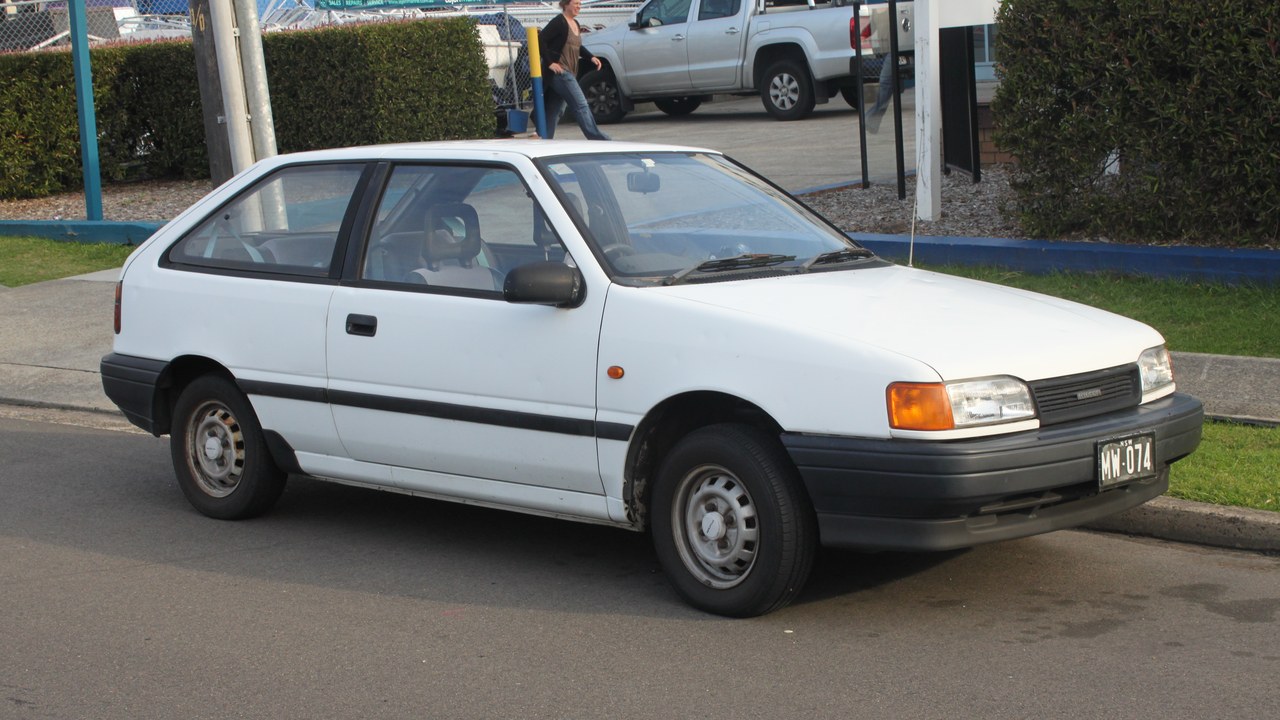
The Excel was Hyundai’s 1986 entry into the American market, priced at a $4,995 sticker. It sold 168,882 units in its first year, which was a record for a first-year import.
That combination of a rock-bottom sticker and immediate volume gave the Korean brand a foothold few newcomers manage. Everything else in this list builds on that debut, which proved American shoppers would try an unknown nameplate if the price was low enough.
2. Hyundai Scoupe: The Sporty Sibling
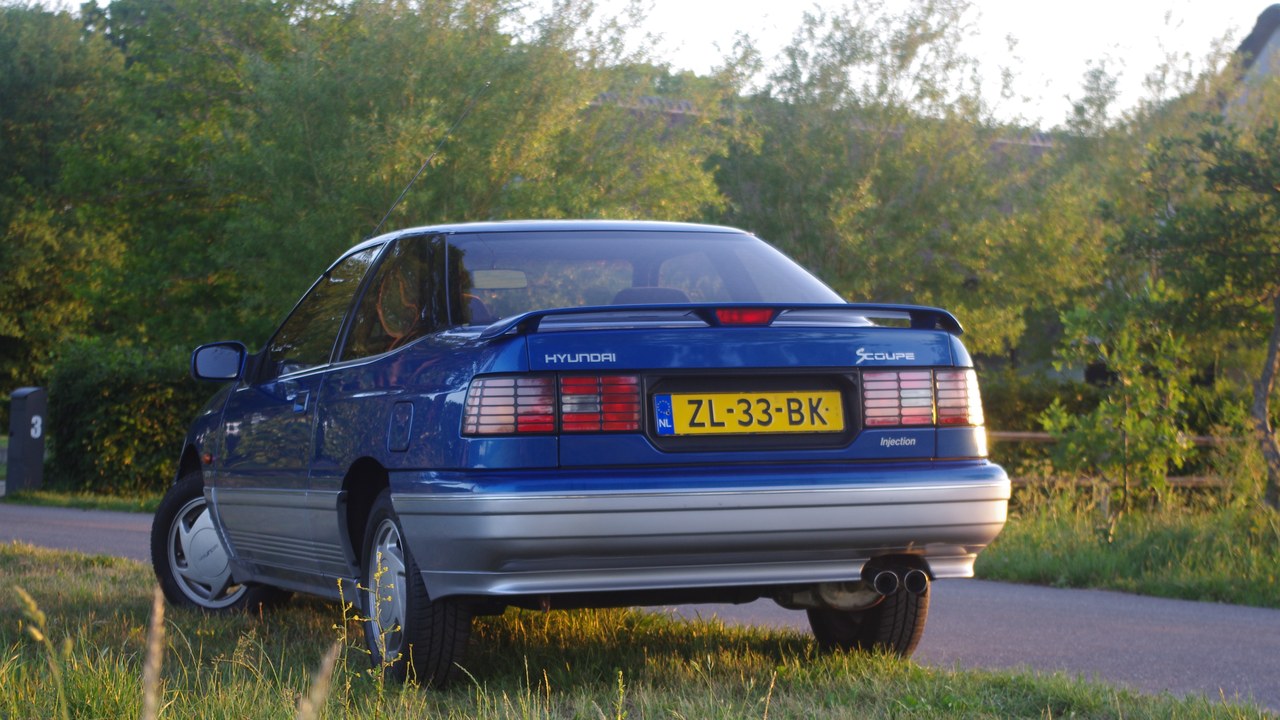
The Scoupe arrived in 1990 as a sporty coupe, launching alongside the Elantra, according to Hyundai’s own history page.
It showed Hyundai wanted more than basic transportation in its showroom lineup. Paired with a compact sedan on the same launch timeline, the two cars widened the company’s appeal beyond the budget buyers who had made the Excel a hit. Hyundai’s own timeline treats the pair as a package, which is a useful reminder that its early strategy leaned on offering variety quickly rather than building one model at a time.
3. Hyundai Accent: The Excel’s Successor

The Accent was launched in 1994 as the successor to the Excel, per Hyundai’s company history.
Replacing a car that had sold so strongly was a test of whether the brand could hold its buyers. The nameplate carried on for generations afterward, and the Accent became the small, affordable core of Hyundai’s lineup after its predecessor’s run ended. It also shows a pattern that recurs across the list, in which Hyundai kept a proven name alive and refreshed it rather than starting from zero each time a model aged out.
4. Hyundai Sonata: A Mid-Size Staple
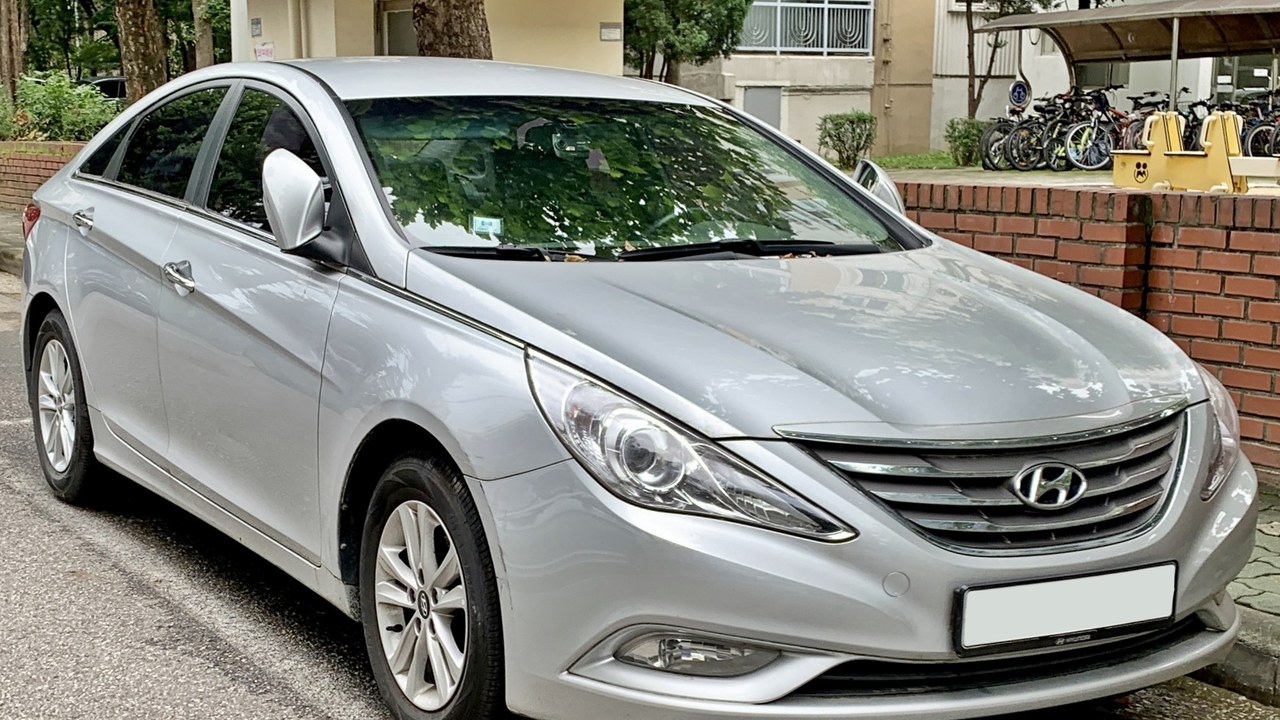
The first-generation Sonata launched in 1985, and a mid-size luxury Sonata followed in 1988, based on Hyundai’s history timeline.
The nameplate gave Hyundai a family-sized sedan to anchor the middle of its range. Its staying power across decades made it one of the longest-running names in the lineup, and it remains a reference point for how the brand moved upmarket over time. The two dates in the history page also make clear that the Sonata name predates the Elantra and Scoupe, so the mid-size sedan was already established before the early 1990s launches.
5. Hyundai Elantra: Compact Staying Power
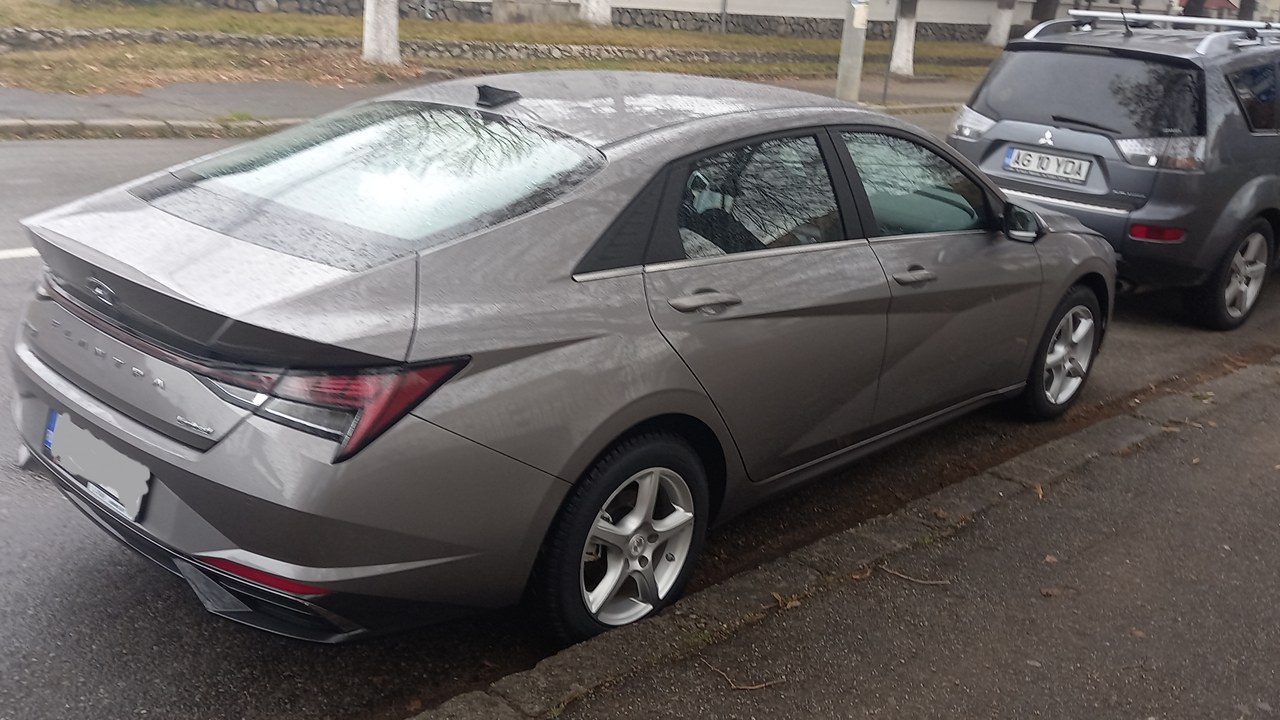
The Elantra launched in 1990 alongside the Scoupe, as Hyundai’s company history page describes.
A compact sedan sat naturally between the tiny Excel and the larger Sonata, filling out a three-step ladder of small, compact and mid-size cars. It has remained a pillar of the lineup since, a long run that grew from this single launch year. Because the launch year matches the Scoupe’s, the two cars are best read as parts of one early-1990s expansion, with the Elantra supplying the practical side and the Scoupe the style.
6. Hyundai Tiburon: A Coupe for America
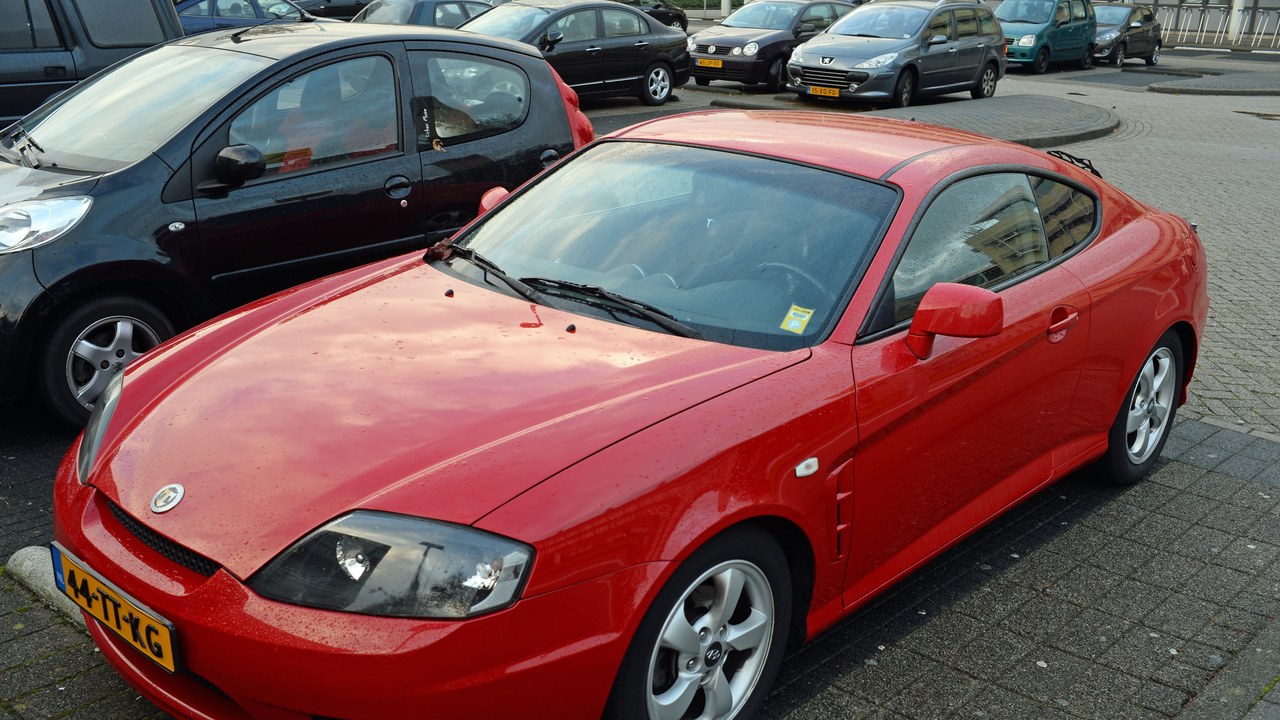
Wikipedia’s Tiburon article says the Tiburon was first offered in the United States for 1997. U.S. sales peaked at 21,242 in 2003, and the GT V6 version made 172 horsepower.
As a two-door sport coupe, it gave younger buyers a reason to walk into a Hyundai dealership. The sales peak came several years after launch, which suggests the car found its audience gradually rather than overnight. The figures come from a reference article rather than a company release, so they are best treated as a snapshot of how a niche coupe performed in a market dominated by sedans and crossovers.
7. Hyundai Santa Fe: The First SUV
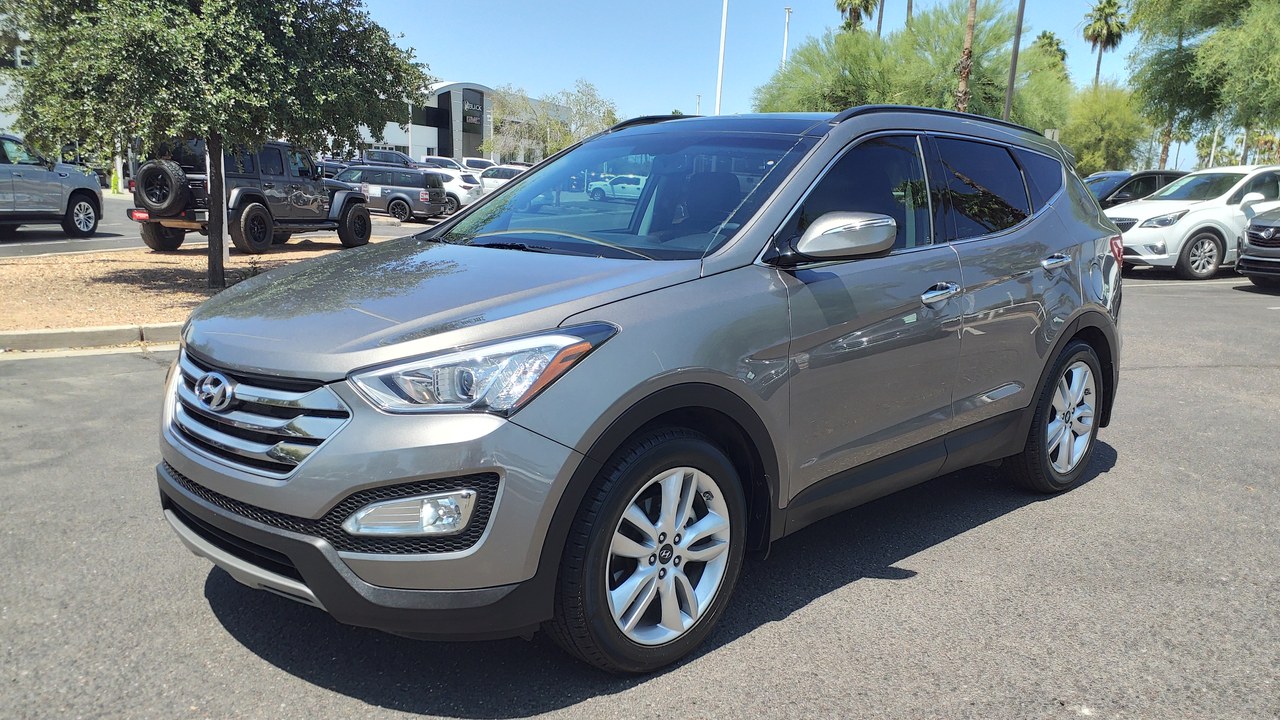
The Santa Fe debuted in September 2000 and reached the United States as a 2001 model, Hyundai’s first U.S. SUV. Hyundai Motor America announced its one millionth U.S. sale in July 2013.
That milestone, thirteen years after launch, shows how quickly the brand moved into the segment American buyers favored. The Santa Fe turned a car-focused company into one with a genuine utility-vehicle business. For a brand that began with a single small import, a one-million-unit total for one nameplate is a useful gauge of how thoroughly the Santa Fe changed the company’s fortunes in the United States.
8. Hyundai Veracruz: Three Rows, Big V6
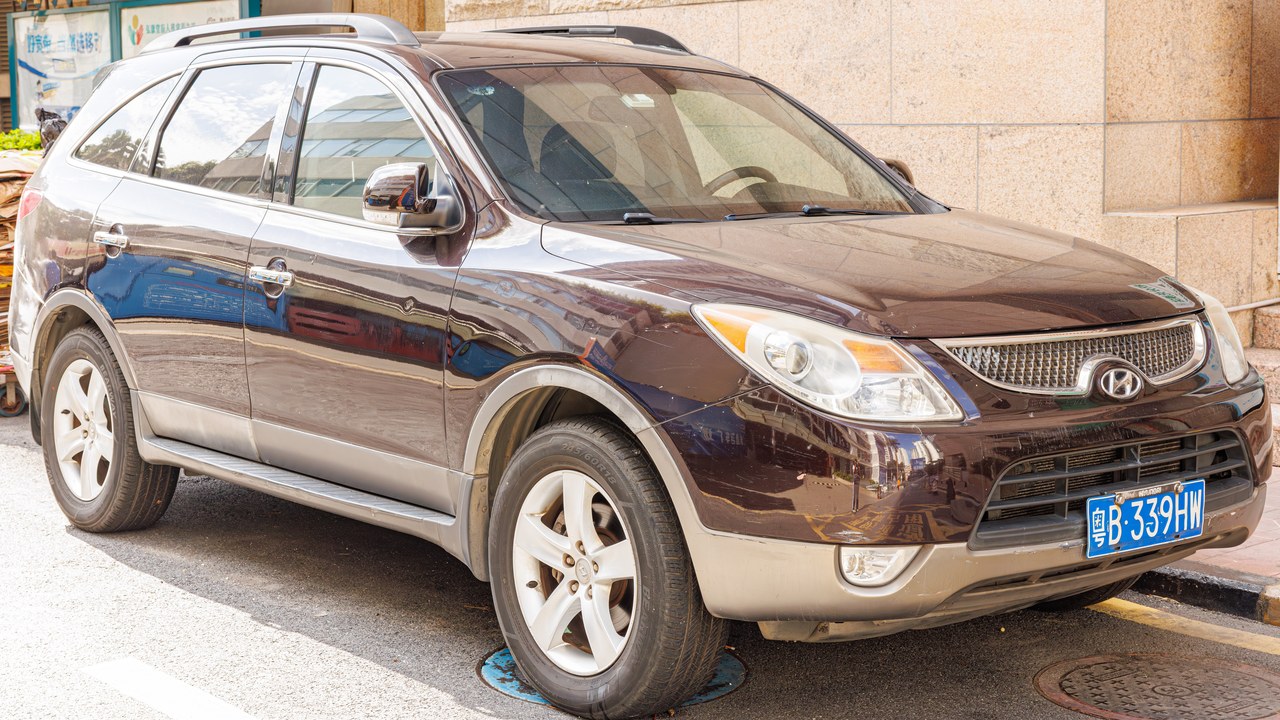
The Veracruz was a three-row crossover that went on sale in the United States as a 2007 model. According to Wikipedia’s Veracruz entry, it carried a 3.8-liter V6 rated at 260 horsepower.
Hyundai eventually replaced it with a seven-passenger Santa Fe. Its short run shows the company testing larger vehicles before settling on stretching an existing nameplate to cover the family-hauler role. The Veracruz is therefore best remembered as a stepping stone, a model that did the work of proving demand for a bigger Hyundai before the lineup consolidated around fewer, broader nameplates.
9. Hyundai Genesis: Rear-Drive Luxury
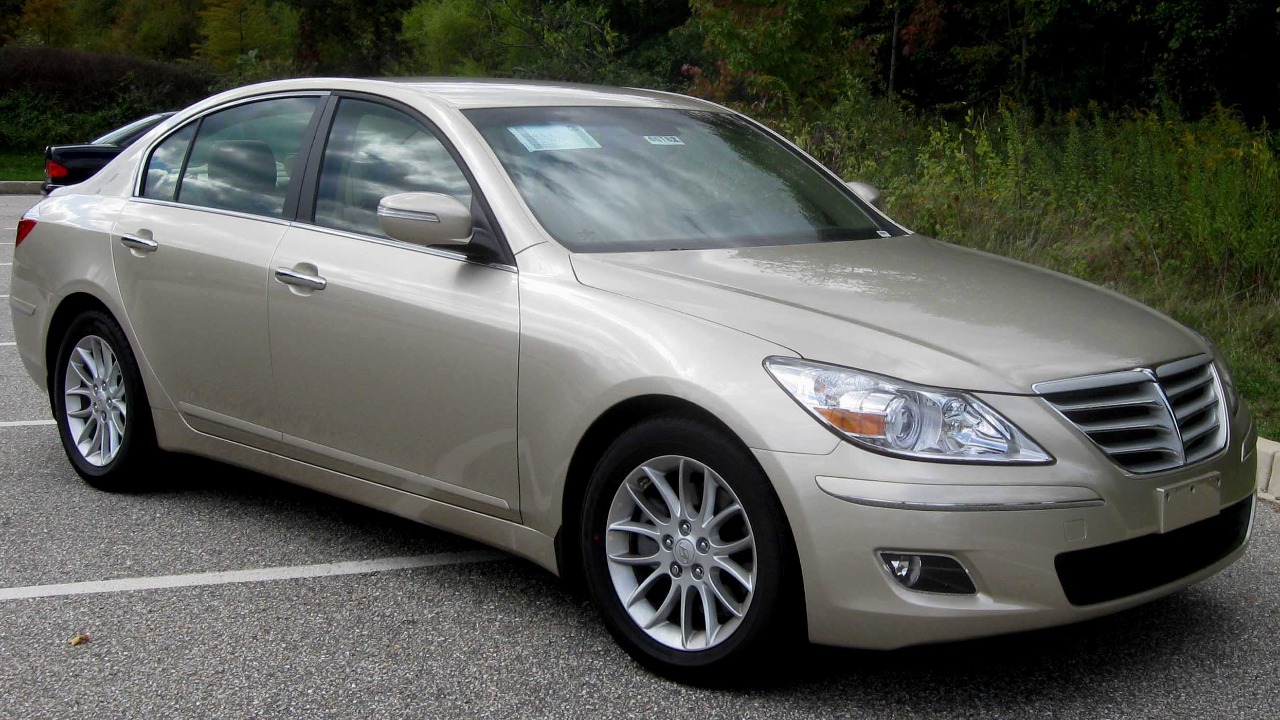
The Genesis was a rear-drive luxury sedan on sale in the U.S. from August 2008, offered with a 375-horsepower V8. Wikipedia’s Genesis article notes it was named the 2009 North American Car of the Year, the first for Hyundai.
That award was a statement from the industry that the brand had moved well past its bargain-basement origins. A rear-drive luxury car marked a sharp contrast with the front-drive economy models of the Excel era.
10. Hyundai Genesis Coupe: Hyundai’s First Sports Car
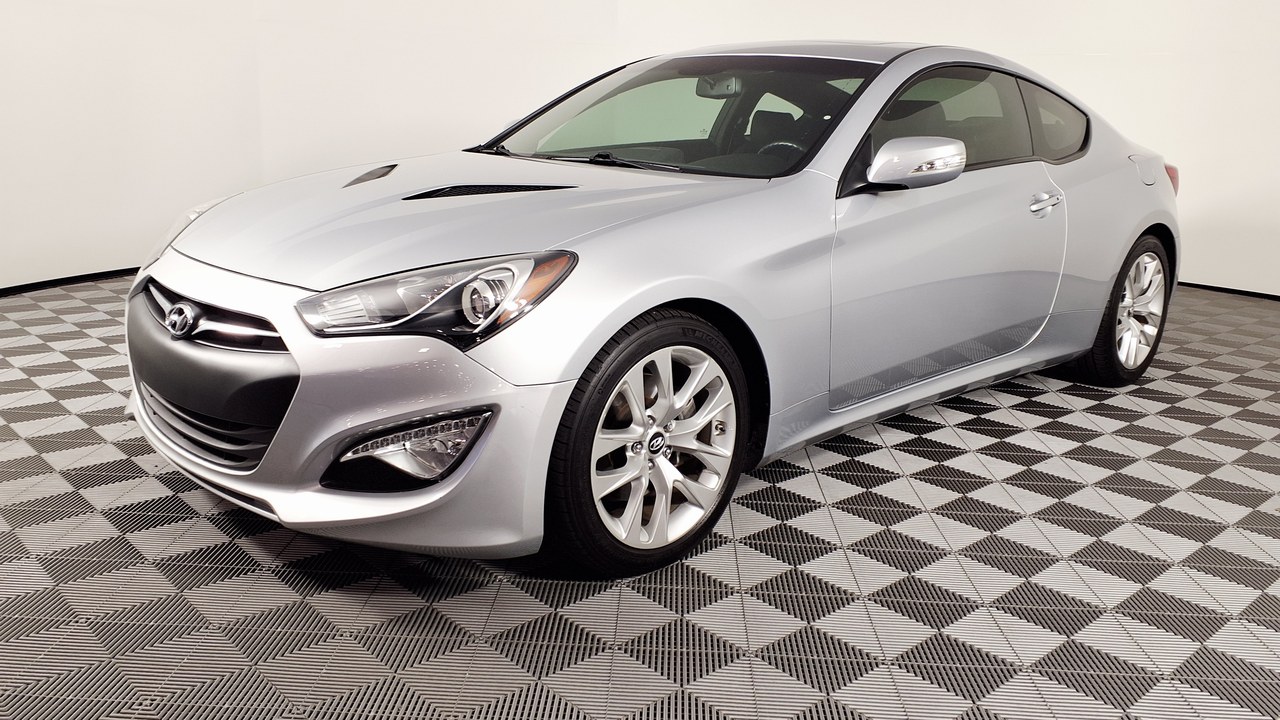
The Genesis Coupe arrived in early 2009 as Hyundai’s first sports car, per the Hyundai Motor America article.
Coming within months of the Genesis sedan, it extended the same rear-drive ambition to a two-door body. Earlier coupes such as the Scoupe and Tiburon had sporty looks, but this was the model the company itself pitched as a true sports car. It also pointed toward the performance ambitions that would later surface in the N division, and the electric Ioniq 5 N at the end of this list is a direct descendant of that mindset.
11. Hyundai Equus: Flagship Arrives
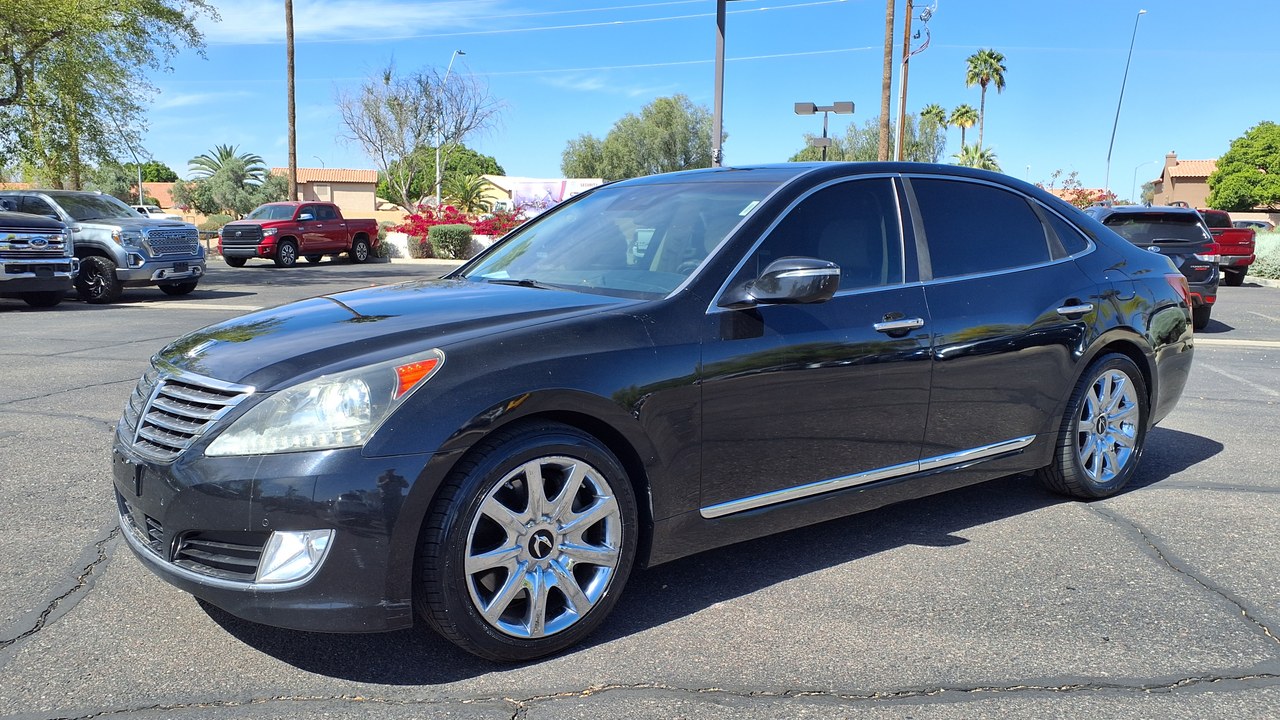
The Equus flagship sedan debuted at the 2010 North American International Auto Show, according to Hyundai Motor America’s history.
Positioned at the top of the range, it put a large luxury car in Hyundai showrooms roughly a quarter-century after the $4,995 Excel. The gap between those two cars neatly captures how far the brand’s ambitions had stretched in a single generation. The show debut is the main fact on offer here, but it is enough to place the Equus as the capstone of Hyundai’s first quarter-century in America.
12. Hyundai Ioniq 5 N: Electric Performance
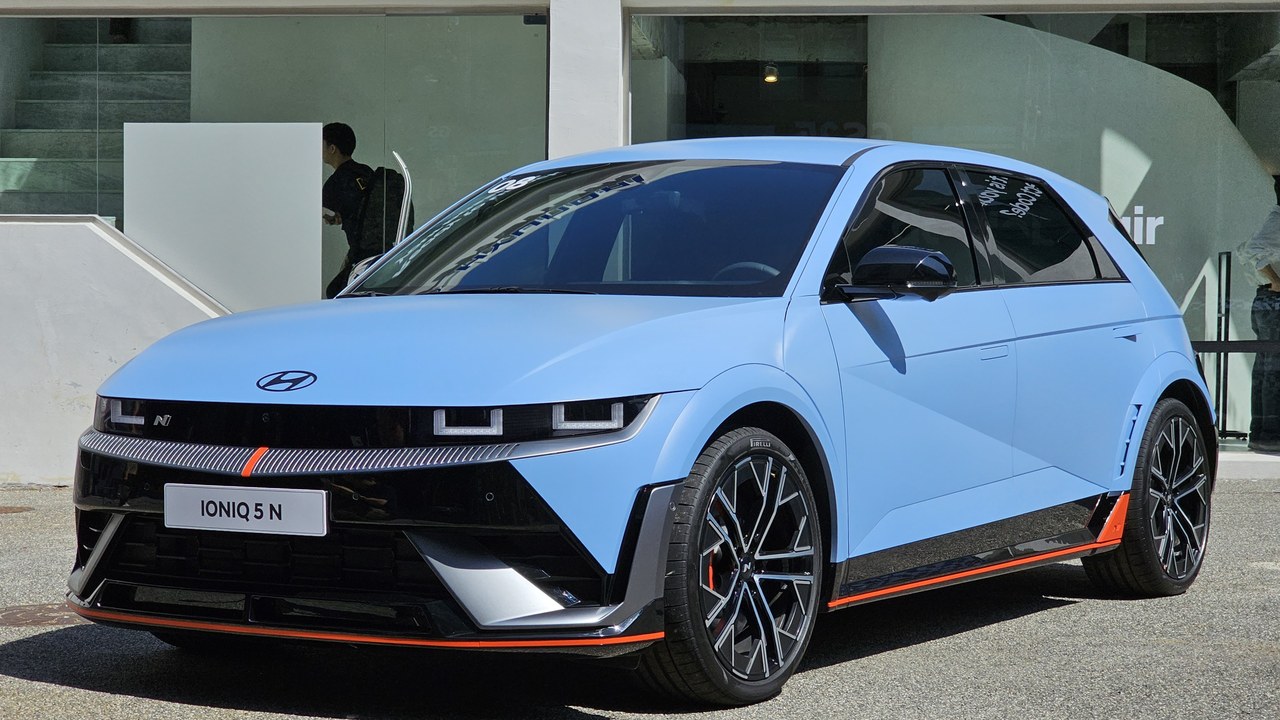
The Ioniq 5 N is the first all-electric Hyundai N model, with up to 641 horsepower when N Grin Boost is engaged. Hyundai Motor America’s release lists it, priced from $59,900 for 2026 after a $6,300 cut.
That price is roughly twelve times the Excel’s launch sticker, yet it buys a track-ready electric performance car. The model brings the story from an economy import to a high-output EV within four decades.
Help yourself and the planet: Get The Cool Down →
We may earn a commission if you sign up.
More from Morning Overview
- Tropical Storm Rachel is dumping up to 12 inches on four Mexican states on its way to major hurricane strength
- The FTC says Lens.com doubled the price shoppers saw in Google ads
- Common allergy, bladder and sleep pills tied to sharply higher dementia odds
- NOAA now gives this winter a 75% chance of the strongest El Nino since 1950
