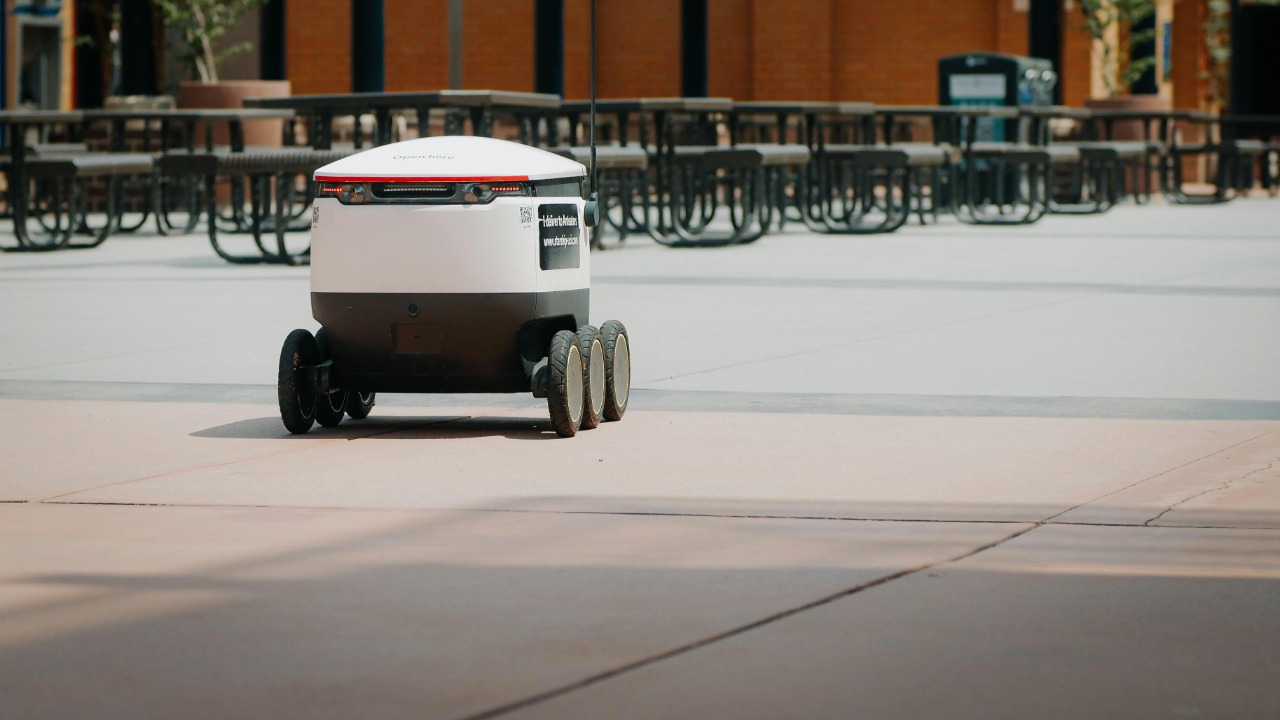

From household robots to reusable rockets, a new wave of breakthrough inventions is redefining what humans can do in space and on Earth. These advances are not isolated gadgets, they are tightly linked systems that blend robotics, optics, connectivity and computing into a single frontier. I will walk through 12 of the most important developments now emerging, and how they are quietly transforming daily life, industry and our long-term future beyond Earth.
1. Robotic Assistants in Everyday Tasks
Robotic assistants in everyday tasks are moving from novelty to necessity, as engineers design machines that can clean homes, deliver packages and support older adults. Analysts describing the future of robotics highlight domestic helpers, warehouse cobots and hospital service robots as early examples of this shift. These systems combine sensors, computer vision and natural language interfaces so that a robot vacuum, a shelf-stacking arm or a medication cart can safely navigate crowded human spaces.
The stakes are significant for labor markets and care systems. Routine physical work is increasingly automated, while new jobs emerge in robot maintenance, data labeling and human-robot interaction design. For families, the promise is more time and independence, especially for people with disabilities who can rely on assistive robots for lifting, feeding or communication. For policymakers, the challenge is to ensure training and safety standards keep pace with machines that are rapidly becoming part of the household infrastructure.
2. Advanced Satellite Networks for Global Connectivity
Advanced satellite networks for global connectivity are one of the 12 transformative space technologies highlighted by experts at the World Economic Forum in Davos. These constellations of small satellites in low-Earth orbit aim to provide broadband coverage to regions that fiber and cellular networks cannot reach. By flying closer to Earth than traditional geostationary satellites, they reduce latency and enable real-time services such as video conferencing, cloud gaming and remote surgery.
For governments and businesses, these networks promise new economic activity in rural areas, from precision agriculture to tele-education. They also create strategic dependencies, since control of orbital infrastructure affects everything from disaster response to financial trading. As more constellations launch, regulators must manage spectrum allocation, orbital debris and cybersecurity, while users weigh the benefits of always-on connectivity against concerns about surveillance and the brightening of the night sky.
3. AI-Driven Prosthetic Limbs
AI-driven prosthetic limbs are among the future technologies identified as poised to change the world in the survey of 22 ideas. These devices use machine learning to interpret muscle signals or nerve activity, translating subtle patterns into smooth, multi-joint movements. Instead of relying on simple open-close grips, modern prosthetics can adapt to a user’s gait, predict intended motions and even adjust grip strength when holding fragile objects like eggs or glassware.
The impact on mobility and dignity is profound for people who have lost limbs through injury, illness or conflict. As sensors shrink and algorithms improve, prosthetics can become lighter, more responsive and more affordable, narrowing the gap between biological and artificial limbs. Health systems will need to integrate long-term support, including software updates and training, while insurers and public programs decide how to fund devices that blur the line between medical necessity and performance enhancement.
4. Next-Generation Telescopes with Adaptive Optics
Next-generation telescopes with adaptive optics are at the heart of a surprising optics breakthrough that could transform how astronomers see the Universe. Researchers described a new approach in which deformable mirrors and advanced wavefront sensors correct atmospheric distortion in real time, sharpening images that previously appeared blurred. According to reporting on this optics breakthrough, the technique can dramatically improve resolution without requiring telescopes to grow ever larger.
For science, this means ground-based observatories can rival or complement some space telescopes when studying exoplanets, star formation and distant galaxies. Clearer images allow astronomers to detect fainter objects and measure subtle motions, refining models of dark matter and cosmic expansion. The same technology has spillover benefits for Earth observation, defense and even medical imaging, where adaptive optics can help microscopes and ophthalmic instruments see through scattering tissue with unprecedented clarity.
5. Quantum Computing for Space Simulations
Quantum computing for space simulations appears in a set of 12 technology predictions for 2025 that are expected to shape the near future. Analysts argue that quantum processors, even at modest qubit counts, can accelerate complex calculations used to model spacecraft trajectories, orbital debris dynamics and materials for radiation-hardened electronics. In the same forecast of tech predictions, quantum tools are linked to faster design cycles for robotics and satellites.
For engineers, the ability to run many possible mission profiles in parallel could reduce risk and cost, allowing agencies and startups to test propulsion concepts or landing strategies virtually before committing hardware. Quantum-enhanced optimization might also improve scheduling for satellite constellations, balancing power, bandwidth and collision avoidance. However, access to quantum hardware remains limited, so partnerships between space organizations and specialized computing firms will be crucial to turn theoretical advantages into operational gains.
6. Swarm Robotics for Collaborative Operations
Swarm robotics for collaborative operations extends the idea of single-purpose robots into coordinated teams that can tackle tasks too dangerous or complex for humans. Analysts examining the 12 breakthrough inventions shaping our future, including space and robotics, point to multi-robot systems as a key shift. In a swarm, dozens or hundreds of small units share data, adapt to failures and reconfigure themselves, whether they are inspecting infrastructure, searching disaster zones or assembling structures in orbit.
For emergency responders, swarms can map collapsed buildings, locate survivors and deliver supplies without putting human teams at immediate risk. In space, coordinated robots could build large antennas, solar arrays or habitats that would be impossible to launch in one piece. The main challenges involve reliable communication, robust autonomy and clear rules of engagement so that human supervisors can understand and control collective behavior without micromanaging every unit.
7. Reusable Rocket Propulsion Innovations
Reusable rocket propulsion innovations are another of the 12 transformative space technologies spotlighted by experts at the World Economic Forum in Davos. By designing engines and stages that can survive multiple launches and landings, companies dramatically cut the cost per kilogram of getting payloads into orbit. Vertical landing boosters, rapid refurbishment processes and advanced materials all contribute to making rockets more like commercial aircraft than disposable missiles.
Lower launch costs unlock new business models, from frequent small-satellite deployments to ambitious deep-space missions that would have been prohibitively expensive. National space agencies and private firms can iterate faster, testing new sensors, habitats and robotic explorers on a regular cadence. At the same time, increased launch frequency raises concerns about congestion in key orbits and environmental impacts from propellant production and reentry, prompting calls for stricter standards and international coordination.
8. Brain-Computer Interfaces in Robotic Control
Brain-computer interfaces in robotic control feature prominently among the 22 future technologies expected to reshape society. In that list of emerging technologies, direct neural links are described as a way for humans to command machines using thought alone. Electrodes on the scalp or implanted arrays record brain activity, which algorithms decode into commands that move robotic arms, wheelchairs or even exoskeletons, bypassing damaged nerves or muscles.
For people with paralysis, this approach offers a path to regain communication and physical agency, controlling cursors, keyboards or assistive robots without relying on residual muscle control. In industrial and military settings, brain-computer interfaces could eventually enable faster, more intuitive control of complex systems, although ethical and privacy concerns are substantial. Questions about data ownership, cognitive overload and potential coercion will shape how far these interfaces extend beyond medical rehabilitation into mainstream human-machine collaboration.
9. High-Resolution Imaging for Deep Space
High-resolution imaging for deep space builds directly on the adaptive optics breakthrough that improves telescope performance. By combining deformable mirrors with sophisticated control software, astronomers can correct for turbulence and optical imperfections, producing images with far greater detail than traditional systems. Reporting on the top technologies transforming the space sector notes that imaging advances are central to mapping asteroids, moons and distant galaxies.
For planetary defense, sharper images help scientists characterize potentially hazardous near-Earth objects, refining estimates of their size, composition and trajectory. Deep-space imaging also supports mission planning, allowing engineers to identify landing sites, ice deposits or geological features before sending probes or crewed vehicles. As data volumes grow, ground stations and cloud infrastructure must scale to process and archive petabytes of imagery, turning raw pixels into actionable knowledge for science and exploration.
10. Autonomous Drones for Planetary Surveys
Autonomous drones for planetary surveys align with predictions that robotics will play a central role in future exploration. In the same context as the 12 tech forecasts for 2025, analysts describe aerial and ground vehicles that can navigate alien terrains with minimal human input, using onboard sensors and AI to avoid hazards and prioritize scientific targets. These drones extend the reach of landers and rovers, scouting cliffs, caves and canyons that wheeled platforms cannot safely access.
For mission planners, autonomous surveys reduce the communication burden and latency constraints that come with controlling robots across interplanetary distances. Drones can adapt to unexpected conditions, such as dust storms or shifting ice, and relay high-resolution maps back to orbiters or Earth. Their success will depend on robust autonomy, efficient power systems and reliable coordination with orbiting assets, which provide navigation data and act as communication relays for the robotic fleet.
11. Ethical AI Frameworks for Robotic Deployment
Ethical AI frameworks for robotic deployment are becoming as important as the hardware itself, especially as robots move into homes, hospitals and public spaces. Analysts examining the Revolutionary Space Tech 2026 argue that governance and trust will determine how widely new systems are adopted. Ethical frameworks address issues such as bias in decision-making, transparency of algorithms, data protection and clear lines of accountability when autonomous systems cause harm.
For manufacturers and operators, robust frameworks can reduce legal risk and build public confidence, making it easier to deploy robots in sensitive roles like elder care or law enforcement. Governments and standards bodies are beginning to codify principles around human oversight, explainability and fail-safe behavior, but implementation remains uneven. As AI-driven robots become more capable, the pressure will grow for international norms that balance innovation with human rights and social stability.
12. In-Situ Resource Utilization on Other Worlds
In-situ resource utilization on other worlds is a final transformative space technology singled out by experts at the Space sector’s frontier. Instead of hauling all supplies from Earth, missions would use robotic miners, processors and 3D printers to extract water, metals and building materials from lunar regolith, Martian soil or asteroid rock. Water can be split into hydrogen and oxygen for rocket fuel, while regolith can be sintered into bricks or radiation-shielding structures.
For long-term exploration and eventual settlement, this approach is essential to reduce launch mass and cost, enabling larger habitats and more frequent missions. Robotic systems will perform the earliest prospecting and construction, operating in harsh environments long before humans arrive. Success in in-situ resource utilization will reshape space logistics, turning the Moon and near-Earth asteroids into part of a supply chain that supports scientific research, commercial activity and, eventually, permanent human presence beyond Earth.
More from Morning Overview