
Three rows do not automatically mean eight seats; plenty of crossovers stop at seven once the second row switches to captain’s chairs. The models that genuinely carry a full eight pair a middle bench with a third row wide enough for three. The ten SUVs below are sized for that eighth passenger.
1. Chevrolet Suburban: The Long-Wheelbase Original
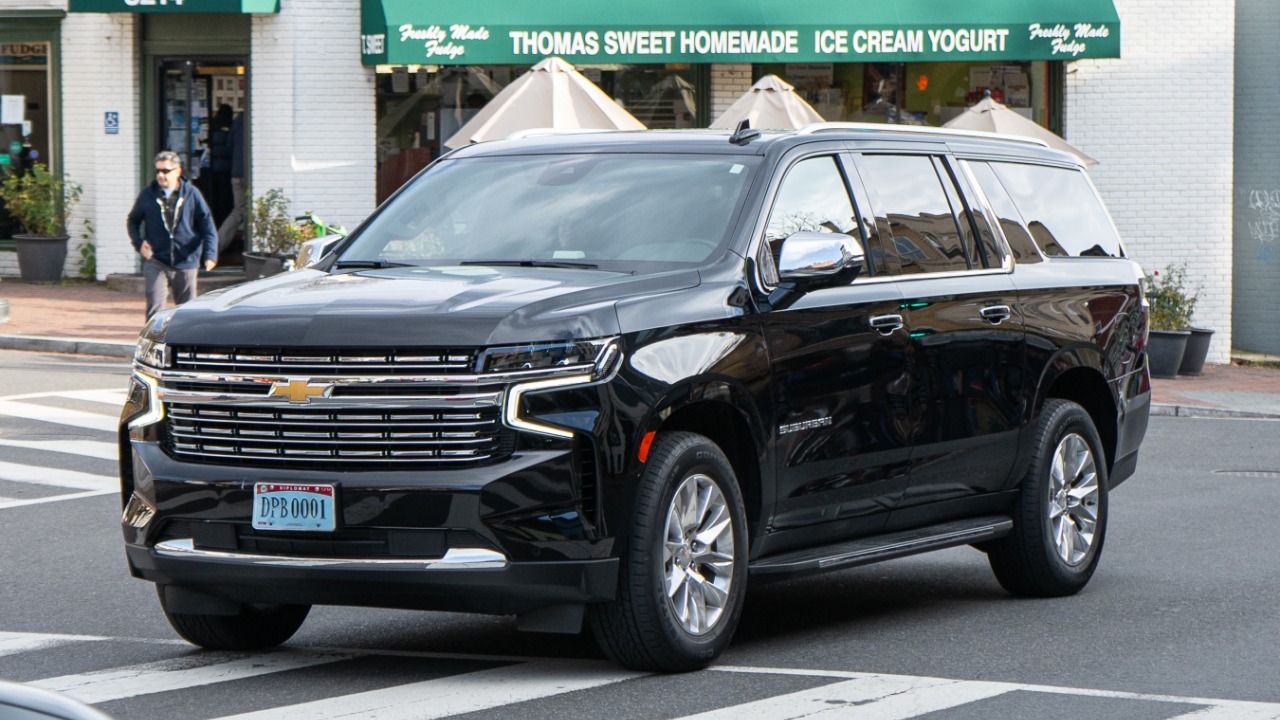
Chevrolet has sold a Suburban since 1935, and the longest-running automobile nameplate in American production earned its reputation on sheer length rather than clever packaging. The twelfth generation, launched for 2021, stretches a 134.1-inch wheelbase between its axles and pairs a second-row bench with a full-width third row, putting eight passengers inside without folding anything.
That generation also traded the old solid rear axle for independent rear suspension, which dropped the load floor and left the third row sitting lower and flatter. The trade is footprint: at well over 18 feet long, the Suburban demands a garage and a parking space many households do not have.
2. GMC Yukon XL: Thirteen Inches of Extra Reach
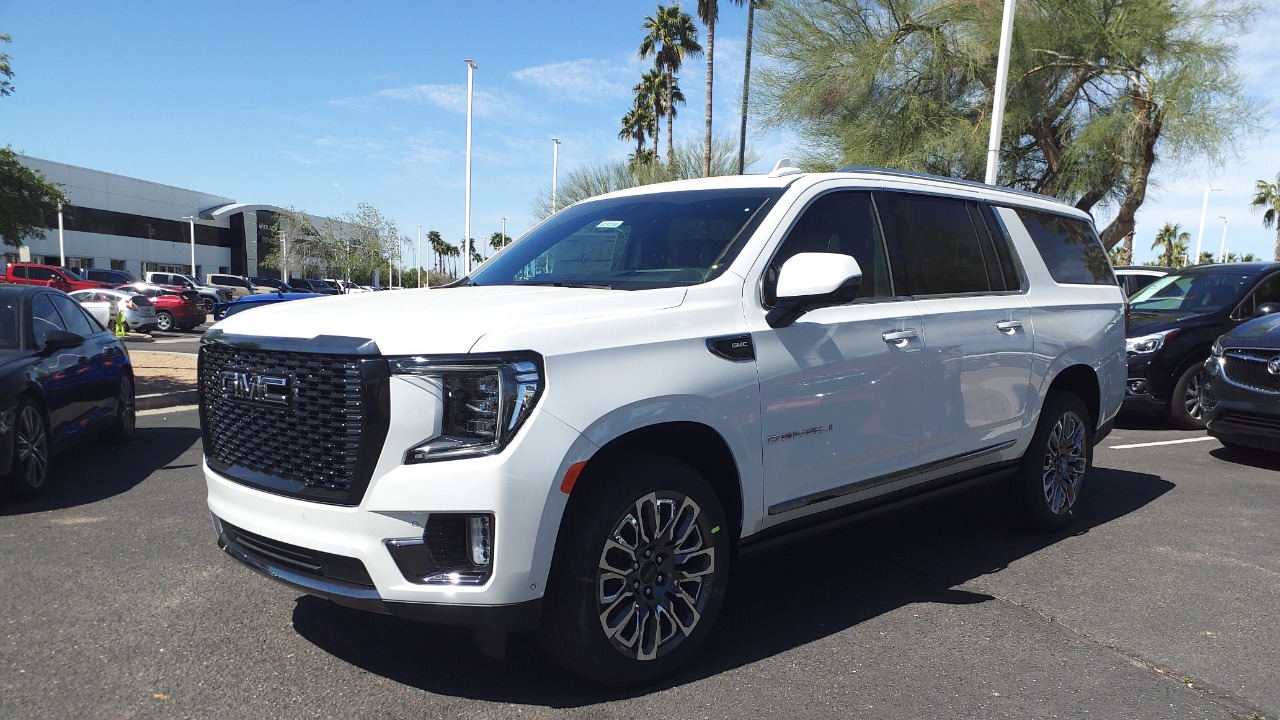
The standard Yukon already carries three rows, but GMC’s extended-wheelbase Yukon adds roughly 13 inches of wheelbase and a similar stretch of body, and the added length benefits the third row and the cargo bay behind it. With a bench in the middle, the count reaches eight, and unlike shorter rivals the XL keeps usable cargo depth behind the raised third-row seatbacks.
Mechanically the Yukon XL is the Suburban’s twin, sharing platform, engines and dimensions while wearing different sheet metal and a plusher cabin. Buyers choosing between them are choosing trim and badge rather than space, so the decision usually comes down to price and dealer preference.
3. Ford Expedition Max: Length Where It Counts
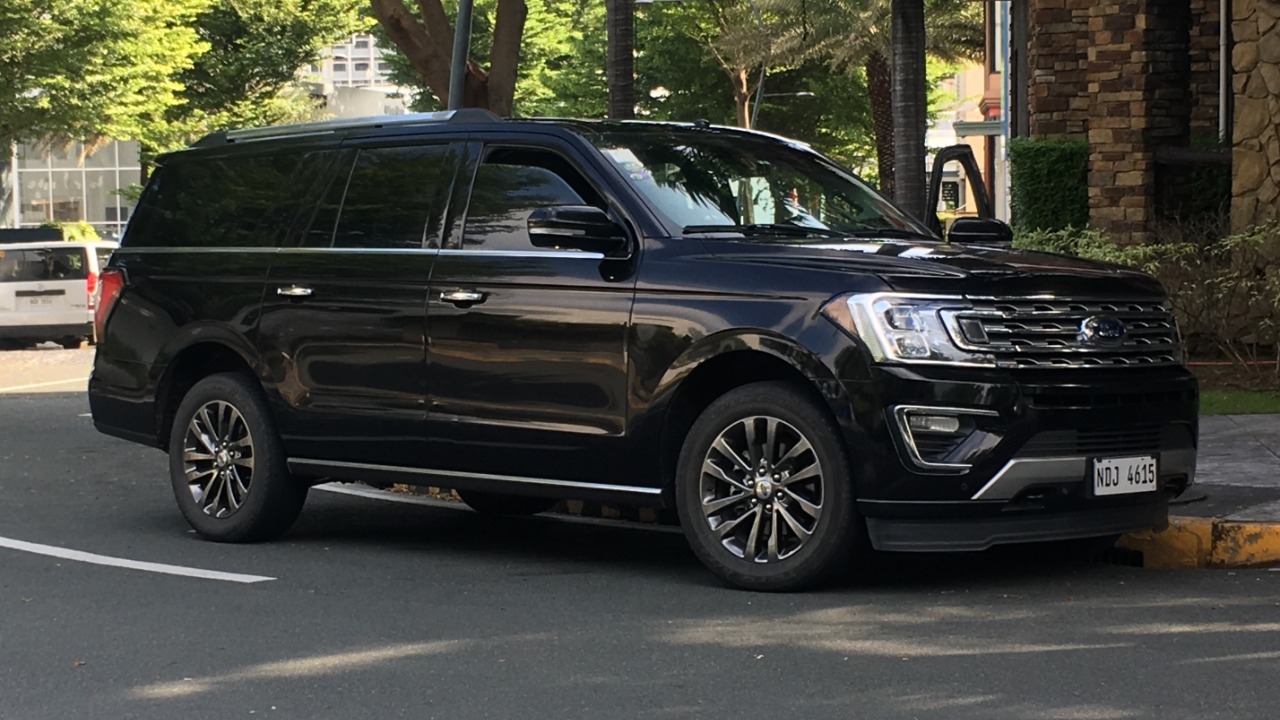
Ford sells the Expedition in two lengths, and the Max, badged Expedition EL before 2018, adds about nine inches of wheelbase and close to a foot of overall body. Ford’s full-size SUV seats eight when the second row is a bench, and the extra length expands cargo space behind the third row by more than half.
For families the calculus is simple: shorter three-row SUVs force a choice between the last row and the luggage, while the long-wheelbase Expedition carries both at once. The cost is maneuverability, since the added rear overhang shows up in tight parking structures and narrow driveways.
4. Toyota Sequoia: Truck Bones, Eight Seatbelts
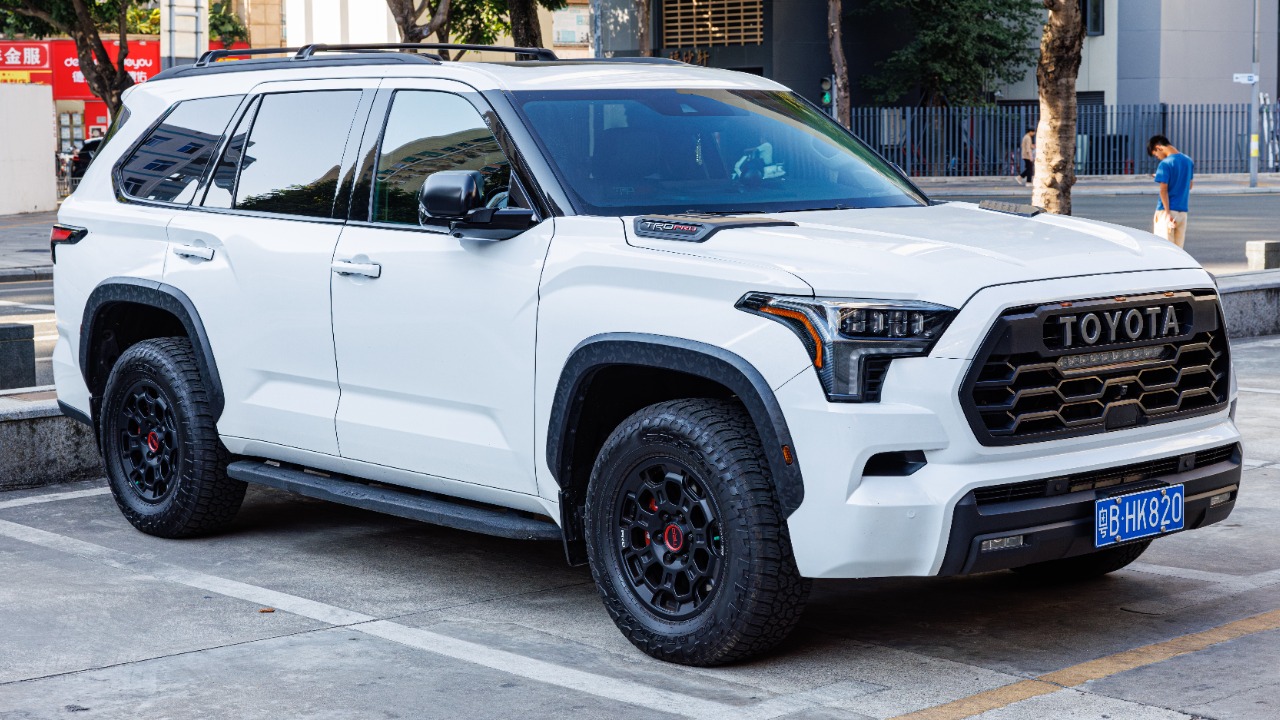
Toyota builds the Sequoia on the Tundra’s frame, and the third generation that arrived for 2023 made a twin-turbocharged V6 hybrid standard across the range. The full-size Toyota seats eight with a second-row bench and seven with captain’s chairs, and its third row slides fore and aft to trade legroom against the cargo bay.
That sliding row matters because packaging the hybrid battery and rear suspension raised the load floor, leaving less space behind the seats than the Sequoia’s exterior size suggests. Eight people fit comfortably; eight people’s luggage is the harder problem, and the slider is how owners split the difference.
5. Honda Pilot: The Removable Middle Seat
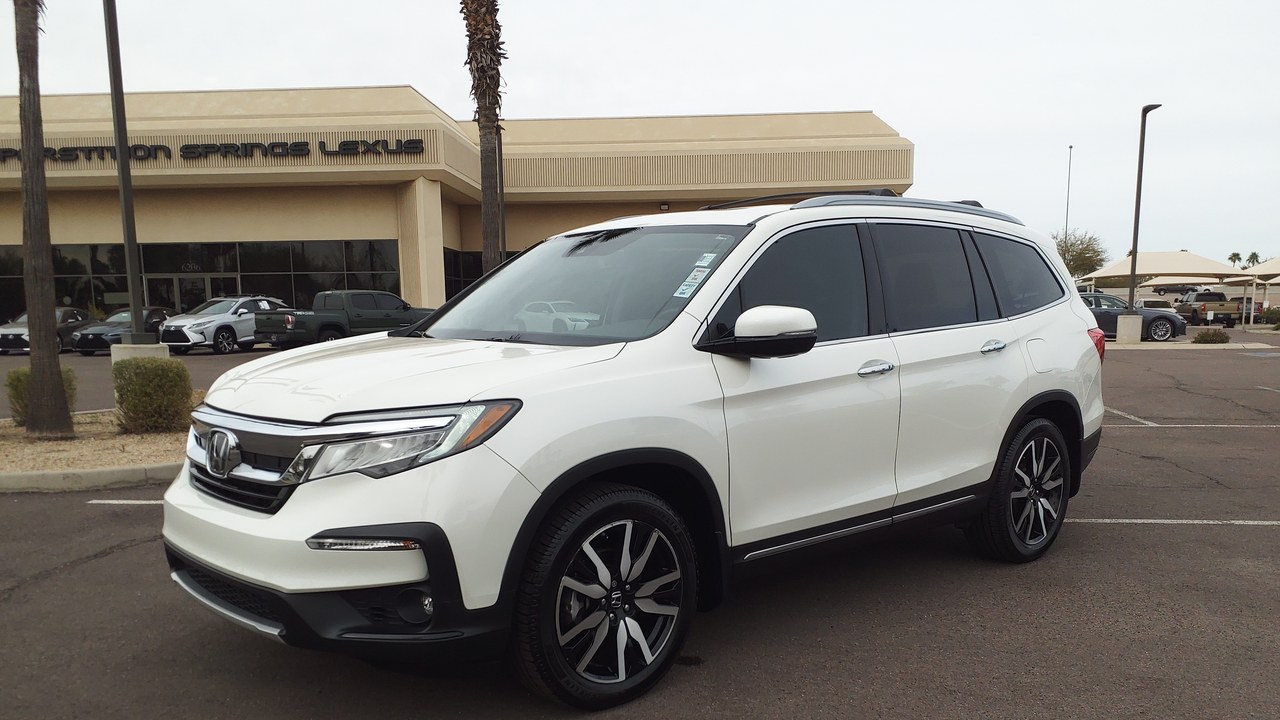
The fourth-generation Pilot, new for 2023, is a unibody crossover rather than a truck, and it still puts eight seatbelts in the cabin. Honda’s three-row crossover uses a second-row bench whose center section lifts out on several trims and stows beneath the cargo floor, converting the middle row to captain’s chairs in a couple of minutes without tools.
That flexibility is the Pilot’s real argument against larger body-on-frame rivals: one vehicle carries eight on a holiday run and four in comfort the rest of the year. The lighter structure also helps ride quality and fuel economy, though towing capacity trails the full-size trucks.
6. Toyota Grand Highlander: Built for the Back Row
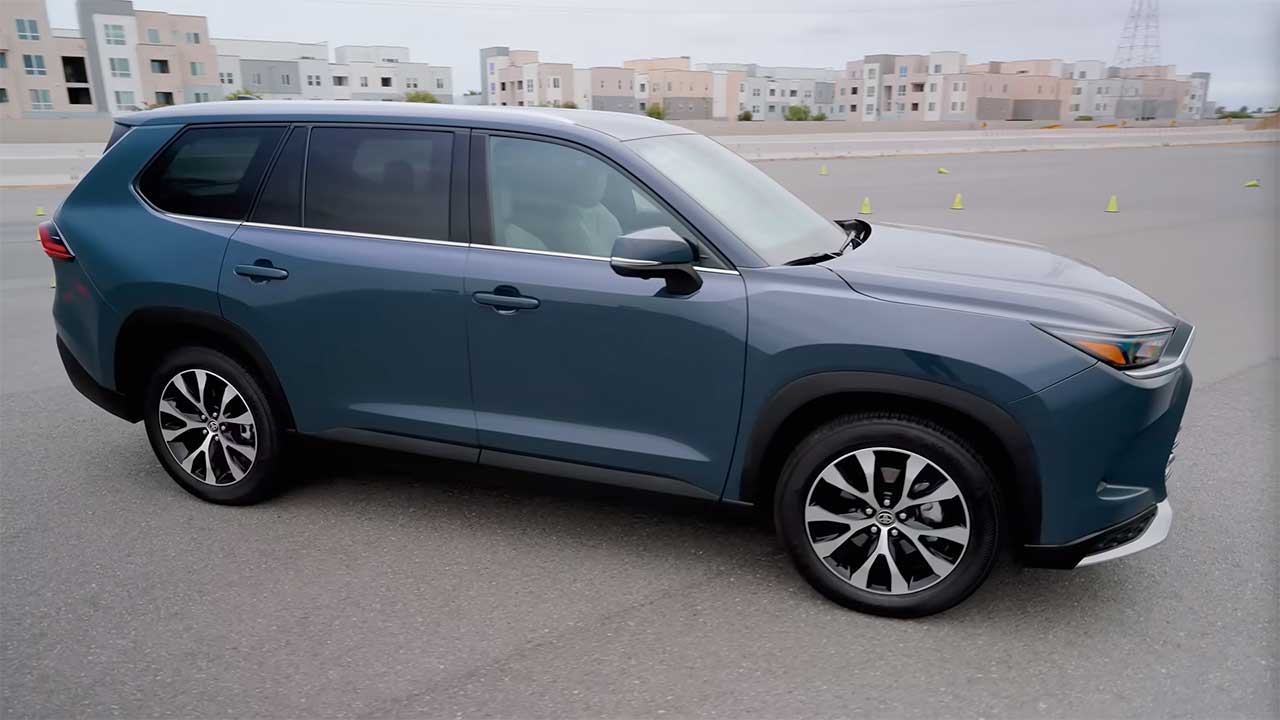
Rather than stretch the Highlander, Toyota built a second, larger vehicle beside it. The Grand Highlander arrived for 2024 on a longer wheelbase with a taller roofline and a third row engineered for adult shoulders and knees, and a second-row bench brings the count to eight.
The point of the exercise was the complaint that dogged the standard Highlander for years, where the last row worked for small children and almost nobody else. Hybrid powertrains carry over, so the extra size arrives without a fuel-economy penalty severe enough to push shoppers back toward the smaller car.
7. Kia Telluride: A Third Row Adults Accept
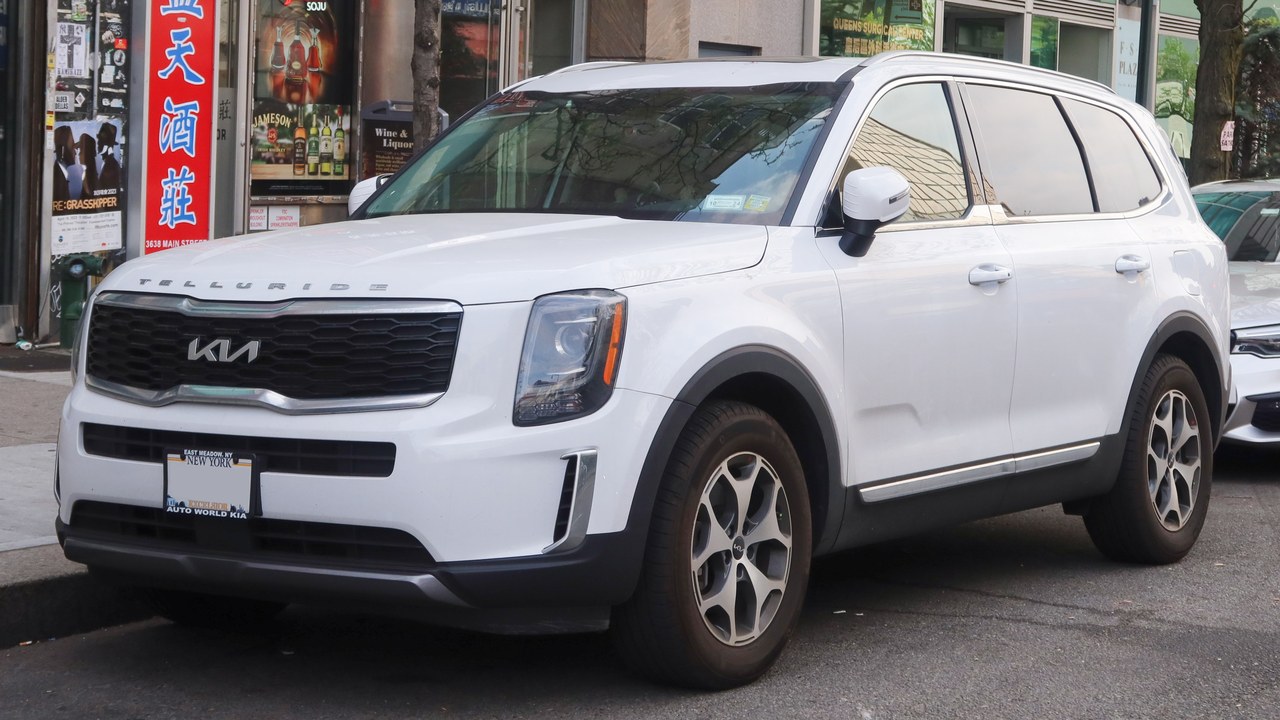
Kia entered the segment for 2020 and took both the World Car of the Year and North American Utility Vehicle of the Year titles. The Telluride seats eight with a second-row bench, and its boxy roofline is the reason the last row works: headroom, not just legroom, is what makes a third row usable for grown passengers.
A 3.8-liter V6 drives all four wheels when equipped, and the mechanical package is shared with its corporate sibling from Hyundai, so shoppers comparing the two are mostly comparing styling, interior treatment and price. The Telluride’s advantage is a squared-off body that pays off in rear-seat space.
8. Hyundai Palisade: Same Bones, Different Suit
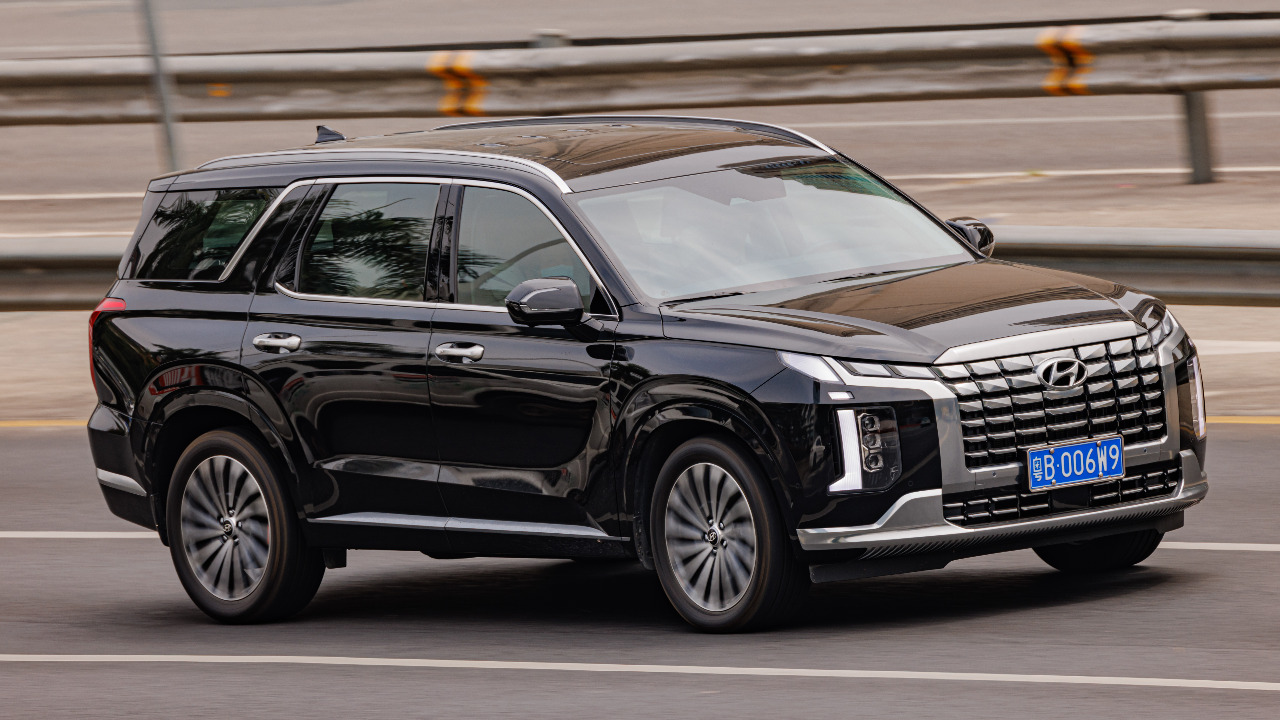
The Hyundai Palisade shares its platform, V6 and much of its structure with the Telluride, and it matches the eight-passenger layout when the second row is specified as a bench. Where the two diverge is presentation: Hyundai leans toward a softer ride and a more heavily equipped cabin at the top of the range.
Choosing between the siblings therefore comes down to warranty terms, dealer pricing and taste rather than capability, because the seating math is identical. Both also share the segment’s practical limitation: with all eight seats occupied, cargo room behind the third row is measured in grocery bags rather than suitcases.
9. Chevrolet Traverse: Eight Seats on a Crossover Footprint
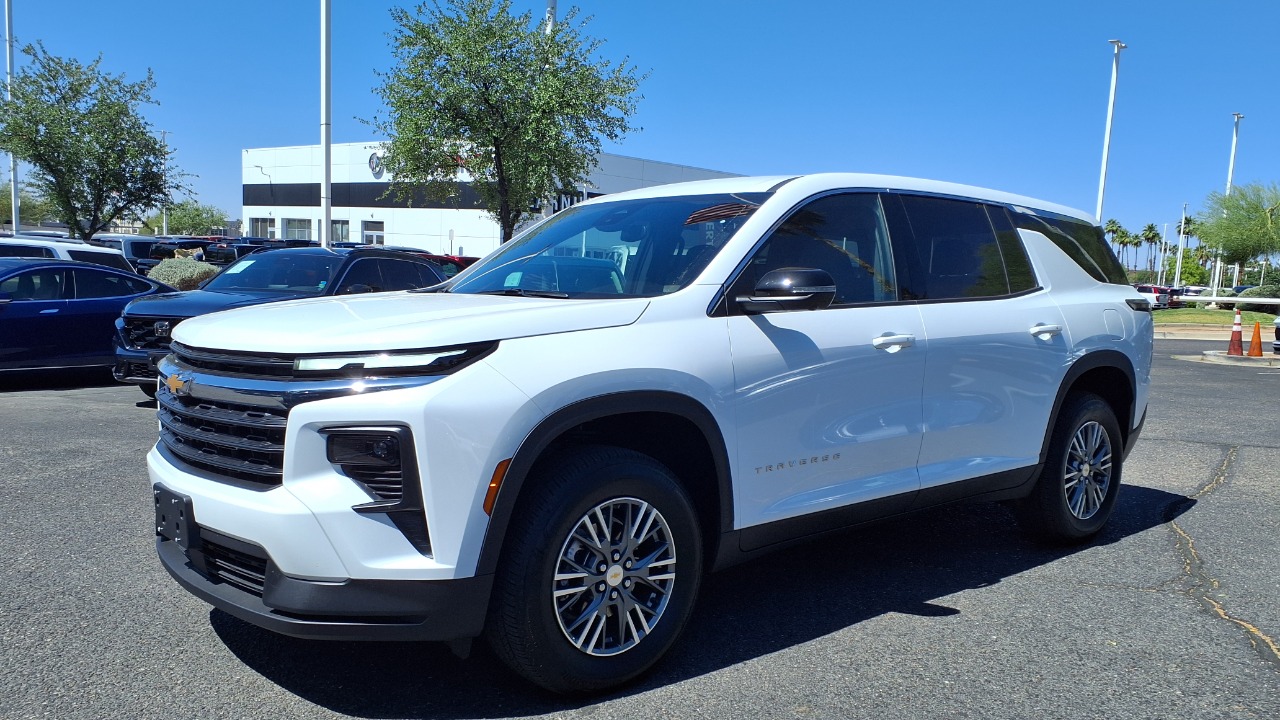
General Motors has built the Traverse since the 2009 model year, and Chevrolet’s largest crossover reached its third generation for 2024. Seating is why it belongs here: with a second-row bench the cabin belts in eight, three across in each of the two rear rows, while optional captain’s chairs drop the count to seven.
The caveat is that the eighth seat is a trim decision rather than a given: many versions swap the second-row bench for captain’s chairs, which leaves seven. The 2024 redesign also retired the V6 in favor of a turbocharged four-cylinder, so buyers cross-shopping older Traverses are not comparing the same vehicle.
10. Jeep Wagoneer: Full-Size Jeep, Eight Seats
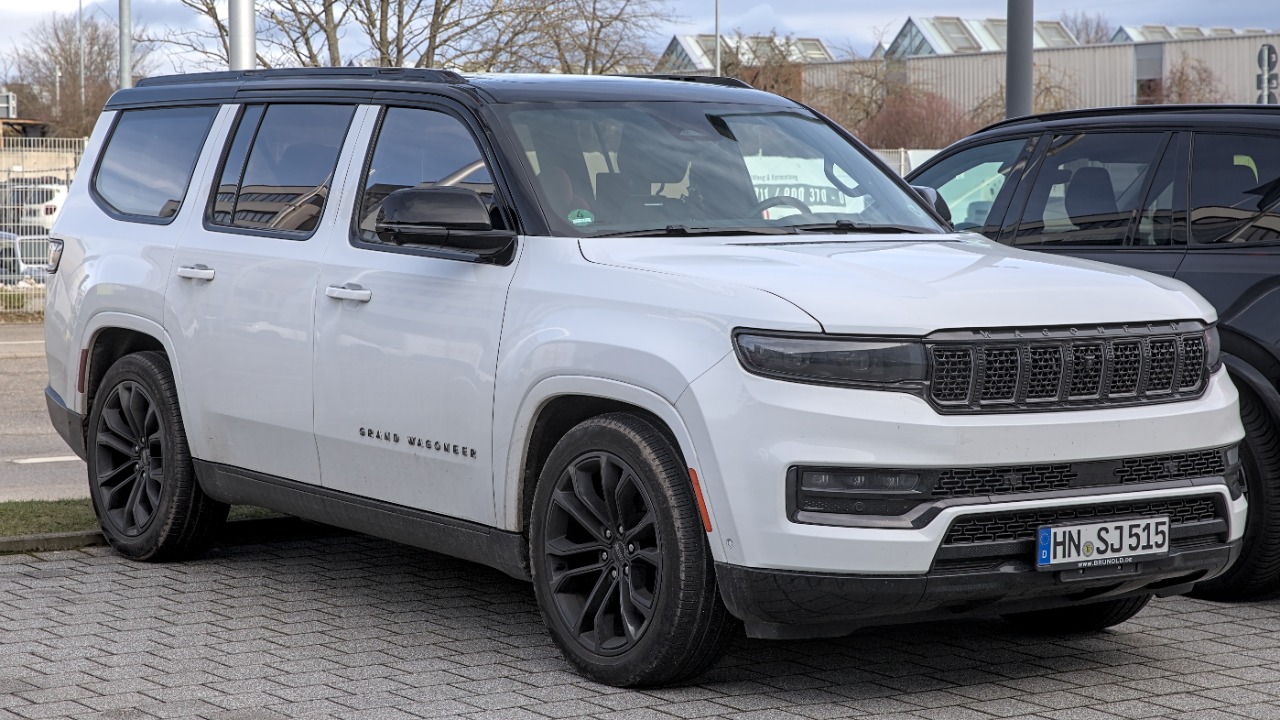
Jeep revived the Wagoneer nameplate for 2022 as a body-on-frame full-size SUV positioned above the Grand Cherokee, and it seats eight when the second row is ordered as a bench. Length is the enabler: the standard car already stretches past 214 inches, and the extended L version adds roughly a foot more behind the rear axle.
Unlike the crossovers on this list, the Wagoneer keeps a separate ladder frame, which pays off in towing capacity and hard-use durability at the cost of considerable curb weight. Jeep sells a plusher Grand Wagoneer on the same body, and both carry that weight penalty straight to the fuel gauge.
More from Morning Overview
