
Packing for a long drive exposes the difference between an SUV that looks big and one that actually swallows luggage. Wheelbase, body style and the space left behind the third row decide how much fits without stacking bags on laps. Here are ten SUVs built around the cargo room that road trips reward.
1. Chevrolet Suburban: The Long-Wheelbase Benchmark
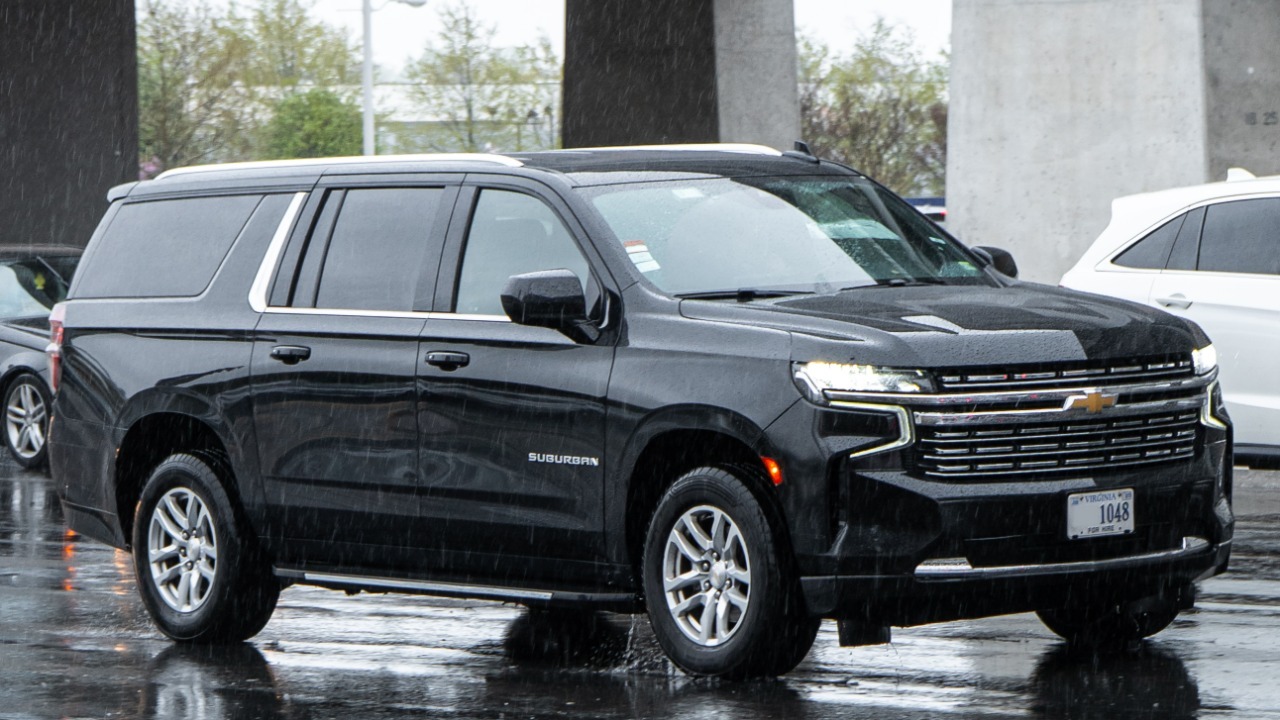
General Motors builds the Suburban as the stretched sibling of the Tahoe, and almost all of that extra length sits behind the rear axle. The Chevrolet Suburban has used the same full-size, body-on-frame recipe since 1935, making it the longest continuously used automobile nameplate in production. Its twelfth generation, introduced for the 2021 model year, swapped the old solid rear axle for independent rear suspension and dropped the load floor with it.
Long body, low floor and upright tailgate are why the Suburban remains a default pick for families hauling coolers, strollers and a week of suitcases at once. The tradeoff is footprint: parking garages and narrow trailhead lots punish a vehicle this long.
2. GMC Yukon XL: The Suburban In A Different Suit
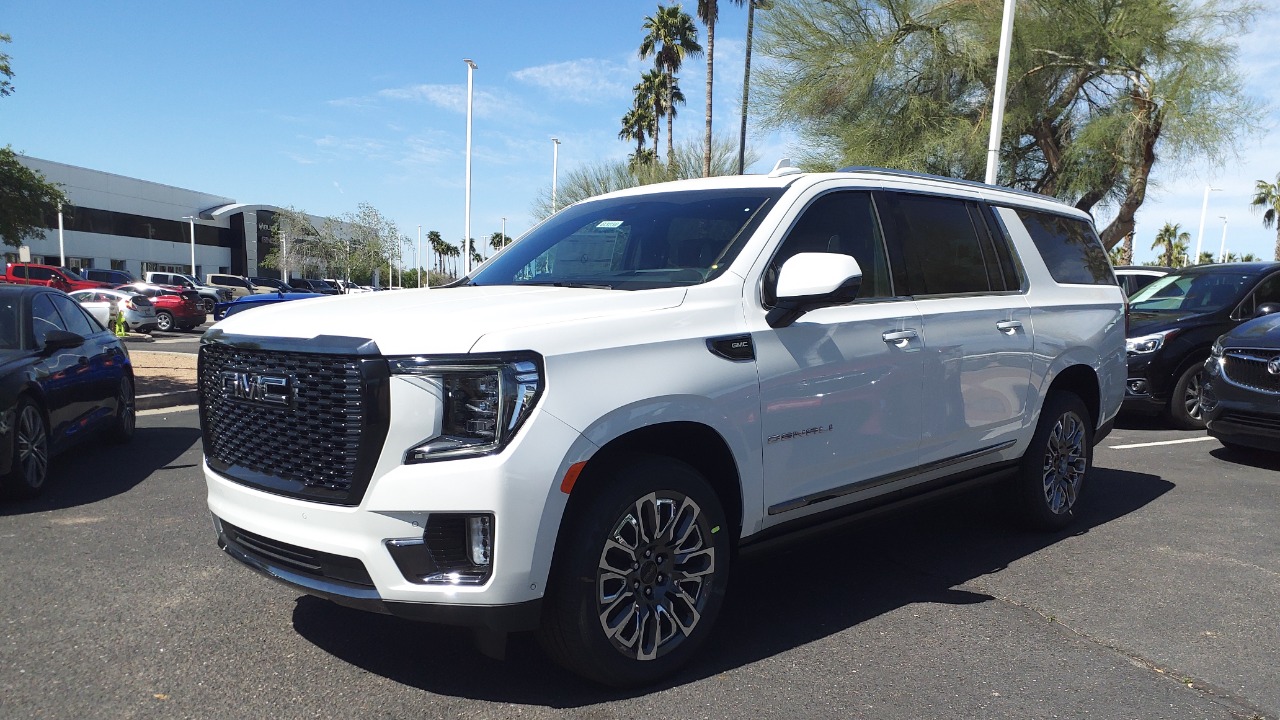
Badge engineering works in a traveler’s favor here. The GMC Yukon XL is the extended-body version of the standard Yukon, built on the same General Motors full-size platform as the Chevrolet Suburban, and its added wheelbase and rear overhang feed both third-row legroom and the cargo well behind it. The current generation arrived for 2021 with independent rear suspension in place of the previous live axle.
The practical result is a deep, square hold that stays usable with all three rows occupied, which is exactly the configuration where most crossovers surrender to a shallow parcel shelf. Fuel consumption and low-speed maneuverability are the price of that geometry.
3. Ford Expedition Max: The Stretched Expedition
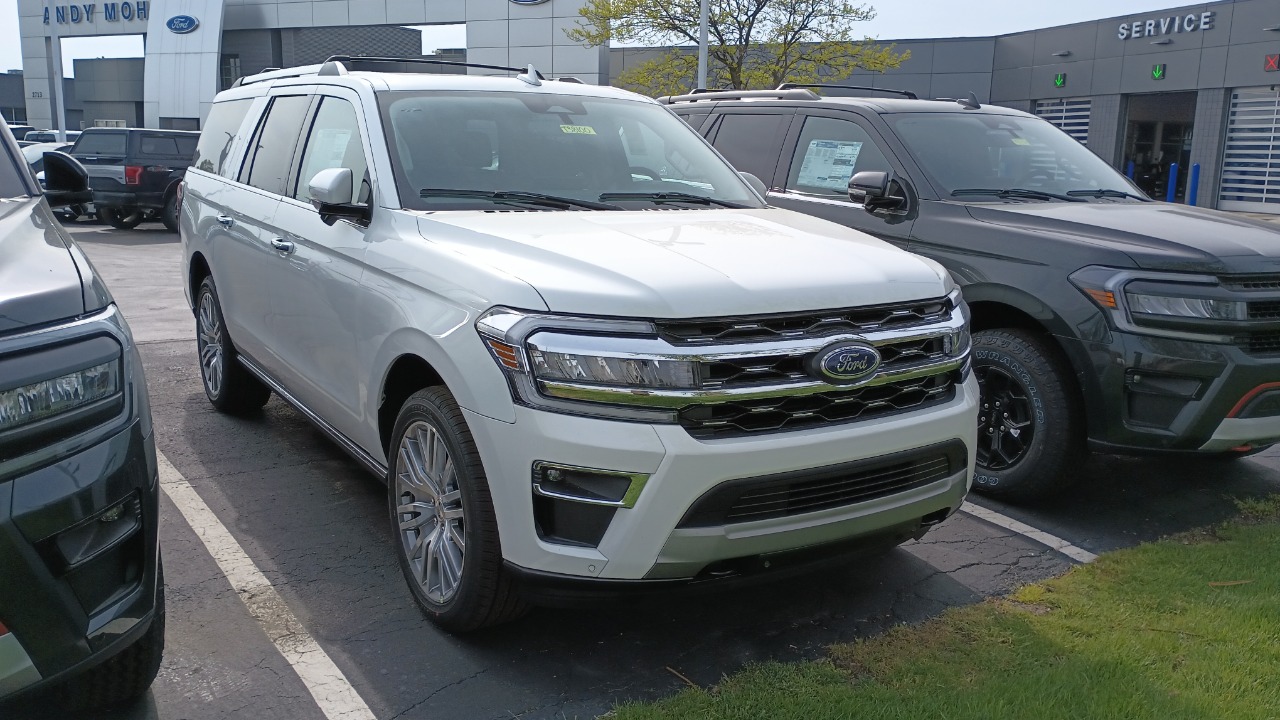
Ford’s long-wheelbase Expedition, sold as the Max since 2018 after a decade under the EL name, exists to solve the cargo problem a full-size third row creates. The Ford Expedition moved to an aluminum-intensive body with that redesign and has used independent rear suspension since 2003, which keeps the floor flat from the tailgate forward. The Max places its additional length behind the rear seats rather than in the cabin.
Few three-row SUVs let a full passenger load and a full luggage load coexist, and the extended body is what buys that. Stepping up from the standard Expedition adds cargo depth without changing powertrain, driving position or interior layout.
4. Chevrolet Tahoe: The Short Body That Caught Up
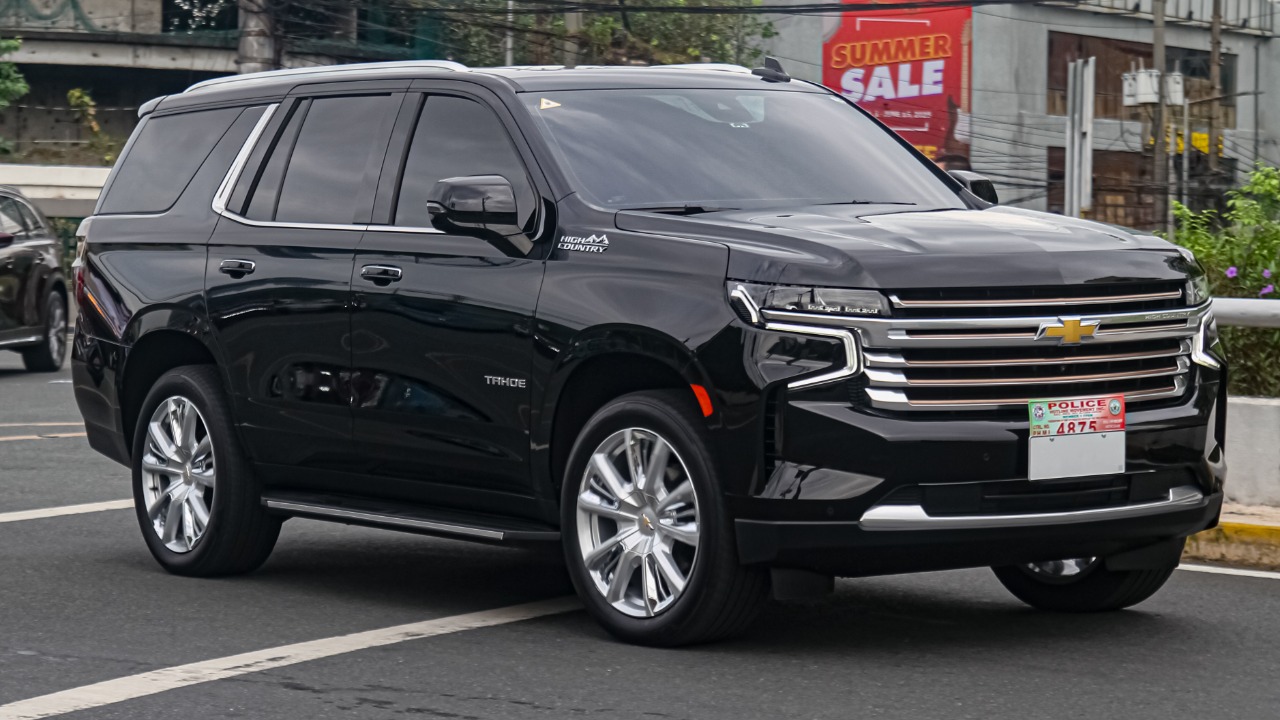
Chevrolet positions the Tahoe as the short-wheelbase counterpart to the Suburban, and the fifth generation closed much of the gap between them. The Chevrolet Tahoe was redesigned for 2021 on a longer wheelbase, with independent rear suspension replacing the previous live axle, lowering the cargo floor and squaring off the area behind the third row. Both bodies share doors, powertrains and interior architecture.
That redesign produced a vehicle that still fits an ordinary garage while carrying road-trip loads that would have demanded the longer Suburban a generation earlier. Anyone routinely loading behind a full third row still gains from the Suburban’s extra rear overhang.
5. Jeep Wagoneer: A Full-Size Name Brought Back
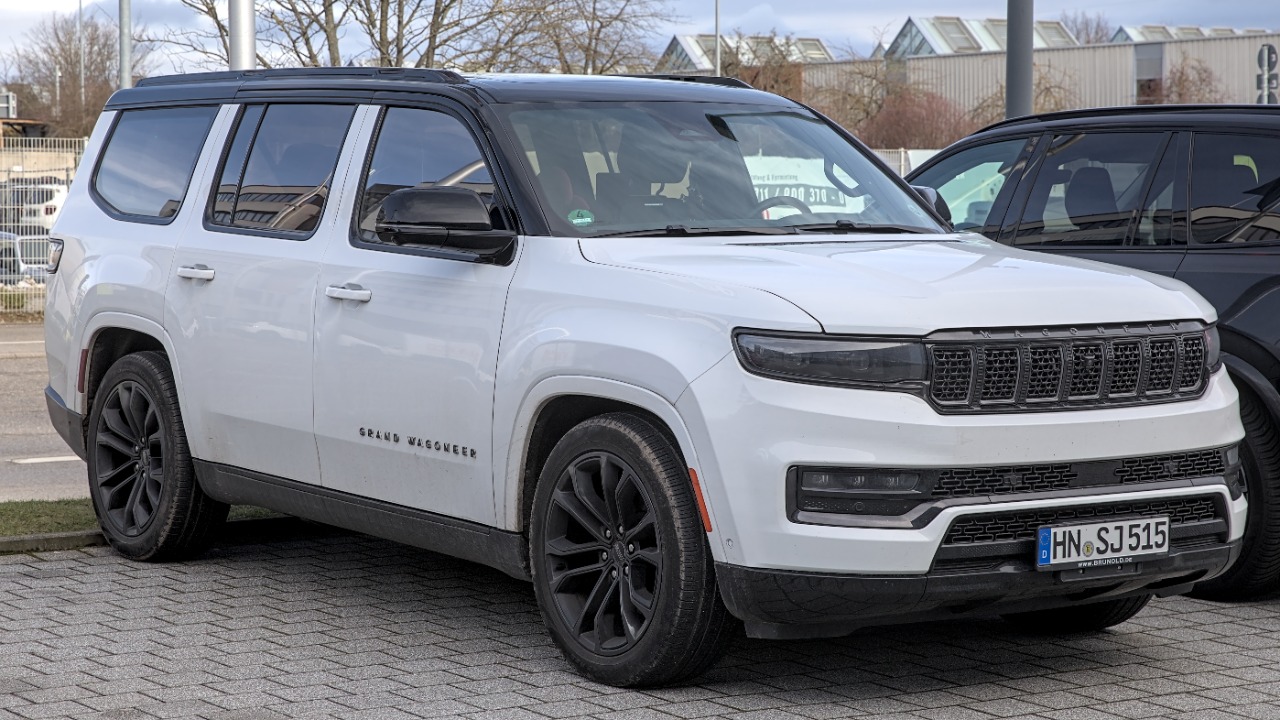
Jeep revived the Wagoneer name for the 2022 model year as a body-on-frame full-size SUV sharing its underpinnings with the Ram 1500 pickup. The Jeep Wagoneer is offered in a standard body and an extended L version, and the added length on the L sits behind the rear axle where luggage rides. Independent rear suspension replaces the solid axle used by the original 1963 Wagoneer.
The extended body places the Wagoneer L among the largest three-row SUVs on sale, which matters most on trips that fill every seat and every footwell. Size and weight cut the other way for drivers who spend most of the year in city traffic.
6. Volkswagen Atlas: Squared Off On Purpose
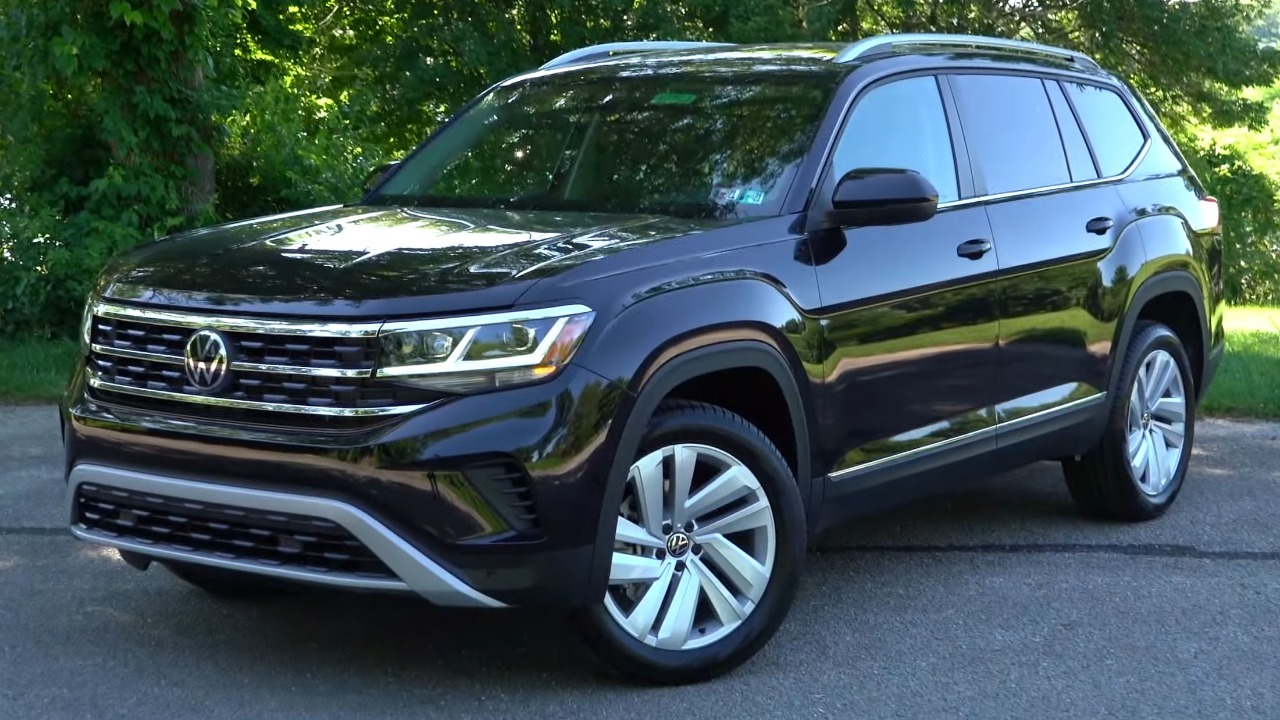
Volkswagen designed the Atlas for the North American market and builds it in Chattanooga, Tennessee, on the MQB architecture shared with far smaller models. The Volkswagen Atlas is the largest vehicle in the brand’s American lineup, and its upright roofline and near-vertical tailgate convert exterior dimensions into usable box volume instead of styling. A facelift landed for 2021, with a further revision for 2024.
Unibody crossovers typically lose cargo depth to sloping rear glass, and the Atlas trades that look for a squared hold and a third row adults can sit in. It carries less than the body-on-frame full-size SUVs on this list while parking like something considerably smaller.
7. Honda Pilot: Boxier By Design
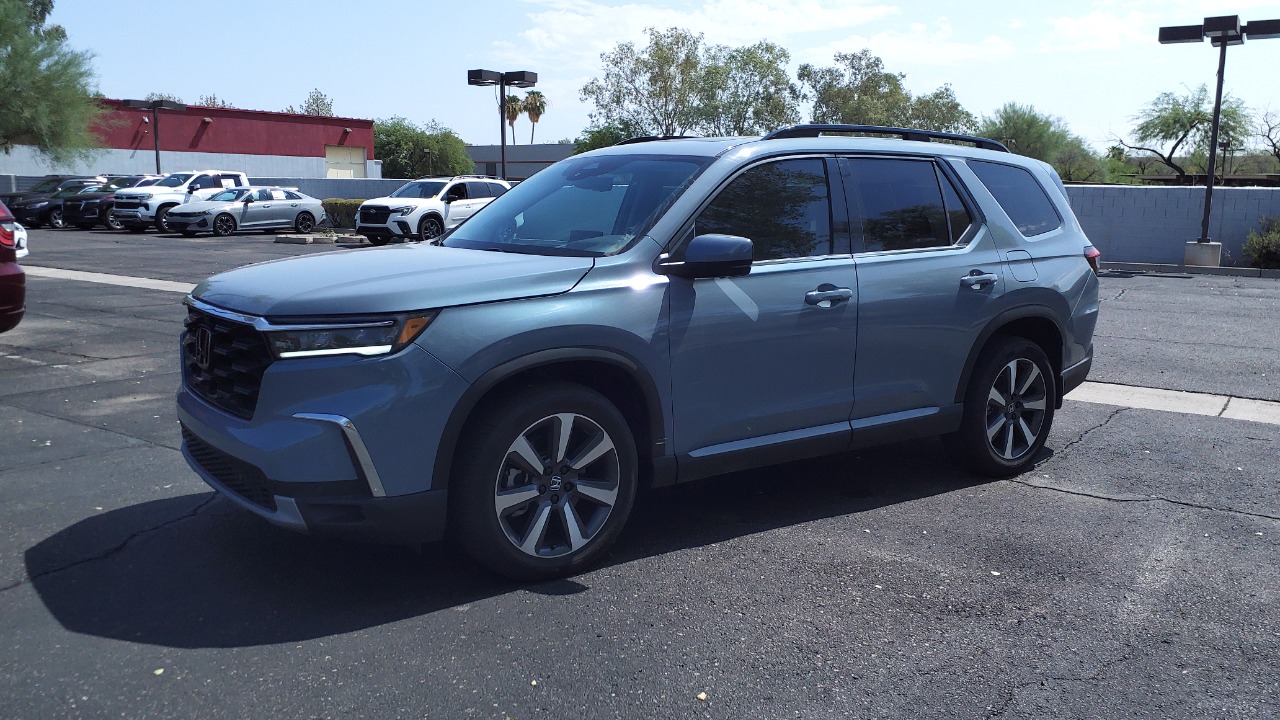
Honda redesigned the Pilot for the 2023 model year, trading the previous rounded body for a squared profile on a new light-truck platform. The Honda Pilot is a three-row unibody crossover, and the fourth generation grew in overall length over the outgoing car while adopting more upright rear glass. That geometry is what makes the area behind the third row genuinely usable rather than decorative.
Midsize crossovers usually force a choice between occupying the third row and carrying the luggage, and the current Pilot narrows that compromise more than most of its direct rivals. Anyone needing more still has to step up to a full-size, body-on-frame SUV.
8. Toyota Sequoia: Truck Bones, Sliding Seats
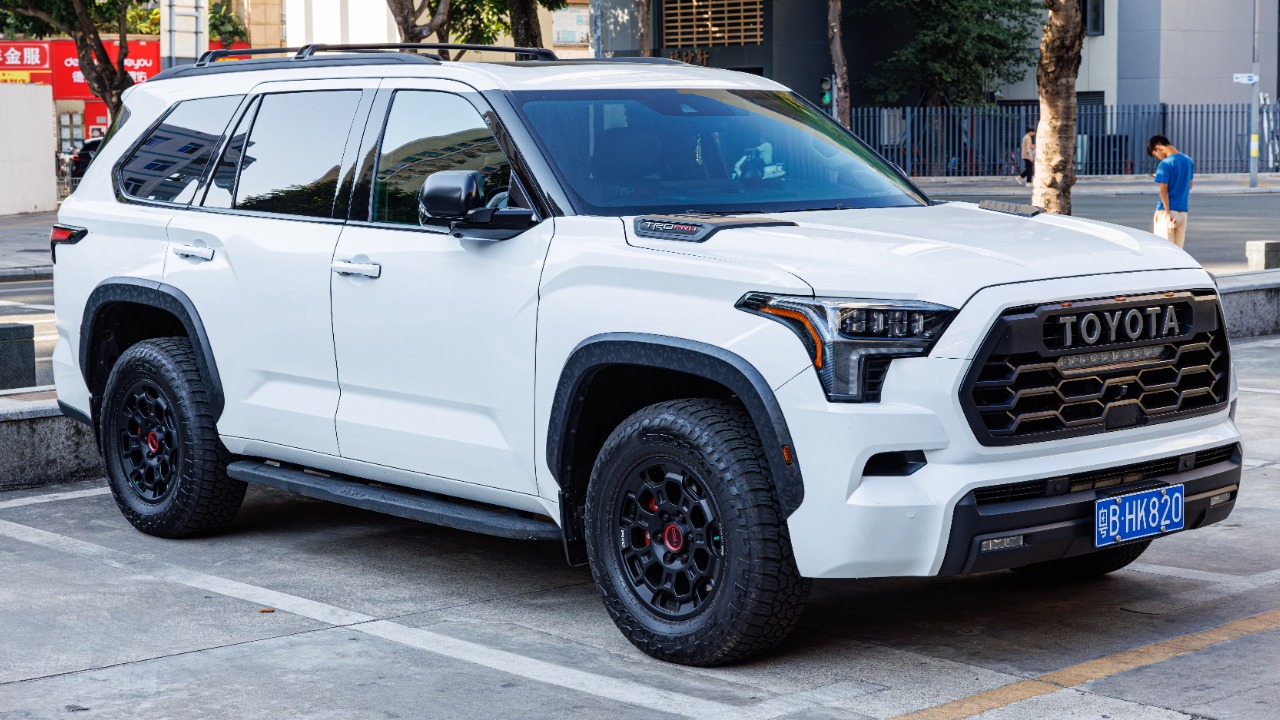
Toyota’s largest SUV moved to the TNGA-F truck platform for the 2023 model year, sharing its frame with the Tundra pickup. The Toyota Sequoia is sold exclusively with the i-FORCE MAX hybrid powertrain in that third generation, and its full-size body-on-frame proportions create a long, tall load bay behind the seats. The third row slides fore and aft on rails, so the bay can be grown or shrunk to suit the trip.
That adjustability is doing real work, because the hybrid hardware and rear suspension raise the load floor and cost depth behind the seats. Sliding the third row forward recovers much of the space at the expense of legroom for whoever sits there.
9. Toyota Grand Highlander: Designed Backward From The Luggage
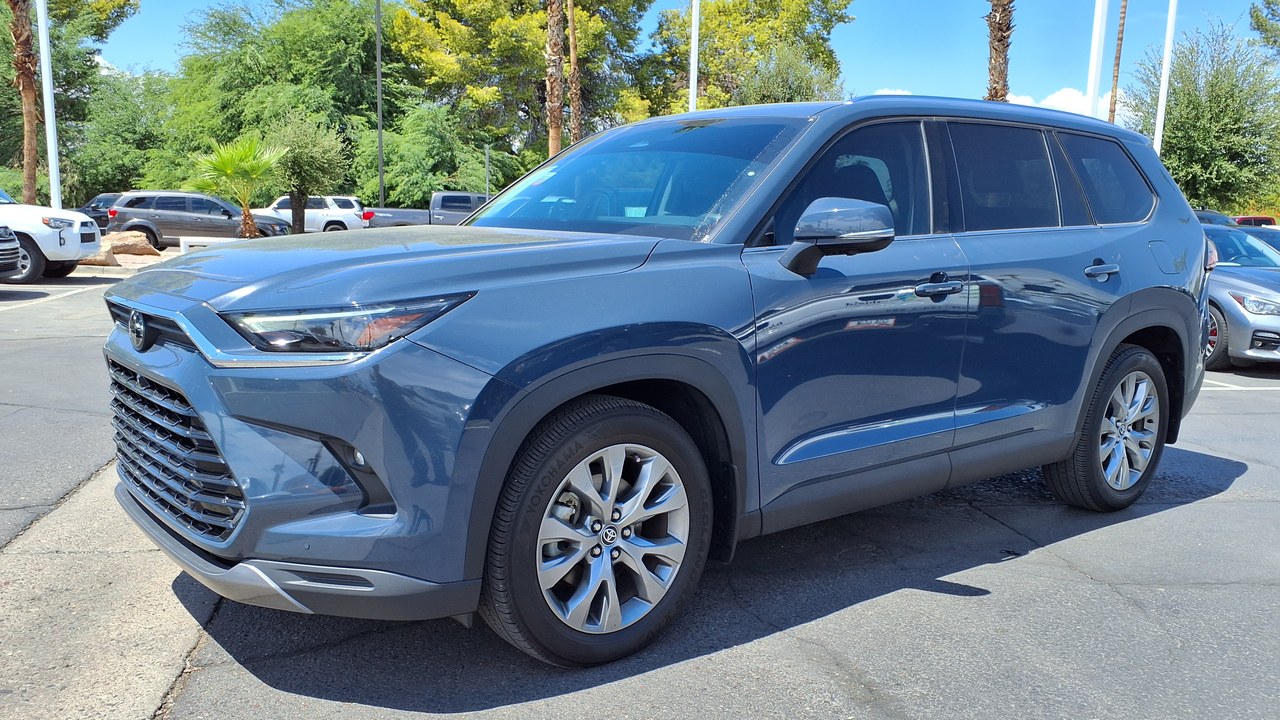
Toyota introduced the Grand Highlander for the 2024 model year as a longer, taller companion to the standard Highlander rather than a replacement for it. The Toyota Grand Highlander stretches the wheelbase and body specifically to make the third row adult-sized and to leave a real cargo well behind it. Hybrid and Hybrid MAX powertrains sit alongside the turbocharged four-cylinder in the range.
The regular Highlander’s weakest point was exactly this space, which makes the Grand version one of the few three-row crossovers engineered outward from the luggage rather than inward from the styling. It stays a unibody vehicle, so towing capacity trails the body-on-frame options above.
10. Subaru Ascent: The All-Weather Option
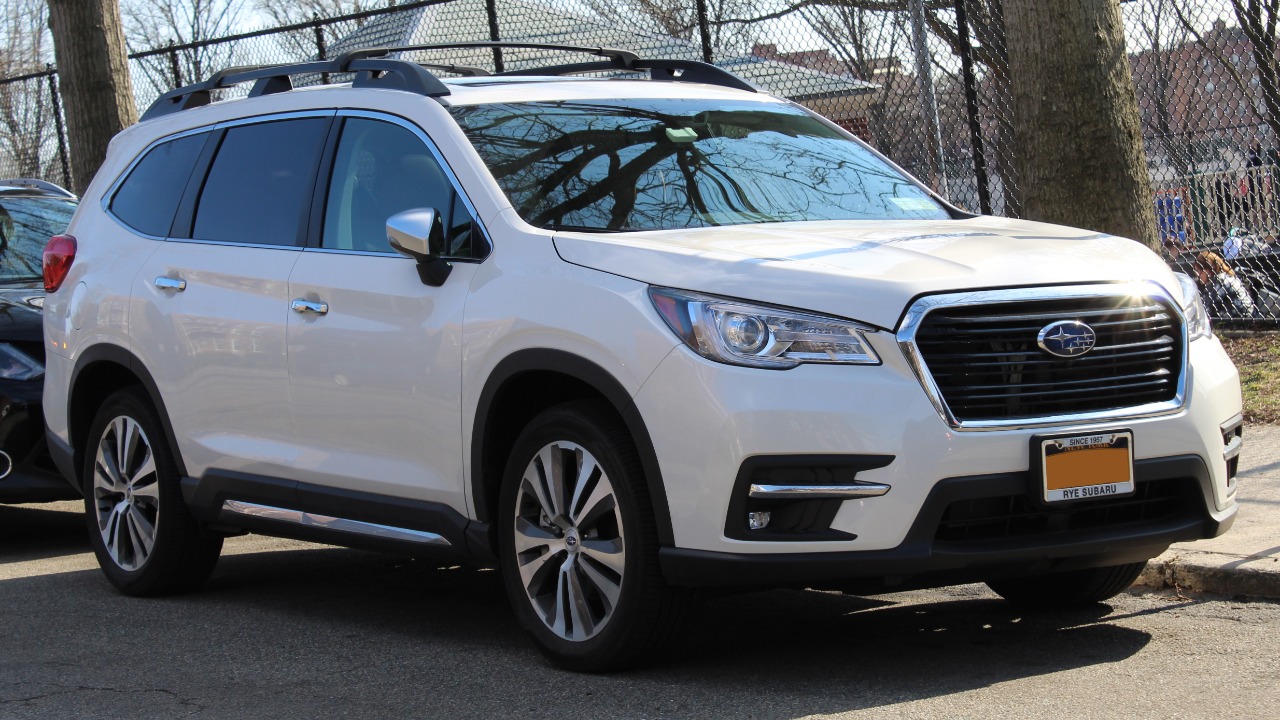
Subaru launched the Ascent in 2018 on the Subaru Global Platform as the brand’s largest vehicle, returning to the three-row segment it had left when the Tribeca was discontinued. The Subaru Ascent pairs standard symmetrical all-wheel drive with a turbocharged flat-four, and its upright body keeps the space behind the third row square rather than tapered. Seven- and eight-seat configurations are both offered.
On road trips that finish on gravel or snow, drivetrain matters alongside cubic feet, and standard all-wheel drive separates the Ascent from rivals that charge extra for it. Its hold trails the full-size, body-on-frame SUVs here, though it is also the easiest vehicle on the list to park.
More from Morning Overview
- Two Ford recalls now carry a rare “do not drive” warning, so owners should check their VIN.
- A Colorado wildfire has exploded past 87,000 acres with no containment
- A wildfire near Ouray swelled past 18,000 acres, putting Colorado towns on alert
- The Pentagon’s newest UFO files describe a fish-scaled, potato-shaped object on camera
