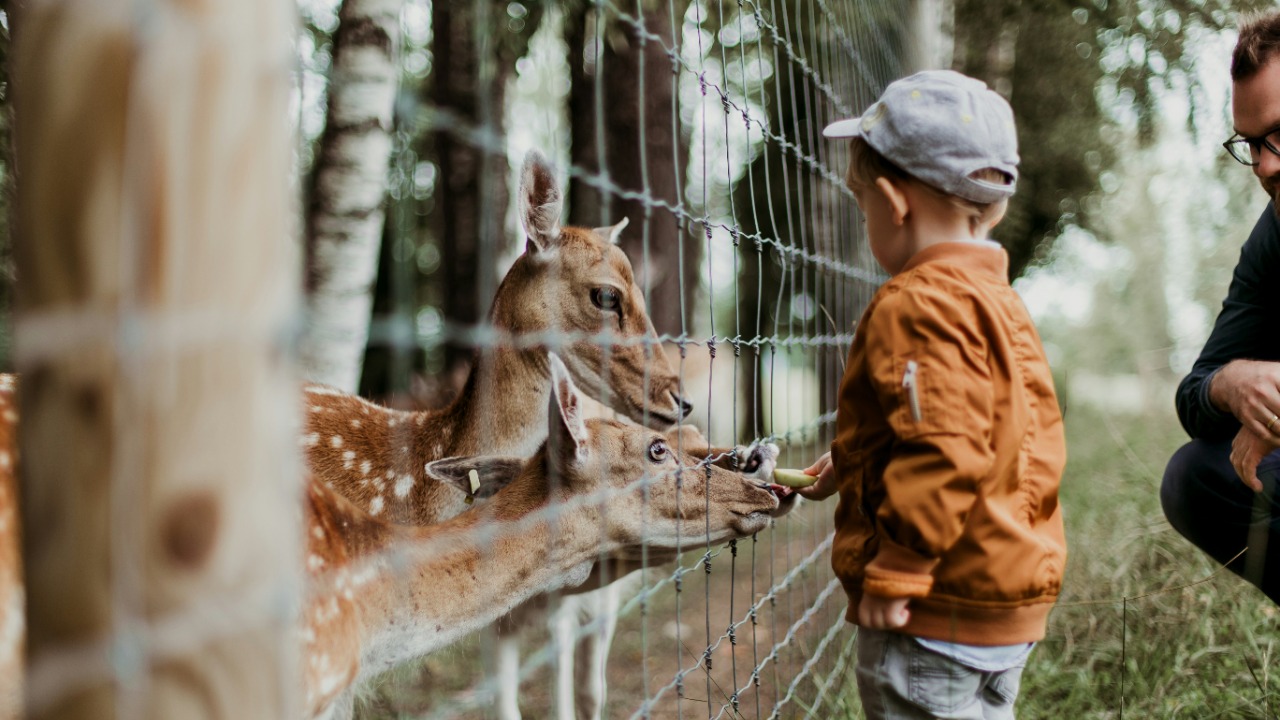

Across the country, zoos are quietly turning a post-holiday problem into a win for animals and the environment. Instead of sending used Christmas trees to the curb, keepers are inviting the public to donate them so the evergreens can become toys, snacks, shelter, and even mulch. The result is a surprisingly rich afterlife for a symbol of the season that usually ends up on the sidewalk.
What looks like yard waste to most people becomes a full sensory experience for lions, kangaroos, bison, and bears, and a practical resource for zoo grounds crews. By treating each tree as raw material for enrichment and habitat care, these institutions are reframing holiday cleanup as a small but tangible act of conservation-minded giving.
From living room centerpiece to zoo playground
For many families, the Christmas tree is the emotional center of the holidays, then almost overnight it becomes clutter that needs to be hauled away. Zoos step into that awkward transition by offering drop-off programs that give those same trees a second purpose, inviting people to see the evergreen not as trash but as a temporary gift to wildlife. The shift is subtle but powerful, turning the end of a celebration into the start of a new, very physical story for the tree.
At facilities that accept donations, staff sort through the pile and decide which trees are sturdy enough to be rolled into exhibits, stacked into climbing structures, or tucked into corners as hiding spots. The branches and needles hold scents from the home and the outdoors, so when a tree lands in a habitat, it instantly changes the landscape for the animals that live there, offering something new to sniff, paw, or chew.
Why zoos want your old Christmas tree
Zoos are not just looking for free decor, they are looking for ways to keep animals mentally and physically engaged in environments that can never fully replicate the wild. A donated tree is a ready-made enrichment tool, dense with textures, smells, and shapes that invite exploration. Keepers can drag a tree into a yard, wedge it into a rock pile, or hang it from a structure, and suddenly the space feels different to the animals that know every inch of their enclosure.
Because each tree is unique in size and shape, staff can tailor how they use it to the needs of different species, from small primates that want to climb and perch to large hoofstock that prefer to rub and browse. The fact that the tree is temporary, drying out and breaking down over days or weeks, adds another layer of novelty, since the object itself changes over time and keeps offering new cues for animals to investigate.
Topeka’s “Pine Tree Recycling” model
In Topeka, the idea has been formalized into a seasonal ritual. The Topeka Zoo & Conservation Center runs a program called Pine Tree Recycling, inviting residents to “Give your Christmas tree a second life” by dropping off clean, live trees at the zoo. The campaign frames the donation as a simple act of support for wildlife, making it as easy as loading the tree into a car instead of leaving it at the curb.
From December 26 through January 8, the Topeka Zoo & Conservation Center accepts those trees as long as they are free of tinsel, hooks, and artificial snow. Staff first use them as enrichment for animals, then chip what is left into mulch for continued reuse around the grounds, effectively giving each tree a third life as part of the landscape. The program turns a narrow holiday window into a concentrated burst of community engagement and resource recovery.
Enrichment in action, from Sun bears to big cats
Once the trees arrive, the creative work begins. At Oakland Zoo, keepers have a track record of pairing leftover evergreens with other seasonal surprises, rolling them into exhibits alongside gifted kongs and puzzle-feeders for animals such as Sun bears, tigers, zebras, baboons, chimps, and others. The trees become part of a larger holiday enrichment scene, where predators can stalk through branches and prey species can weave around new obstacles.
Keepers might tuck treats into the boughs so a tiger has to nose through needles to find meat, or they might lean trees together to form a temporary thicket for primates to climb. For Sun bears, who naturally forage and tear into logs, a dense evergreen offers branches to shred and bark to peel, mimicking some of the physical challenges they would face in the wild. The same tree that once held ornaments now holds the attention of animals that rarely get to dismantle something so large and fragrant.
Topeka Zoo’s third life for trees
In Topeka, staff emphasize that the value of a donated tree does not end when the animals lose interest. Local coverage has highlighted how the Topeka Zoo reuses live Christmas trees for animal enrichment, urging residents, “Instead, your tree could give the zoo’s animals a little fun,” and reminding them, “Don’t toss that live Christmas tree in the trash” when it could be repurposed at the Topeka Zoo. The message is as much about waste reduction as it is about animal welfare.
Another report on the same effort underscores that the Topeka Zoo is effectively giving trees a third life, first as a holiday centerpiece, then as enrichment, and finally as mulch that supports plantings and paths. Coverage notes that the Topeka Zoo reuses live Christmas trees for animal enrichment and describes how the program is framed as a way of giving them a third life. It is a closed loop that keeps organic material on site and in use for as long as possible.
How evergreens transform animal behavior
For the animals, the impact of these trees is immediate and visible. When a fresh evergreen appears in an enclosure, kangaroos, bison, lions, and other residents often rush to investigate, rubbing against the branches, nibbling on needles, or simply lying in the shade of the new structure. Reporting on one South Jersey facility describes how the evergreen trees give kangaroos, bison, lions, and more extra enrichment at the South Jersey zoo home, turning a quiet winter paddock into a dynamic space.
Experts point out that the Christmas trees also provide the animals with enrichment that goes beyond simple entertainment. For any animal in human care, whether it is the family dog or a zoo lion, having control over how they spend their time is critical to their well-being, and a tree offers choices: climb, chew, hide, or ignore. One analysis notes that The Christmas trees also provide the animals with enrichment by giving them more agency in how they interact with their environment, which can reduce stress and encourage natural behaviors.
What zoos need from donors
Not every tree is suitable for this second life, and zoos are clear about their rules. Staff typically require that trees be real, not artificial, and that they arrive free of tinsel, hooks, lights, and artificial snow, since those remnants can pose choking hazards or introduce chemicals into habitats. Programs like Topeka’s specify that they are accepting clean, live Christmas trees, and they often remind donors that flocked or heavily treated trees cannot be used safely for animals or mulch.
Because storage space and staff time are limited, facilities also set boundaries on how many trees they can accept. One report on donation programs notes that the zoo cannot take every tree, so You are encouraged to call ahead and check if they are still taking donations, or to look for local mulching events if the zoo’s capacity has been reached. The guidelines are practical, but they also reinforce that a tree is only a gift if it arrives in a condition that keeps animals safe.
Beyond enrichment, a broader conservation message
These programs do more than entertain animals and divert waste, they also give zoos a concrete way to talk with visitors about resource use and habitat protection. When families drive up to drop off a tree, they see firsthand how a simple household object can be repurposed multiple times, and they often stick around to watch animals interact with the evergreens they just delivered. That experience can make abstract ideas about sustainability feel immediate and personal.
By connecting the fate of a living room tree to the daily lives of kangaroos, bison, lions, Sun bears, and other species, zoos can frame conservation as a series of small, specific choices rather than a distant, overwhelming goal. The same institutions that care for animals on site are often involved in field projects and habitat restoration elsewhere, and the Christmas tree programs give them an accessible story to tell about how individual actions, like recycling a pine, fit into a larger pattern of stewardship.
Where this idea can spread next
The success of these efforts suggests there is room for more communities to adopt similar models. Cities that already host large holiday tree displays, such as those near major public squares or civic centers, could partner with nearby zoos or wildlife centers to redirect those trees once the lights come down. Locations identified in mapping tools, including places like /m/02lf1z and /m/08m96v, illustrate how digital tools already catalog public spaces that could be linked into donation networks.
As more zoos share images of animals diving into piles of evergreens or carefully stripping needles from branches, the idea of a tree’s “second life” is likely to become part of the seasonal routine for households that buy real pines. The model is straightforward: collect clean trees, use them for enrichment, then chip them into mulch. What changes from place to place is the scale and the storytelling, and that is where local institutions can tailor the concept to their own landscapes and communities.
More from MorningOverview