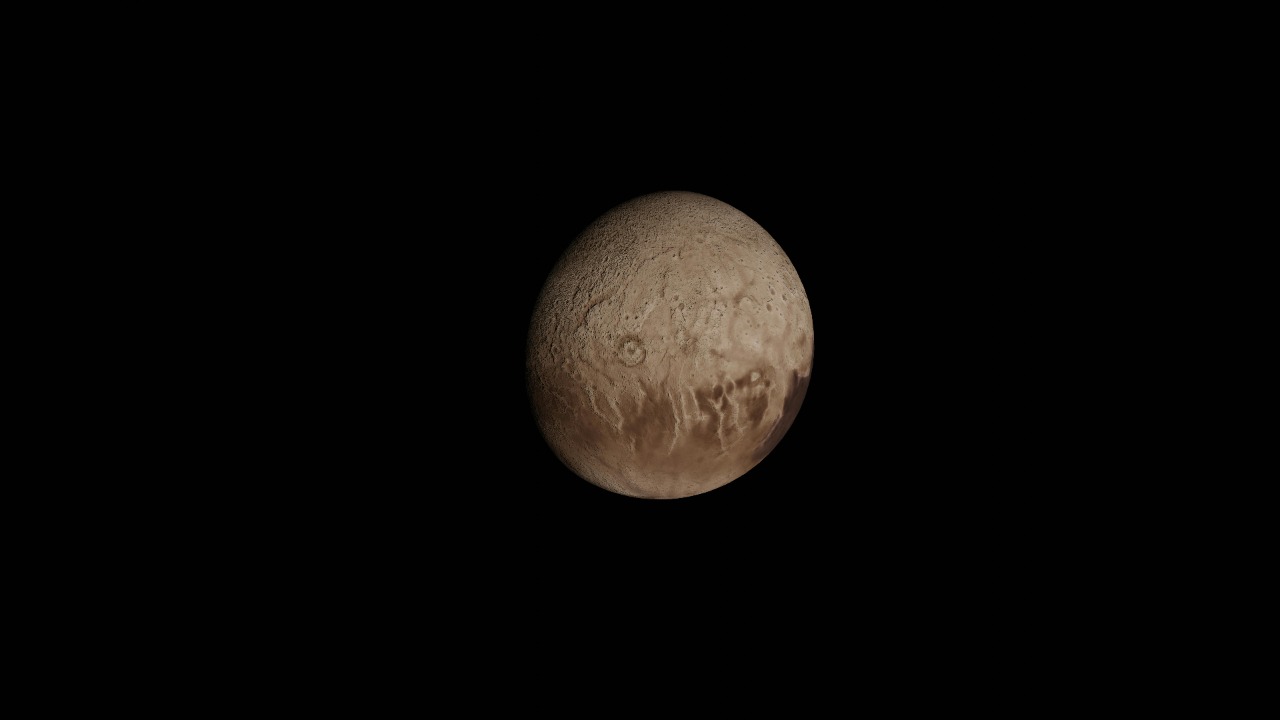

A dead star about 260 light years away has been caught in the act of shredding and swallowing the frozen remains of a Pluto-like world. The stellar corpse, a compact white dwarf, is pulling in debris rich in water ice, giving astronomers a rare, forensic look at the fate that may one day await the outermost small bodies in our own Solar System. The discovery turns a quiet, fading star into a vivid laboratory for how planetary systems die and recycle their building blocks.
By tracking the chemical fingerprints of this cosmic meal, researchers can reconstruct both the lost dwarf planet and the distant planetary system it once orbited. The result is a snapshot of planetary archaeology in real time, with implications that stretch from the Kuiper Belt beyond Neptune to the long-term future of the Sun and its icy leftovers.
The dead star and its icy victim
The star at the center of this drama is a white dwarf known as WD 1647+375, the dense remnant left after a Sun-like star exhausted its fuel and shed its outer layers. White dwarfs pack roughly the mass of the Sun into a sphere about the size of Earth, so their gravity is intense enough to tear apart any asteroid, comet, or dwarf planet that wanders too close. In this case, scientists using the Hubble Space Telescope detected that WD 1647+375 is polluted with heavy elements that should have sunk out of sight, a telltale sign that it is actively accreting fresh planetary debris traced back to a Pluto analog.
The devoured object appears to have been both icy and rocky, similar in broad terms to Pluto but orbiting another star. Spectroscopic measurements show that the material falling onto the white dwarf contains a large amount of water, along with rock-forming elements, indicating a frozen body rather than a dry asteroid. Researchers describe the star as a kind of hungry stellar remnant that has turned a distant, icy world into a ring of debris spiraling inward.
A Kuiper Belt cousin around another star
The Pluto-like body did not come from the inner regions of its system but from a distant reservoir of frozen objects, akin to the Kuiper Belt that encircles our own planetary neighborhood. In our Solar System, the Kuiper Belt is an icy ring of debris beyond Neptune that hosts Pluto and countless smaller bodies. Astronomers infer that WD 1647+375 once had its own version of this belt, a distant population of frozen worlds left over from planet formation that survived the star’s red giant phase.
Scientists think the white dwarf’s immense gravity eventually destabilized one of these outer objects, pulling it inward until tidal forces tore it apart. Evidence from the star’s atmosphere suggests that this Pluto analog was dragged from the system’s Kuiper Belt cousin into a tight orbit where it was shredded and transformed into a disk of gas and dust. That scenario is supported by detailed modeling of the infalling material described in The Pluto analog analysis, which links the composition of the debris to an origin in a cold, distant reservoir.
How Hubble caught a stellar crime scene
To uncover this planetary autopsy, astronomers relied on the ultraviolet sensitivity of the Hubble Space Telescope. By spreading the white dwarf’s light into a spectrum, they could see narrow absorption lines from elements like oxygen, magnesium, and iron that should not linger in the star’s outer layers. The presence of these heavy elements means WD 1647+375 is actively accreting material, and the specific mix of elements points to a water-rich, Pluto-like source. The observing campaign is detailed in Hubble mission material that lays out how the telescope isolated the star’s chemical fingerprints.
The fact that astronomers detected so much water in the infalling debris is particularly striking. According to Hubble Sees White, the water content is high enough that the original object must have been dominated by ice, not just coated in a thin frozen shell. That level of detail is only possible because the white dwarf’s gravity concentrates the debris into its atmosphere, turning the star into a backlit screen where the composition of the destroyed world is written in absorption lines.
A nearby system with familiar architecture
What makes this event especially compelling is how close and relatable the system is. The white dwarf lies in a nearby region of the Milky Way, roughly 260 light years from Earth, close enough that Hubble can collect high quality spectra. A summary of the detection shared through NASA commentary notes that this proximity helps turn WD 1647+375 into a benchmark for studying how planetary systems survive their star’s death.
The architecture of the system, with inner planets likely destroyed and outer icy bodies lingering until they are perturbed inward, looks uncomfortably similar to what is expected for the far future of the Sun. As the Sun evolves into a white dwarf, models predict that our own Kuiper Belt and scattered disk will continue to host Pluto and other frozen worlds for billions of years, until gravitational nudges send some of them spiraling inward. The scenario described by Hubble observers, in which a dead star eats a Pluto-like object not far from our Solar System, is effectively a preview of that distant future.
Reconstructing a frozen world from stellar pollution
From a few spectral lines in a white dwarf’s atmosphere, astronomers are reconstructing the geology and internal structure of a world that no longer exists. The mix of rock-forming elements and volatiles suggests that the destroyed body had a differentiated interior, with a rocky core and a thick mantle of ice, much like Pluto. Detailed modeling of the accreted material, described in Monthly Notices of reporting, indicates that the object’s bulk composition is inconsistent with a simple comet and instead matches a dwarf planet scale body that formed in a cold, outer disk.
Researchers have compared the inferred composition with that of known Solar System objects and find that it lines up best with Pluto and similar Kuiper Belt dwarfs. The analysis presented in Scientists notes that the water fraction is high enough to imply a thick icy shell, while the presence of heavier elements points to a rocky interior. In effect, the white dwarf’s atmosphere has become a chemical autopsy report, allowing planetary scientists to reverse engineer a frozen world that has been ground down to dust.
More from Morning Overview