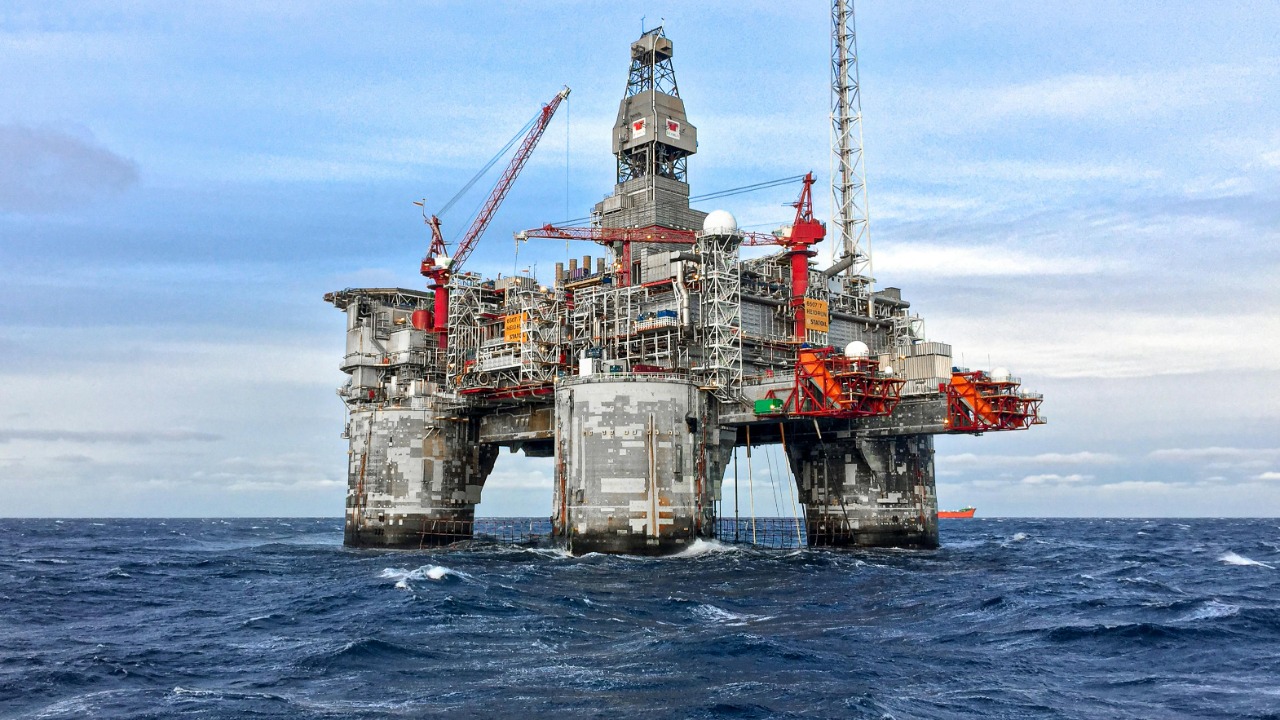

While the world fixates on Venezuela’s turmoil and shrinking oil output, Brazil is quietly assembling one of the most powerful and diversified energy portfolios on the planet. From record offshore crude to a surge of wind and solar, the region’s energy center of gravity is shifting south and east along the Atlantic coast. I see a country that is not just filling a gap left by its neighbor, but redefining what a fossil‑and‑renewables superpower can look like.
The contrast is stark. Venezuela still holds the world’s largest proven oil reserves, yet years of mismanagement, sanctions and technical decay have gutted its production capacity. Brazil, by contrast, is turning geological luck and policy stability into a mega boom that is reshaping global oil balances, power markets and even the digital infrastructure that runs on its increasingly abundant electricity.
From Venezuela’s stalled reserves to Brazil’s offshore surge
Regional headlines are dominated by Venezuela, where political crisis, security scares and spectacular industrial accidents keep the world’s cameras rolling. Reports of a Fire at Fuerte Tiuna in Caracas, a huge blaze at an oil facility in the country’s main producing region that witnesses linked to an explosion, and dramatic clips of Videos showing flames and smoke have reinforced an image of a sector in free fall. Footage of Unreal Visuals From capturing explosions in Caracas and Higuerote underscores how instability has become part of the country’s energy story. Behind the spectacle lies a deeper structural collapse: as detailed in the Key Takeaways, Venezuela’s nationalizations drove out expertise, sanctions choked investment and its heavy crude is costly to extract.
While that drama unfolds, Brazil is quietly becoming the workhorse of Latin American oil growth. In its December STEO, the United States Energy Information Administration highlighted that crude output growth from Brazil, Guyana and Argentina is set to account for a significant share of global additions in 2026, with Brazil central to that forecast. Analysts now see the country as “destined” to rank among the world’s top five producers, a trajectory rooted in prolific pre‑salt fields that have drawn sustained investment, as detailed in assessments of top five potential. That macro picture is already visible in company data: Brazil’s state‑controlled champion Petrobras has reported that it surpassed its 2025 production targets, with output up 11% versus 2024 and total production of 3.70 MMboe/d. A separate breakdown of Brazil’s state-owned oil confirms record volumes, with production hitting 3.70mn barrels of oil equivalent per day and beating internal goals.
A twin boom in crude and clean power
What makes Brazil’s moment unusual is that its oil surge is unfolding alongside a rapid build‑out of renewables, rather than at their expense. The country has long relied on hydropower, but in the past few years wind and solar have moved from niche to central pillars of the grid. By 2025, wind and solar together were providing over one third of the nation’s electricity, a milestone confirmed by data showing that Wind and sun had crossed that threshold. Another analysis of Brazil from BOGOTA, Colombia, underscores how quickly these technologies have scaled, turning what was once a hydro‑dominated system into a more diversified mix. Solar alone has been a standout, with one review of Brazil Solar Wind describing how the country is “Shattering Renewable Energy Records In” 2025 as solar and wind reach 34% of generation.
That clean‑energy surge is colliding with a parallel expansion in overall power capacity. According to Brazil’s regulator ANEEL, the South American nation added 7,403 m of new capacity in 2025, a figure highlighted in the “Brazil Boosts Power Output, More Expected” overview of the South American build‑out. The same “Brazil Boosts Power in 2025, with More Expected in 2026” analysis notes that ANEEL’s dashboard tracks a pipeline of projects worth more than US$629 billion, underscoring how much capital is now tied to the grid. A summary of that expansion for Brazil, based on, reinforces the scale of the build‑out. Another breakdown of the same trend, titled “Massive Increase Ahead,” highlights how solar and wind power already account for 11.15% of the installed base and are set to climb further.
Managing abundance: grids, data centers and soy power
Abundance brings its own headaches. Brazil’s grid operators and policymakers are now wrestling with how to absorb so much new capacity without crashing prices or stranding assets. Analysts of excess power supply warn that curtailment and congestion are already emerging in some regions, as wind and solar outpace transmission upgrades. A more detailed look at how Brazil has rapidly its position in renewables notes that falling costs of solar equipment and supportive policy have encouraged developers to keep building even as the market grapples with oversupply. That tension is now shaping corporate strategy: data‑center operators, miners and industrial users are racing to lock in long‑term contracts that can monetize the glut.
More from Morning Overview