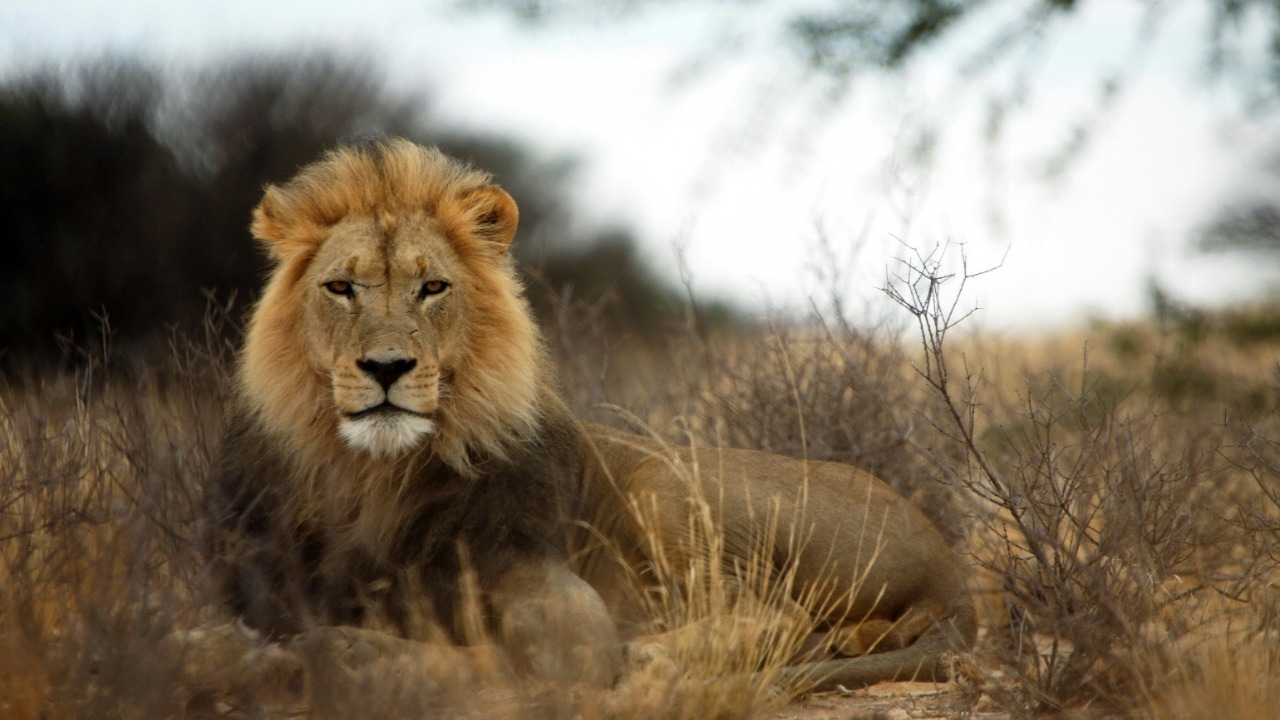

Across forests, oceans and city edges, wild animals live under constant pressure from stronger rivals, scarce resources and sudden shocks. Their survival depends on how they respond to concentrated power, whether it comes from a dominant male, a rival troop or a human-made threat. When I look closely at those responses, I see a set of quiet strategies for resisting domination that are far more practical than romantic: change the environment, share information, and refuse to let fear be the final word.
Those patterns do not offer a neat political manual, and they certainly do not turn wolves or crows into moral heroes. Yet the way animals navigate hierarchy, revenge and cooperation hints at how any community can blunt the edge of tyranny. The wild is not a utopia, but it is a laboratory of hard lessons about power that human societies keep relearning the hard way.
How environments create, and break, animal despots
Authoritarian rule in the wild often begins with something deceptively simple: control over a bottleneck resource. When food or shelter is tightly clustered, a single aggressive individual can monopolize access and turn a group into a captive audience. Research on mice shows that in the wild, environmental factors can determine whether despotism emerges in a particular group, and when conditions trap weaker animals in confined spaces, this can have tragic consequences for the victims of bullying and exclusion, a pattern documented in detail in work cited by In the wild. The lesson is stark: structure can be as tyrannical as any leader, and cramped, unequal landscapes invite domination.
Yet those same studies also show that when habitats are more open, with multiple escape routes and scattered resources, the grip of any would‑be despot weakens. Subordinate animals can slip away, form subgroups or exploit alternative food patches, turning what looked like a rigid hierarchy into a shifting, negotiable order. I see a clear parallel in human settings where monopolies over housing, information or energy give rulers leverage that citizens cannot easily counter. Change the physical or economic landscape, and the strongman’s leverage erodes, just as a dominant mouse loses control when the maze opens into a field.
Revenge, restraint and the cost of striking back
Defeating tyranny is not only about escape routes, it is also about how the oppressed respond to harm. In many species, retaliation is real and targeted. Oct research on primates has shown that Yes, animals do practice revenge: Chimps will remember an attack and later punish the aggressor, while Macaques sometimes redirect their anger toward the attacker’s relative when a direct counterstrike is too risky, a pattern described in detail in work on Chimps and Macaques. That kind of calculated payback can deter future abuse, but it also risks spirals of violence that drain a group’s energy and attention.
What strikes me is how often animals seem to weigh those costs. Subordinates sometimes bide their time, waiting until an aggressor is isolated or weakened before acting, or they choose indirect forms of resistance such as withholding grooming or cooperation. In human politics, the same tension plays out between immediate confrontation and longer campaigns that chip away at a tyrant’s support. The animal record suggests that revenge without strategy rarely ends well, but carefully chosen moments of pushback, especially when coordinated, can reset the balance of power without destroying the group that must live on afterward.
Brains, stories and the power of shared memory
Intelligence alone does not guarantee freedom, but it does expand the menu of responses to domination. The Smartest Animals list compiled by field guides to cognition puts the Chimpanzee near the top, noting that Humans and chimps share a surprising 98.8% of their DNA, and that the Orangutan also ranks among the most capable problem solvers in the animal kingdom, details that appear in assessments of DNA and learning. Those numbers matter because they hint at a shared capacity for planning, teaching and remembering, the very tools that allow groups to coordinate against unfair rule.
Human culture adds another layer by turning those memories into stories. Dec discussions of classic fiction about animals, such as the rabbit society in Watership Down, highlight how As the rabbits navigate threats, they debate leadership, weigh the risks of staying versus fleeing and confront rival warrens that slide into outright tyranny, a dynamic explored in commentary on As the rabbits. I read those narratives as more than allegory: they are human attempts to translate the raw logic of survival into moral language, using animal characters to ask how much fear a community should tolerate before it chooses the uncertainty of resistance.
Learning in the wild: how knowledge undermines control
One of the quietest ways animals resist control is by teaching each other how to survive without a guardian. In Costa Rica, conservationists have built a living experiment in this principle. Sam Williams and his colleagues at the Macaw Recovery Network in Costa Rica work with captivity‑hatched fledgling scarlet and great green macaws, gradually rewilding them so they can find food, avoid predators and integrate into wild flocks, a process described in detail in reports on Sam Williams and the Macaw Recovery Network. The key is not just releasing birds, but ensuring they can pass on hard‑won skills so future generations are less dependent on human intervention.
That same pattern appears in human struggles against oppressive systems. Underground schools, encrypted messaging channels and diaspora media all function like those older macaws, seeding knowledge that lets others navigate danger with more autonomy. When information about safe routes, legal rights or digital security spreads horizontally instead of flowing from a single authority, it becomes much harder for any regime to keep a population in the dark. The macaws’ gradual shift from hand‑feeding to independent foraging is a vivid reminder that freedom is not a switch, it is a learned practice that must be rehearsed and shared.
Crows, songs and the subversive power of symbols
Not all resistance looks like open defiance. Sometimes it sounds like a song or appears in the shape of a bird on a city lamppost. Jun reflections on forest life describe how Speaking truth brings freedom and peace, linking that idea to a community of enthusiasts called The Crow Lovers and to the figure of the Raven, with one contributor styling themselves as an Addict Oct commentator on the dark, clever presence of corvids in human imagination, a connection explored in discussions among The Crow Lovers. In those circles, birds become shorthand for uncomfortable truths that cannot be spoken directly, a way to talk about power without naming it.
That symbolism has deep roots. Nov explorations of animal meaning note that the Crow is known for its magic and mystery, and that, Surprisingly, They are associated with higher perspective, flexibility and trickster energy, traits that unsettle those who try to manipulate others, a set of associations catalogued in work on Crow symbolism. When people adopt such animals as emblems, they are not just decorating protest signs, they are borrowing a language of mischief and adaptation that has always made life harder for would‑be rulers. Songs, stories and symbols become a parallel channel of communication, one that can slip past censors in the same way a crow slips through the branches above a fenced border.
More from Morning Overview