
Pilots have long joked that some aircraft seemed more dangerous to their own crews than to any enemy. When I look at the worst US Navy planes that aviators loved to hate, I see a pattern of rushed technology, flawed assumptions, and hard lessons that still echo in debates about automation and design today. Each of these ten machines earned its reputation the hard way, in cockpits where frustration and fear were part of the preflight checklist.
1. Brewster F2A Buffalo
The Brewster F2A Buffalo is often cited as one of the most disappointing fighters to see frontline service, and its poor combat record is highlighted in detailed assessments of the worst fighter planes of the Second World War. In Navy service, the F2A suffered from sluggish climb, inadequate engine power, and a fragile airframe that struggled under carrier operations. Pilots complained that once fully loaded with fuel and ammunition, the Buffalo felt dangerously underpowered, especially when facing agile opponents in the Pacific.
Operationally, the F2A’s shortcomings translated into brutal loss rates, which cemented its place on any list of aircraft that crews distrusted. Aviators who flew it into combat often felt they were being sent out in an obsolete design that could not match enemy performance or absorb damage. Strategically, the Buffalo’s failure pushed the Navy to accelerate adoption of more capable fighters, a painful but necessary shift that shaped later procurement decisions.
2. Curtiss SB2C Helldiver
The Curtiss SB2C Helldiver, intended as a modern carrier-based dive bomber, quickly became infamous among Navy pilots for its vicious handling and structural quirks. Crews complained that the aircraft was unstable in dives, difficult to control at low speeds, and prone to maintenance headaches that kept it on the deck when it was most needed. The Helldiver’s long development cycle produced an aircraft that arrived overweight and underperforming, a combination that made carrier landings particularly nerve-racking.
Despite these flaws, the SB2C did deliver significant combat results, which only deepened the love-to-hate relationship among those who flew it. Pilots recognized that its bomb load and range could be decisive, yet they also knew that every mission demanded intense concentration just to keep the aircraft within safe limits. For Navy planners, the Helldiver became a cautionary example of how design compromises and production pressure can erode pilot confidence even in a technically capable platform.
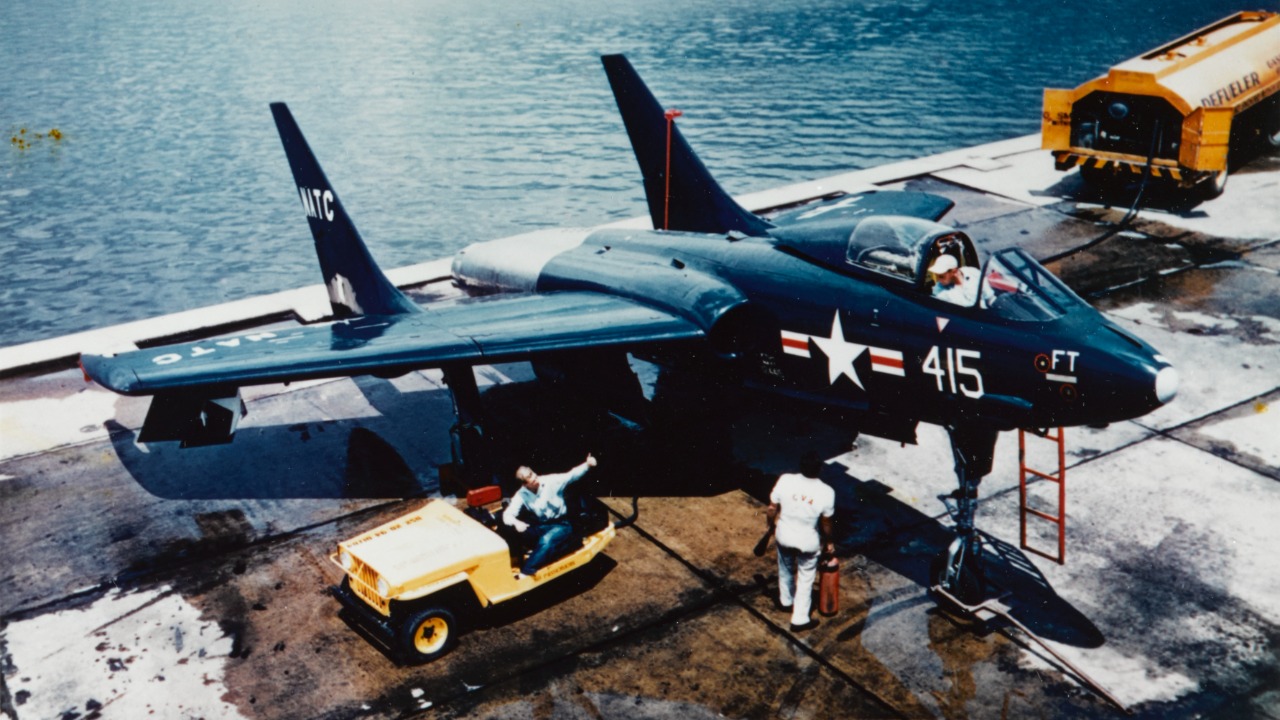
3. Vought F7U Cutlass
The Vought F7U Cutlass represented a bold leap into swept-wing jet design, but for many Navy aviators it felt like a dangerous experiment conducted at their expense. The aircraft’s unconventional layout, combined with underpowered early jet engines, produced sluggish acceleration and marginal carrier performance. Pilots reported that the Cutlass could be unforgiving during takeoff and landing, phases where any instability over a pitching deck could quickly turn fatal.
Accident statistics and maintenance demands gave the F7U a reputation as a “hangar queen” that spent more time grounded than flying useful sorties. In practice, this meant squadrons struggled to generate reliable combat power, undermining the Navy’s early jet ambitions. Strategically, the Cutlass underscored the risks of fielding radical designs before propulsion and control systems had matured, a lesson that would influence later, more conservative choices in carrier-based jets.
4. Douglas TBD Devastator
The Douglas TBD Devastator entered service as a modern torpedo bomber, but by the time it faced combat it was hopelessly outclassed. Slow, lightly armed, and saddled with unreliable torpedoes, the TBD forced its crews to fly straight and level toward heavily defended targets with little chance of escape. Accounts of early Pacific battles describe how Devastator squadrons suffered catastrophic losses, reinforcing its status as an aircraft that pilots dreaded taking into harm’s way.
From a design standpoint, the TBD’s problems were not purely mechanical, they reflected a failure to anticipate how quickly air combat would evolve. Once enemy fighters and anti-aircraft fire improved, the Devastator’s lack of speed and maneuverability became lethal liabilities. For the Navy, the aircraft’s grim combat record accelerated the push toward faster, more survivable torpedo bombers and highlighted the human cost of flying outdated machines into modern war.
5. Grumman F-11 Tiger
The Grumman F-11 Tiger is remembered less for its sleek lines than for its operational frustrations, including the notorious incident in which a test pilot managed to shoot his own aircraft with its cannon fire. As an early supersonic fighter, the Tiger pushed the limits of available engine and airframe technology, resulting in high maintenance needs and limited service life. Pilots appreciated its speed but criticized its short range and reliability, especially in the demanding environment of carrier operations.
In squadron service, the F-11’s issues meant fewer available aircraft on the flight line and more aborted sorties, undermining training and readiness. The Tiger’s rapid retirement in favor of more robust designs illustrated how quickly the Navy was willing to move on from a jet that did not meet frontline expectations. For aviators, it became a symbol of how cutting-edge performance meant little if the aircraft could not be trusted day after day at sea.
6. McDonnell F3H Demon
The McDonnell F3H Demon was conceived as a powerful all-weather fighter, yet its early versions were plagued by engine problems that shook pilot confidence. Underpowered and prone to compressor stalls, the Demon could leave aviators wrestling with unreliable thrust at the worst possible moments. Carrier takeoffs and bolters were especially stressful, since any hesitation from the engine translated directly into risk over the water.
Although later upgrades improved performance, the aircraft’s reputation never fully recovered among crews who had experienced its early shortcomings. Maintenance teams also struggled with the complex powerplant, reducing sortie rates and increasing workload on already stretched carrier decks. Strategically, the Demon’s troubled service highlighted the importance of matching ambitious airframe designs with equally mature propulsion systems, a balance that would be better achieved in its successor, the far more successful F-4 Phantom II.
7. Convair F2Y Sea Dart
The Convair F2Y Sea Dart was an audacious attempt to create a supersonic seaplane fighter, but for test pilots it often felt like a high-speed accident waiting to happen. Operating from water introduced violent spray, unpredictable hydrodynamics, and brutal impacts during takeoff and landing. These factors, combined with early jet engines and a complex retractable ski system, produced a machine that demanded intense skill just to operate safely.
Tragic accidents during testing underscored how unforgiving the Sea Dart could be, and the program never progressed to operational carrier squadrons. For Navy planners, the aircraft’s difficulties reinforced skepticism about exotic solutions when simpler carrier-based jets were rapidly improving. The Sea Dart’s short, troubled life became a reminder that innovation must be balanced against the practical realities of pilot workload, maintenance, and survivability in real-world conditions.
8. Grumman AF Guardian
The Grumman AF Guardian, designed for anti-submarine warfare, forced its crews to contend with a bulky airframe and awkward handling that made low-altitude operations demanding. Pilots flying long patrols in heavy weather found the aircraft tiring to manage, especially during carrier approaches when fatigue and poor visibility combined. The Guardian’s complex mission equipment also added weight and maintenance challenges, reducing performance and availability.
Operationally, the aircraft’s limitations meant that squadrons struggled to cover wide ocean areas efficiently, a serious concern in an era when submarine threats were growing. The Guardian’s eventual replacement by more capable designs reflected a broader shift toward aircraft that integrated sensors and weapons without overwhelming pilots. For those who flew it, the AF became a case study in how mission ambition can outstrip what a given airframe can comfortably and safely support.
9. Early carrier drones and autonomy experiments
While not a single model, early Navy experiments with carrier-capable drones and autonomous systems created a new category of aircraft that many pilots viewed warily. Concerns about reliability, software errors, and unpredictable behavior echoed broader critiques of self-driving technology, such as those raised by robotics expert Missy Cummings in debates over autonomous vehicles. For aviators, the fear was that imperfect algorithms might be trusted with complex tasks in crowded airspace around carriers.
These systems promised reduced risk to human crews, yet they also threatened to sideline traditional pilot skills and judgment. The tension between automation and human control, so visible in civilian discussions of robot taxis, played out on flight decks where safety margins are razor thin. Strategically, the Navy’s cautious approach reflected an understanding that any autonomous platform that pilots do not trust will struggle to gain acceptance, no matter how advanced its technology appears on paper.
10. Training and aggressor variants with poor safety records
Several Navy training and aggressor aircraft, while not infamous by name, earned deep resentment from pilots because of poor safety records and unforgiving flight characteristics. Instructors and students alike knew that some airframes had higher accident rates, often due to aging structures, marginal power, or outdated ejection systems. These factors turned routine sorties into exercises in risk management, especially during low-level maneuvering and carrier qualification flights.
For the institution, operating such aircraft posed a difficult trade-off between budget constraints and the need to protect young aviators. Mishaps in training squadrons had outsized impact on morale, since they occurred far from combat and often involved pilots at the start of their careers. Over time, the push to retire or upgrade these problem platforms reflected a hard-earned recognition that no cost savings justify saddling trainees with planes they quietly, and sometimes openly, hated to fly.
More from Morning Overview