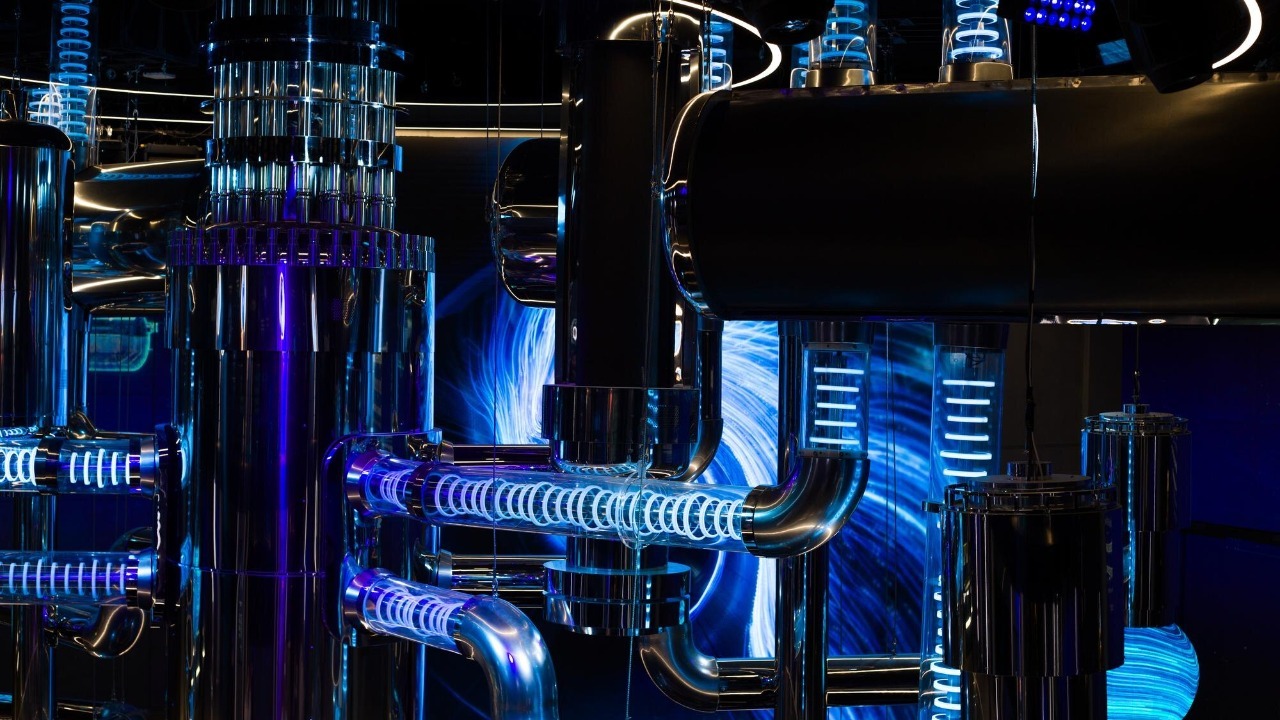

French startup Stellaria is asking regulators for permission to build an experimental fast-neutron molten salt reactor that could redefine how the world powers energy-hungry digital infrastructure. If approved, the project would be the first of its kind, designed not only to supply low-carbon electricity but also to consume more nuclear waste than it creates. I see this bid as a pivotal test of whether advanced nuclear can move from lab promise to industrial reality on a timeline that matches the surge in artificial intelligence and data center demand.
The company’s proposed reactor, called Stellarium, aims to pair a fourth-generation nuclear design with a business model built around long-lived, high-availability power for industry and the grid. By seeking a green light now, Stellaria is effectively betting that regulators, investors, and large power buyers are ready to back a technology that challenges long-held assumptions about nuclear safety, waste, and cost.
From French lab spin-off to fast-neutron frontrunner
Stellaria did not emerge from nowhere. The company is a spin-off from the French Alternative Energies and Atomic Energy Commission, better known as CEA, which has decades of experience with advanced reactor concepts. That heritage matters, because it gives Stellaria access to research depth and nuclear engineering talent that few young firms can match, and it anchors the project firmly in France’s long-running civil nuclear ecosystem. The link to CEA is explicit in reporting that describes Stellaria as a spin-off backed by the French Alternative Energies.
Capital has followed that technical pedigree. Over the summer, Stellaria raised €23 million in a funding round that built on an earlier raise in 2023, a significant sum for a company still in the pre-licensing phase. According to one account, this new round of funding for the French start-up Stellaria is earmarked to accelerate development of its molten-salt technology and prepare for industrial deployment. Another report notes that Stellaria, founded by CEA and a France-based technology company, plans to invest this capital in a fast-neutron molten salt reactor program that targets commercial deployment by 2035, with the EUR 23 million raise framed as a key step on that path.
Inside the Stellarium design
At the heart of Stellaria’s pitch is Stellarium, a fourth-generation fast neutron molten salt reactor that departs sharply from conventional light-water designs. Instead of solid fuel rods, Stellarium uses a liquid fuel made from chloride salts, with sodium chloride (NaCl) as a key component of the circulating medium. This configuration allows the reactor to operate at high temperatures and low pressure, which in turn can improve thermal efficiency and reduce some of the mechanical stresses that plague traditional reactors. One technical description notes that the reactor, called the Stellarium, is a fast neutron molten salt design that uses liquid fuel made salts, while another highlights that Stellaria’s reactor uses sodium chloride liquid salt to efficiently generate electricity and enable passive safety features, with Stellaria’s reactor described as a fast neutron molten salt design.
The fast-neutron spectrum is central to Stellaria’s claim that Stellarium can “eat” nuclear waste. By bombarding heavy nuclei with high-energy neutrons, the reactor can fission isotopes that are normally long-lived and problematic, including minor actinides. Reporting on the project stresses that this is intended to be the World’s first fast nuclear reactor designed to destroy more waste than it makes, a claim that, if validated, would mark a major shift in how policymakers think about the back end of the fuel cycle. Another analysis of the technology underscores that Stellaria’s reactor is a fast neutron molten salt design that uses sodium chloride liquid salt to efficiently generate electricity while enabling passive safety and the removal of fuel if necessary, reducing the need for emergency shutdowns.
Regulatory leap: from concept to experimental reactor
The move that now puts Stellaria in the spotlight is its formal application to build an experimental reactor in France. Earlier this week, the company announced that it is seeking the necessary authorisations to construct a demonstration unit that would definitively validate the concept. The filing includes a comprehensive safety case, with a detailed description of the installation, the safety principles adopted, and the analysis of potential incidents and accidents. One regulatory-focused report notes that Stellaria seeks permission to build this experimental reactor as part of a broader REGULATION and SAFETY process, while another emphasizes that the application, submitted on a Tuesday in late January, marks a shift from concept work into a more structured licensing phase for the French molten salt reactor developer Stellaria.
What stands out to me is the level of detail Stellaria is required to provide at this stage. The documentation must cover not only the reactor’s normal operation but also how it behaves under stress, including scenarios involving the liquid fuel and the handling of minor actinides or even thorium. One description of the filing notes that it includes the safety case, a detailed description of the installation, the safety principles adopted, and the analysis of potential incidents and accidents, including the management of minor actinides and thorium. Another account frames the application as a decisive step, quoting Stellaria president Nicolas Breyton and noting that by filing this application, Stellaria moves beyond the concept stage and enters a structuring regulatory phase.
A reactor built for AI-era demand
Stellaria is not just selling a technology, it is targeting a very specific market: the explosive growth in electricity demand from artificial intelligence and cloud computing. The company has positioned Stellarium as a dedicated power source for data centers in Europe, with a particular focus on AI workloads that require constant, high-density power. One report describes how the World’s first fast-neutron nuclear reactor is being developed specifically to power AI data centers, while another notes that Stellarium is aimed at meeting the needs of AI data centers in Europe and can operate for over 20 years without refueling.
That strategy is already translating into commercial traction. Data center operator Equinix has signed up to take power from the first Stellarium unit, effectively becoming an anchor customer for the technology. The agreement underscores how large digital infrastructure players are now willing to contract directly with next-generation nuclear projects to secure long-term, low-carbon supply. Reporting on the deal explains that the Stellarium reactor proposed by Stellaria, a spin-off from the French Alternative Energies and Atomic Energy Commission (CEA), is designed to produce more waste than it consumes in the sense of destroying existing nuclear waste, and that Equinix has agreed to purchase power from the first reactor. Another account of the AI-focused strategy notes that the World’s first fast-neutron nuclear reactor to power AI data centers in Europe is being developed by French startup Stellaria, which has secured its first power purchase agreement.
Policy backing, investors, and the France 2030 bet
Behind the technical and commercial story sits a broader policy push. Stellaria is a beneficiary of France’s France 2030 program, which is channeling public support into advanced nuclear and other strategic technologies. In a notable signal of state-level backing, Stellaria and Dutch startup Thorizon were selected, in consortium with Orano, as winners of a call for projects to develop molten salt reactors under the France 2030 banner. That decision effectively places Stellaria in a small group of companies that French authorities see as credible contenders to deliver next-generation nuclear capacity.
Private investors are making a similar bet. Climate-focused fund At One Ventures has publicly framed Stellaria as a way to deliver lower-cost nuclear power with rapid payback, pointing to unit economics that could make small modular reactors competitive with fossil fuels. In its investment thesis, the firm highlights how Stellaria is de-risking SMR scale-up for commercial deployment, while a separate section on market positioning argues that the company’s focus on data centers and industrial loads gives it strong future traction in a Market hungry for firm, clean power. Another passage in the same analysis underscores that Stellaria’s reactor is a fast neutron molten salt design that uses sodium chloride liquid salt to efficiently generate electricity and enable passive safety, reinforcing the Technology case that underpins those economics.
More from Morning Overview